
BuddhistCatholicContemplativeEvangelicalGeneral ChristianHinduJewishLatter-day SaintMuslimNew VisionsProgressive Christian
Beliefs
- Buddhist
- Catholic
- Contemplative
- Evangelical
- General Christian
- Hindu
- Jewish
- Latter-day Saint
- More Voices
- Muslim
- New Visions
- Pagan
- Progressive Christian
Topics
- Religion News
- Food and Religion
- Sports and Religion
- Religious Art
- Religious Music and Entertainment
- Religious Events
- History and Religion
- Style and Religion
- Politics and Religion
- Women in Religion
- Recreation Outdoors and Religion
- Business Finance and Religion
- Careers Workplace and Religion
- Education and Religion
- Family Parenting and Religion
- Health Fitness and Religion
- Home and Religion
- Relationships and Religion
- Technology and Religion
- Travel and Religion
Columnists
- Buddhist Columnists
- Business Finance and Religion Columnists
- Careers Workplace and Religion Columnists
- Catholic Columnists
- Contemplative Columnists
- Education and Religion Columnists
- Evangelists Columnists
- Family Parenting and Religion Columnists
- General Christian Columnists
- Health Fitness and Religion Columnists
- Hindu Columnists
- History and Religion Columnists
- Home and Religion Columnists
- Jewish Columnists
- More Voices Columnists
- Latter Day Columnists
- Muslim Columnists
- New Visions Columnists
- Nonreligious Columnists
- Pagan Columnists
- Politics and Religion Columnists
- Progressive Columnists
- Recreation Outdoors and Religion Columnists
- Relationships and Religion Columnists
- Religion News Columnists
- Religious Art Columnists
- Religious Events Columnists
- Religious Music and Entertainment Columnists
- Sports and Religion Columnists
- Style and Religion Columnists
- Technology and Religion Columnists
- Travel and Religion Columnists
- Women in Religion Columnists
Resource Library
- 2026 Calendar
- Library of World Religions
- The 100 Most Holy Places on Earth
- Patheos Answers
- Podcasts
- Videos
- Faith Leaders Database
- Anglican Episcopalian
- Bahai
- Baptist
- Buddhism
- Christianity
- Confucianism
- Eastern Orthodoxy
- Hinduism
- Holiness and Pentecostal
- ISKCON
- Islam
- Judaism
- Lutheran
- Methodist
- The Church of Jesus Christ of Latter-day Saints
- New Age
- Paganism
- Presbytarian and Reformed
- Protestantism
- Religion Behind the Scenes
- Roman Catholic
- Scientology
- Shia Islam
- Sikhism
- Sufism
- Sunni Islam
- Taoism
- Zen
- See all religions
Research Tools
 Ad-Free & Subscriber Log-In Subscription Support
Ad-Free & Subscriber Log-In Subscription Support
Follow Patheos 

- Trending:
- Forgiveness
- |
- Marriage
- |
- Consciousness
- |
- Death Penalty
- |
- Election
- |
- Halloween

- Home
- Evangelical
- I Need More Proof to Believe – Part 1
I Need More Proof to Believe – Part 1
Last updated on: January 5, 2022 at 12:48 pm by Richard E. Simmons III
I Need More Proof to Believe – Part 1 2022-01-05T12:48:01-06:00 Richard E. Simmons III
Patheos Explore the world's faith through different perspectives on religion and spirituality! Patheos has the views of the prevalent religions and spiritualities of the world.
 Do you need more proof in order to believe in the claims of Christ?
A number of years ago the famous atheist Bertrand Russell was asked, “What if you are wrong? When you stand before God, what are you going to say to him?” Russell confidently replied, “I am going to tell him he did not give me enough proof.”
This reminds me of some words from one of Philip Yancey’s older books, The Jesus I never Knew. He spoke of the miracles of Christ and the impact it had on people’s lives. He says:
Jesus performed miracles – around three dozen, depending on how you count them – but the Gospels actually downplay them. Often Jesus asked those who had seen a miracle not to tell anyone else. Some miracles, such as the Transfiguration or the raise of a twelve-year-old dead girl, he let only his closest disciples watch, with strict orders to keep things quiet. Though he never denied someone who asked for physical healing, he always turned down requests for a demonstration to amaze the crowds and impress important people. Jesus recognized early on that the excitement generated by miracles did not readily convert into life-changing faith.
I also remember something Yancey wrote in one of his very first books, Disappointment With God. He speaks of an extensive study he did of the Old Testament. He then describes a shocking realization as he studied the life of Moses and his leading the Jewish people into the promised land.
Yancey put it this way:
What happened during those days almost defies belief. When Moses climbed the sacred mountain stormy with the signs of God’s presence, those people who had lived through the ten plagues of Egypt, who had crossed the Red Sea on dry ground, who had drunk water from a rock, who were digesting the miracle of manna in their stomachs at the moment – those same people got bored or impatient or rebellious or jealous and apparently forgot all about their God. By the time Moses descended from the mountain, they were dancing like heathens around a golden calf.
God did not play hide-and-seek with the Israelites; they had every proof of his existence you could ask for. But astonishingly – and I could hardly believe this result, even as I read it – God’s directness seemed to produce the very opposite of the desired effect. The Israelites responded not with worship and love, but with fear and open rebellion. God’s visible presence did nothing to improve lasting faith.
This has to make you wonder about the real reason for people’s unbelief. Is it truly lack of proof which leads to intellectual disbelief, or is there more to it?
I can think of two issues that impact a person’s willingness to believe and become a follower of Christ. The first I will cover in today’s blog, the other I will write on in next week’s blog.
For men, I find there is one question we are always asking ourselves, even though we often are not aware of it. It seems to be the central question that must be answered before we make certain decisions or take a definitive course of action. It is a question that haunts many a person’s life. The question is:
What do people think of me?
The fear of rejection is a powerful force in people’s lives, and it is difficult for many of us to even shake.
An author I have grown to really like is Dr. Paul Vitz. He is a retired psychology professor who taught at NYU. He was an atheist until his mid-thirties, but he shares some interesting insight on why he rejected God.
The major reason for me wanting to become an atheist, was that I desired to be accepted by the powerful and influential psychologists in my field. In particular I wanted to be accepted by my professors in graduate school, As a graduate student I was thoroughly socialized by the specific culture of academic psychology. My professors at Stanford, as much as they might disagree on psychological theory, were, as far as I could tell, united on really only two things: their intense personal ambition and their rejection of religion. In this environment, just as I had learned how to dress like a college student by putting on the right clothes, I also learned to think like a proper psychologist by putting on the right, atheistic or skeptical, ideas and attitudes.
Do you see what he is admitting?
He wanted to be accepted by his peers and professors. Because of his fear of rejection, he adopted their views, regardless of whether he believed them to be true or not.
A number of years ago I met with a man who was on a search for spiritual truth, though he told me up front he did not believe in God. We met for several weeks, and for a man who claimed to be an atheist, he sure sounded like he believed in some type of God. We reached a point where he sheepishly admitted that he did believe in God and he also believed that Jesus was the son of God.
However, he said he did not want to be a Christian because it might impact his social life (he was single) and it might impact what his business colleagues might think of him.
Looking back, it was much easier for him to say “I don’t believe in God” than to admit that he feared rejection and what people would think if he was a follower of Christ.
It is hard to believe that we would allow the approval of man to set the boundaries of our faith, but this seems to be a major factor that leads to unbelief.
Part 2 coming soon!
To learn more about the evidence for God that exists, I invite you to read my book Reflections on the Existence of God. The book lays out, in short essays, much of the evidence for the existence of God that is available. We should seek to take the evidence offered and use it to make reasonable conclusions. What you will find is, as the evidence accumulates, it enables us to come to confident conclusions about God. Who He is. And, that He truly is.
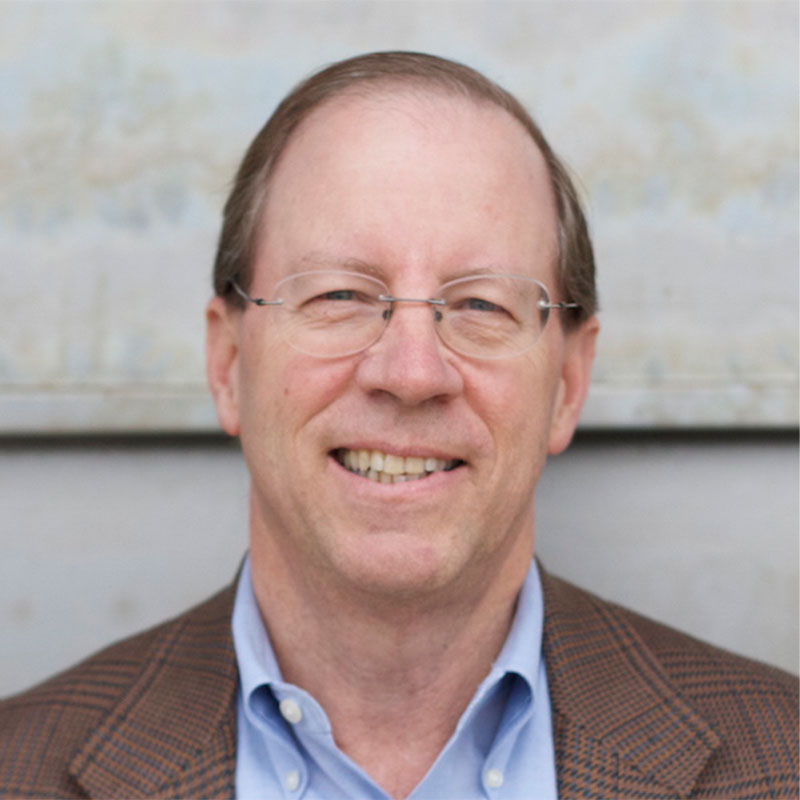
About Richard E Simmons III
Richard E. Simmons III is the founding director of The Center for Executive Leadership, a faith-based ministry in Birmingham, Alabama focused on counseling businessmen and professionals. His newest book, an Amazon best-seller, is Reflections on the Existence of God – a series of short essays seeking to answer life’s most enduring question: Does God exist? You can read more about the author here.
Previous Post

December 25, 2021
Christmas: God's Revelation to Us
Next Post

January 8, 2022 I Need More Proof To Believe - Part 2
Browse Our Archives
Select a Category Character Development Inspiration Leadership Life Purpose Personal Growth Relationships Seeking God Spiritual Truth The Bible True Masculinity Uncategorized Wisdom
Select a Month October 2026 September 2026 August 2026 July 2026 June 2026 May 2026 April 2026 March 2026 February 2026 January 2026 December 2025 November 2025 October 2025 September 2025 August 2025 July 2025 June 2025 May 2025 April 2025 March 2025 February 2025 January 2025 December 2024 November 2024 October 2024 September 2024 August 2024 July 2024 June 2024 May 2024 April 2024 March 2024 February 2024 January 2024 December 2023 November 2023 October 2023 September 2023 August 2023 April 2023 March 2023 February 2023 January 2023 December 2022 November 2022 October 2022 September 2022 August 2022 July 2022 June 2022 May 2022 April 2022 March 2022 February 2022 January 2022 December 2021 November 2021 October 2021 September 2021 August 2021 July 2021 June 2021 May 2021
Follow Us!
TAKE THE
Religious Wisdom Quiz
What did Ezekiel cook his food over as a sign of coming judgment?
Select your answer to see how you score.
Cow dung Wood Ashes Stones
Related posts from Reliable Truth


An Insight Into Unhappiness – Part I

An Insight Into Unhappiness – Part II

TRENDING AT PATHEOS Evangelical

How the author of the world's best hymn...
I've been working with John Newton for a while now. This makes...

Long before this Lectio Divina, Psalm 130 - the song - started...

What About the Trees? Another Living Parable
After I finished writing the last article about falling leaves as a...

Why Classical Education Is a Conversation, Not a...
Come and Read: Joy in Classical Education When I was a little...

Falling Leaves: A Living Parable on Letting Go
I’ve spent the vast majority of my life in the southeast corner...

Cornell University has received a great deal of negative publicity and intense...
view all Evangelical blogs
Ad-Free & Subscriber Log-In Subscription Support
- About Us
- 2026 Calendar
- Videos
- Podcasts
- Library of World Religions
- Faith In Media Tracker
- Advertise With Us
- Write for Us
- Privacy Policy
- Terms of Service
- Do Not Sell My Data
- Contact Us
- Radiant Digital
- Manage Newsletter Subscriptions
- Unsubscribe From Notifications
- Sitemap
Copyright 2008-2026, Patheos. All rights reserved.
Subscription Support Ad-Free & Subscriber Log-In
Follow Patheos