
BuddhistCatholicContemplativeEvangelicalGeneral ChristianHinduJewishLatter-day SaintMuslimNew VisionsProgressive Christian
Beliefs
- Buddhist
- Catholic
- Contemplative
- Evangelical
- General Christian
- Hindu
- Jewish
- Latter-day Saint
- More Voices
- Muslim
- New Visions
- Pagan
- Progressive Christian
Topics
- Religion News
- Food and Religion
- Sports and Religion
- Religious Art
- Religious Music and Entertainment
- Religious Events
- History and Religion
- Style and Religion
- Politics and Religion
- Women in Religion
- Recreation Outdoors and Religion
- Business Finance and Religion
- Careers Workplace and Religion
- Education and Religion
- Family Parenting and Religion
- Health Fitness and Religion
- Home and Religion
- Relationships and Religion
- Technology and Religion
- Travel and Religion
Columnists
- Buddhist Columnists
- Business Finance and Religion Columnists
- Careers Workplace and Religion Columnists
- Catholic Columnists
- Contemplative Columnists
- Education and Religion Columnists
- Evangelists Columnists
- Family Parenting and Religion Columnists
- General Christian Columnists
- Health Fitness and Religion Columnists
- Hindu Columnists
- History and Religion Columnists
- Home and Religion Columnists
- Jewish Columnists
- More Voices Columnists
- Latter Day Columnists
- Muslim Columnists
- New Visions Columnists
- Nonreligious Columnists
- Pagan Columnists
- Politics and Religion Columnists
- Progressive Columnists
- Recreation Outdoors and Religion Columnists
- Relationships and Religion Columnists
- Religion News Columnists
- Religious Art Columnists
- Religious Events Columnists
- Religious Music and Entertainment Columnists
- Sports and Religion Columnists
- Style and Religion Columnists
- Technology and Religion Columnists
- Travel and Religion Columnists
- Women in Religion Columnists
Resource Library
- 2026 Calendar
- Library of World Religions
- The 100 Most Holy Places on Earth
- Patheos Answers
- Podcasts
- Videos
- Faith Leaders Database
- Anglican Episcopalian
- Bahai
- Baptist
- Buddhism
- Christianity
- Confucianism
- Eastern Orthodoxy
- Hinduism
- Holiness and Pentecostal
- ISKCON
- Islam
- Judaism
- Lutheran
- Methodist
- The Church of Jesus Christ of Latter-day Saints
- New Age
- Paganism
- Presbytarian and Reformed
- Protestantism
- Religion Behind the Scenes
- Roman Catholic
- Scientology
- Shia Islam
- Sikhism
- Sufism
- Sunni Islam
- Taoism
- Zen
- See all religions
Research Tools
 Ad-Free & Subscriber Log-In Subscription Support
Ad-Free & Subscriber Log-In Subscription Support
Follow Patheos 

- Trending:
- Forgiveness
- |
- Marriage
- |
- Consciousness
- |
- Death Penalty
- |
- Election
- |
- Halloween

- Home
- General Christian
- Family, Parenting and Religion
- Why The Cancel Culture Isn’t Christlike: Grace Over Judgment
Why The Cancel Culture Isn’t Christlike: Grace Over Judgment
Last updated on: October 8, 2024 at 5:00 am by Kurt W. Bubna
Why The Cancel Culture Isn’t Christlike: Grace Over Judgment 2024-10-06T08:56:44-07:00 Kurt W. Bubna
Patheos Explore the world's faith through different perspectives on religion and spirituality! Patheos has the views of the prevalent religions and spiritualities of the world.

Cancel Culture Anger
Image by Engin Akyurt from Pixabay
We live in a world where rejection and revulsion are far too common. The cancel culture—where we cast off people and end relationships because we’ve been angered and hurt, separates and divides us from one another. In our treatment of others, we appoint ourselves the judge of right and wrong and determine who is in or out based on our preferences or beliefs. We have forgotten how to be civil. We also confuse accountability (i.e., holding people responsible for their actions), which is holy, with erasure, which is not.
When we cancel someone, we assume the role of judge and jury, righting someone off as both wrong and hopeless. And in case you’re wondering, the cancel culture mentality still exists and is far from the heart of Jesus. Above all others, Christians should believe the best, trust the most, and endure rather than erase. We should be shining examples of grace, mercy, and kindness.
Grace is Hard
Grace and mercy are never easy, and kindness toward everyone, including our enemies, is unfair. By definition, “fair” implies that an action is “just and appropriate based on the circumstances.” However, when someone’s done something wrong, grace and mercy are anything but just. What is suitable is reasonable retribution fitting the offense. What seems proper is punishment that fits the crime rather than kindness toward an offender.
Grace—unmerited favor (i.e., unearned blessing) toward a sinner seems ludicrous.
Mercy—not getting what someone deserves for their sins against us seems scandalous.
So, we cry out for justice, demand payment, and don’t want to let anyone off the hook for their failures, especially when we suffer from their actions.
Sadly, we quickly add our “yeah, buts” when challenged to be more like Jesus.
- “Yeah, God is merciful, but there are still consequences for poor choices.”
- “Yeah, God is kind, but that doesn’t mean I need to put up with stupidity.”
- “Yeah, God offers unearned favor to the worst of us, but my offender is going to have to prove themself to me before I can ever trust them again or let them back into my life!”

Cancelled & Locked Out of a Relationship
Image by Daniel Borker from Pixabay
Forgiveness is Hard
Too often, we qualify and define what someone must do to experience our forgiveness and kindness and excuse our shunning under the guise of self-love and setting healthy boundaries. However, to forgive is to let someone go from our personal judgment. Forgiveness is pardoning someone for their sin against us, letting go of anger, bitterness, or the desire for revenge as we seek to restore a relationship. To forgive doesn’t mean we forget, but we do remove their debt as the Father removes our sins as far as the East is from the West (Psalm 103:12). Jesus commands believers to forgive others freely, without holding grudges, resentment, or hatred in their hearts. We are, in fact, to do good to those who curse us (Luke 6:28, Romans 12:14). Of course, forgiveness is never about excusing bad behavior. Still, it is, without question, all about reconciliation, restoration, and imitating God’s redeeming love.
When I post something on social media or write an article about grace and forgiveness, I almost always get a reaction from a Christian who says, “I can forgive without being restored! God doesn’t want me to get hurt again! It’s okay to set a boundary and not let that person back into my life. They broke my trust and it’s going to be a long time (if ever) before I risk relationship with them once more!”
Using the excuse of self-protection, wisdom, or common sense, too many who claim to follow Christ have canceled people who’ve offended and hurt them. To be clear, if someone continues to abuse someone without remorse or concern and is a legitimate threat to your well-being, by all means, be wise, and that may include a relational boundary.
On the other hand, if your offender has confessed their sins, repented, and asked you to forgive them, love requires you to “bear all things, believe all things, hope all things, and endure all things” (I Corinthians 13:7). Yes, love is risky, and you may be hurt again, but the very intent of forgiveness involves restoration. (Please read that last line again.) God forgave us so that we could be restored to our relationship with Him. To say, “I forgive you, but I want nothing to do with you!” is utterly contrary to the way of Christ.

Forgiveness is Hard
Image by Engin Akyurt from Pixabay
Following the Way of Jesus is Hard
You will not find one example in the gospels where Jesus encouraged “self-protection,” but you see a lot of commandments to love and treat others how you want to be loved and treated. You will also find the challenge to love your enemies, to go the second mile, to bless those who curse you, and to be reconciled to your offender (Matthew 5). I know we are to love others as we love ourselves. Unfortunately, however, we use that command to place self-love above selfless love, and that was not the point. Jesus meant we are to treat others with the same care we give to ourselves. And no healthy person ever hurts or rejects themselves.
I can hear the screams of anger. “YOU DON’T KNOW WHAT THEY DID TO ME!” However, the One who knows all things, and loves all more than we can imagine, calls us to take up our cross, die to ourselves, and love others as the Father loves us (Mark 8:34-35). Jesus invites us to a radically different way, placing us on a narrow path involving significant personal and emotional risk. To love as He loved means putting the needs of others before our own. What else did our Lord mean by going the second mile, taking a second slap, giving up what rightfully belongs to us, and being merciful (Luke 6:27-37)?
Paul took things even further when he reminded us that while we were horrible and still unrepentant sinners, Jesus chose to die for us because of love (Romans 5:6-8). There is no wiggle room here. The pursuit of Christlikeness is not about self-preservation; it is about self-denial and selfless love.
Again, there may be times when you need to remove yourself from a dangerous situation and harmful relationship for a time, but those who claim to be His can never claim we have a right to cancel anyone. We don’t get to treat people poorly, not even our worst enemies.
“God canceled the record of the charges against us and took it away by nailing it to the cross.” Colossians 2:14 NLT
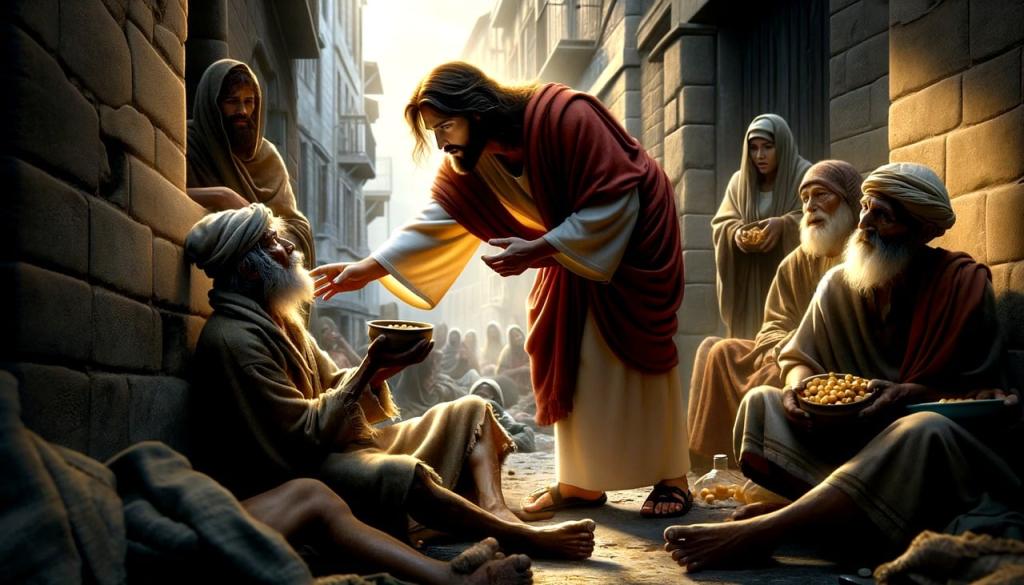
Be Christlike
Image by Karen .t from Pixabay
What if?
So . . .
- What if we treated others like God treats us, as if all their debts were fully canceled?
- What if we showed grace and favor to those who don’t deserve it?
- What if we demonstrated mercy toward others rather than demand justice?
- What if we decided to love as we are loved?
- What if we embraced the broken and contrite of heart because God does?

Forgive Others
Image by Sr. Maria-Magdalena R. SMCB from Pixabay
Of course, love does not ignore sin. Certainly, consequences often follow choices, but for the most part, those are up to God, not us. James wrote that mercy always triumphs over justice, and to be merciful is to treat the humble and repentant as if their debt is canceled in full because it is.
Karma isn’t crazy. Grace is, but this is the way of the cross, and Jesus would never cancel anyone. As C.S. Lewis once wrote, “I admit that this may mean loving people who have nothing lovable about them. To be a Christian means to forgive the inexcusable because God has forgiven the inexcusable in you. Love is not affectionate feeling, but a steady wish for the loved person’s ultimate good.”
Admittedly, God’s goodness, kindness, and love demonstrated through us is never easy. It’s easier to walk away and give up on people. It’s easier to set up what we like to call a “healthy boundary” and exclude our offenders. It’s easier to delete them from our contacts and unfollow them on social media. It’s easier to yell, “What about me?!”
Certainly, God’s river of grace is unreasonable as it washes away the worst sins of the worst of us. His mercy to the offenders is not often acceptable to the offended. But like it or not, and we usually do not, loving those who do not deserve our love and embracing rather than erasing our offenders molds us into His image. And God is always more concerned with our character than with our comfort.
Always.
So, risking love, acceptance, and forgiveness is never optional for those who walk in His footsteps.
Never.
Please leave a comment below, and let’s engage in a conversation.
You can find out more about Kurt Bubna and his writing on Twitter and Facebook. You can read more about his views and insights, both in his books and on his website.
General Christian
Evangelical
Previous Post

October 1, 2024
Surviving The Storms: When Life’s Pain Feels Unbearable
Next Post

October 15, 2024 Reflections On Loss And The Unstoppable Reality Of Change
Recent Comments
"Thanks for sharing this detailed post. I have one question: do you think this method ..."
Finding Hope Beyond the Three Hardest ..."
"Thank you, James. So appreciate the kind words."
Adult Kids, Divorce, And Christmas
"Kurt, You'll never remember me but you'll always remember us... ministering in Eastern Washinton. You ..."
Adult Kids, Divorce, And Christmas
"ya, Satan is alive and well, and always smack dab in the middle of family ..."
When Adult Children Walk Away: A ..."
Browse Our Archives
Select a Category Church issues Divorce Emotional & Relational Health For Leaders and Pastors Forgiveness & Restoration Guilt & Shame Insights on Being Human Loss & Struggle Parenting Uncategorized
Select a Month October 2026 September 2026 August 2026 June 2026 April 2026 March 2026 January 2026 December 2025 November 2025 October 2025 September 2025 August 2025 July 2025 June 2025 May 2025 April 2025 February 2025 December 2024 November 2024 October 2024 September 2024 August 2024 July 2024 June 2024 May 2024 April 2024
Follow Us!
TAKE THE
Religious Wisdom Quiz
According to 2 Thessalonians, what are believers told to stand firm and hold fast to?
Select your answer to see how you score.
The traditions of the elders The faith once delivered The word of God The teachings passed on to them
Books by This Author Books by Relationship Matters!
Related posts from Relationship Matters!

A Word to Fallen Leaders and Pastors

When Christians Won't Let You Outlive Your Past

Stop Living in the Land of What If

What Happens When a Christian Keeps Failing?
TRENDING AT PATHEOS Family, Parenting and Religion

Dolly Parton’s Last Song Wins Dove Award with...
Bluegrass band The Grascals, speaking on the red carpet at the 57th...

The Image: On the Horror of Capitalism and...
The Image Then went the Pharisees, and took counsel how they might...

We are approaching the date of our new American national holiday: October...

Letters on Living the Faith by C.S. Lewis
Most of us met C.S. Lewis as a public intellectual. Mere Christianity....

When Halloween Unmasks Married Hearts
Written by Dr. David K. Ewen from Eternal Truth Bible College Behind...

Aristotle. He’s been called the father of logic, the father of the...
view all Family, Parenting and Religion blogs
What Are Your Thoughts?leave a comment
Ad-Free & Subscriber Log-In Subscription Support
- About Us
- 2026 Calendar
- Videos
- Podcasts
- Library of World Religions
- Faith In Media Tracker
- Advertise With Us
- Write for Us
- Privacy Policy
- Terms of Service
- Do Not Sell My Data
- Contact Us
- Radiant Digital
- Manage Newsletter Subscriptions
- Unsubscribe From Notifications
- Sitemap
Copyright 2008-2026, Patheos. All rights reserved.
Subscription Support Ad-Free & Subscriber Log-In
Follow Patheos