
BuddhistCatholicContemplativeEvangelicalGeneral ChristianHinduJewishLatter-day SaintMuslimNew VisionsProgressive Christian
Beliefs
- Buddhist
- Catholic
- Contemplative
- Evangelical
- General Christian
- Hindu
- Jewish
- Latter-day Saint
- More Voices
- Muslim
- New Visions
- Pagan
- Progressive Christian
Topics
- Religion News
- Food and Religion
- Sports and Religion
- Religious Art
- Religious Music and Entertainment
- Religious Events
- History and Religion
- Style and Religion
- Politics and Religion
- Women in Religion
- Recreation Outdoors and Religion
- Business Finance and Religion
- Careers Workplace and Religion
- Education and Religion
- Family Parenting and Religion
- Health Fitness and Religion
- Home and Religion
- Relationships and Religion
- Technology and Religion
- Travel and Religion
Columnists
- Buddhist Columnists
- Business Finance and Religion Columnists
- Careers Workplace and Religion Columnists
- Catholic Columnists
- Contemplative Columnists
- Education and Religion Columnists
- Evangelists Columnists
- Family Parenting and Religion Columnists
- General Christian Columnists
- Health Fitness and Religion Columnists
- Hindu Columnists
- History and Religion Columnists
- Home and Religion Columnists
- Jewish Columnists
- More Voices Columnists
- Latter Day Columnists
- Muslim Columnists
- New Visions Columnists
- Nonreligious Columnists
- Pagan Columnists
- Politics and Religion Columnists
- Progressive Columnists
- Recreation Outdoors and Religion Columnists
- Relationships and Religion Columnists
- Religion News Columnists
- Religious Art Columnists
- Religious Events Columnists
- Religious Music and Entertainment Columnists
- Sports and Religion Columnists
- Style and Religion Columnists
- Technology and Religion Columnists
- Travel and Religion Columnists
- Women in Religion Columnists
Resource Library
- 2026 Calendar
- Library of World Religions
- The 100 Most Holy Places on Earth
- Patheos Answers
- Podcasts
- Videos
- Faith Leaders Database
- Anglican Episcopalian
- Bahai
- Baptist
- Buddhism
- Christianity
- Confucianism
- Eastern Orthodoxy
- Hinduism
- Holiness and Pentecostal
- ISKCON
- Islam
- Judaism
- Lutheran
- Methodist
- The Church of Jesus Christ of Latter-day Saints
- New Age
- Paganism
- Presbytarian and Reformed
- Protestantism
- Religion Behind the Scenes
- Roman Catholic
- Scientology
- Shia Islam
- Sikhism
- Sufism
- Sunni Islam
- Taoism
- Zen
- See all religions
Research Tools
 Ad-Free & Subscriber Log-In Subscription Support
Ad-Free & Subscriber Log-In Subscription Support
Follow Patheos 

- Trending:
- Forgiveness
- |
- Marriage
- |
- Consciousness
- |
- Death Penalty
- |
- Election
- |
- Halloween

- Home
- Careers, Workplace and Religion
- CRT Part 2: What is Critical Race Theory?
CRT Part 2: What is Critical Race Theory?
Last updated on: June 9, 2021 at 6:11 pm by Bob Robinson
CRT Part 2: What is Critical Race Theory? 2021-06-09T18:11:56-04:00 Bob Robinson
Patheos Explore the world's faith through different perspectives on religion and spirituality! Patheos has the views of the prevalent religions and spiritualities of the world.
It must be first stated that CRT is not a fully unified school of thought. It started in the late 1970s as legal scholars like Derrick Bell, Kimberlé Crenshaw, and Richard Delgado were trying to understand how American law perpetuated and exasperated racialization in the United States. They argued that racism and white supremacy were foundational elements of the American legal system despite the language of the Constitution claiming “equal protection.” It wasn’t until the late 1980s that Kimberlé Crenshaw coined the term “Critical Race Theory.”
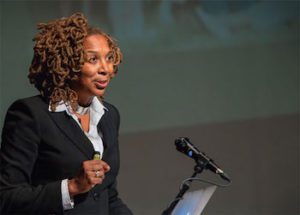
Kimberlé Crenshaw
Since then, Critical Theory has been studied as it relates to other forms of discrimination (this is what “intersectionality” means, what are the reasons a female who is Black experiences discrimination? What is the intersection of these two factors?).
It has also been applied it to other disciplines other than law, and the further it moves away from its original academic discipline, the more people change it and the more it morphs into other things.
So, it’s difficult to say definitively what CRT is. Therefore, it is also difficult for some people to criticize it, because they inevitably see some aspects that they don’t like and simplify and truncate the theory to those things, which ends up making “straw man” arguments. Too many Christians rely on John MacArthur or some other white conservative men to explain CRT to them or to point them to someone else who is critical of it (especially if that someone is Black).
Many have turned to Voddie Baucham to critique CRT. In a recent interview with Faithwire, he said, “This (CRT) is a religious movement. It has all the trappings of a religion. It has its own cosmology, it has its own saints, it has its own liturgy, its own law.”
Certainly, CRT is a secular scholarly discipline, and along with other secular disciplines, a certain kind of evangelical Christian has been trained to be suspicious and resistant. We’ve seen this suspicion toward CRT especially with the Southern Baptists who been among the most vocal opponents (Baucham’s education, both his M.Div. and D.Min. degrees, are from Southern Baptist schools. In November, the Southern Baptist Convention’s six seminary presidents released a statement calling the theory “incompatible” with the SBC’s message, prompting at least four Black pastors to break with the denomination.).
But this isn’t the only academic discipline that isn’t rooted primarily in the Bible. We have all sorts of things to study in God’s creation, so we’ve created disciplines like Anthropology, Psychology, Sociology, Chemistry, Biology, Physics, Mathematics, Economics, Engineering, and Medicine. Conservative Christians are often suspicious of many of these secular disciplines: They opposed anthropology and psychology because they weren’t built on a foundation of a biblical worldview. They opposed the sciences because so much of it relies on evolutionary theories. They oppose certain economic theories because they deem them too liberal or socialist. They don’t drive across bridges or go to the doctor because… Well, they actually do drive across bridges and go to the doctor.
It should be said, however, that any ideology can become an idolatry. We’ve seen the harm when people make all-encompassing idols out of ideologies, like economic ideologies, political ideologies, psychological ideologies, scientific ideologies, and the rest.
But because any of these can become an all-encompassing idolatrous ideology does not negate that they also can offer us insights to better understand the world around us.
So we must echo the Lausanne Covenant: Reconciliation with other people, while important, is not reconciliation with God. Political liberation, while important, is not eternal salvation. But making these statements does not negate that we have a Christian duty to seek socio-political justice.
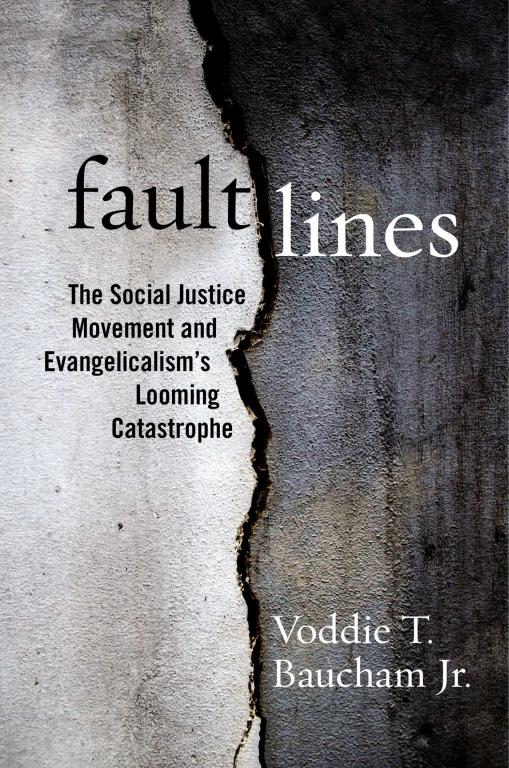 Baucham’s new book on the subject, Fault Lines, is subtitled, “The Social Justice Movement and Evangelicalism’s Looming Catastrophe.” Catastrophe? Really? This inflammatory rhetoric is a tactic to make Christians fearful in order to sell books. Are we really to believe that if we allow for the gospel to include social justice it will cause devastation to the faith? Remember that “God gave us a spirit not of fear but of power and love and self-control” (2 Tim 1:7).
Another highly-read article on CRT appeared on The Gospel Coalition website in 2019. In an article titled, “The Incompatibility of Critical Theory and Christianity,” Neil Shenvi and Pat Sawyer offer several points, which I bullet point here. I’m often struck by how few people have skipped over their first two points because they don’t fit the narratives they want to believe.
- Not everything that critical theory affirms is false. Like almost any discipline, there are areas in which Christians should agree with critical theory.
- The notion of hegemonic power is also legitimate…as the culture imbibes norms and values promoted by dominant institutions.
- Critical theory functions as a worldview. Christianity provides us with an overarching metanarrative that runs from creation to redemption…through the atoning work of Jesus… In contrast, critical theory is associated with a metanarrative that runs from oppression to liberation: We are members either of a dominant group or of a marginalized group… As such, we either need to divest ourselves of power and seek to liberate others, or we need to acquire power and liberate ourselves by dismantling all structures and institutions that subjugate and oppress. In critical theory, the greatest sin is oppression, and the greatest virtue is the pursuit of liberation.
- Because critical theory understands all relationships in terms of power dynamics, it can’t be confined to a single issue such as class, or race, or gender. Consistency will push us to apply this framework to other areas. Critical theorists classify racism, sexism, capitalism, heteronormativity, cisgender privilege, and Christian privilege as forms of oppression. In all these cases, a dominant group has imposed its values on a subordinate group.
- Critical theory claims that members of oppressed groups have special access to truth because of their ‘lived experience’ of oppression. Such insight is unavailable to members of oppressor groups, who are blinded by their privilege.
This, as far as I’ve seen, is the best and most fair Christian summary of CRT. But we would all do better to let those who work in CRT tell us themselves what they are attempting to do. For a detailed history and the “Key Writings That Formed the Movement,” see this reader from Kimberlé Crenshaw, et. al., and another key primary text on CRT is Critical Race Theory: An Introduction by Richard Delgado and Jean Stefancic.
In Words That Wound: Critical Race Theory, Assaultive Speech, And The First Amendment, four of the key founding scholars of CRT, Mari J. Matsuda, Charles R. Lawrence III, Richard Delgado, and Kimberlé Crenshaw, list six “defining elements” of critical race theory (p. 6):
- “Critical race theory recognizes that racism is endemic to American life… [W]e ask how these traditional interests [like federalism, privacy, traditional values or established property interests] serve as vessels of racial subordination.”
- “Critical race theory expresses skepticism toward dominant legal claims of neutrality, objectivity, color blindness, and meritocracy…”
- “Critical race theory challenges ahistoricism and insists on a contextual/historical analysis of the law… As critical race theorists, we adopt a stance that presumes that racism has contributed to all contemporary manifestations of group advantage and disadvantage along racial lines…”
- “Critical race theory insists on recognition of the experiential knowledge of people of color…This knowledge is gained from critical reflection on the lived experience of racism…”
- “Critical race theory is interdisciplinary and eclectic. It borrows from several traditions, including liberalism, law and society, feminism, Marxism, poststructuralism, critical legal theory, pragmatism, and nationalism…”
- “Critical race theory works toward the end of eliminating racial oppression as part of the broader goal of ending all forms of oppression. Racial oppression is experienced by many in tandem with oppressions on grounds of gender, class, or sexual orientation…”
Now that we’ve read the actual words of CRT’s main founders, we can debate the merits of each of these, agreeing or disagreeing with any one, or parts of, any one of them. As I read that list, there are some things I feel are worthy of critique or of fleshing out so that I can understand what they’re saying better (it’s not very wise to jump to conclusions when interacting with new ideas). But I also must say, most of what I see is not blatantly anti-biblical. Some? Yes. But all? No.
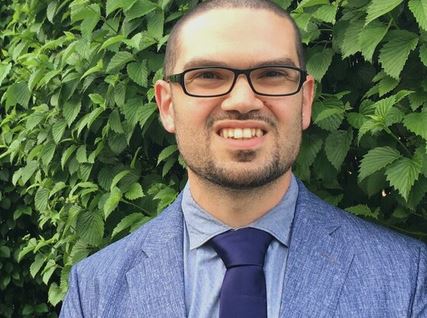
Dr. Nathan Cartagena
It should also be noted that, just as there are Christians who are anthropologists, economists, psychologists, sociologists, or mathematicians, there are also Christians in the discipline of CRT.
One is Dr. Nathan Cartagena, Assistant Professor of Philosophy at Wheaton College (IL), where he teaches courses on race, justice, and political philosophy. I first heard him on the Gravity Leader’s Podcast, where he was extremely helpful in explaining CRT’s history and tenets.
On his blog, he offers this definition of CRT:
“Critical Race Theory is a legal movement aimed at understanding, resisting, and remediating how US law and legal institutions such as law schools have fostered and perpetuated racism and white supremacy.”
If that is what CRT is, then I believe that it is a legitimate field of study for a Christian, even if words like “perpetuated racism” and “white supremacy” may make some of us White Christians squirm in discomfort.
Discernment When We Engage Various Academic Disciplines
While there are those who advocate CRT who do not embrace the gospel and do not share a Christian worldview, that does not mean that the theory itself does not offer language and categories to understand systemic racial injustice.
I work with college students every day in my work as a college campus minister. Our students are learning from many different disciplines that are studied and taught by people who do not embrace the gospel and do not share a Christian worldview.
But that does not mean we dismiss these things as unworthy of study. Through these various disciplines, God’s “common grace” has provided avenues into knowing the way his creation functions.
It takes a lot of work to help young Christian men and women discern how to integrate their faith into their studies, but it is worth it. It is a never-ending endeavor to separate the wheat from the chaff, so to speak. While we are to be wise to know when things being taught to us are contrary to Scripture, much of what we learn can be used to further the Kingdom of God.
The same goes with CRT. There is chaff there. But that is not all that is there.
Read
CRT Part 1: Is it Just Another Chapter in the Battle for a More Holistic Gospel
Feature image by Eye for Ebony on Unsplash

Browse Our Archives
Select a Category arts and entertainment audio/video bible / theology business church college community culture education faith family government/politics leadership media medicine podcast science & tech social sector tech Uncategorized work and calling
Select a Month November 2025 May 2025 October 2024 September 2024 June 2024 May 2024 April 2024 March 2024 February 2024 January 2024 December 2023 August 2023 July 2023 June 2023 May 2023 April 2023 March 2023 February 2023 January 2023 December 2022 October 2022 August 2022 July 2022 June 2022 April 2022 March 2022 February 2022 January 2022 December 2021 November 2021 October 2021 August 2021 June 2021 May 2021 April 2021 March 2021 February 2021 January 2021 December 2020 October 2020 September 2020 August 2020 July 2020 June 2020 May 2020 March 2020 February 2020 January 2020 November 2019 October 2019 September 2019 July 2019 May 2019 April 2019 March 2019 February 2019 January 2019 December 2018 July 2018 May 2018 April 2018 March 2018 July 2017 April 2017 March 2017 February 2017 November 2016 September 2016 August 2016 May 2016 April 2016 March 2016 February 2016 January 2016 December 2015 November 2015 October 2015 September 2015 August 2015 July 2015 June 2015 May 2015 April 2015 January 2015 December 2014 November 2014 October 2014 September 2014 August 2014 July 2014 June 2014 May 2014 April 2014 March 2014 February 2014 January 2014 December 2013 November 2013 October 2013 September 2013 August 2013 July 2013 June 2013 May 2013 April 2013 March 2013 February 2013 January 2013 December 2012 November 2012 October 2012 September 2012 August 2012
Follow Us!
TAKE THE
Religious Wisdom Quiz
In 1 Thessalonians, what does Paul say believers who are alive will be caught up together with to meet the Lord?
Select your answer to see how you score.
Those who have fallen asleep (the dead in Christ) The prophets The martyrs The angels
Related posts from (re)integrate

SCOT MCKNIGHT - Rethinking Revelation (podcast)
MAE ELISE CANNON: Spiritual Practices that Fuel Active...

Are "Intellectual Properties" Ruining Movies?
MATTHEW SOERENS on How Listening to Marginalized Christian...
TRENDING AT PATHEOS Careers, Workplace and Religion

St. Francis by Bill Droel Pope Leo XIV declares 2026 as “Year...

Catholics are schooled in the faith by memorizing dogmatic points and lots...

The Good News of Our Human Limitations -...
After another day of trying to meet deadlines and working on projects,...

Quiet Holy Attentiveness (podcast) with Sarah Clarkson
We know that quiet is an essential aspect of the spiritual life,...

Every Vocation Everywhere All At Once
What is a vocation? How does it endure through the years? Can...

I promise this is not going to become a Taylor Swift Studies...
view all Careers, Workplace and Religion blogs
Ad-Free & Subscriber Log-In Subscription Support
- About Us
- 2026 Calendar
- Videos
- Podcasts
- Library of World Religions
- Faith In Media Tracker
- Advertise With Us
- Write for Us
- Privacy Policy
- Terms of Service
- Do Not Sell My Data
- Contact Us
- Radiant Digital
- Manage Newsletter Subscriptions
- Unsubscribe From Notifications
- Sitemap
Copyright 2008-2026, Patheos. All rights reserved.
Subscription Support Ad-Free & Subscriber Log-In
Follow Patheos