
BuddhistCatholicContemplativeEvangelicalGeneral ChristianHinduJewishLatter-day SaintMuslimNew VisionsProgressive Christian
Beliefs
- Buddhist
- Catholic
- Contemplative
- Evangelical
- General Christian
- Hindu
- Jewish
- Latter-day Saint
- More Voices
- Muslim
- New Visions
- Pagan
- Progressive Christian
Topics
- Religion News
- Food and Religion
- Sports and Religion
- Religious Art
- Religious Music and Entertainment
- Religious Events
- History and Religion
- Style and Religion
- Politics and Religion
- Women in Religion
- Recreation Outdoors and Religion
- Business Finance and Religion
- Careers Workplace and Religion
- Education and Religion
- Family Parenting and Religion
- Health Fitness and Religion
- Home and Religion
- Relationships and Religion
- Technology and Religion
- Travel and Religion
Columnists
- Buddhist Columnists
- Business Finance and Religion Columnists
- Careers Workplace and Religion Columnists
- Catholic Columnists
- Contemplative Columnists
- Education and Religion Columnists
- Evangelists Columnists
- Family Parenting and Religion Columnists
- General Christian Columnists
- Health Fitness and Religion Columnists
- Hindu Columnists
- History and Religion Columnists
- Home and Religion Columnists
- Jewish Columnists
- More Voices Columnists
- Latter Day Columnists
- Muslim Columnists
- New Visions Columnists
- Nonreligious Columnists
- Pagan Columnists
- Politics and Religion Columnists
- Progressive Columnists
- Recreation Outdoors and Religion Columnists
- Relationships and Religion Columnists
- Religion News Columnists
- Religious Art Columnists
- Religious Events Columnists
- Religious Music and Entertainment Columnists
- Sports and Religion Columnists
- Style and Religion Columnists
- Technology and Religion Columnists
- Travel and Religion Columnists
- Women in Religion Columnists
Resource Library
- 2026 Calendar
- Library of World Religions
- The 100 Most Holy Places on Earth
- Patheos Answers
- Podcasts
- Videos
- Faith Leaders Database
- Anglican Episcopalian
- Bahai
- Baptist
- Buddhism
- Christianity
- Confucianism
- Eastern Orthodoxy
- Hinduism
- Holiness and Pentecostal
- ISKCON
- Islam
- Judaism
- Lutheran
- Methodist
- The Church of Jesus Christ of Latter-day Saints
- New Age
- Paganism
- Presbytarian and Reformed
- Protestantism
- Religion Behind the Scenes
- Roman Catholic
- Scientology
- Shia Islam
- Sikhism
- Sufism
- Sunni Islam
- Taoism
- Zen
- See all religions
Research Tools
 Ad-Free & Subscriber Log-In Subscription Support
Ad-Free & Subscriber Log-In Subscription Support
Follow Patheos 

- Trending:
- Forgiveness
- |
- Marriage
- |
- Consciousness
- |
- Death Penalty
- |
- Election
- |
- Halloween

- Home
- Careers, Workplace and Religion
- What Christians Should and Should Not Do During COVID-19
What Christians Should and Should Not Do During COVID-19
Last updated on: March 17, 2020 at 10:41 am by Bob Robinson
What Christians Should and Should Not Do During COVID-19 2020-03-17T10:41:11-04:00 Bob Robinson
Patheos Explore the world's faith through different perspectives on religion and spirituality! Patheos has the views of the prevalent religions and spiritualities of the world.
 The Ancient History of Epidemics Has Some Lessons for Us
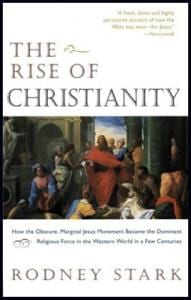
Today I re-read the chapter titled “Epidemics, Networks, and Conversion” in sociologist Rodney Stark’s essential book, The Rise of Christianity: How the Obscure, Marginal Jesus Movement Became the Dominant Religious Force in the Western World in a Few Centuries. I thought I’d get some insights into our current situation, and did I ever.
Imagine you’re living way back around AD 170. All seems to be going smoothly. The government has essentially squashed all opposition and you are experiencing the “Pax Romana” (“The Peace of Rome”). Your biggest questions about life seem to be answered by Greek philosophy. You’ve been doing your best to keep the gods appeased.
Then many of the people around you start getting sick. You hear rumors that there is a plague sweeping through the known world that is highly contagious, and many are dying. What do you think? How do you feel? Where do you turn for answers? Is there anyone who can help?
 Starting in 165 and lasting 15 years, an epidemic of smallpox called “The Plague of Galen” took the lives of between a quarter to a third of the Roman Empire’s population. So many people died that Emperor Marcus Aurelius spoke of caravans of carts hauling the dead from the cities. Marcus Aurelius himself died from the plague. After that plague had gone its course, a generation later another plague, this time of measles, hit in AD 251. At its height, it was reported that 5,000 people a day died in the city of Rome alone.
What was the response of the government? Of the civic and thought leaders? Of the religious community? To whom could the people go for answers and help in a time of utter crisis?
What Didn’t Help: Politicians
First, the politics of Rome was not the answer. Rodney Stark quotes Hans Zinsser:
“Again and again, the forward march of Roman power and world organization was interrupted by the only force which political genius and military valor were utterly helpless—epidemic disease.” (p.74)
I think you’d agree that the politics of the Coronavirus is getting out of hand. In an election season, we Americans have a tendency to place a lot of faith in the candidate we are backing, and in spite of our high regard for our ability to think for ourselves, we are more susceptible to “group-think” than we are willing to admit. I’ve noticed through social media that those who watch Fox News have a very different take on the Coronavirus than those who watch CNN.
But here’s the truth: Political maneuvers for power and votes will not effectively deal with the issues surrounding this epidemic. As David Koyzis writes in Political Visions and Illusions, political ideologies are “inescapably religious,” and therefore idolatrous.
Certainly, government is a part of God’s good creational norms. God wants us humans to live well together in society, and the means for doing so is through government. So don’t hear me equating America with ancient Rome or saying all government is a bad thing. But it is a created thing, and thus it cannot be worshipped as if it is God himself. Not only is it idolatry, it is fruitless. We cannot put our faith in, nor seek our salvation from, political ideologies.
The people’s trust in the nebulous might of the Roman empire was embarrassingly made obvious because of these ancient plagues. Today, Christians should be different than those around us – we should not place too much trust in the false savior of any political figure or party.
What Didn’t Help: Religions and Philosophies
The Roman world had plenty of religion, but what did that pagan religion of Jupiter, Apollo, and Mercury have to offer? Stark imagines the thoughts of those ancient people as they suffered:
“If we are pagans, we probably already know that our priests profess ignorance. They do not know why the gods have sent such misery—or if, in fact, the gods are involved or even care. Worse yet, many of our priests have fled the city, as have the highest civil authorities and the wealthiest of families.”
Sociologists like Stark see a pattern with natural or social disasters: When these happen, it often causes that society to have a crisis of faith. “Typically this occurs because the disaster places demands upon the prevailing religion that it appears unable to meet.” The prevailing religion can’t explain why it happened, nor does it provide how to deal with what has happened.
The prevailing religion in America has been what sociologist Christian Smith termed “Moralistic Therapeutic Deism.” This religion believes that God exists and created and ordered the world and that he wants people to be good and fair to each other. Good people go to heaven when they die (and most of us are good). The central goal of life in MTD is to be happy and to feel good about oneself. However, the God of MTD is not particularly involved in anybody’s life.
The COVID-19 epidemic perhaps will cause our neighbors to have a crisis of faith; MTD is woefully insufficient to provide meaning and comfort to an anxious population.
Not only was the Roman religion with all its various gods incapable of answering these questions, so were the prevailing philosophies. The Greek philosophies of the day didn’t offer much more help as the people watched helplessly as their loved ones died. They began to recognize that the Hellenic philosophies fell short in explaining why these things occurred, nor did these philosophies offer any comfort.
Philosophy’s ‘Natural Law’ had nothing to say about the meaning of suffering, and makes survival just a matter of chance. Much of what Plato and Aristotle taught made suffering meaningless because they taught that this tangible, physical life really has no value, and they all varied on what to think of an afterlife.
What Did Help: Christians Who Were Authentic and Sacrificial with their Lives
These early Christians had deep-seated beliefs, that instilled in them deeply-anchored answers, which created a deeper meaning for their lives.
Humans have always been meaning-seeking creatures. Why am I here? What am I supposed to do with my life? Where is my life going? To what end is my life leading?
Today, during this current epidemic, we should be asking these questions. And it should shake us to find that we have been living in light of our wrong answers.
Some in our culture (many of them being people who profess the Christian faith) have answered these questions with answers like, “I am here to enjoy life. I purpose to do that which brings me the most happiness.” Or they might think, “I seek to do everything I can to bring to me and my loved ones prosperous and safe lives.” Or they might think, “I want to make a difference in the world, to make a name for myself.” Or they might think, “This is the only life I’ve got. So, I must make the most of it and if it ends, that’s a tragedy.”
Here is a major thesis of what Rodney Stark discovered in his research: Those early Christians had answers to these questions that were radically different from the rest of the Romans. They believed that the meaning of life is to love God and to love their neighbors. They found joy in serving others, even sacrificially doing so. They did not live in fear, for they were convinced that there was an eternity of life still awaiting them. But they still valued the gift of life and did everything they could to preserve it.
So, they did the unthinkable: They did not run away out of their cities to avoid people inflicted with the plague as so many others did. They stayed. They nursed each other to health. They nursed others in their communities as well. Many of them died in doing so. But they were not afraid. They sacrificially served.
And because of their willingness to love and care for the sick, the actual percentage of Christians who died was vastly less than the rest of the population. Stark estimates that the survival rate among Christians was nearly twice as much as non-Christians (81% to 45%). And he makes further analysis of the survival rates based on if non-Christians knew Christians. He estimates that those who did not know a non-Christian had only a 25% survival rate, and those who were blessed enough to be nursed by a Christian obviously had a much greater chance of surviving.
Of course, it should go without saying that this made an incredible impact on the early growth of the Christian church. People saw a community of people who cared for their own, and who even cared for those outside their community. They saw the miracle of Christians surviving the plague and then helping others so that they too could survive the plague. They heard these Christians’ testimonies about the reasons for suffering and evil and what Christ has done about it through his death and resurrection. They saw a hope in these Christian people that was completely novel to them, manifesting itself with fearlessness in the face of death. They experienced a love that was real and amazing.
When all is said and done after the COVID-19 crisis, what will the non-Christians have to say about the Christians? Will this be a chance for us to do what those early Christians did, what sociologists like Stark call a “revitalization movement?” Stark says that the name “indicates the positive contributions such movements often make by ‘revitalizing’ the capacity of a culture to deal with its problems.”
Shall we be the movement that helps our fellow citizens thrive in the face of trouble, anxiety, and fear.
Image by Lorianne DiSabato. Used with permission. Sourced via Flickr.
Previous Post

February 15, 2020
God’s Glory and Our Glory
Next Post

March 30, 2020 Three Steps to Get Your Work Bearings During the Pandemic
Browse Our Archives
Select a Category arts and entertainment audio/video bible / theology business church college community culture education faith family government/politics leadership media medicine podcast science & tech social sector tech Uncategorized work and calling
Select a Month November 2025 May 2025 October 2024 September 2024 June 2024 May 2024 April 2024 March 2024 February 2024 January 2024 December 2023 August 2023 July 2023 June 2023 May 2023 April 2023 March 2023 February 2023 January 2023 December 2022 October 2022 August 2022 July 2022 June 2022 April 2022 March 2022 February 2022 January 2022 December 2021 November 2021 October 2021 August 2021 June 2021 May 2021 April 2021 March 2021 February 2021 January 2021 December 2020 October 2020 September 2020 August 2020 July 2020 June 2020 May 2020 March 2020 February 2020 January 2020 November 2019 October 2019 September 2019 July 2019 May 2019 April 2019 March 2019 February 2019 January 2019 December 2018 July 2018 May 2018 April 2018 March 2018 July 2017 April 2017 March 2017 February 2017 November 2016 September 2016 August 2016 May 2016 April 2016 March 2016 February 2016 January 2016 December 2015 November 2015 October 2015 September 2015 August 2015 July 2015 June 2015 May 2015 April 2015 January 2015 December 2014 November 2014 October 2014 September 2014 August 2014 July 2014 June 2014 May 2014 April 2014 March 2014 February 2014 January 2014 December 2013 November 2013 October 2013 September 2013 August 2013 July 2013 June 2013 May 2013 April 2013 March 2013 February 2013 January 2013 December 2012 November 2012 October 2012 September 2012 August 2012
Follow Us!
TAKE THE
Religious Wisdom Quiz
And if a kingdom be divided against itself, ____________.
Select your answer to see how you score.
it is doomed that kingdom cannot stand it will fall it has no hope
Related posts from (re)integrate

Submitting to Husbands? Ephesians with Dr. Lynn Cohick

SCOT MCKNIGHT - Rethinking Revelation (podcast)

Women's Callings in their Work with Joanna Meyer

CHRISTOPHER JH WRIGHT Great Commission and Mission of...
TRENDING AT PATHEOS Careers, Workplace and Religion

St. Francis by Bill Droel Pope Leo XIV declares 2026 as “Year...

Catholics are schooled in the faith by memorizing dogmatic points and lots...

The Good News of Our Human Limitations -...
After another day of trying to meet deadlines and working on projects,...

Quiet Holy Attentiveness (podcast) with Sarah Clarkson
We know that quiet is an essential aspect of the spiritual life,...

Every Vocation Everywhere All At Once
What is a vocation? How does it endure through the years? Can...

I promise this is not going to become a Taylor Swift Studies...
view all Careers, Workplace and Religion blogs
Ad-Free & Subscriber Log-In Subscription Support
- About Us
- 2026 Calendar
- Videos
- Podcasts
- Library of World Religions
- Faith In Media Tracker
- Advertise With Us
- Write for Us
- Privacy Policy
- Terms of Service
- Do Not Sell My Data
- Contact Us
- Radiant Digital
- Manage Newsletter Subscriptions
- Unsubscribe From Notifications
- Sitemap
Copyright 2008-2026, Patheos. All rights reserved.
Subscription Support Ad-Free & Subscriber Log-In
Follow Patheos