
BuddhistCatholicContemplativeEvangelicalGeneral ChristianHinduJewishLatter-day SaintMuslimNew VisionsProgressive Christian
Beliefs
- Buddhist
- Catholic
- Contemplative
- Evangelical
- General Christian
- Hindu
- Jewish
- Latter-day Saint
- More Voices
- Muslim
- New Visions
- Pagan
- Progressive Christian
Topics
- Religion News
- Food and Religion
- Sports and Religion
- Religious Art
- Religious Music and Entertainment
- Religious Events
- History and Religion
- Style and Religion
- Politics and Religion
- Women in Religion
- Recreation Outdoors and Religion
- Business Finance and Religion
- Careers Workplace and Religion
- Education and Religion
- Family Parenting and Religion
- Health Fitness and Religion
- Home and Religion
- Relationships and Religion
- Technology and Religion
- Travel and Religion
Columnists
- Buddhist Columnists
- Business Finance and Religion Columnists
- Careers Workplace and Religion Columnists
- Catholic Columnists
- Contemplative Columnists
- Education and Religion Columnists
- Evangelists Columnists
- Family Parenting and Religion Columnists
- General Christian Columnists
- Health Fitness and Religion Columnists
- Hindu Columnists
- History and Religion Columnists
- Home and Religion Columnists
- Jewish Columnists
- More Voices Columnists
- Latter Day Columnists
- Muslim Columnists
- New Visions Columnists
- Nonreligious Columnists
- Pagan Columnists
- Politics and Religion Columnists
- Progressive Columnists
- Recreation Outdoors and Religion Columnists
- Relationships and Religion Columnists
- Religion News Columnists
- Religious Art Columnists
- Religious Events Columnists
- Religious Music and Entertainment Columnists
- Sports and Religion Columnists
- Style and Religion Columnists
- Technology and Religion Columnists
- Travel and Religion Columnists
- Women in Religion Columnists
Resource Library
- 2026 Calendar
- Library of World Religions
- The 100 Most Holy Places on Earth
- Patheos Answers
- Podcasts
- Videos
- Faith Leaders Database
- Anglican Episcopalian
- Bahai
- Baptist
- Buddhism
- Christianity
- Confucianism
- Eastern Orthodoxy
- Hinduism
- Holiness and Pentecostal
- ISKCON
- Islam
- Judaism
- Lutheran
- Methodist
- The Church of Jesus Christ of Latter-day Saints
- New Age
- Paganism
- Presbytarian and Reformed
- Protestantism
- Religion Behind the Scenes
- Roman Catholic
- Scientology
- Shia Islam
- Sikhism
- Sufism
- Sunni Islam
- Taoism
- Zen
- See all religions
Research Tools
 Ad-Free & Subscriber Log-In Subscription Support
Ad-Free & Subscriber Log-In Subscription Support
Follow Patheos 

- Trending:
- Forgiveness
- |
- Marriage
- |
- Consciousness
- |
- Death Penalty
- |
- Election
- |
- Halloween

- Home
- Careers, Workplace and Religion
- Preach Sermons that Tell the Story of Creation / Fall / Redemption / Consummation
Preach Sermons that Tell the Story of Creation / Fall / Redemption / Consummation
Last updated on: January 15, 2019 at 1:43 pm by Bob Robinson
Preach Sermons that Tell the Story of Creation / Fall / Redemption / Consummation 2019-01-15T13:43:08-04:00 Bob Robinson
Patheos Explore the world's faith through different perspectives on religion and spirituality! Patheos has the views of the prevalent religions and spiritualities of the world.
Best Practices for Pastors

Stanley Zimny
For my doctoral dissertation, my research discovered how pastors lead congregants to participate in the mission God through their vocations. What did the pastors do in their discipleship paradigms? What challenges did they face? What were the results of their efforts? I interviewed pastors from around the country who were dedicated to seeing people reintegrate their faith with all of life, especially their various vocations.
Based on that research, I’ve identified some best practices for pastors who would like to see their congregants live as whole-life disciples, where every aspect of their lives are participating in the mission of God in our world.
In the following weeks, I’m going to post the final chapter of the dissertation, where I have a discussion of my findings and provide recommendations.
Preach Sermons that Tell the Overarching Biblical Story
Individual sermons and sermon series should be regularly preached that tell the overarching story. New people may not have heard this story, and those who have heard it before will need to constantly be reminded of what God’s mission is and how we participate in that mission.
Many of the pastors I interviewed stated that they were intentional in laying a worldview foundation in their churches that framed the biblical story as Creation / Fall / Redemption / Consummation. They were convinced that if Christians understood the four-chapter gospel story, it would open up opportunities for more fruitful ministry in and through their congregants’ vocations.
CFRC – Helps Make the Entire Bible Make Sense
Jack said that early in his pastoral ministry, he did not have “CFRC as a navigational guide,” but he eventually had come to appreciate it as “the common thread of canonical coherence, and the importance hermeneutically of seeing the whole story and keeping the whole story in front of me starting from creation to consummation.” He admits that “there’s always this danger of reductionism” by just focusing in on the CFRC storyline because of “the infinite complexity of the biblical story,” but he stated that for his own understanding and for the good of his congregation’s understanding, “it’s true that it can work as a sign post, giving you more clarity from the infinite complexity of the text. These sign posts, like CFRC—which I think is one of the best—I needed that. I use it all the time, so I like it of all the sign posts, the best.”
Dave’s church goes even further with it: “Our liturgy is framed by the four-part story of redemption. Our bulletin is creation, fall, redemption, consummation.” While he says that the elements of the service “might seem like a familiar Presbyterian worship service,” they are intentional is how they frame things. “Right there we are saying, even from our call to worship, that this is important.” The first chapter of the story gets significant emphasis in Dave’s church. “For instance, we are weekly celebrating physical things, communicating that in the care we try to put into even the kind of bread we use for communion bought from a local bakery which also reflects our commitment to the neighborhood, a bakery down the street. We believe that aesthetics matter; we’re not disembodied souls connecting with God.” Dave sees this as foundational to his ministry of connecting vocation with the faith: “These are two or three steps moved from the topic of work per se, but I do believe it goes a long way in shaping people’s worldview which is the key to the practice of their faith out there in the world.”
Steve, in planting his church, states that “I mostly focus my energy on laying down the groundwork theologically, worldview wise, to what I think will best shape us long term.” For his church, it is especially the Creation Mandate vision where a theology of vocation plays a part: “There is great dignity in our everyday work and that following Christ includes your vocations, in tending the garden, cultivating the creation, and being good stewards of it. We’ve kind of played a little with the nomenclature but we say, ‘Following Christ in all aspects of our lives.’”
CFRC Could be the Best Gospel Presentation for Non-Believers.
Dave has found the four-part gospel story to be helpful in his outreach to non-believers. “My ‘Gospel presentation’ to non-Christians almost always involves the four-chapter story of redemption because I think non-Christians resonate most with chapters one and four, which is exactly the chapters that the last generation of evangelists and churches left out.
He went on to say, “This generation of non-Christians believes that if God does exist, and if he did make all things that he made it good.”
CFRC Tells the Full Story of What We are Participating In
Each chapter of the the Creation / Fall / Redemption / Consummation story directly addresses different aspects of the lives of God’s people and the work they do in the world. Our sermons are meant to call every Christian “to be an agent of the Kingdom of Jesus Christ, wherever they are called by God to serve,” [1] because “the restoration in Christ of creation and the coming of the kingdom of God are one and the same.”[2]
Many of the pastors said that it was very important, as Steve said, to “focus my energy on laying down the groundwork theologically, worldview wise, to what I think will best shape us long term.”
[1] Richard Mouw, When the Kings Come Marching in, 5.
[2] Albert Wolters, Creation Regained, 73.
Image by Stanley Zimny. Used with permission. Sourced via Flickr.
Previous Post

January 2, 2019
The Kingdom of God is Both/And not Either/Or

Browse Our Archives
Select a Category arts and entertainment audio/video bible / theology business church college community culture education faith family government/politics leadership media medicine podcast science & tech social sector tech Uncategorized work and calling
Select a Month November 2025 May 2025 October 2024 September 2024 June 2024 May 2024 April 2024 March 2024 February 2024 January 2024 December 2023 August 2023 July 2023 June 2023 May 2023 April 2023 March 2023 February 2023 January 2023 December 2022 October 2022 August 2022 July 2022 June 2022 April 2022 March 2022 February 2022 January 2022 December 2021 November 2021 October 2021 August 2021 June 2021 May 2021 April 2021 March 2021 February 2021 January 2021 December 2020 October 2020 September 2020 August 2020 July 2020 June 2020 May 2020 March 2020 February 2020 January 2020 November 2019 October 2019 September 2019 July 2019 May 2019 April 2019 March 2019 February 2019 January 2019 December 2018 July 2018 May 2018 April 2018 March 2018 July 2017 April 2017 March 2017 February 2017 November 2016 September 2016 August 2016 May 2016 April 2016 March 2016 February 2016 January 2016 December 2015 November 2015 October 2015 September 2015 August 2015 July 2015 June 2015 May 2015 April 2015 January 2015 December 2014 November 2014 October 2014 September 2014 August 2014 July 2014 June 2014 May 2014 April 2014 March 2014 February 2014 January 2014 December 2013 November 2013 October 2013 September 2013 August 2013 July 2013 June 2013 May 2013 April 2013 March 2013 February 2013 January 2013 December 2012 November 2012 October 2012 September 2012 August 2012
Follow Us!
TAKE THE
Religious Wisdom Quiz
Who is known as the "weeping prophet"?
Select your answer to see how you score.
Isaiah Ezekiel Joel Jeremiah
Related posts from (re)integrate

Becoming a Wise Leader with ULI CHI

Submitting to Husbands? Ephesians with Dr. Lynn Cohick
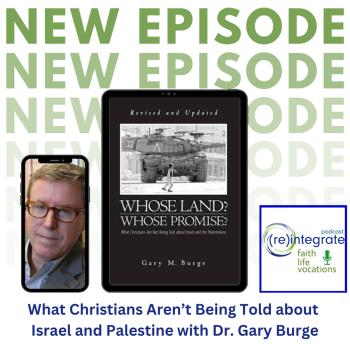
Christians, Israel, and Palestine with GARY BURGE (podcast)

SCOT MCKNIGHT - Rethinking Revelation (podcast)
TRENDING AT PATHEOS Careers, Workplace and Religion

St. Francis by Bill Droel Pope Leo XIV declares 2026 as “Year...

Catholics are schooled in the faith by memorizing dogmatic points and lots...

The Good News of Our Human Limitations -...
After another day of trying to meet deadlines and working on projects,...

Quiet Holy Attentiveness (podcast) with Sarah Clarkson
We know that quiet is an essential aspect of the spiritual life,...

Every Vocation Everywhere All At Once
What is a vocation? How does it endure through the years? Can...

I promise this is not going to become a Taylor Swift Studies...
view all Careers, Workplace and Religion blogs
Ad-Free & Subscriber Log-In Subscription Support
- About Us
- 2026 Calendar
- Videos
- Podcasts
- Library of World Religions
- Faith In Media Tracker
- Advertise With Us
- Write for Us
- Privacy Policy
- Terms of Service
- Do Not Sell My Data
- Contact Us
- Radiant Digital
- Manage Newsletter Subscriptions
- Unsubscribe From Notifications
- Sitemap
Copyright 2008-2026, Patheos. All rights reserved.
Subscription Support Ad-Free & Subscriber Log-In
Follow Patheos