
BuddhistCatholicContemplativeEvangelicalGeneral ChristianHinduJewishLatter-day SaintMuslimNew VisionsProgressive Christian
Beliefs
- Buddhist
- Catholic
- Contemplative
- Evangelical
- General Christian
- Hindu
- Jewish
- Latter-day Saint
- More Voices
- Muslim
- New Visions
- Pagan
- Progressive Christian
Topics
- Religion News
- Food and Religion
- Sports and Religion
- Religious Art
- Religious Music and Entertainment
- Religious Events
- History and Religion
- Style and Religion
- Politics and Religion
- Women in Religion
- Recreation Outdoors and Religion
- Business Finance and Religion
- Careers Workplace and Religion
- Education and Religion
- Family Parenting and Religion
- Health Fitness and Religion
- Home and Religion
- Relationships and Religion
- Technology and Religion
- Travel and Religion
Columnists
- Buddhist Columnists
- Business Finance and Religion Columnists
- Careers Workplace and Religion Columnists
- Catholic Columnists
- Contemplative Columnists
- Education and Religion Columnists
- Evangelists Columnists
- Family Parenting and Religion Columnists
- General Christian Columnists
- Health Fitness and Religion Columnists
- Hindu Columnists
- History and Religion Columnists
- Home and Religion Columnists
- Jewish Columnists
- More Voices Columnists
- Latter Day Columnists
- Muslim Columnists
- New Visions Columnists
- Nonreligious Columnists
- Pagan Columnists
- Politics and Religion Columnists
- Progressive Columnists
- Recreation Outdoors and Religion Columnists
- Relationships and Religion Columnists
- Religion News Columnists
- Religious Art Columnists
- Religious Events Columnists
- Religious Music and Entertainment Columnists
- Sports and Religion Columnists
- Style and Religion Columnists
- Technology and Religion Columnists
- Travel and Religion Columnists
- Women in Religion Columnists
Resource Library
- 2026 Calendar
- Library of World Religions
- The 100 Most Holy Places on Earth
- Patheos Answers
- Podcasts
- Videos
- Faith Leaders Database
- Anglican Episcopalian
- Bahai
- Baptist
- Buddhism
- Christianity
- Confucianism
- Eastern Orthodoxy
- Hinduism
- Holiness and Pentecostal
- ISKCON
- Islam
- Judaism
- Lutheran
- Methodist
- The Church of Jesus Christ of Latter-day Saints
- New Age
- Paganism
- Presbytarian and Reformed
- Protestantism
- Religion Behind the Scenes
- Roman Catholic
- Scientology
- Shia Islam
- Sikhism
- Sufism
- Sunni Islam
- Taoism
- Zen
- See all religions
Research Tools
 Ad-Free & Subscriber Log-In Subscription Support
Ad-Free & Subscriber Log-In Subscription Support
Follow Patheos 

- Trending:
- Forgiveness
- |
- Marriage
- |
- Consciousness
- |
- Death Penalty
- |
- Election
- |
- Halloween

- Home
- Careers, Workplace and Religion
- Are There Two Kinds of Grace?
Are There Two Kinds of Grace?
Last updated on: March 16, 2017 at 3:16 pm by Bob Robinson
Are There Two Kinds of Grace? 2017-03-16T15:16:45-04:00 Bob Robinson
Patheos Explore the world's faith through different perspectives on religion and spirituality! Patheos has the views of the prevalent religions and spiritualities of the world.
 In the beginning, God created the heavens and the earth. As God created everything in the cosmos in an orderly way, we read in Genesis 1 that “God saw that it was good.” After God made it all, we read,
“God saw all that he had made, and it was very good.” (Genesis 1:31)
Think about it. It was very good! How dare we think that our sin can nullify that which God has made!
But that is exactly the implication we get from many of our churches – that the creation is so evil that there is nothing that can be done about it. All we can do is save people from this disgusting existence and get them up to heaven. But as I wrote in an earlier post, A careful reading of the Bible will see that the original creation is corrupted but not unredeemable. Sin does not abolish God’s love for his creation.
Albert Wolters wrote,
“Evil does not have the power of bringing to naught God’s steadfast faithfulness to the works of his hands.” (Creation Regained, p. 57)
Grace that is Common (But Still Amazing!)
Neither does evil bring to naught the work of the hands of those created in God’s image!
Because of God’s bestowment of common grace, fallen humans are still capable of bringing the good, the true, and the beautiful into the world through our cultural endeavors.
What is “Common Grace?”
My friend Vince Bacote summarizes Abraham Kuyper’s theology of Common Grace,
“Put simply, common grace responds to the question many have about our world: ‘How does the world go on after sin’s entrance and how is it possible that ‘good’ things emerge from the hands of humans within and without a covenant relationship with God?’ Common grace is God’s restraint of the full effects of sin after the Fall, preservation and maintenance of the created order, and distribution of talents to human beings.” (Vincent E. Bacote, “Introduction,” in Wisdom & Wonder: Common Grace in Science & Art, by Abraham Kuyper, ed. Jordan J. Ballor and Stephen J. Grabill, trans. Nelson D. Kloosterman, 2011, p. 26)
Theologian Herman Dooyeweerd warns that Common Grace must not be understood in such a way that we forget the awful and destructive consequences of the Fall and of human sin.
“In all this it is imperative to understand that ‘common grace’ does not weaken or eliminate the antithesis (opposition) between the ground motive of the Christian religion and the apostate ground motives. Common grace, in fact, can be understood only on the basis of the antithesis.” (Roots of Western Culture: Pagan, Secular, and Christian Options)
Two Kinds of Grace?
So there are two kinds of grace. Saving Grace, which determines our eternal destiny, and Common Grace, which brings blessing to us in our everyday lives through the work of our hands. Both are from God and He alone gets the glory.
Our work matters because the larger creation matters. What we do in our evangelism is kingdom work. And (this is what must be understood) what we do in our work is also kingdom work, if it is making the world more like the way God wants things to be, where people and creation flourish and there is joy in living the human life.
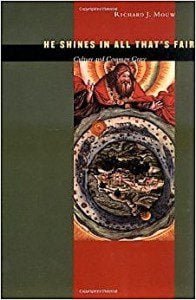 In the book He Shines in All That’s Fair, Richard Mouw looks in depth at the arguments for and against the doctrine of common grace. What do you think of his thesis?
“The underlying view I am endorsing here posits multiple divine purposes in the world. To state it plainly: I am insisting that as God unfolds his plan for his creation, he is interested in more than one thing. Alongside of God’s clear concern about the eternal destiny of individuals are his designs for the larger creation.” (Richard J. Mouw, He Shines in All That’s Fair: Culture and Common Grace, Eerdmans, 2002, p. 50)
Image by Lorenzo Magnis. Used with permission. Sourced via Flickr.
Previous Post

March 13, 2017
Four Ideas for Handling a Bad Boss
Next Post

March 24, 2017 Jesus is More (But Not Less) than a Carpenter
Browse Our Archives
Select a Category arts and entertainment audio/video bible / theology business church college community culture education faith family government/politics leadership media medicine podcast science & tech social sector tech Uncategorized work and calling
Select a Month November 2025 May 2025 October 2024 September 2024 June 2024 May 2024 April 2024 March 2024 February 2024 January 2024 December 2023 August 2023 July 2023 June 2023 May 2023 April 2023 March 2023 February 2023 January 2023 December 2022 October 2022 August 2022 July 2022 June 2022 April 2022 March 2022 February 2022 January 2022 December 2021 November 2021 October 2021 August 2021 June 2021 May 2021 April 2021 March 2021 February 2021 January 2021 December 2020 October 2020 September 2020 August 2020 July 2020 June 2020 May 2020 March 2020 February 2020 January 2020 November 2019 October 2019 September 2019 July 2019 May 2019 April 2019 March 2019 February 2019 January 2019 December 2018 July 2018 May 2018 April 2018 March 2018 July 2017 April 2017 March 2017 February 2017 November 2016 September 2016 August 2016 May 2016 April 2016 March 2016 February 2016 January 2016 December 2015 November 2015 October 2015 September 2015 August 2015 July 2015 June 2015 May 2015 April 2015 January 2015 December 2014 November 2014 October 2014 September 2014 August 2014 July 2014 June 2014 May 2014 April 2014 March 2014 February 2014 January 2014 December 2013 November 2013 October 2013 September 2013 August 2013 July 2013 June 2013 May 2013 April 2013 March 2013 February 2013 January 2013 December 2012 November 2012 October 2012 September 2012 August 2012
Follow Us!
TAKE THE
Religious Wisdom Quiz
Who is known as the "weeping prophet"?
Select your answer to see how you score.
Isaiah Ezekiel Joel Jeremiah
Related posts from (re)integrate

Becoming a Wise Leader with ULI CHI

Submitting to Husbands? Ephesians with Dr. Lynn Cohick

Christians, Israel, and Palestine with GARY BURGE (podcast)

SCOT MCKNIGHT - Rethinking Revelation (podcast)
TRENDING AT PATHEOS Careers, Workplace and Religion

St. Francis by Bill Droel Pope Leo XIV declares 2026 as “Year...

Catholics are schooled in the faith by memorizing dogmatic points and lots...

The Good News of Our Human Limitations -...
After another day of trying to meet deadlines and working on projects,...

Quiet Holy Attentiveness (podcast) with Sarah Clarkson
We know that quiet is an essential aspect of the spiritual life,...

Every Vocation Everywhere All At Once
What is a vocation? How does it endure through the years? Can...

I promise this is not going to become a Taylor Swift Studies...
view all Careers, Workplace and Religion blogs
Ad-Free & Subscriber Log-In Subscription Support
- About Us
- 2026 Calendar
- Videos
- Podcasts
- Library of World Religions
- Faith In Media Tracker
- Advertise With Us
- Write for Us
- Privacy Policy
- Terms of Service
- Do Not Sell My Data
- Contact Us
- Radiant Digital
- Manage Newsletter Subscriptions
- Unsubscribe From Notifications
- Sitemap
Copyright 2008-2026, Patheos. All rights reserved.
Subscription Support Ad-Free & Subscriber Log-In
Follow Patheos