
BuddhistCatholicContemplativeEvangelicalGeneral ChristianHinduJewishLatter-day SaintMuslimNew VisionsProgressive Christian
Beliefs
- Buddhist
- Catholic
- Contemplative
- Evangelical
- General Christian
- Hindu
- Jewish
- Latter-day Saint
- More Voices
- Muslim
- New Visions
- Pagan
- Progressive Christian
Topics
- Religion News
- Food and Religion
- Sports and Religion
- Religious Art
- Religious Music and Entertainment
- Religious Events
- History and Religion
- Style and Religion
- Politics and Religion
- Women in Religion
- Recreation Outdoors and Religion
- Business Finance and Religion
- Careers Workplace and Religion
- Education and Religion
- Family Parenting and Religion
- Health Fitness and Religion
- Home and Religion
- Relationships and Religion
- Technology and Religion
- Travel and Religion
Columnists
- Buddhist Columnists
- Business Finance and Religion Columnists
- Careers Workplace and Religion Columnists
- Catholic Columnists
- Contemplative Columnists
- Education and Religion Columnists
- Evangelists Columnists
- Family Parenting and Religion Columnists
- General Christian Columnists
- Health Fitness and Religion Columnists
- Hindu Columnists
- History and Religion Columnists
- Home and Religion Columnists
- Jewish Columnists
- More Voices Columnists
- Latter Day Columnists
- Muslim Columnists
- New Visions Columnists
- Nonreligious Columnists
- Pagan Columnists
- Politics and Religion Columnists
- Progressive Columnists
- Recreation Outdoors and Religion Columnists
- Relationships and Religion Columnists
- Religion News Columnists
- Religious Art Columnists
- Religious Events Columnists
- Religious Music and Entertainment Columnists
- Sports and Religion Columnists
- Style and Religion Columnists
- Technology and Religion Columnists
- Travel and Religion Columnists
- Women in Religion Columnists
Resource Library
- 2026 Calendar
- Library of World Religions
- The 100 Most Holy Places on Earth
- Patheos Answers
- Podcasts
- Videos
- Faith Leaders Database
- Anglican Episcopalian
- Bahai
- Baptist
- Buddhism
- Christianity
- Confucianism
- Eastern Orthodoxy
- Hinduism
- Holiness and Pentecostal
- ISKCON
- Islam
- Judaism
- Lutheran
- Methodist
- The Church of Jesus Christ of Latter-day Saints
- New Age
- Paganism
- Presbytarian and Reformed
- Protestantism
- Religion Behind the Scenes
- Roman Catholic
- Scientology
- Shia Islam
- Sikhism
- Sufism
- Sunni Islam
- Taoism
- Zen
- See all religions
Research Tools
 Ad-Free & Subscriber Log-In Subscription Support
Ad-Free & Subscriber Log-In Subscription Support
Follow Patheos 

- Trending:
- Forgiveness
- |
- Marriage
- |
- Consciousness
- |
- Death Penalty
- |
- Election
- |
- Halloween

- Home
- Careers, Workplace and Religion
- Embracing the True, the Good, and the Beautiful
Embracing the True, the Good, and the Beautiful
Last updated on: November 1, 2016 at 3:51 pm by Bob Robinson
Embracing the True, the Good, and the Beautiful 2016-11-01T15:51:54-04:00 Bob Robinson
Patheos Explore the world's faith through different perspectives on religion and spirituality! Patheos has the views of the prevalent religions and spiritualities of the world.
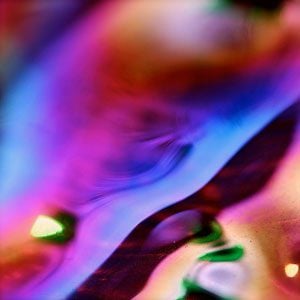 (re)integrating faith and art.
The true, the good, and the beautiful: through the ages, these ideals have been at the heart of what it means to be human.
We seek truth, we need to do that which is good, and we need to experience beauty. Christians have forever embraced these as various aspects of the glory of God.
Jesus, the logos of God, is “full of grace and truth” (John 1:14) and is the personification of truth (John 14:6), and those who follow Jesus will know this truth and be set free (John 8:33) and will then be empowered do the work of truth (John 3:21).
God is good (Psalm 100:5) and what he has created is declared by him to be “very good” (Genesis 1:31). All of God’s commands are good (Psalm 119:39). God did good by giving to everyone “rains from heaven and fruitful seasons, satisfying your hearts with food and gladness” (Acts 14:17), and “every good gift and every perfect gift is from above, coming down from the Father of lights” (James 1:17), “The Lord is good to all and his compassion is over all that he has made” (Ps. 145:9).
David sings that the “one thing” that he seeks is “to gaze upon the beauty of the Lord” in the temple (Ps 27:4). Biblical imagery of beauty is found from start to finish – from the garden to the glorious New Jerusalem, from nature to that which man makes, from flocks to people to garments to ornaments and to cities. Truth, Goodness, and Beauty combine to create a synthesis of what it means to be human, enjoying God as a part of his glorious creation.
But where is the ART?
However, evangelical Christians in the past century have mostly embraced only the true and the good. We have championed truth and done a lot of good. As David Bebbington delineated, among what makes evangelicals distinctive is a high regard for the Bible where truth is found, and a belief that the gospel needs to be expressed in good works.
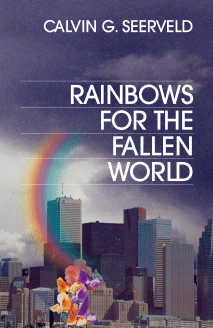 The embrace of the aesthetic aspect of life has largely been dismissed as superfluous by evangelicals in recent history. Calvin Seerveld issues a stern rebuke:
“If older Christians do not like the secular novels their young people read, cannot stand the songs and films mass-produced to capture and twist the imagination of millions around us, are nonplussed by godless contemporary art, what can they expect if no redemptive, imaginatively rich alternative has been engaged in by Christ’s body for sustained years of work; what can they expect if it hasn’t even started? We must come to understand the unwisdom of having run as far away from plastic art and gritty literature as our sanctified legs can run.” (Rainbows for the Fallen World: Aesthetic Life and Artistic Task, p. 35)
The Importance of Beauty
There is a need for evangelicals to embrace again the aesthetic life, but we are uneasy to do so. We have so become modern, so focused narrowly on the reasonable and the scientifically observable that we no longer experience the world as the pre-moderns once did. Hans Urs von Balthasar identified our problem:
“Beauty is the last thing which the thinking intellect dares to approach, since only it dances as an uncontained splendor around the double constellation of the true and the good and their inseparable relation to one another. Beauty is the disinterested one, without which the ancient world refused to understand itself, a word that both imperceptibly and yet unmistakably has bid farewell to our new world, a world of interests, leaving it to its own avarice and sadness.
No more loved or fostered by religion, beauty is lifted from its face as a mask, and its absence exposes features on that face, which threaten to become incomprehensible to man. We no longer dare to believe in beauty and we make of it a mere appearance in order the more easily to dispose of it.
Our situation today shows that beauty demands for itself at least as much courage and decision as do truth and goodness, and she will not allow herself to be separated and banned from her two sisters without taking them along with herself in an act of mysterious vengeance.” (Glory of the Lord: A Theological Aesthetics, Volume 1, Seeing the Form, p. 18)
In our post-modern age, it is time to re-embrace beauty as much as truth and goodness.
Beauty is found in the nuance of a painting found in an art museum, the unexpected transition in a musical composition, in a tearful and exhilarating moment in a film.
But not only there: beauty is also experienced in a smile on a four-year-old’s face, a gentle breeze against your face, a moment of lying still in the grass. As Seerveld writes,
“If the aesthetic moment is missing in daily active responses to God and neighbor in the world, then that life is shorn of a great praise potential and you are liable to a closed down kind of grim slavery.” (Rainbows for the Fallen World, p. 54).
Image by Cindee Re. Used with permission from artist. Sourced via Flickr.
Previous Post
September 13, 2016
Can a Cardiologist's Life Matter to God?
Next Post

November 22, 2016 Abundance in a World of Choices
Browse Our Archives
Select a Category arts and entertainment audio/video bible / theology business church college community culture education faith family government/politics leadership media medicine podcast science & tech social sector tech Uncategorized work and calling
Select a Month November 2025 May 2025 October 2024 September 2024 June 2024 May 2024 April 2024 March 2024 February 2024 January 2024 December 2023 August 2023 July 2023 June 2023 May 2023 April 2023 March 2023 February 2023 January 2023 December 2022 October 2022 August 2022 July 2022 June 2022 April 2022 March 2022 February 2022 January 2022 December 2021 November 2021 October 2021 August 2021 June 2021 May 2021 April 2021 March 2021 February 2021 January 2021 December 2020 October 2020 September 2020 August 2020 July 2020 June 2020 May 2020 March 2020 February 2020 January 2020 November 2019 October 2019 September 2019 July 2019 May 2019 April 2019 March 2019 February 2019 January 2019 December 2018 July 2018 May 2018 April 2018 March 2018 July 2017 April 2017 March 2017 February 2017 November 2016 September 2016 August 2016 May 2016 April 2016 March 2016 February 2016 January 2016 December 2015 November 2015 October 2015 September 2015 August 2015 July 2015 June 2015 May 2015 April 2015 January 2015 December 2014 November 2014 October 2014 September 2014 August 2014 July 2014 June 2014 May 2014 April 2014 March 2014 February 2014 January 2014 December 2013 November 2013 October 2013 September 2013 August 2013 July 2013 June 2013 May 2013 April 2013 March 2013 February 2013 January 2013 December 2012 November 2012 October 2012 September 2012 August 2012
Follow Us!
TAKE THE
Religious Wisdom Quiz
How many seals are on the scroll in Revelation?
Select your answer to see how you score.
Twelve Ten Seven Four
Related posts from (re)integrate

JOSH LARSEN - Enjoying Movies at a Deeper...

RICHARD VANCE GOODWIN - Experiencing God at the...

Are "Intellectual Properties" Ruining Movies?
Our Creativity is a Key to our Spirituality...
TRENDING AT PATHEOS Careers, Workplace and Religion

St. Francis by Bill Droel Pope Leo XIV declares 2026 as “Year...

Catholics are schooled in the faith by memorizing dogmatic points and lots...

The Good News of Our Human Limitations -...
After another day of trying to meet deadlines and working on projects,...

Quiet Holy Attentiveness (podcast) with Sarah Clarkson
We know that quiet is an essential aspect of the spiritual life,...

Every Vocation Everywhere All At Once
What is a vocation? How does it endure through the years? Can...

I promise this is not going to become a Taylor Swift Studies...
view all Careers, Workplace and Religion blogs
Ad-Free & Subscriber Log-In Subscription Support
- About Us
- 2026 Calendar
- Videos
- Podcasts
- Library of World Religions
- Faith In Media Tracker
- Advertise With Us
- Write for Us
- Privacy Policy
- Terms of Service
- Do Not Sell My Data
- Contact Us
- Radiant Digital
- Manage Newsletter Subscriptions
- Unsubscribe From Notifications
- Sitemap
Copyright 2008-2026, Patheos. All rights reserved.
Subscription Support Ad-Free & Subscriber Log-In
Follow Patheos