
BuddhistCatholicContemplativeEvangelicalGeneral ChristianHinduJewishLatter-day SaintMuslimNew VisionsProgressive Christian
Beliefs
- Buddhist
- Catholic
- Contemplative
- Evangelical
- General Christian
- Hindu
- Jewish
- Latter-day Saint
- More Voices
- Muslim
- New Visions
- Pagan
- Progressive Christian
Topics
- Religion News
- Food and Religion
- Sports and Religion
- Religious Art
- Religious Music and Entertainment
- Religious Events
- History and Religion
- Style and Religion
- Politics and Religion
- Women in Religion
- Recreation Outdoors and Religion
- Business Finance and Religion
- Careers Workplace and Religion
- Education and Religion
- Family Parenting and Religion
- Health Fitness and Religion
- Home and Religion
- Relationships and Religion
- Technology and Religion
- Travel and Religion
Columnists
- Buddhist Columnists
- Business Finance and Religion Columnists
- Careers Workplace and Religion Columnists
- Catholic Columnists
- Contemplative Columnists
- Education and Religion Columnists
- Evangelists Columnists
- Family Parenting and Religion Columnists
- General Christian Columnists
- Health Fitness and Religion Columnists
- Hindu Columnists
- History and Religion Columnists
- Home and Religion Columnists
- Jewish Columnists
- More Voices Columnists
- Latter Day Columnists
- Muslim Columnists
- New Visions Columnists
- Nonreligious Columnists
- Pagan Columnists
- Politics and Religion Columnists
- Progressive Columnists
- Recreation Outdoors and Religion Columnists
- Relationships and Religion Columnists
- Religion News Columnists
- Religious Art Columnists
- Religious Events Columnists
- Religious Music and Entertainment Columnists
- Sports and Religion Columnists
- Style and Religion Columnists
- Technology and Religion Columnists
- Travel and Religion Columnists
- Women in Religion Columnists
Resource Library
- 2026 Calendar
- Library of World Religions
- The 100 Most Holy Places on Earth
- Patheos Answers
- Podcasts
- Videos
- Faith Leaders Database
- Anglican Episcopalian
- Bahai
- Baptist
- Buddhism
- Christianity
- Confucianism
- Eastern Orthodoxy
- Hinduism
- Holiness and Pentecostal
- ISKCON
- Islam
- Judaism
- Lutheran
- Methodist
- The Church of Jesus Christ of Latter-day Saints
- New Age
- Paganism
- Presbytarian and Reformed
- Protestantism
- Religion Behind the Scenes
- Roman Catholic
- Scientology
- Shia Islam
- Sikhism
- Sufism
- Sunni Islam
- Taoism
- Zen
- See all religions
Research Tools
 Ad-Free & Subscriber Log-In Subscription Support
Ad-Free & Subscriber Log-In Subscription Support
Follow Patheos 

- Trending:
- Forgiveness
- |
- Marriage
- |
- Consciousness
- |
- Death Penalty
- |
- Election
- |
- Halloween

- Home
- Careers, Workplace and Religion
- Kingdom of God: Why “Already / Not Yet” is Not Enough
Kingdom of God: Why “Already / Not Yet” is Not Enough
Last updated on: September 4, 2015 at 6:29 am by Bob Robinson
Kingdom of God: Why “Already / Not Yet” is Not Enough 2015-09-03T22:32:31-04:00 Bob Robinson
Patheos Explore the world's faith through different perspectives on religion and spirituality! Patheos has the views of the prevalent religions and spiritualities of the world.
 For much of the 20th Century, Dispensationalists taught that the kingdom is strictly a future event. My first Bible was the Ryrie Study Bible. I loved that Bible! I still own it (though I haven’t opened it in over ten years).
Charles Ryrie was a leading theologian in the Dispensational movement in the late 20th Century. In his book, A Survey of Bible Doctrine (Chicago: Moody Press, 1972), he explains the Dispensational view of the kingdom:
“The millennial kingdom is that period of 1,000 years during which our Lord Jesus Christ will rule the earth in righteousness and will fulfill to the Jews and the world those promises of the Old Testament covenants.”
Amillennialists refuted the idea of a future kingdom, insisting
(God’s rule) “is going on now, and will be until Christ returns. Hence the term realized millennialism is an apt description of (this) view…if it is remembered that the millennium in question is not an earthly but a heavenly reign.”[1]
Then Along Came George Eldon Ladd
While doing his doctoral studies at Harvard, George Eldon Ladd studied the kingdom debates in Germany. Beginning in 1964, with the first publication of Jesus and the Kingdom (later retitled The Presence of the Future: The Eschatology of Biblical Realism). he advocated the German construct of “Already/Not Yet.”
Ladd wrote,
“The Kingdom of God is the redemptive reign of God dynamically active to establish his rule among men…This Kingdom, which will appear as an apocalyptic act at the end of the age, has already come into human history in the person and mission of Jesus to overcome evil, to deliver men from its power, and to bring them into the blessings of God’s reign. The Kingdom of God involves two great moments: fulfillment within history (already), and consummation at the end of history (not yet)”[2]
For Ladd, the kingdom of God manifests itself in two stages: The “already” of God’s reign in the lives of Christians, and the “not yet” of when God will rule over the full realm of the cosmos. What God’s people experience spiritually now is a prolepsis of the fullness that will be experienced when Christ returns.
The Inner Rule of God in Individual Hearts?
Ladd’s view is an example of the interior kingdom (see my previous post where I delineate the 8 very different ways various Christians view the kingdom of God), where the manifestation of God’s rule in our present day is not in the realm of the material created cosmos. Rather, for Ladd, it is the dynamic redemptive-rule in the hearts of individuals.
If Ladd’s view of the kingdom of God is correct, then the mission of God’s people is to proclaim a gospel that God is to be the ruler of each person individually in the present as a means for guaranteeing the bliss of entering into the King’s material rule/realm in the future, when the internal spiritual experience will come to consummation in the more external tangible experience.
You may not have ever heard of George Eldon Ladd, but it can’t be understated the influence he has had on American evangelical Christianity.
“In a 1984 survey that Mark Noll sent to members of the Evangelical Theological Society (ETS) and the Institute for Biblical Research (IBR), Noll asked, ‘Please list the three individuals, living or dead, who have exerted the dominant influence on your scholarly work. You do not have to share the conclusions of these individuals but they should be the ones whose work influences you most.’ For ETS members, the number one individual was John Calvin. Number two was George Ladd. For IBR members, number one was George Ladd.”[3]
While the “Already/Not Yet” construct has been helpful to help us understand that the kingdom of God can be both present and future, it raises other tensions:
- Is the kingdom of God individual or social?
- Is the kingdom particular to the church or does it include the entire cosmos?
Ladd’s formula for the kingdom of God did this:
- The kingdom “Already” is God ruling individual Christians in the church who have submitted to the lordship of Christ in their lives
- The kingdom “Not Yet” is when God’s rule will actually be manifested in social order and in he redemption of the entire cosmos.
Scot McKnight, in his recent book, Kingdom Conspiracy: Returning to the Radical Mission of the Local Church, summarizes Ladd’s take:
“The word ‘kingdom,’ then, is not a place or a space or a realm or a people with boundaries and kings and a temple. No, ‘kingdom’ refers to the abstract dynamic that God is now at work redeeming individuals in Jesus Christ in this world, and this rule in Jesus Christ will be completed and universal at the eschaton when the kingdom arrives fully.”[4]
What About Redeemed Community?
While it cannot be denied that Jesus Christ’s lordship includes the redemptive-rule of Christ over individual Christians, Ladd’s proposal does not emphasize God’s call on these individuals into redeemed community.
It also does not provide a theological foundation for God’s people to participate with God in his mission for the redemption or reconciliation of the entirety of his creation. (More on this in the next post).
What do you think? Is the present manifestation of the kingdom of God primarily or even exclusively about God’s rule in the hearts of individual believers? Is the kingdom also about his authority over the entirety of the created cosmos? Should God’s rule also include other aspects of this present world? Is God the Lord of business? Of education? Of the arts? Of governing? In what ways?
Notes
[1] Anthony A. Hoekema, The Bible and the Future (Grand Rapids, Mich.: Wm. B. Eerdmans Publishing Co., 1979),
[2] George Eldon Ladd, The Presence of the Future: The Eschatology of Biblical Realism, Reprint edition (Grand Rapids, Mich: Wm. B. Eerdmans Publishing Co., 1996).
[3] Andrew David Naselli, “Three Reflections on Evangelical Academic Publishing,” in Themelios, Volume 39, Issue 3, ed. D. A. Carson (Eugene, OR: Wipf and Stock Publishers, 2014).
[4] Scot McKnight, Kingdom Conspiracy: Returning to the Radical Mission of the Local Church (Grand Rapids, Michigan: Brazos Press, 2014), 13.
Image by Gemma Bou. Used with permission. Sourced via Flickr.
Previous Post

August 31, 2015
8 Very Different Ways to View the Kingdom of God

Browse Our Archives
Select a Category arts and entertainment audio/video bible / theology business church college community culture education faith family government/politics leadership media medicine podcast science & tech social sector tech Uncategorized work and calling
Select a Month November 2025 May 2025 October 2024 September 2024 June 2024 May 2024 April 2024 March 2024 February 2024 January 2024 December 2023 August 2023 July 2023 June 2023 May 2023 April 2023 March 2023 February 2023 January 2023 December 2022 October 2022 August 2022 July 2022 June 2022 April 2022 March 2022 February 2022 January 2022 December 2021 November 2021 October 2021 August 2021 June 2021 May 2021 April 2021 March 2021 February 2021 January 2021 December 2020 October 2020 September 2020 August 2020 July 2020 June 2020 May 2020 March 2020 February 2020 January 2020 November 2019 October 2019 September 2019 July 2019 May 2019 April 2019 March 2019 February 2019 January 2019 December 2018 July 2018 May 2018 April 2018 March 2018 July 2017 April 2017 March 2017 February 2017 November 2016 September 2016 August 2016 May 2016 April 2016 March 2016 February 2016 January 2016 December 2015 November 2015 October 2015 September 2015 August 2015 July 2015 June 2015 May 2015 April 2015 January 2015 December 2014 November 2014 October 2014 September 2014 August 2014 July 2014 June 2014 May 2014 April 2014 March 2014 February 2014 January 2014 December 2013 November 2013 October 2013 September 2013 August 2013 July 2013 June 2013 May 2013 April 2013 March 2013 February 2013 January 2013 December 2012 November 2012 October 2012 September 2012 August 2012
Follow Us!
TAKE THE
Religious Wisdom Quiz
True or False: Abraham was 100 years old when Isaac was born.
Select your answer to see how you score.
FALSE TRUE
Related posts from (re)integrate

Becoming a Wise Leader with ULI CHI

Submitting to Husbands? Ephesians with Dr. Lynn Cohick
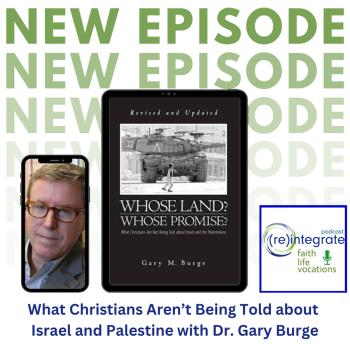
Christians, Israel, and Palestine with GARY BURGE (podcast)

SCOT MCKNIGHT - Rethinking Revelation (podcast)
TRENDING AT PATHEOS Careers, Workplace and Religion

St. Francis by Bill Droel Pope Leo XIV declares 2026 as “Year...

Catholics are schooled in the faith by memorizing dogmatic points and lots...

The Good News of Our Human Limitations -...
After another day of trying to meet deadlines and working on projects,...

Quiet Holy Attentiveness (podcast) with Sarah Clarkson
We know that quiet is an essential aspect of the spiritual life,...

Every Vocation Everywhere All At Once
What is a vocation? How does it endure through the years? Can...

I promise this is not going to become a Taylor Swift Studies...
view all Careers, Workplace and Religion blogs
Ad-Free & Subscriber Log-In Subscription Support
- About Us
- 2026 Calendar
- Videos
- Podcasts
- Library of World Religions
- Faith In Media Tracker
- Advertise With Us
- Write for Us
- Privacy Policy
- Terms of Service
- Do Not Sell My Data
- Contact Us
- Radiant Digital
- Manage Newsletter Subscriptions
- Unsubscribe From Notifications
- Sitemap
Copyright 2008-2026, Patheos. All rights reserved.
Subscription Support Ad-Free & Subscriber Log-In
Follow Patheos