
BuddhistCatholicContemplativeEvangelicalGeneral ChristianHinduJewishLatter-day SaintMuslimNew VisionsProgressive Christian
Beliefs
- Buddhist
- Catholic
- Contemplative
- Evangelical
- General Christian
- Hindu
- Jewish
- Latter-day Saint
- More Voices
- Muslim
- New Visions
- Pagan
- Progressive Christian
Topics
- Religion News
- Food and Religion
- Sports and Religion
- Religious Art
- Religious Music and Entertainment
- Religious Events
- History and Religion
- Style and Religion
- Politics and Religion
- Women in Religion
- Recreation Outdoors and Religion
- Business Finance and Religion
- Careers Workplace and Religion
- Education and Religion
- Family Parenting and Religion
- Health Fitness and Religion
- Home and Religion
- Relationships and Religion
- Technology and Religion
- Travel and Religion
Columnists
- Buddhist Columnists
- Business Finance and Religion Columnists
- Careers Workplace and Religion Columnists
- Catholic Columnists
- Contemplative Columnists
- Education and Religion Columnists
- Evangelists Columnists
- Family Parenting and Religion Columnists
- General Christian Columnists
- Health Fitness and Religion Columnists
- Hindu Columnists
- History and Religion Columnists
- Home and Religion Columnists
- Jewish Columnists
- More Voices Columnists
- Latter Day Columnists
- Muslim Columnists
- New Visions Columnists
- Nonreligious Columnists
- Pagan Columnists
- Politics and Religion Columnists
- Progressive Columnists
- Recreation Outdoors and Religion Columnists
- Relationships and Religion Columnists
- Religion News Columnists
- Religious Art Columnists
- Religious Events Columnists
- Religious Music and Entertainment Columnists
- Sports and Religion Columnists
- Style and Religion Columnists
- Technology and Religion Columnists
- Travel and Religion Columnists
- Women in Religion Columnists
Resource Library
- 2026 Calendar
- Library of World Religions
- The 100 Most Holy Places on Earth
- Patheos Answers
- Podcasts
- Videos
- Faith Leaders Database
- Anglican Episcopalian
- Bahai
- Baptist
- Buddhism
- Christianity
- Confucianism
- Eastern Orthodoxy
- Hinduism
- Holiness and Pentecostal
- ISKCON
- Islam
- Judaism
- Lutheran
- Methodist
- The Church of Jesus Christ of Latter-day Saints
- New Age
- Paganism
- Presbytarian and Reformed
- Protestantism
- Religion Behind the Scenes
- Roman Catholic
- Scientology
- Shia Islam
- Sikhism
- Sufism
- Sunni Islam
- Taoism
- Zen
- See all religions
Research Tools
 Ad-Free & Subscriber Log-In Subscription Support
Ad-Free & Subscriber Log-In Subscription Support
Follow Patheos 

- Trending:
- Forgiveness
- |
- Marriage
- |
- Consciousness
- |
- Death Penalty
- |
- Election
- |
- Halloween

- Home
- Careers, Workplace and Religion
- Neo-Dortian? Neo-Puritan? Neo-Nuff?
Neo-Dortian? Neo-Puritan? Neo-Nuff?
Last updated on: June 27, 2014 at 3:17 pm by Bob Robinson
Neo-Dortian? Neo-Puritan? Neo-Nuff? 2014-06-27T15:17:13-04:00 Bob Robinson
Patheos Explore the world's faith through different perspectives on religion and spirituality! Patheos has the views of the prevalent religions and spiritualities of the world.
So I wrote this post last month on why the “New Calvinism” (the young, restless, and Reformed group) should not be called “Neo-Calvinism” – that Neo-Calvinism sees the Gospel as the redemption of all creation while this new group sees the Gospel as the salvation of individuals.
See “So What’s Wrong with Neo-Calvinism?”
In “Naming the New Calvinism,” Timothy Paul Jones, Associate Professor of Leadership and Church Ministry at The Southern Baptist Theological Seminary, has written a post that helps this conversation move forward. He writes,
The relatively recent introduction of “neo-Calvinist” to describe the latest resurgence of interest in Reformation theology has muddied the semantic waters even more—but not because “neo-Calvinist” or “new Calvinist” carries too many different meanings (not yet, anyway). It’s because, at least since the early twentieth century, “neo-Calvinist” has described the views of Dutch Reformed theologians who emphasized the lordship of Christ over all creation and the capacity of grace to restore nature. It was neo-Calvinist Abraham Kuyper who famously declared, “There is not one square inch in the whole domain of human existence over which Christ, who is sovereign over all, does not declare, ‘Mine!’”
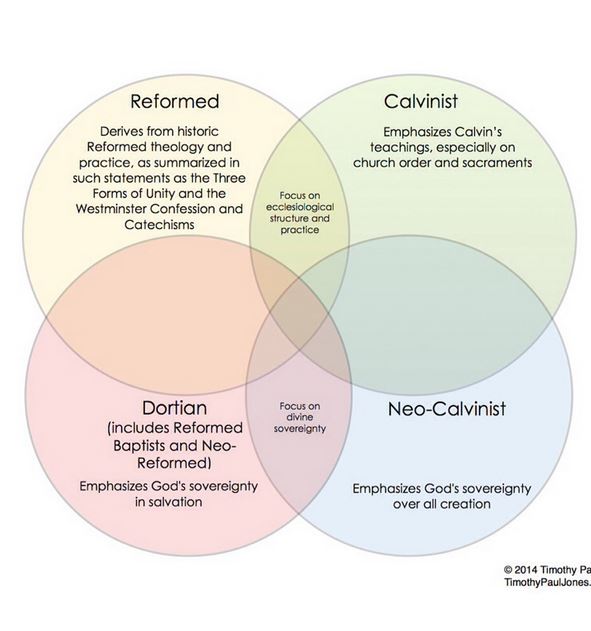
To identify the current Reformation-oriented crowd as “neo-Calvinist” is to confuse a venerable movement that focuses on God’s sovereignty over creation with a current movement that focuses on God’s sovereignty in salvation. The result is a blurred definition that does disservice to persons in each group, especially since some of us do theology in ways that derive in different ways from both movements.
And then he takes issue with my use of the title “Neo-Puriatan” to identify these new Calvinists.
“Neo-Puritan,” perhaps the most misguided of all the recent monikers, would multiply the muddiness even more. Reformed theology was never the primary factor in setting the limits of Puritanism. “Puritan” has historically included not only Christians who profess Reformed soteriology but also at least a few Arminians and—depending on who you ask—perhaps even Quakers.
What Timothy Paul Jones would rather us realize is that this new group of Calvinists are getting their cues from the Synod of Dort. The “Five Points of Calvinism” (Commonly known as “TULIP”) were codified in the canons of Dort, and when this happened, according to Jones, it disconnected the Reformed theology of salvation (i.e., soteriology) from the rest of the Covenant theology associated with the Calvinists. Thus, people could embrace Reformed teachings on soteriology without having to subscribe to the the Confessions and Catechisms of the Reformed traditions. Jones makes a great point when he says,
Of course, the Reformed pastors at the synod of Dort never intended their summary of Reformed soteriology to stand alone. The five points in the canons of Dort were designed to serve as a soteriological clarification, standing as one of the Three Forms of Unity alongside the Belgic Confession and Heidelberg Catechism. That’s why one scholar has declared, “It would be a major error–both historically and doctrinally–if the five points of Calvinism were understood as the sole or even the absolutely primary basis for identifying someone as holding Calvinistic or Reformed faith.”
 But you see, this is exactly what these new Calvinists are doing! They have defined the Gospel solely in terms of soteriology. To these folks, the Gospel is primarily about salvation. What Neo-Calvinists insist is this:
The Gospel is about God’s redemption of his entire Creation. The means by which this is done is through the salvation of people, but the ultimate goal is not to see individuals blissfully worshiping God in heaven. The telos is for God to be the Lord of all creation, with every knee bowed before Him as we live in a new heaven and new earth. It is, quite simply, the consummation of God’s kingdom.
Timothy Paul Jones also offers a working diagram trying to differentiate the different streams of Calvinism that I think is very helpful. Check it out here.
Feature Image by Bob Robinson
Previous Post

June 27, 2014
Satisfaction in Work
Next Post
July 1, 2014 Common Grace for the Common Good
Browse Our Archives
Select a Category arts and entertainment audio/video bible / theology business church college community culture education faith family government/politics leadership media medicine podcast science & tech social sector tech Uncategorized work and calling
Select a Month November 2025 May 2025 October 2024 September 2024 June 2024 May 2024 April 2024 March 2024 February 2024 January 2024 December 2023 August 2023 July 2023 June 2023 May 2023 April 2023 March 2023 February 2023 January 2023 December 2022 October 2022 August 2022 July 2022 June 2022 April 2022 March 2022 February 2022 January 2022 December 2021 November 2021 October 2021 August 2021 June 2021 May 2021 April 2021 March 2021 February 2021 January 2021 December 2020 October 2020 September 2020 August 2020 July 2020 June 2020 May 2020 March 2020 February 2020 January 2020 November 2019 October 2019 September 2019 July 2019 May 2019 April 2019 March 2019 February 2019 January 2019 December 2018 July 2018 May 2018 April 2018 March 2018 July 2017 April 2017 March 2017 February 2017 November 2016 September 2016 August 2016 May 2016 April 2016 March 2016 February 2016 January 2016 December 2015 November 2015 October 2015 September 2015 August 2015 July 2015 June 2015 May 2015 April 2015 January 2015 December 2014 November 2014 October 2014 September 2014 August 2014 July 2014 June 2014 May 2014 April 2014 March 2014 February 2014 January 2014 December 2013 November 2013 October 2013 September 2013 August 2013 July 2013 June 2013 May 2013 April 2013 March 2013 February 2013 January 2013 December 2012 November 2012 October 2012 September 2012 August 2012
Follow Us!
TAKE THE
Religious Wisdom Quiz
To which king did Isaiah deliver the prophecy of 15 extra years of life?
Select your answer to see how you score.
Josiah Ahab Manasseh Hezekiah
Related posts from (re)integrate

Submitting to Husbands? Ephesians with Dr. Lynn Cohick

SCOT MCKNIGHT - Rethinking Revelation (podcast)

Women's Callings in their Work with Joanna Meyer

CHRISTOPHER JH WRIGHT Great Commission and Mission of...
TRENDING AT PATHEOS Careers, Workplace and Religion

St. Francis by Bill Droel Pope Leo XIV declares 2026 as “Year...

Catholics are schooled in the faith by memorizing dogmatic points and lots...

The Good News of Our Human Limitations -...
After another day of trying to meet deadlines and working on projects,...

Quiet Holy Attentiveness (podcast) with Sarah Clarkson
We know that quiet is an essential aspect of the spiritual life,...

Every Vocation Everywhere All At Once
What is a vocation? How does it endure through the years? Can...

I promise this is not going to become a Taylor Swift Studies...
view all Careers, Workplace and Religion blogs
Ad-Free & Subscriber Log-In Subscription Support
- About Us
- 2026 Calendar
- Videos
- Podcasts
- Library of World Religions
- Faith In Media Tracker
- Advertise With Us
- Write for Us
- Privacy Policy
- Terms of Service
- Do Not Sell My Data
- Contact Us
- Radiant Digital
- Manage Newsletter Subscriptions
- Unsubscribe From Notifications
- Sitemap
Copyright 2008-2026, Patheos. All rights reserved.
Subscription Support Ad-Free & Subscriber Log-In
Follow Patheos