
BuddhistCatholicContemplativeEvangelicalGeneral ChristianHinduJewishLatter-day SaintMuslimNew VisionsProgressive Christian
Beliefs
- Buddhist
- Catholic
- Contemplative
- Evangelical
- General Christian
- Hindu
- Jewish
- Latter-day Saint
- More Voices
- Muslim
- New Visions
- Pagan
- Progressive Christian
Topics
- Religion News
- Food and Religion
- Sports and Religion
- Religious Art
- Religious Music and Entertainment
- Religious Events
- History and Religion
- Style and Religion
- Politics and Religion
- Women in Religion
- Recreation Outdoors and Religion
- Business Finance and Religion
- Careers Workplace and Religion
- Education and Religion
- Family Parenting and Religion
- Health Fitness and Religion
- Home and Religion
- Relationships and Religion
- Technology and Religion
- Travel and Religion
Columnists
- Buddhist Columnists
- Business Finance and Religion Columnists
- Careers Workplace and Religion Columnists
- Catholic Columnists
- Contemplative Columnists
- Education and Religion Columnists
- Evangelists Columnists
- Family Parenting and Religion Columnists
- General Christian Columnists
- Health Fitness and Religion Columnists
- Hindu Columnists
- History and Religion Columnists
- Home and Religion Columnists
- Jewish Columnists
- More Voices Columnists
- Latter Day Columnists
- Muslim Columnists
- New Visions Columnists
- Nonreligious Columnists
- Pagan Columnists
- Politics and Religion Columnists
- Progressive Columnists
- Recreation Outdoors and Religion Columnists
- Relationships and Religion Columnists
- Religion News Columnists
- Religious Art Columnists
- Religious Events Columnists
- Religious Music and Entertainment Columnists
- Sports and Religion Columnists
- Style and Religion Columnists
- Technology and Religion Columnists
- Travel and Religion Columnists
- Women in Religion Columnists
Resource Library
- 2026 Calendar
- Library of World Religions
- The 100 Most Holy Places on Earth
- Patheos Answers
- Podcasts
- Videos
- Faith Leaders Database
- Anglican Episcopalian
- Bahai
- Baptist
- Buddhism
- Christianity
- Confucianism
- Eastern Orthodoxy
- Hinduism
- Holiness and Pentecostal
- ISKCON
- Islam
- Judaism
- Lutheran
- Methodist
- The Church of Jesus Christ of Latter-day Saints
- New Age
- Paganism
- Presbytarian and Reformed
- Protestantism
- Religion Behind the Scenes
- Roman Catholic
- Scientology
- Shia Islam
- Sikhism
- Sufism
- Sunni Islam
- Taoism
- Zen
- See all religions
Research Tools
 Ad-Free & Subscriber Log-In Subscription Support
Ad-Free & Subscriber Log-In Subscription Support
Follow Patheos 

- Trending:
- Forgiveness
- |
- Marriage
- |
- Consciousness
- |
- Death Penalty
- |
- Election
- |
- Halloween

- Home
- Careers, Workplace and Religion
- Visual and Creative Arts as Ministry: A Doorway to Transformation
Visual and Creative Arts as Ministry: A Doorway to Transformation
Last updated on: March 24, 2014 at 6:05 pm by Laura Boggess
Visual and Creative Arts as Ministry: A Doorway to Transformation 2014-03-24T18:05:16-04:00 Laura Boggess
Patheos Explore the world's faith through different perspectives on religion and spirituality! Patheos has the views of the prevalent religions and spiritualities of the world.
“The purpose of art and religion are the same,”Kenyon Adams said. I held my breath and leaned onto the edge of my seat. “Transformation.”
I was sitting in a workshop at a conference in the middle of February, one of the oldest faces amidst a sea of college students. It wasn’t the first time I’d attended a breakout session led by Adams, a performing artist and arts advocate currently pursuing graduate studies in theology and art at Yale Divinity School. But this one, entitled Negotiable Spaces: Art, Religion and the Gift of the Liminal, was speaking to my very heart.
“Art creates space,” he said. “Effective art creates a liminal space which is shaped by our sensual engagement …”
That word, “liminal?” It means “threshold.” Adams (who has a very impressive biography) was telling us that art creates a doorway that, when stepped into, takes us to a new place where transformation is more likely to occur. In the material world, Adams explained, we all have “aspirational concerns”—we hope to be something. “In performance,” he said, “we embody these ‘hoped for’ states … if transformation occurs; this is the work of the Spirit.”
Lost
Artists played a critical role in the early history of the Church—their work evoking longing and enhancing worship for many years. However, the Protestant Reformation in the 16th Century and the Enlightenment in the 17th and 18th centuries led to suspicion of emotional and sensual experiences. During this time the Church came to associate art with idolatry and irrational thinking and thus distanced itself from most forms of artistic expression. In doing so, we lost a powerful means of transformation. We have been seeking to recover art for the Kingdom ever since.
In the first of a series of lectures by International Arts Movement (IAM) founder Makoto Fujimura on “Art, Love, and Beauty,” Fujimara discusses why he feels creativity has been “culturally orphaned” and the dangers of this for our world. Fujimura says that one of the things they try to do at IAM is “…wrestle deeply with issues of art, faith, and humanity…” The fourth live broadcast in a series of six is scheduled for March 20, 2014, and is entitled “Art as Prayer”.
IAM and similar organizations have done a lot to encourage the restoration of the relationship between faith and art. The Church today is more comfortable embracing the arts but it remains an important question: How do we carry this liminal space that art creates into the church, into ministry?
Found
This conversation between faith and art has been explored in a series at TheHighCalling,org on visual and creative arts as ministry.
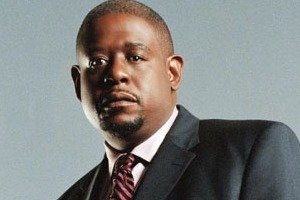
In an interview with Christine Scheller, actor Forest Whitaker talks about how faith influences his work.
It’s more about my connection with other human beings, my connection with God. It is a motivating factor in my work. It is what I do in my acting. The way I try to explore a character is a spiritual journey for me. It’s not an academic or theatrical journey. It’s a journey to try to get to an understanding of my connection with another human being who is also divine in their connection with God.
Whitaker also discusses how his Southern Baptist roots are a factor in the many humanitarian projects he is involved in, stating, “I have a deep connection to that with my family. My father is an elder in the church. He’s a minister, so it’s something that I know. I understand and I think it’s influenced the way I make all my choices.”
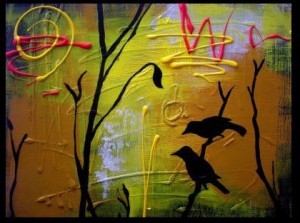
“Birds” by Emily T. Wierenga. Acrylic and gouache on 24″ by 18″ canvas. Prints available at www.emilywierenga.com.
Sometimes art can build a bridge and create opportunities to impact lives in deeply intimate ways. Author, speaker, and artist Emily Wierenga shares a story of how she has uses art to connect with young girls in her community. “Art gives us permission to be human in a way that most humans cannot,” Emily writes. “Because art doesn’t judge. It invites.”
The art we make can be a way of loving—both ourselves and others. What greater ministry is there than love? Writer Diana Trautwein experienced this firsthand during a season of working as a florist.
The more I learned, the more I began to see how this form of visual art added beauty that went beyond the senses. Seeing the lilies and roses, the bouvardia and star aster add color and fragrance to those ceremonies and gatherings, I began to think of my work as an offering of sorts. A gift to the couples, to friends, to family. A ministry.
In one of our daily reflections, Christy Tennant Crispin acknowledges how art brings liturgy to life during worship.
The artists among us know this to be true: words are often not enough. For many, the message only comes alive when it is embodied in a physical form: paint, wood, cement, bronze. Words sometimes pass right over a person’s head, while images are ingrained into minds—and hearts.
 When we look for more conversation on this topic, The International Arts Movement is a wonderful resource. IAM talks with Alfonse Borysewicsz in one of their featured videos about his exhibit “The Beekeeper Paintings.” In the video, the author discusses how faith enriches his art and describes his attempts to restore the Church’s connection to the arts through various projects.
One church that seems to be doing a good job of integrating faith and art is Redeemer Presbyterian Church in New York City. Their Center for Work and Faith is the “cultural renewal arm” of that church. Their vision inspires. Redeemer’s Art’s Ministry has developed a series called In the Living Room that “offers artists discipleship, informal theological training, as well as encouragement towards their vocational callings.” Kenyon Adams served Redeemer Church as the Arts Ministries Coordinator at the Center for Faith and Work prior to pursuing his current graduate studies.
No discussion about liminal spaces would be complete without mention of Laity Lodge, the retreat center in the Texas hill country which is one of several programs comprising Foundations for Laity Renewal . The core purpose of the lodge is to serve God by creating opportunities for people to encounter God for the transformation of daily life, work, and our world. Visual and creative arts have always played a part in the outrageous hospitality the lodge offers. The Cody Center offers gallery and performance spaces, and is flanked by two fully stocked art studios for retreat participants to enjoy. In 2013, artist Roger Feldman completed a permanent, site-specific installation on the grounds of the lodge called Threshold. The installation is “an arrangement of architectural looking components” made from local stone.
The space is offered as a gift to be experienced by guests of Laity Lodge. It stands as a quiet space for contemplation. It is also a perfect space for conversation—with a friend or a small group. The installation’s gently curving lines welcome visitors, inviting them inside and guiding their movement through it. What results is a beautiful place for stillness.” (from the Laity Lodge website)
Transformed
As I sat in that workshop and listened to Kenyon Adams talk about the ways the arts make a space for transformation, I realized how mysterious this process is. Who can name the many ways a heart might be moved? We were created in God’s image, and thus, creating is part of who we are at the deepest level. I wondered, when we are creating or responding to the creation of others, is this then when we are most like our heavenly Creator?
As I pondered all these things, Adams picked up his harmonica and belted out a blues song right there in the classroom. And I felt the Spirit moving among us. I was transformed.
To read more of the articles in the series, go to Visual and Creative Arts as Ministry.
Image by Thomas Hawk. Used with permission. Sourced via Flickr.
Previous Post

March 13, 2014
Helping People in Their Vocations: Pastors Share Their Stories
Next Post
April 10, 2014 Three Questions You Must Answer Before You Die
Browse Our Archives
Select a Category arts and entertainment audio/video bible / theology business church college community culture education faith family government/politics leadership media medicine podcast science & tech social sector tech Uncategorized work and calling
Select a Month November 2025 May 2025 October 2024 September 2024 June 2024 May 2024 April 2024 March 2024 February 2024 January 2024 December 2023 August 2023 July 2023 June 2023 May 2023 April 2023 March 2023 February 2023 January 2023 December 2022 October 2022 August 2022 July 2022 June 2022 April 2022 March 2022 February 2022 January 2022 December 2021 November 2021 October 2021 August 2021 June 2021 May 2021 April 2021 March 2021 February 2021 January 2021 December 2020 October 2020 September 2020 August 2020 July 2020 June 2020 May 2020 March 2020 February 2020 January 2020 November 2019 October 2019 September 2019 July 2019 May 2019 April 2019 March 2019 February 2019 January 2019 December 2018 July 2018 May 2018 April 2018 March 2018 July 2017 April 2017 March 2017 February 2017 November 2016 September 2016 August 2016 May 2016 April 2016 March 2016 February 2016 January 2016 December 2015 November 2015 October 2015 September 2015 August 2015 July 2015 June 2015 May 2015 April 2015 January 2015 December 2014 November 2014 October 2014 September 2014 August 2014 July 2014 June 2014 May 2014 April 2014 March 2014 February 2014 January 2014 December 2013 November 2013 October 2013 September 2013 August 2013 July 2013 June 2013 May 2013 April 2013 March 2013 February 2013 January 2013 December 2012 November 2012 October 2012 September 2012 August 2012
Follow Us!
TAKE THE
Religious Wisdom Quiz
What did the Israelites put on their doorposts during Passover?
Select your answer to see how you score.
Olive oil Incense Lamb’s blood Gold dust
Related posts from (re)integrate
JOSH LARSEN - Enjoying Movies at a Deeper...
RICHARD VANCE GOODWIN - Experiencing God at the...

Are "Intellectual Properties" Ruining Movies?
Documentary Released on the Asbury University Revival
TRENDING AT PATHEOS Careers, Workplace and Religion

St. Francis by Bill Droel Pope Leo XIV declares 2026 as “Year...

Catholics are schooled in the faith by memorizing dogmatic points and lots...

The Good News of Our Human Limitations -...
After another day of trying to meet deadlines and working on projects,...

Quiet Holy Attentiveness (podcast) with Sarah Clarkson
We know that quiet is an essential aspect of the spiritual life,...

Every Vocation Everywhere All At Once
What is a vocation? How does it endure through the years? Can...

I promise this is not going to become a Taylor Swift Studies...
view all Careers, Workplace and Religion blogs
Ad-Free & Subscriber Log-In Subscription Support
- About Us
- 2026 Calendar
- Videos
- Podcasts
- Library of World Religions
- Faith In Media Tracker
- Advertise With Us
- Write for Us
- Privacy Policy
- Terms of Service
- Do Not Sell My Data
- Contact Us
- Radiant Digital
- Manage Newsletter Subscriptions
- Unsubscribe From Notifications
- Sitemap
Copyright 2008-2026, Patheos. All rights reserved.
Subscription Support Ad-Free & Subscriber Log-In
Follow Patheos