
BuddhistCatholicContemplativeEvangelicalGeneral ChristianHinduJewishLatter-day SaintMuslimNew VisionsProgressive Christian
Beliefs
- Buddhist
- Catholic
- Contemplative
- Evangelical
- General Christian
- Hindu
- Jewish
- Latter-day Saint
- More Voices
- Muslim
- New Visions
- Pagan
- Progressive Christian
Topics
- Religion News
- Food and Religion
- Sports and Religion
- Religious Art
- Religious Music and Entertainment
- Religious Events
- History and Religion
- Style and Religion
- Politics and Religion
- Women in Religion
- Recreation Outdoors and Religion
- Business Finance and Religion
- Careers Workplace and Religion
- Education and Religion
- Family Parenting and Religion
- Health Fitness and Religion
- Home and Religion
- Relationships and Religion
- Technology and Religion
- Travel and Religion
Columnists
- Buddhist Columnists
- Business Finance and Religion Columnists
- Careers Workplace and Religion Columnists
- Catholic Columnists
- Contemplative Columnists
- Education and Religion Columnists
- Evangelists Columnists
- Family Parenting and Religion Columnists
- General Christian Columnists
- Health Fitness and Religion Columnists
- Hindu Columnists
- History and Religion Columnists
- Home and Religion Columnists
- Jewish Columnists
- More Voices Columnists
- Latter Day Columnists
- Muslim Columnists
- New Visions Columnists
- Nonreligious Columnists
- Pagan Columnists
- Politics and Religion Columnists
- Progressive Columnists
- Recreation Outdoors and Religion Columnists
- Relationships and Religion Columnists
- Religion News Columnists
- Religious Art Columnists
- Religious Events Columnists
- Religious Music and Entertainment Columnists
- Sports and Religion Columnists
- Style and Religion Columnists
- Technology and Religion Columnists
- Travel and Religion Columnists
- Women in Religion Columnists
Resource Library
- 2026 Calendar
- Library of World Religions
- The 100 Most Holy Places on Earth
- Patheos Answers
- Podcasts
- Videos
- Faith Leaders Database
- Anglican Episcopalian
- Bahai
- Baptist
- Buddhism
- Christianity
- Confucianism
- Eastern Orthodoxy
- Hinduism
- Holiness and Pentecostal
- ISKCON
- Islam
- Judaism
- Lutheran
- Methodist
- The Church of Jesus Christ of Latter-day Saints
- New Age
- Paganism
- Presbytarian and Reformed
- Protestantism
- Religion Behind the Scenes
- Roman Catholic
- Scientology
- Shia Islam
- Sikhism
- Sufism
- Sunni Islam
- Taoism
- Zen
- See all religions
Research Tools
 Ad-Free & Subscriber Log-In Subscription Support
Ad-Free & Subscriber Log-In Subscription Support
Follow Patheos 

- Trending:
- Forgiveness
- |
- Marriage
- |
- Consciousness
- |
- Death Penalty
- |
- Election
- |
- Halloween

- Home
- Careers, Workplace and Religion
- The Economics of Mutuality
The Economics of Mutuality
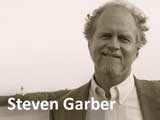
Last updated on: June 4, 2013 at 11:51 am by Dr. Steven Garber
The Economics of Mutuality 2013-06-04T11:51:00-04:00 Dr. Steven Garber
Patheos Explore the world's faith through different perspectives on religion and spirituality! Patheos has the views of the prevalent religions and spiritualities of the world.
Growing out of a conversation with business executives who have responsibility for a global corporation whose products everyone on earth enjoys, the words are becoming flesh: “The economics of mutuality.” I recently flew to Paris to take part in several days of conversation about the whys and whats of what this might look like.
At its core “the economics of mutuality” is a critique of the hyper-individualism and corporate myopia of Milton Friedman’s University of Chicago “school,” which is summed up by these words, “The sole purpose of business is to maximize shareholder profit.” Most of the time in most places that is the way of the world. And with that rule, some do make fortunes, making a “killing” as they say, and the rest of us have to pay for years and years to come. Think of the sub-prime mortgage scandal that brought down Wall Street and the world five years ago. A few became rich, but the rest of us will pay for their gain, perhaps for generations to come. Masters of the universe they are, to remember Tom Wolfe’s image in “Bonfire of the Vanities,” but at their worst they are horribly myopic, making economic decisions that are against history and humanity. Very importantly, the economics of mutuality is principally an argument for the way business ought to be, for a reframing of the very meaning of economic life.
My assignment was to speak on three words: vocation, meaning and ethics, set within a globalizing economy. This is not an ivory-tower, “wouldn’t it be nice if we were all nice?” conversation. Literally billions of dollars and scores of thousands of employees are stake. This is not a new way to be philanthropic. Instead there is an honest desire to sustain profitability for the long-haul, for generations, and so there is an honest desire to reframe the definition of “the bottom line.” Simply said, to keep making money there has to be an acknowledgement of a more complex bottom line, one that remembers that people and the planet must be written into the calculus, if profit is to be sustained.
Because it is France, I decided to draw Jean Valjean into the presentation. In a profound way this hero from Victor Hugo’s “Les Miserables” embodies “vocation, meaning and ethics.” The words become flesh in his life. After his encounter with the bishop’s amazing grace, he begins to find a new way to understand his life, and the life of the world around him. Over the next years his whole community is transformed. Not first of all by his philanthropy, but by his visionary leadership of a business that offers opportunity and employment, and whose product serves the marketplace. Valjean becomes a remarkably kind man with eyes to see the needs of those in his community, but that is as a businessman with a strong sense of vocation grounded in an understanding of the meaning of life manifest in an ethic that has consequence for him and his world.
So my lecture, at their request, explored the nexus of these words: vocation, ethics and meaning. These concepts are intended to be as integral to their deliberations as the professor yesterday from the Harvard Business School who talked about the way healthy organizations work. No final tension between principle and practice, between beliefs about the way it ought to be done, and the way it is being worked out. That is the hope.
Can business be done differently? Could we in fact rethink the meaning of “the bottom line”? Is it possible to create a business practice where there is no final tension between a principled vision and the pragmatics of the marketplace?
Even being with people who care enough to think hard about these questions is a gift to me. Simply said, it keeps my heart alive.
Image by Mathew Knott. Used with permission. Sourced via Flickr.
Previous Post

May 30, 2013
Subversive for the Common Good: Seek the Welfare of the City
Next Post
June 14, 2013 From Ideologies to Art: Why Work Matters
Browse Our Archives
Select a Category arts and entertainment audio/video bible / theology business church college community culture education faith family government/politics leadership media medicine podcast science & tech social sector tech Uncategorized work and calling
Select a Month November 2025 May 2025 October 2024 September 2024 June 2024 May 2024 April 2024 March 2024 February 2024 January 2024 December 2023 August 2023 July 2023 June 2023 May 2023 April 2023 March 2023 February 2023 January 2023 December 2022 October 2022 August 2022 July 2022 June 2022 April 2022 March 2022 February 2022 January 2022 December 2021 November 2021 October 2021 August 2021 June 2021 May 2021 April 2021 March 2021 February 2021 January 2021 December 2020 October 2020 September 2020 August 2020 July 2020 June 2020 May 2020 March 2020 February 2020 January 2020 November 2019 October 2019 September 2019 July 2019 May 2019 April 2019 March 2019 February 2019 January 2019 December 2018 July 2018 May 2018 April 2018 March 2018 July 2017 April 2017 March 2017 February 2017 November 2016 September 2016 August 2016 May 2016 April 2016 March 2016 February 2016 January 2016 December 2015 November 2015 October 2015 September 2015 August 2015 July 2015 June 2015 May 2015 April 2015 January 2015 December 2014 November 2014 October 2014 September 2014 August 2014 July 2014 June 2014 May 2014 April 2014 March 2014 February 2014 January 2014 December 2013 November 2013 October 2013 September 2013 August 2013 July 2013 June 2013 May 2013 April 2013 March 2013 February 2013 January 2013 December 2012 November 2012 October 2012 September 2012 August 2012
Follow Us!
TAKE THE
Religious Wisdom Quiz
Who said, "For where two or three gather in my name, there am I with them"?
Select your answer to see how you score.
Paul Peter Jesus John
Related posts from (re)integrate

Becoming a Wise Leader with ULI CHI

Women's Callings in their Work with Joanna Meyer

Reintegrate Faith and Science - with John Van...
How to Reintegrate Faith and Vocations with Logos...
TRENDING AT PATHEOS Careers, Workplace and Religion

St. Francis by Bill Droel Pope Leo XIV declares 2026 as “Year...

Catholics are schooled in the faith by memorizing dogmatic points and lots...

The Good News of Our Human Limitations -...
After another day of trying to meet deadlines and working on projects,...

Quiet Holy Attentiveness (podcast) with Sarah Clarkson
We know that quiet is an essential aspect of the spiritual life,...

Every Vocation Everywhere All At Once
What is a vocation? How does it endure through the years? Can...

I promise this is not going to become a Taylor Swift Studies...
view all Careers, Workplace and Religion blogs
Ad-Free & Subscriber Log-In Subscription Support
- About Us
- 2026 Calendar
- Videos
- Podcasts
- Library of World Religions
- Faith In Media Tracker
- Advertise With Us
- Write for Us
- Privacy Policy
- Terms of Service
- Do Not Sell My Data
- Contact Us
- Radiant Digital
- Manage Newsletter Subscriptions
- Unsubscribe From Notifications
- Sitemap
Copyright 2008-2026, Patheos. All rights reserved.
Subscription Support Ad-Free & Subscriber Log-In
Follow Patheos