
BuddhistCatholicContemplativeEvangelicalGeneral ChristianHinduJewishLatter-day SaintMuslimNew VisionsProgressive Christian
Beliefs
- Buddhist
- Catholic
- Contemplative
- Evangelical
- General Christian
- Hindu
- Jewish
- Latter-day Saint
- More Voices
- Muslim
- New Visions
- Pagan
- Progressive Christian
Topics
- Religion News
- Food and Religion
- Sports and Religion
- Religious Art
- Religious Music and Entertainment
- Religious Events
- History and Religion
- Style and Religion
- Politics and Religion
- Women in Religion
- Recreation Outdoors and Religion
- Business Finance and Religion
- Careers Workplace and Religion
- Education and Religion
- Family Parenting and Religion
- Health Fitness and Religion
- Home and Religion
- Relationships and Religion
- Technology and Religion
- Travel and Religion
Columnists
- Buddhist Columnists
- Business Finance and Religion Columnists
- Careers Workplace and Religion Columnists
- Catholic Columnists
- Contemplative Columnists
- Education and Religion Columnists
- Evangelists Columnists
- Family Parenting and Religion Columnists
- General Christian Columnists
- Health Fitness and Religion Columnists
- Hindu Columnists
- History and Religion Columnists
- Home and Religion Columnists
- Jewish Columnists
- More Voices Columnists
- Latter Day Columnists
- Muslim Columnists
- New Visions Columnists
- Nonreligious Columnists
- Pagan Columnists
- Politics and Religion Columnists
- Progressive Columnists
- Recreation Outdoors and Religion Columnists
- Relationships and Religion Columnists
- Religion News Columnists
- Religious Art Columnists
- Religious Events Columnists
- Religious Music and Entertainment Columnists
- Sports and Religion Columnists
- Style and Religion Columnists
- Technology and Religion Columnists
- Travel and Religion Columnists
- Women in Religion Columnists
Resource Library
- 2026 Calendar
- Library of World Religions
- The 100 Most Holy Places on Earth
- Patheos Answers
- Podcasts
- Videos
- Faith Leaders Database
- Anglican Episcopalian
- Bahai
- Baptist
- Buddhism
- Christianity
- Confucianism
- Eastern Orthodoxy
- Hinduism
- Holiness and Pentecostal
- ISKCON
- Islam
- Judaism
- Lutheran
- Methodist
- The Church of Jesus Christ of Latter-day Saints
- New Age
- Paganism
- Presbytarian and Reformed
- Protestantism
- Religion Behind the Scenes
- Roman Catholic
- Scientology
- Shia Islam
- Sikhism
- Sufism
- Sunni Islam
- Taoism
- Zen
- See all religions
Research Tools
 Ad-Free & Subscriber Log-In Subscription Support
Ad-Free & Subscriber Log-In Subscription Support
Follow Patheos 

- Trending:
- Forgiveness
- |
- Marriage
- |
- Consciousness
- |
- Death Penalty
- |
- Election
- |
- Halloween

- Home
- Careers, Workplace and Religion
- The People of God or The Corporation of God?
The People of God or The Corporation of God?
Last updated on: November 28, 2012 at 9:44 am by Bob Robinson
The People of God or The Corporation of God? 2012-11-28T09:44:19-04:00 Bob Robinson
Patheos Explore the world's faith through different perspectives on religion and spirituality! Patheos has the views of the prevalent religions and spiritualities of the world.
Is the local church an institution that does the mission of God, or is it the gathering of God’s people so that they can be equipped and empowered to do the mission of God?
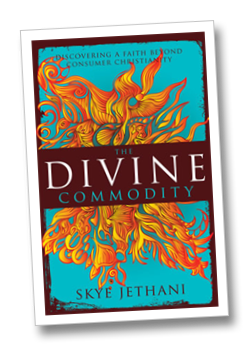 Skye Jethani, in his excellent book The Divine Commodity: Discovering a Faith Beyond Consumer Christianity, exposes a damaging trend in our day.
We treat corporations like they are people. This is due to the Supreme Court decision, Santa Clara County v. Southern Pacific Railroad, which applied the Fourteenth Amendment to corporations, granting them the right to be recognized as persons. As Skye Jethani writes,
“Ironically, the same law that ensured human beings would no longer have legal status as property was used to grant property the legal status of human beings” (p. 90).
The Fourteenth Amendment was the post-Civil War amendment (adopted in 1868) that overruled the Supreme Court’s ruling in Dred Scott v. Sandford (1857) that had held that black people could not be citizens of the United States.
In 1886, this amendment was applied to corporations.
Jethani then connects the dots between that decision and how we now emotionally, psychologically, and theologically convey personhood to institutions. Because of branding, we don’t just buy oats, we buy from “a smiling Quaker man;” we don’t just drive a car, we shout, “I love what you do for me, Toyota!”
“…as if the carmaker was a benevolent individual and not 300,000 anonymous employees organized into a profit-driven multinational institution. One hundred years of relating to personified corporations has caused a profound shift in the way we live” (p. 91).
Jethani connect the dots all the way to the institutional church, which we have personified like other corporations. We therefore believe we are supposed to have a relationship with the institution of the church rather than the people of the church.
“As such, with all sincerity, we can say, ‘“I love what you do for me, Faith Community!’ The personification of institutions in our culture means the institutional church, rather than the flesh-and-blood people of God, has become the vehicle of God’s mission in the world.”
Thus, those who lead the church as pastors start to believe that their job is to create a corporate brand, a church institution that people will be loyal to, that will have a positive reputation in the community, that our members will invite their friends to.
We develop vision statements, create programs, and we use slick marketing tools (including contemporary logos), all because we believe that the mission of God is to get people to “buy in” with our church, devote themselves to our programs, and in so doing, they will become deeper disciples of Jesus Christ.
But as soon as we start believing that the goal is to sell people warm feelings about the church, then we are way off the mark of God’s true mission for his church.
The mission of God is the redemption of His creation. In other words, God is ushering in His Kingdom. The institutional church is not the Kingdom of God, but rather the witnesses to the Kingdom of God.
Instead of placing the emphasis on marketing the church, the church should be equipping its people to be the witnesses of the Kingdom. It is the “flesh-and-blood people of God” that the Spirit indwells in order to be the incarnational-missional instrument for the Kingdom.
I pray that those who lead our local churches will embrace the vision that the mission of God is accomplished through God’s people living fully into their callings (their vocations) in such a way that they impact the culture and provide a witness to the Kingdom of God. I pray that the local church will re-imagine discipleship in such a way that it equips and empowers them to be the witness of the Kingdom of God in their workplace, their communities, their neighborhoods, and their families.
Previous Post

November 27, 2012
The Hopes and Fears of all the years... for Israel and Palestine.
Next Post
November 29, 2012 The Christian Life is a Peach, Not an Orange
Browse Our Archives
Select a Category arts and entertainment audio/video bible / theology business church college community culture education faith family government/politics leadership media medicine podcast science & tech social sector tech Uncategorized work and calling
Select a Month November 2025 May 2025 October 2024 September 2024 June 2024 May 2024 April 2024 March 2024 February 2024 January 2024 December 2023 August 2023 July 2023 June 2023 May 2023 April 2023 March 2023 February 2023 January 2023 December 2022 October 2022 August 2022 July 2022 June 2022 April 2022 March 2022 February 2022 January 2022 December 2021 November 2021 October 2021 August 2021 June 2021 May 2021 April 2021 March 2021 February 2021 January 2021 December 2020 October 2020 September 2020 August 2020 July 2020 June 2020 May 2020 March 2020 February 2020 January 2020 November 2019 October 2019 September 2019 July 2019 May 2019 April 2019 March 2019 February 2019 January 2019 December 2018 July 2018 May 2018 April 2018 March 2018 July 2017 April 2017 March 2017 February 2017 November 2016 September 2016 August 2016 May 2016 April 2016 March 2016 February 2016 January 2016 December 2015 November 2015 October 2015 September 2015 August 2015 July 2015 June 2015 May 2015 April 2015 January 2015 December 2014 November 2014 October 2014 September 2014 August 2014 July 2014 June 2014 May 2014 April 2014 March 2014 February 2014 January 2014 December 2013 November 2013 October 2013 September 2013 August 2013 July 2013 June 2013 May 2013 April 2013 March 2013 February 2013 January 2013 December 2012 November 2012 October 2012 September 2012 August 2012
Follow Us!
TAKE THE
Religious Wisdom Quiz
What is the name of the lake into which the beast and false prophet are thrown?
Select your answer to see how you score.
The outer darkness The abyss The lake of burning sulfur (lake of fire) Gehenna
Related posts from (re)integrate

Becoming a Wise Leader with ULI CHI

Submitting to Husbands? Ephesians with Dr. Lynn Cohick

SCOT MCKNIGHT - Rethinking Revelation (podcast)

Women's Callings in their Work with Joanna Meyer
TRENDING AT PATHEOS Careers, Workplace and Religion

St. Francis by Bill Droel Pope Leo XIV declares 2026 as “Year...

Catholics are schooled in the faith by memorizing dogmatic points and lots...

The Good News of Our Human Limitations -...
After another day of trying to meet deadlines and working on projects,...

Quiet Holy Attentiveness (podcast) with Sarah Clarkson
We know that quiet is an essential aspect of the spiritual life,...

Every Vocation Everywhere All At Once
What is a vocation? How does it endure through the years? Can...

I promise this is not going to become a Taylor Swift Studies...
view all Careers, Workplace and Religion blogs
Ad-Free & Subscriber Log-In Subscription Support
- About Us
- 2026 Calendar
- Videos
- Podcasts
- Library of World Religions
- Faith In Media Tracker
- Advertise With Us
- Write for Us
- Privacy Policy
- Terms of Service
- Do Not Sell My Data
- Contact Us
- Radiant Digital
- Manage Newsletter Subscriptions
- Unsubscribe From Notifications
- Sitemap
Copyright 2008-2026, Patheos. All rights reserved.
Subscription Support Ad-Free & Subscriber Log-In
Follow Patheos