
BuddhistCatholicContemplativeEvangelicalGeneral ChristianHinduJewishLatter-day SaintMuslimNew VisionsProgressive Christian
Beliefs
- Buddhist
- Catholic
- Contemplative
- Evangelical
- General Christian
- Hindu
- Jewish
- Latter-day Saint
- More Voices
- Muslim
- New Visions
- Pagan
- Progressive Christian
Topics
- Religion News
- Food and Religion
- Sports and Religion
- Religious Art
- Religious Music and Entertainment
- Religious Events
- History and Religion
- Style and Religion
- Politics and Religion
- Women in Religion
- Recreation Outdoors and Religion
- Business Finance and Religion
- Careers Workplace and Religion
- Education and Religion
- Family Parenting and Religion
- Health Fitness and Religion
- Home and Religion
- Relationships and Religion
- Technology and Religion
- Travel and Religion
Columnists
- Buddhist Columnists
- Business Finance and Religion Columnists
- Careers Workplace and Religion Columnists
- Catholic Columnists
- Contemplative Columnists
- Education and Religion Columnists
- Evangelists Columnists
- Family Parenting and Religion Columnists
- General Christian Columnists
- Health Fitness and Religion Columnists
- Hindu Columnists
- History and Religion Columnists
- Home and Religion Columnists
- Jewish Columnists
- More Voices Columnists
- Latter Day Columnists
- Muslim Columnists
- New Visions Columnists
- Nonreligious Columnists
- Pagan Columnists
- Politics and Religion Columnists
- Progressive Columnists
- Recreation Outdoors and Religion Columnists
- Relationships and Religion Columnists
- Religion News Columnists
- Religious Art Columnists
- Religious Events Columnists
- Religious Music and Entertainment Columnists
- Sports and Religion Columnists
- Style and Religion Columnists
- Technology and Religion Columnists
- Travel and Religion Columnists
- Women in Religion Columnists
Resource Library
- 2026 Calendar
- Library of World Religions
- The 100 Most Holy Places on Earth
- Patheos Answers
- Podcasts
- Videos
- Faith Leaders Database
- Anglican Episcopalian
- Bahai
- Baptist
- Buddhism
- Christianity
- Confucianism
- Eastern Orthodoxy
- Hinduism
- Holiness and Pentecostal
- ISKCON
- Islam
- Judaism
- Lutheran
- Methodist
- The Church of Jesus Christ of Latter-day Saints
- New Age
- Paganism
- Presbytarian and Reformed
- Protestantism
- Religion Behind the Scenes
- Roman Catholic
- Scientology
- Shia Islam
- Sikhism
- Sufism
- Sunni Islam
- Taoism
- Zen
- See all religions
Research Tools
 Ad-Free & Subscriber Log-In Subscription Support
Ad-Free & Subscriber Log-In Subscription Support
Follow Patheos 

- Trending:
- Forgiveness
- |
- Marriage
- |
- Consciousness
- |
- Death Penalty
- |
- Election
- |
- Halloween

- Home
- Careers, Workplace and Religion
- Can We Affirm the Good, True and Beautiful in the Art of Unbelievers?
Can We Affirm the Good, True and Beautiful in the Art of Unbelievers?
Last updated on: August 15, 2012 at 3:43 pm by Bob Robinson
Can We Affirm the Good, True and Beautiful in the Art of Unbelievers? 2012-08-15T15:43:30-04:00 Bob Robinson
Patheos Explore the world's faith through different perspectives on religion and spirituality! Patheos has the views of the prevalent religions and spiritualities of the world.
In the amazing film Amadeus, the Viennese court composer Antonio Salieri becomes spiritually hardened because he cannot understand how God would allow the obviously pagan Wolfgang Amadeus Mozart to be so incredibly talented while Salieri flounders as just a mediocre composer. There is a moment where he looks at the sheet music from Mozart and is astonished:
Was Salieri hearing the voice of God through the music of Mozart? Isn’t this impossible, since “those who are in the realm of the flesh cannot please God” (Romans 8:8)? Is there not a clear and distinct differentiation between that which we find in the natural, pagan culture and that which we find in the spiritual, redeemed community of the church?
The starting place for answering such questions is found in rejecting the non-biblical presupposition underlying them. We must reject the notion that God is only Lord of the “sacred” spheres of “spiritual” activities and not over every aspect of human life. Rather, we must affirm that God created a *good earth,*and no matter how much sin has been introduced into this creation, it is still God’s good creation. God created humanity as divine image-bearers, and no matter how depraved the human heart has become or how unjust and against shalom humanity makes the world’s systems, that image of God remains in us. Redemption in Christ is just that: *RE–*demption, RE-storing, *RE–*creation of what God originally made. God is not just interested in saving souls, but in reconciling “all things”–that is, everything that he has created—back to himself:
15 The Son is the image of the invisible God, the firstborn over all creation. 16 For in him all things were created: things in heaven and on earth, visible and invisible, whether thrones or powers or rulers or authorities; all things have been created through him and for him. 17 He is before all things, and in him all things hold together. 18 And he is the head of the body, the church; he is the beginning and the firstborn from among the dead, so that in everything he might have the supremacy. 19 For God was pleased to have all his fullness dwell in him, 20and through him to reconcile to himself all things, whether things on earth or things in heaven, by making peace through his blood, shed on the cross. (Colossians 1:15-20, NIV)
According to this passage, the shed blood of Christ on the cross is not merely an atoning sacrifice for the salvation of individual human souls, but the action of the creator God reaching into his creation and proclaiming with a loud voice, “Mine!” (as Abraham Kuyper famously insisted that Jesus proclaims).
Kuyper, in his influential essay on “Common Grace,” wrote,
“[W]e have no right to conceptualize the image of the Mediator in ways other than Scripture presents it. People fall into one-sidedness in the opposite direction if, reflecting on the Christ, they think exclusively of the blood shed in atonement and refuse to take account of the significance of Christ for the body, for the visible world, and for the outcome of world history.
Consider carefully: by taking this tack you run the danger of isolating Christ for your soul and you view life in and for the world as something that exists alongside your Christian religion, not controlled by it. Then the word ‘Christian’ seems appropriate to you only when it concerns certain matters of faith or things directly connected with the faith—your church, missions, and the like—but all the remaining spheres of life fall for you outside the Christ
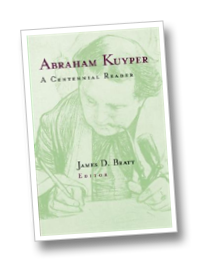
This way of thinking results in your living in two distinct circles of thought: in the very circumscribed circle of your soul’s salvation on the one hand, and in the spacious, life-encompassing sphere of the world on the other. Your Christ is at home in the former but not in the latter. From that opposition and false proportionality springs all narrow-mindedness, all inner unreality, if not all sanctimoniousness and powerlessness.” (James D. Bratt, ed., Abraham Kuyper: A Centennial Reader (Grand Rapids, MI: Eerdmans, 1998), p. 172)
Is it theologically possible to believe that God is pleased by the artistic endeavors of unbelievers? Richard Mouw states that he believes that God enjoys the good, true, and beautiful actions of unbelievers for their own sakes,
“When an unbelieving poet makes use of an apt metaphor, or when a foul-mouthed major league outfielder leaps high into the air to make a stunning catch, we can think of God as enjoying the event without necessarily approving of anything in the agents involved – just as wemight give high marks to a rhetorical flourish by a politician whose views on public policy we despise.” (Richard Mouw, He Shines in all that’s Fair, p. 37)
This is what theologians have called “Common Grace.” Wayne Grudem provides this definition: “Common grace is the grace of God by which he gives people innumerable blessings that are not part of salvation. The word common here means something that is common to all people and is not restricted to believers or to the elect only.” (Grudem, Systematic Theology, p. 657)
How many of our churches teach their congregations to embrace “Common Grace” as a wonderful gift from God for our good and for his glory?
Previous Post

November 6, 2025
The Good News of Our Human Limitations - Kelly Kapic
Next Post

August 15, 2012 The Seven Deadly Sins of Evangelicals and Politics
Browse Our Archives
Select a Category arts and entertainment audio/video bible / theology business church college community culture education faith family government/politics leadership media medicine podcast science & tech social sector tech Uncategorized work and calling
Select a Month November 2025 May 2025 October 2024 September 2024 June 2024 May 2024 April 2024 March 2024 February 2024 January 2024 December 2023 August 2023 July 2023 June 2023 May 2023 April 2023 March 2023 February 2023 January 2023 December 2022 October 2022 August 2022 July 2022 June 2022 April 2022 March 2022 February 2022 January 2022 December 2021 November 2021 October 2021 August 2021 June 2021 May 2021 April 2021 March 2021 February 2021 January 2021 December 2020 October 2020 September 2020 August 2020 July 2020 June 2020 May 2020 March 2020 February 2020 January 2020 November 2019 October 2019 September 2019 July 2019 May 2019 April 2019 March 2019 February 2019 January 2019 December 2018 July 2018 May 2018 April 2018 March 2018 July 2017 April 2017 March 2017 February 2017 November 2016 September 2016 August 2016 May 2016 April 2016 March 2016 February 2016 January 2016 December 2015 November 2015 October 2015 September 2015 August 2015 July 2015 June 2015 May 2015 April 2015 January 2015 December 2014 November 2014 October 2014 September 2014 August 2014 July 2014 June 2014 May 2014 April 2014 March 2014 February 2014 January 2014 December 2013 November 2013 October 2013 September 2013 August 2013 July 2013 June 2013 May 2013 April 2013 March 2013 February 2013 January 2013 December 2012 November 2012 October 2012 September 2012 August 2012
Follow Us!
TAKE THE
Religious Wisdom Quiz
True or False: The Gospel of John records seven miracles (signs) of Jesus.
Select your answer to see how you score.
TRUE FALSE
Related posts from (re)integrate

JOSH LARSEN - Enjoying Movies at a Deeper...

RICHARD VANCE GOODWIN - Experiencing God at the...

Are "Intellectual Properties" Ruining Movies?

Our Creativity is a Key to our Spirituality...
TRENDING AT PATHEOS Careers, Workplace and Religion

St. Francis by Bill Droel Pope Leo XIV declares 2026 as “Year...

Catholics are schooled in the faith by memorizing dogmatic points and lots...
The Good News of Our Human Limitations -...
After another day of trying to meet deadlines and working on projects,...

Quiet Holy Attentiveness (podcast) with Sarah Clarkson
We know that quiet is an essential aspect of the spiritual life,...

Every Vocation Everywhere All At Once
What is a vocation? How does it endure through the years? Can...

I promise this is not going to become a Taylor Swift Studies...
view all Careers, Workplace and Religion blogs
Ad-Free & Subscriber Log-In Subscription Support
- About Us
- 2026 Calendar
- Videos
- Podcasts
- Library of World Religions
- Faith In Media Tracker
- Advertise With Us
- Write for Us
- Privacy Policy
- Terms of Service
- Do Not Sell My Data
- Contact Us
- Radiant Digital
- Manage Newsletter Subscriptions
- Unsubscribe From Notifications
- Sitemap
Copyright 2008-2026, Patheos. All rights reserved.
Subscription Support Ad-Free & Subscriber Log-In
Follow Patheos