
BuddhistCatholicContemplativeEvangelicalGeneral ChristianHinduJewishLatter-day SaintMuslimNew VisionsProgressive Christian
Beliefs
- Buddhist
- Catholic
- Contemplative
- Evangelical
- General Christian
- Hindu
- Jewish
- Latter-day Saint
- More Voices
- Muslim
- New Visions
- Pagan
- Progressive Christian
Topics
- Religion News
- Food and Religion
- Sports and Religion
- Religious Art
- Religious Music and Entertainment
- Religious Events
- History and Religion
- Style and Religion
- Politics and Religion
- Women in Religion
- Recreation Outdoors and Religion
- Business Finance and Religion
- Careers Workplace and Religion
- Education and Religion
- Family Parenting and Religion
- Health Fitness and Religion
- Home and Religion
- Relationships and Religion
- Technology and Religion
- Travel and Religion
Columnists
- Buddhist Columnists
- Business Finance and Religion Columnists
- Careers Workplace and Religion Columnists
- Catholic Columnists
- Contemplative Columnists
- Education and Religion Columnists
- Evangelists Columnists
- Family Parenting and Religion Columnists
- General Christian Columnists
- Health Fitness and Religion Columnists
- Hindu Columnists
- History and Religion Columnists
- Home and Religion Columnists
- Jewish Columnists
- More Voices Columnists
- Latter Day Columnists
- Muslim Columnists
- New Visions Columnists
- Nonreligious Columnists
- Pagan Columnists
- Politics and Religion Columnists
- Progressive Columnists
- Recreation Outdoors and Religion Columnists
- Relationships and Religion Columnists
- Religion News Columnists
- Religious Art Columnists
- Religious Events Columnists
- Religious Music and Entertainment Columnists
- Sports and Religion Columnists
- Style and Religion Columnists
- Technology and Religion Columnists
- Travel and Religion Columnists
- Women in Religion Columnists
Resource Library
- 2026 Calendar
- Library of World Religions
- The 100 Most Holy Places on Earth
- Patheos Answers
- Podcasts
- Videos
- Faith Leaders Database
- Anglican Episcopalian
- Bahai
- Baptist
- Buddhism
- Christianity
- Confucianism
- Eastern Orthodoxy
- Hinduism
- Holiness and Pentecostal
- ISKCON
- Islam
- Judaism
- Lutheran
- Methodist
- The Church of Jesus Christ of Latter-day Saints
- New Age
- Paganism
- Presbytarian and Reformed
- Protestantism
- Religion Behind the Scenes
- Roman Catholic
- Scientology
- Shia Islam
- Sikhism
- Sufism
- Sunni Islam
- Taoism
- Zen
- See all religions
Research Tools
 Ad-Free & Subscriber Log-In Subscription Support
Follow Patheos 

- Trending:
- Advent
- |
- Forgiveness
- |
- Thanksgiving
- |
- Election
- |
- Seasonal Holidays
- |
- Marriage

- Home
- Progressive Christian
- Politics and Religion
- Religious Trauma: It’s a Real Thing!
Religious Trauma: It’s a Real Thing!
Last updated on: January 28, 2023 at 9:02 am by Daniel Henderson
Religious Trauma: It’s a Real Thing! 2023-01-28T09:02:28-06:00 Daniel Henderson
Patheos Explore the world's faith through different perspectives on religion and spirituality! Patheos has the views of the prevalent religions and spiritualities of the world.

Public reading from “Confessions of a Recovering Evangelical.” Daniel Henderson is the author.
A while ago I was at a Bookstore in Des Moines and did a public book reading and signing of my recently published book, “Confessions of a Recovering Evangelical.” It was a great afternoon of meeting former acquaintances, friends, even some former students, and making new friends. The place was full. The bookstore told me that the copies I gave them a few weeks before sold out quickly, so they wanted more. Apparently the title which includes “Recovering Evangelical” has struck a chord with many people. I am finding out just how many.
Religious Trauma is Everywhere
I had conversations with several of the people who came that I didn’t know. There were former Catholics, Holiness church members, Baptists, and an assortment of other eclectic religious affiliations. The common theme that emerged from the audience is that just about everyone was looking for a way out of their religious toxicity or had already left and were on their own journey to spirituality. Some were excited about the steps they are taking and others are more tepid and reserved. Fear is a real emotion when considering leaving your religion behind.
Folks talked about their experiences in their various religious traditions and expressed hurt, dismay and disillusion with what they had been raised with and the “brainwashing” they had accepted. Some even asked if I had a course or class on deconstructing faith. I’m considering doing that.
Since the publishing of my book in 2022, I’ve begun to hear from many people asking these types of questions. Where can I find more support or help? There is a hunger and need for people that are choosing to leave religion, yet still want to find and engage in spirituality. Leaving religion is not an act of anti-spirituality but is an act of courage and self-determination. And lots of people are doing so.
Who Are the “Nones?”
The Pew Research Center has published their survey reports on religious affiliation and have found that people that report they have no particular religious affiliation is at an all-time high and growing. These “nones” as they are called, make up around 27% of the American adult population. Among the millennial generation, the percentage is higher, around 33%. This group is diverse across all ages, ethnicity, and include both Catholics and Protestants. And they are not necessarily becoming atheists or agnostics. Statistics for those groups tend to remain constant. What is clear is that many, many people are no longer fulfilled or satisfied by the religious traditions they’ve been raised with. They are looking for something more authentic and hopeful.
What is interesting about people leaving their churches is range of emotions and abuse they have experienced; everything from shame, guilt, suffering from public pronouncements of disapproval and disfellowship, and in extreme cases, some have experienced sexual abuse. It is no secret any longer just how much sexual exploitation has taken place within the walls of churches both Catholic and Protestant.
Many people are coming out of their religious institutions with trauma, pain, loss of loved ones who often disown them, and a feeling of disorientation. For many this affiliation has been a live style for their whole lives, but they are finding it no longer works for them. It just doesn’t fit. And the politicization of religion that has happened since the advent of the Moral Majority in the 1980’s down to the Christian MAGA Nationalists of today, has turned many a true believer away from their congregations.
Finding Help for Religious Trauma
So, what are people to do if they leave their chosen congregation and religious affiliation? Where do they turn? How do they get the help they need? In many cases, these folks need counseling, trauma therapy or just an ear to bend. I want to highlight some resources in this article today to give anyone going through this experience a place to turn. There are communities of people that have experienced similar things that want to reach out and support others. With the numbers of people leaving organized religion, there have been services and counseling available. It is important to recognize and acknowledge that religious trauma is a real thing.
I want to share and highlight a few resources and places where people can find help. These are the resources for which I am personally knowledgeable and can with confidence recommend to people. Everyone should be wary of any counseling or supportive group and do their homework to make sure they are legitimate. But there are three resources I can recommend to friends that are traveling the journey of religious deconstruction. I will post links to Facebook groups or webpages, but I encourage anyone looking for support to do your homework too, and make sure you are comfortable in reaching out these resources
The first resource I can recommend is the “Center for Non-Religious Spirituality.” This online community was founded by Jim Palmer who was a pastor in one of the largest Mega-Churches in the United States, until he came to a crisis of faith himself. He writes about his journey in a series of books he has published. You can find a list of them here: Jim Palmer Books.
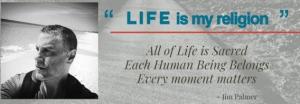
Jim Palmer of the Center for Non-Religious Spirituality
For twenty years, Jim has been counseling and helping people that have experienced religious trauma and have left their religious affiliations behind. Jim is an ordained minister, receiving his Master of Divinity degree from Trinity Divinity School in Chicago. In addition to writing, speaking, and his spiritual direction practice, Jim is an adjunct professor in the areas of Ethics and Comparative Religion. He is a certified Humanist Chaplain with the American Humanist Association and the Co-Founder of the Nashville Humanist Association.
Jim is a wonderful person to know. He has mentored me in the writing of my book and was gracious enough to write the foreword. He is available for consultation here. You can also view and check out Jim’s Facebook page here: Center for Non-Religious Spirituality. If you contact Jim or join that community of people, I can guarantee you will find acceptance, a non-judgmental environment and support and affirmation of your humanity.
Another resource that can be of immense help is the Global Center for Religious Research. This community is centered on the academic study of religious trauma and brings together scholars, researchers, counselors, psychologists, and therapists to provide a clearinghouse of resources and help. The website provides videos to study religious trauma and how religious trauma can affect your brain and impair your life. They also house an interdisciplinary virtual library, that will give you access to 20+ hours of downloadable on-demand content from prestigious world leaders to advance your clinical and psychological understandings of Religious Trauma. This is really a great place to begin your journey out of religion and toward spirituality. There are trained, certified counselors available through this Global Center.
A third online resource is the Religious Trauma Institute. This link will guide you to a list of online courses, videos, and other resources to both learn more about religious trauma and if you need seek out help and support. The Religious Trauma Institute was co-founded by Dr. Laura Anderson, and Brian Peck, LCSW, in collaboration with a growing community of clinicians who are passionate about bringing a trauma-informed approach to religious trauma. Here is a link to their Religious Trauma Facebook page.
Communities of Help
As more and more people choose to leave their religious traditions and affiliations behind, there is a growing community of people willing to reach out and come along side you. You can be assured that thousands of people are experiencing what you are experiencing and can lend a helping hand. This isn’t about becoming an atheist or even an agnostic. Spirituality is something that is inherent within all people. How you view it, cultivate, or engage with spirituality is a very important but it is an individual undertaking and no two journeys will be the same. But what is comforting is that communities of people are on that journey with you. Reach out and discover some new souls that can assure you along your path.
You can find my book, “Confessions of a Recovering Evangelical” here:
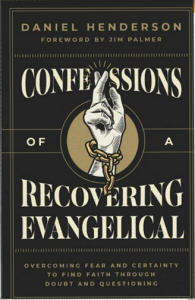
Cover of Daniel’s new book that came out in 2022.
General Christian
Relationships and Religion
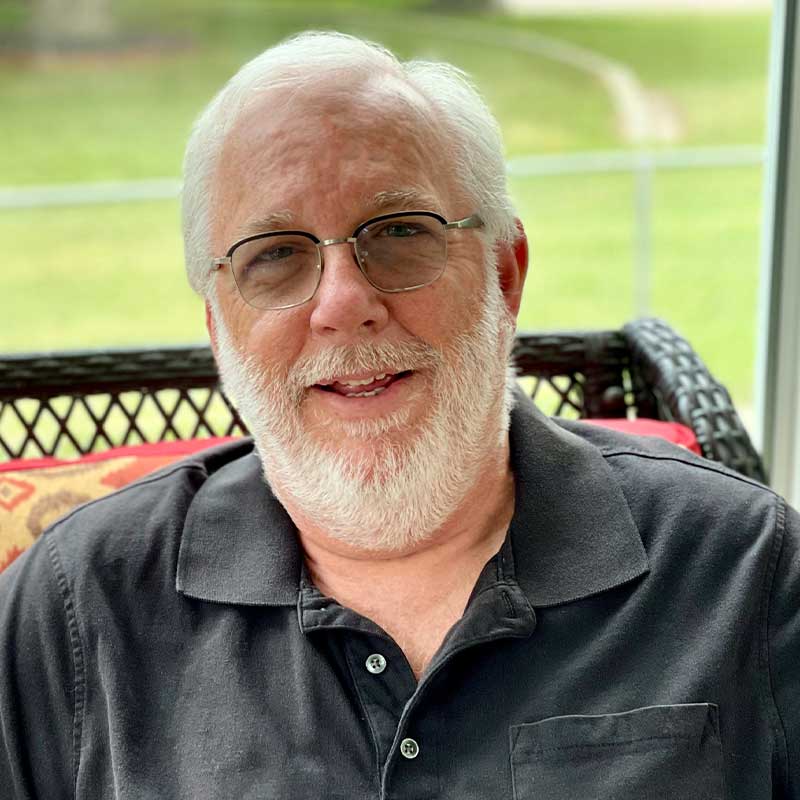
About DANIEL L HENDERSON
A former career teacher of history and religion in both Christian Schools and in public schools, Daniel is now a retired educator. He is a writer, and activist and has now re-entered a graduate program in Public History. Daniel became an evangelical in the 1960s before evangelicalism became absorbed in right-wing politics. By 2005 he rejected it. You can read more about the author here.
Previous Post
October 1, 2022
Faith as Belief? Or Faith as Being?
Next Post
January 28, 2023 The Ten Commandments of Christian Nationalism (Part 1)
Recent Comments
Browse Our Archives
Select a Category Uncategorized
Select a Month September 2024 April 2024 March 2024 February 2024 January 2024 December 2023 October 2023 September 2023 August 2023 June 2023 April 2023 March 2023 February 2023 January 2023 October 2022 September 2022
Follow Us!
TAKE THE
Religious Wisdom Quiz
What is the first line of the Bible?
Select your answer to see how you score.
In the beginning God created the heavens and the earth. Let there be light Hear, O Israel. The Lord is my shepherd.
Related posts from Reflections of a Recovering Evangelical
No Longer a Christian...Here's Why...
Reflections of a Recovering Evangelical

Close Encounters of the Spiritual Kind
Reflections of a Recovering Evangelical

Question-Doubt-Tell Stories=Community
Reflections of a Recovering Evangelical
Sorry Evangelicals, You Don't Get to Own Jesus
Reflections of a Recovering Evangelical
TRENDING AT PATHEOS Progressive Christian

Can a Chatbot Touch Your Soul?
Can a chatbot offer genuine spiritual counsel? One conversation brought me to...

Religion and Politics: How Should We Then Live?
Two cultural axioms get repeated in polite company. Don't mix religion and...

7 Things We Get Wrong About Giving Thanks
It's a time of year when many of us turn to the...

Uncaging Truth: Spirituality Beyond Institutions
The Lost Connection: Why True Spirituality, Not Religion, Is the Key to...

Christ the King? Maybe We've Misunderstood the Crown
What do we mean when we say that Jesus is King? What...

Counter “Christ Is King” Nationalism with Christ THE...
Christ the King Sunday is an ideal time to address the heresy...
view all Progressive Christian blogs
Ad-Free & Subscriber Log-In Subscription Support
- About Us
- 2026 Calendar
- Videos
- Podcasts
- Library of World Religions
- Faith In Media Tracker
- Advertise With Us
- Write for Us
- Privacy Policy
- Terms of Service
- Do Not Sell My Data
- Contact Us
- Radiant Digital
- Manage Newsletter Subscriptions
- Unsubscribe From Notifications
- Sitemap
Copyright 2008-2026, Patheos, part of the Radiant Digital network of media brands. All rights reserved.
Subscription Support Ad-Free & Subscriber Log-In
Follow Patheos