
BuddhistCatholicContemplativeEvangelicalGeneral ChristianHinduJewishLatter-day SaintMuslimNew VisionsProgressive Christian
Beliefs
- Buddhist
- Catholic
- Contemplative
- Evangelical
- General Christian
- Hindu
- Jewish
- Latter-day Saint
- More Voices
- Muslim
- New Visions
- Pagan
- Progressive Christian
Topics
- Religion News
- Food and Religion
- Sports and Religion
- Religious Art
- Religious Music and Entertainment
- Religious Events
- History and Religion
- Style and Religion
- Politics and Religion
- Women in Religion
- Recreation Outdoors and Religion
- Business Finance and Religion
- Careers Workplace and Religion
- Education and Religion
- Family Parenting and Religion
- Health Fitness and Religion
- Home and Religion
- Relationships and Religion
- Technology and Religion
- Travel and Religion
Columnists
- Buddhist Columnists
- Business Finance and Religion Columnists
- Careers Workplace and Religion Columnists
- Catholic Columnists
- Contemplative Columnists
- Education and Religion Columnists
- Evangelists Columnists
- Family Parenting and Religion Columnists
- General Christian Columnists
- Health Fitness and Religion Columnists
- Hindu Columnists
- History and Religion Columnists
- Home and Religion Columnists
- Jewish Columnists
- More Voices Columnists
- Latter Day Columnists
- Muslim Columnists
- New Visions Columnists
- Nonreligious Columnists
- Pagan Columnists
- Politics and Religion Columnists
- Progressive Columnists
- Recreation Outdoors and Religion Columnists
- Relationships and Religion Columnists
- Religion News Columnists
- Religious Art Columnists
- Religious Events Columnists
- Religious Music and Entertainment Columnists
- Sports and Religion Columnists
- Style and Religion Columnists
- Technology and Religion Columnists
- Travel and Religion Columnists
- Women in Religion Columnists
Resource Library
- 2026 Calendar
- Library of World Religions
- The 100 Most Holy Places on Earth
- Patheos Answers
- Podcasts
- Videos
- Faith Leaders Database
- Anglican Episcopalian
- Bahai
- Baptist
- Buddhism
- Christianity
- Confucianism
- Eastern Orthodoxy
- Hinduism
- Holiness and Pentecostal
- ISKCON
- Islam
- Judaism
- Lutheran
- Methodist
- The Church of Jesus Christ of Latter-day Saints
- New Age
- Paganism
- Presbytarian and Reformed
- Protestantism
- Religion Behind the Scenes
- Roman Catholic
- Scientology
- Shia Islam
- Sikhism
- Sufism
- Sunni Islam
- Taoism
- Zen
- See all religions
Research Tools
 Ad-Free & Subscriber Log-In Subscription Support
Ad-Free & Subscriber Log-In Subscription Support
Follow Patheos 

- Trending:
- Forgiveness
- |
- Marriage
- |
- Consciousness
- |
- Death Penalty
- |
- Election
- |
- Halloween
 Rebecca Florence Miller
- Home
- Evangelical
- Wildfires, Hurricanes, and Ezekiel’s Unheeded Warning
Wildfires, Hurricanes, and Ezekiel’s Unheeded Warning
Last updated on: September 9, 2017 at 8:59 pm by Rebecca Florence Miller
Wildfires, Hurricanes, and Ezekiel’s Unheeded Warning 2017-09-09T20:59:35-06:00 Rebecca Florence Miller
Patheos Explore the world's faith through different perspectives on religion and spirituality! Patheos has the views of the prevalent religions and spiritualities of the world.
I’m going to try something for a while, in an effort to engage more constructively with Scripture, rather than only writing about the frustrations I have. I would to build up what is good, not just tear down what is bad. I will still write about social issues and the arts as time allows, but I will be writing each weekend on the lectionary Scriptures for the weekend. I hope to make these messages relevant to current times and to a wider audience to the extent I can. Hopefully, they are interesting and engaging and challenging. Both believing and nonbelieving readers are invited to engage. If I was leading a church right now, this might be the kind of thing I would preach.
(This week’s readings can be found here. This message will mainly focus on Ezekiel 33:7-11.)
This week, as Hurricane Irma bears down on Florida, leaders and weather forecasters have warned citizens in the strongest possible terms to evacuate. “Get out now,” they said. “There will be a period of time with no emergency services. You will be alone. This storm will take lives. Don’t take your chances with it.”
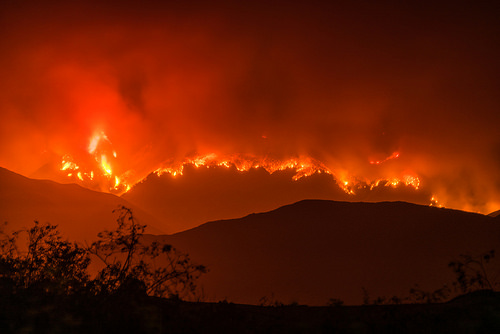
In my state of Montana, we are having the opposite problem. Huge fires have been bearing down on our state, destroying homes and forests and even a much-beloved historic lodge in Glacier National Park. Several areas are in evacuation. Local firefighters have said, “When we say, ‘Get out now,’ that’s what we mean.” But not everyone is ready to go, and as a result several homes burned only twenty or thirty minutes after the occupants fled.
In times of natural disaster, it is not always stubbornness that leads people to stay in harm’s way. Sometimes jobs hang in the balance. Other times poverty or lack of a vehicle hinders people from leaving. Sometimes the safety of pets or other family members keeps people close to home despite the threat. But there is certainly a portion of the public who hunkers down out of pride, ignoring warnings of danger.
Ezekiel lived in such a time as this. During his time as an active prophet (593-571 BC), as a result of their sin the Northern Kingdom of Israel had already fallen to the Assyrians, and the world had just lived through a time of empire upheaval as Egypt and Assyria’s dominance was challenged by the Babylonians. In 597, Babylon carried off ten thousand citizens of Judah, including Ezekiel, in exile. The final fall of Jerusalem occurred in 586 BC. This was a time of fearful, direct military onslaught. It was like ISIS had taken over your city. Direct, mortal threat. Captivity and bondage. It was also a time in which Ezekiel was called to publicly and courageously challenge the people of Judah about their sin and the natural consequences of it–the judgment of God.
To us today, the idea of judgment is offensive. How dare God judge us? The people of Judah had the same response. Objecting to this judgment, they said to Ezekiel, “The way of the Lord is not just” (33:17 NIV). Many today say the same. In response, I would say two things. First of all, note that the judgment that Ezekiel is speaking here is against the people of faith. It is against the people who have been given the Word of God and been entered into the covenant and should know better. Likewise, our supporting passage from Matthew 18:15-20 deals with the confrontation of sin within the Church.
Do we really object to this? I have many secular readers, and essentially, they say the same thing. They say, “Why don’t Christians live up to what they are supposed to stand for?” Well, the Bible agrees. The Bible is always hardest on the religious people–the ones who should know better. If you’re reading this and you are a Christian, this can be a hard pill to swallow. Most of us are far more used to diatribes against the godless unbeliever than we are to talking of judgment against the believer. But an honest assessment of Scripture forces us to realize God is indeed much harder on believers than unbelievers in prophecy.
Second, we are disturbed by biblical talk of judgment–and there is plenty of conversation to be had around that topic and the questions raised by it–but for the moment I think it is most helpful to think of judgment as “natural consequences.” Sin is violence to God’s creation (and other humans) and to our relationship with God. That violence is like a tear in the fabric of the universe. It necessarily brings about consequences. We can think in terms of a modern parallel: Scientists today tell us that a significant portion of the global warming we experience on earth has preventable human causes. When humans emit an unnecessarily high amount of greenhouse gases, that leads to outcomes like rising temperatures, drought, famine, increased storm intensity, wildfires, polluted air, and many other negative effects. Those things are natural consequences of the violence that is done to God’s good creation through not taking care to prevent that harm which could be prevented. Those things are natural consequences of not being a good steward of God’s creation, something really all of us in the West (and other industrialized nations) have contributed to–even those friendly to environmental stewardship.
If the sin of causing a tear in the fabric of environmental well-being should naturally affect God’s creation, why shouldn’t the tear in the fabric of human relationships? This is a basic principle. We can get weighed down in trying to understand the minutiae of biblical commands–and there is a time and place for that discussion(s)–but for now we simply need to acknowledge the basic idea that a tear in relational wholeness is the essence of what sin is.
Previous Post

August 26, 2017
Charlottesville, White Supremacy, and a Broken Heart

Browse Our Archives
Select a Category Books Charis Christian Witness Church Year Conversation Creativity Cultural Engagement Curiosity Current Events Film Jesus Lectionary Message Literature Lutheran Theology Politics Story Television Theology Uncategorized
Select a Month December 2017 November 2017 October 2017 September 2017 August 2017 July 2017 June 2017 May 2017 April 2017 March 2017 February 2017 December 2016 October 2016 August 2016 July 2016 June 2016 May 2016 April 2016 March 2016 February 2016 January 2016 December 2015 November 2015 October 2015 September 2015 August 2015 July 2015 June 2015 May 2015 April 2015 March 2015 February 2015 January 2015 December 2014 November 2014 October 2014
Follow Us!
TAKE THE
Religious Wisdom Quiz
How many Gospels are in the New Testament?
Select your answer to see how you score.
5 6 3 4
Related posts from Rebecca Florence Miller

A New Normal: Grief and Facing the Brokenness...

Our Response to Sexual Abuse Should Not Be...

#Loser: How the Call of Christ Is Antithetical...

Conflict and Challenge, instead of Cheap Grace
TRENDING AT PATHEOS Evangelical

How the author of the world's best hymn...
I've been working with John Newton for a while now. This makes...

Long before this Lectio Divina, Psalm 130 - the song - started...

What About the Trees? Another Living Parable
After I finished writing the last article about falling leaves as a...

Why Classical Education Is a Conversation, Not a...
Come and Read: Joy in Classical Education When I was a little...

Falling Leaves: A Living Parable on Letting Go
I’ve spent the vast majority of my life in the southeast corner...

Cornell University has received a great deal of negative publicity and intense...
view all Evangelical blogs
Ad-Free & Subscriber Log-In Subscription Support
- About Us
- 2026 Calendar
- Videos
- Podcasts
- Library of World Religions
- Faith In Media Tracker
- Advertise With Us
- Write for Us
- Privacy Policy
- Terms of Service
- Do Not Sell My Data
- Contact Us
- Radiant Digital
- Manage Newsletter Subscriptions
- Unsubscribe From Notifications
- Sitemap
Copyright 2008-2026, Patheos. All rights reserved.
Subscription Support Ad-Free & Subscriber Log-In
Follow Patheos