
BuddhistCatholicContemplativeEvangelicalGeneral ChristianHinduJewishLatter-day SaintMuslimNew VisionsProgressive Christian
Beliefs
- Buddhist
- Catholic
- Contemplative
- Evangelical
- General Christian
- Hindu
- Jewish
- Latter-day Saint
- More Voices
- Muslim
- New Visions
- Pagan
- Progressive Christian
Topics
- Religion News
- Food and Religion
- Sports and Religion
- Religious Art
- Religious Music and Entertainment
- Religious Events
- History and Religion
- Style and Religion
- Politics and Religion
- Women in Religion
- Recreation Outdoors and Religion
- Business Finance and Religion
- Careers Workplace and Religion
- Education and Religion
- Family Parenting and Religion
- Health Fitness and Religion
- Home and Religion
- Relationships and Religion
- Technology and Religion
- Travel and Religion
Columnists
- Buddhist Columnists
- Business Finance and Religion Columnists
- Careers Workplace and Religion Columnists
- Catholic Columnists
- Contemplative Columnists
- Education and Religion Columnists
- Evangelists Columnists
- Family Parenting and Religion Columnists
- General Christian Columnists
- Health Fitness and Religion Columnists
- Hindu Columnists
- History and Religion Columnists
- Home and Religion Columnists
- Jewish Columnists
- More Voices Columnists
- Latter Day Columnists
- Muslim Columnists
- New Visions Columnists
- Nonreligious Columnists
- Pagan Columnists
- Politics and Religion Columnists
- Progressive Columnists
- Recreation Outdoors and Religion Columnists
- Relationships and Religion Columnists
- Religion News Columnists
- Religious Art Columnists
- Religious Events Columnists
- Religious Music and Entertainment Columnists
- Sports and Religion Columnists
- Style and Religion Columnists
- Technology and Religion Columnists
- Travel and Religion Columnists
- Women in Religion Columnists
Resource Library
- 2026 Calendar
- Library of World Religions
- The 100 Most Holy Places on Earth
- Patheos Answers
- Podcasts
- Videos
- Faith Leaders Database
- Anglican Episcopalian
- Bahai
- Baptist
- Buddhism
- Christianity
- Confucianism
- Eastern Orthodoxy
- Hinduism
- Holiness and Pentecostal
- ISKCON
- Islam
- Judaism
- Lutheran
- Methodist
- The Church of Jesus Christ of Latter-day Saints
- New Age
- Paganism
- Presbytarian and Reformed
- Protestantism
- Religion Behind the Scenes
- Roman Catholic
- Scientology
- Shia Islam
- Sikhism
- Sufism
- Sunni Islam
- Taoism
- Zen
- See all religions
Research Tools
 Ad-Free & Subscriber Log-In Subscription Support
Ad-Free & Subscriber Log-In Subscription Support
Follow Patheos 

- Trending:
- Forgiveness
- |
- Marriage
- |
- Consciousness
- |
- Death Penalty
- |
- Election
- |
- Halloween
 Rebecca Florence Miller
- Home
- Evangelical
- Dispatch from the Big Sky Documentary Film Festival: Empathy at the Movies
Dispatch from the Big Sky Documentary Film Festival: Empathy at the Movies
Last updated on: February 20, 2017 at 1:40 pm by Rebecca Florence Miller
Dispatch from the Big Sky Documentary Film Festival: Empathy at the Movies 2017-02-20T13:40:44-06:00 Rebecca Florence Miller
Patheos Explore the world's faith through different perspectives on religion and spirituality! Patheos has the views of the prevalent religions and spiritualities of the world.

The Big Sky Documentary Film Festival is currently being held in Missoula, Montana. This year, it features 210 films, being shown over the course of ten days, February 17-26. I had a chance to visit this past Saturday. With limited time at the festival, I focused my attention on films that would guide me to greater knowledge and empathy on important social issues that matter to me as a Christian, particularly that of racial justice.
In this dispatch from the festival, first, I’ll offer quick summaries of some of my favorite films, and why you should see them too. Then, I’ll offer some general thoughts on documentary film as a category and what it contributes to the world when it’s at its best.
Whose Streets (dir./prod. Sabaah Folayan, Damon Davis)
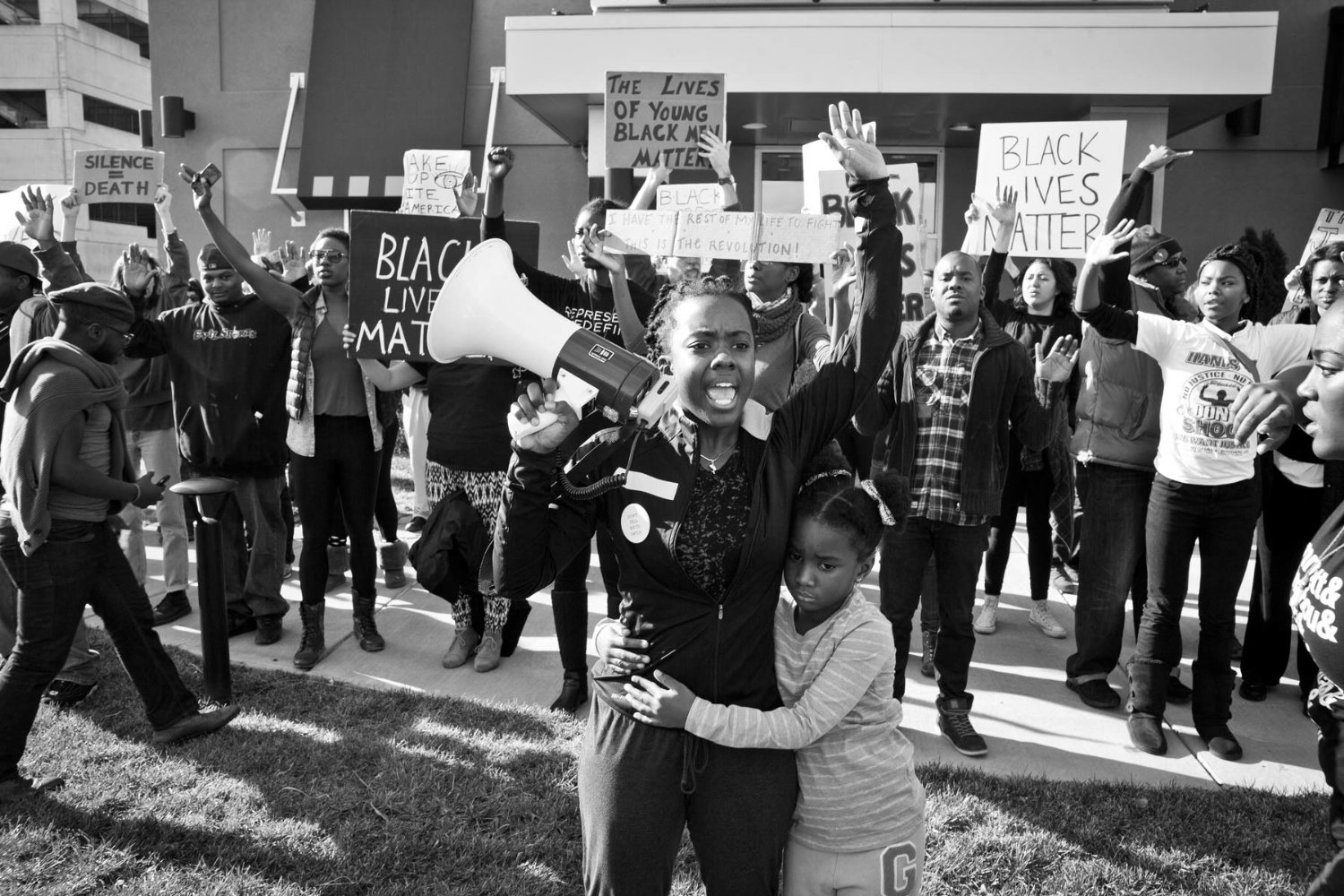 This film which documents the Ferguson uprising from the point of view of the citizens on the ground, rather than from the perspective of the media interpretation of what was happening, was nominated for a Grand Jury Prize at Sundance. I found it visceral and laden with grief and anger deep in a long-term historical context of a community being ignored and discriminated against over and over again.
The surrounding context of any incident of police violence is what is too often ignored by the white community, in my opinion. We see the anger and because we have not been steeped in that context and in the long-term destruction of trust by those in leadership (police, elected officials, etc.), we don’t understand why in one particular instance a community would distrust the police.
Increasingly, the Black Lives Matter movement makes me think of the American Revolution, through which our country was founded. In that case, the offense was taxation without representation and the sense that Great Britain was pushing the colonies around. I would argue that what is happening today is much more imminent and life-threatening to black communities. And yet, the predominant method of resistance among protesters is nonviolence. It makes me wonder whether American settlers might have found a way to justice and independence from Britain without violent resistance. At the very least, the more I learn of the unrelenting injustices against the black community, the more I am astonished at their largely nonviolent methods of protest.
Whose Streets is probably not the place to start if you are just beginning to learn about the injustices against the black community, however (see * below for recommended resources to start with.) It is an unvarnished, uncensored expression of grief that sometimes overflows into rage. If I had seen this film a couple of years ago, I’m not sure I would have understood it. Even now, as I watched the film, there were times when I disagreed with some of the tactics of some of the people–though it’s clear from the film that there are different viewpoints on how to resist on the ground. (None of them involve killing people, by the way, but one organizer excuses the burning of a convenience store. She makes a thoughtful point that outrage comes about at the destruction of a gas station but not of a life, but I’m still not on board with destruction of property as a tactic–and neither are some of the other people in the film.) There is also a disagreement in tactics between the older and younger generations, and even President Obama is criticized by some of the young activists for trying to calm everyone down without addressing the real issue of injustice (at least at first). Additionally frustrating, despite later refutations of some of the key facts of the Mike Brown killing (“hands up, don’t shoot”), these facts do not get airtime in the film–even late in the film. And some conservatives will find frustrating some of the sexual ethics displayed in the film. All of these factors make the film less accessible to conservative viewers or those just beginning to think about issues of racial justice. (Of course, the film wasn’t really made for those folks.)
But all that aside, Whose Streets is a valuable piece of film because it shows us how the people in the uprising were thinking and feeling on the ground. It doesn’t edit out what we the viewer might find offensive. In that way, we are seeing a truthful account of people’s perspective. The quotation “We are occupying the streets that we paid for” summarizes the viewpoint of the film. Whose streets are they? The people’s streets! Most moving in the film was the ending where portions of the Declaration of Independence are slowly displayed on the screen:
We hold these truths to be self-evident, that all men are created equal, that they are endowed by their Creator with certain unalienable Rights, that among these are Life, Liberty and the pursuit of Happiness. — That to secure these rights, Governments are instituted among Men, deriving their just powers from the consent of the governed, — That whenever any Form of Government becomes destructive of these ends, it is the Right of the People to alter or to abolish it, and to institute new Government, laying its foundation on such principles and organizing its powers in such form, as to them shall seem most likely to effect their Safety and Happiness.
*I recommend the Reformed African-American Network Podcast, Pass the Mic (and ESPECIALLY this episode), for a careful, historical explanation of Black Lives Matter and a careful thought process on how to relate to it as a Christian. I also recommend the books The New Jim Crow by Michelle Alexander and Just Mercy by Bryan Stevenson for the larger context on “why the black community is upset.” Finally, I recommend the ESPN documentary film series OJ: Made in America for historical context on why black communities distrust police and the documentary 13th (available on Netflix) for context on mass incarceration.
Big Sky Documentary Film Festival
Walk with Me: The Trials of Damon J. Keith
Previous Post

February 8, 2017
The Plight of Refugees--the Risk and the Call of Christ
Next Post

March 1, 2017 On Streaming: A Film about McCarthyism, Edward R. Murrow, and Courage
Browse Our Archives
Select a Category Books Charis Christian Witness Church Year Conversation Creativity Cultural Engagement Curiosity Current Events Film Jesus Lectionary Message Literature Lutheran Theology Politics Story Television Theology Uncategorized
Select a Month December 2017 November 2017 October 2017 September 2017 August 2017 July 2017 June 2017 May 2017 April 2017 March 2017 February 2017 December 2016 October 2016 August 2016 July 2016 June 2016 May 2016 April 2016 March 2016 February 2016 January 2016 December 2015 November 2015 October 2015 September 2015 August 2015 July 2015 June 2015 May 2015 April 2015 March 2015 February 2015 January 2015 December 2014 November 2014 October 2014
Follow Us!
TAKE THE
Religious Wisdom Quiz
Why did God reject Saul as king?
Select your answer to see how you score.
He was too old He was tricked by David He lost in battle He disobeyed God
Related posts from Rebecca Florence Miller

A New Normal: Grief and Facing the Brokenness...

An Interview with the Christian and Atheist Friends...

Our Response to Sexual Abuse Should Not Be...

#Loser: How the Call of Christ Is Antithetical...
TRENDING AT PATHEOS Evangelical

How the author of the world's best hymn...
I've been working with John Newton for a while now. This makes...

Long before this Lectio Divina, Psalm 130 - the song - started...

What About the Trees? Another Living Parable
After I finished writing the last article about falling leaves as a...

Why Classical Education Is a Conversation, Not a...
Come and Read: Joy in Classical Education When I was a little...

Falling Leaves: A Living Parable on Letting Go
I’ve spent the vast majority of my life in the southeast corner...

Cornell University has received a great deal of negative publicity and intense...
view all Evangelical blogs
Ad-Free & Subscriber Log-In Subscription Support
- About Us
- 2026 Calendar
- Videos
- Podcasts
- Library of World Religions
- Faith In Media Tracker
- Advertise With Us
- Write for Us
- Privacy Policy
- Terms of Service
- Do Not Sell My Data
- Contact Us
- Radiant Digital
- Manage Newsletter Subscriptions
- Unsubscribe From Notifications
- Sitemap
Copyright 2008-2026, Patheos. All rights reserved.
Subscription Support Ad-Free & Subscriber Log-In
Follow Patheos