
BuddhistCatholicContemplativeEvangelicalGeneral ChristianHinduJewishLatter-day SaintMuslimNew VisionsProgressive Christian
Beliefs
- Buddhist
- Catholic
- Contemplative
- Evangelical
- General Christian
- Hindu
- Jewish
- Latter-day Saint
- More Voices
- Muslim
- New Visions
- Pagan
- Progressive Christian
Topics
- Religion News
- Food and Religion
- Sports and Religion
- Religious Art
- Religious Music and Entertainment
- Religious Events
- History and Religion
- Style and Religion
- Politics and Religion
- Women in Religion
- Recreation Outdoors and Religion
- Business Finance and Religion
- Careers Workplace and Religion
- Education and Religion
- Family Parenting and Religion
- Health Fitness and Religion
- Home and Religion
- Relationships and Religion
- Technology and Religion
- Travel and Religion
Columnists
- Buddhist Columnists
- Business Finance and Religion Columnists
- Careers Workplace and Religion Columnists
- Catholic Columnists
- Contemplative Columnists
- Education and Religion Columnists
- Evangelists Columnists
- Family Parenting and Religion Columnists
- General Christian Columnists
- Health Fitness and Religion Columnists
- Hindu Columnists
- History and Religion Columnists
- Home and Religion Columnists
- Jewish Columnists
- More Voices Columnists
- Latter Day Columnists
- Muslim Columnists
- New Visions Columnists
- Nonreligious Columnists
- Pagan Columnists
- Politics and Religion Columnists
- Progressive Columnists
- Recreation Outdoors and Religion Columnists
- Relationships and Religion Columnists
- Religion News Columnists
- Religious Art Columnists
- Religious Events Columnists
- Religious Music and Entertainment Columnists
- Sports and Religion Columnists
- Style and Religion Columnists
- Technology and Religion Columnists
- Travel and Religion Columnists
- Women in Religion Columnists
Resource Library
- 2026 Calendar
- Library of World Religions
- The 100 Most Holy Places on Earth
- Patheos Answers
- Podcasts
- Videos
- Faith Leaders Database
- Anglican Episcopalian
- Bahai
- Baptist
- Buddhism
- Christianity
- Confucianism
- Eastern Orthodoxy
- Hinduism
- Holiness and Pentecostal
- ISKCON
- Islam
- Judaism
- Lutheran
- Methodist
- The Church of Jesus Christ of Latter-day Saints
- New Age
- Paganism
- Presbytarian and Reformed
- Protestantism
- Religion Behind the Scenes
- Roman Catholic
- Scientology
- Shia Islam
- Sikhism
- Sufism
- Sunni Islam
- Taoism
- Zen
- See all religions
Research Tools
 Ad-Free & Subscriber Log-In Subscription Support
Ad-Free & Subscriber Log-In Subscription Support
Follow Patheos 

- Trending:
- Forgiveness
- |
- Marriage
- |
- Consciousness
- |
- Death Penalty
- |
- Election
- |
- Halloween
 Rebecca Florence Miller
- Home
- Evangelical
- INTO GREAT SILENCE: Joy and Vocation in the Cloister
INTO GREAT SILENCE: Joy and Vocation in the Cloister
Last updated on: February 19, 2016 at 4:44 pm by Rebecca Florence Miller
INTO GREAT SILENCE: Joy and Vocation in the Cloister 2016-02-19T16:44:34-06:00 Rebecca Florence Miller
Patheos Explore the world's faith through different perspectives on religion and spirituality! Patheos has the views of the prevalent religions and spiritualities of the world.
 This post is part of a ten-part series drawing from the Arts and Faith Top 100 Films. You can read the introduction the series here, along with the schedule of films to be featured.
We are three films into our series, and for me, this one was the toughest film yet. While most or all of the films included in this series requires a certain slowing down from the frenetic pace of postmodern culture and a cultivating of contemplation, Philip Gröning’s documentary film, Into Great Silence, requires an extra order of inner stilling from the viewer.
In this film, Gröning takes us inside the Grande Chartreuse monastery in the French Alps to see the daily lives of the members of the reclusive Carthusian Order, which dates back to the 11th century. This is a film without plot, without development of characters (the individual isn’t that important in the monastery), and without verbal explanation of what we are seeing. We are left to deduce what we can from the almost unrelenting silence and the gorgeous imagery. And gorgeous it is. From the majesty of the French Alps which surround the monastery to the still life-like imagery of a sliced apple, a lit candle, or a chorus of falling snowflakes to the portraits of each monk in intimate close-up, this film is like one long, kinetic painting. Even the color tones of the monastery resemble a canvas. The visuals are broken up with chant and with bare quotations displayed on black screen. Chief among these quotations (because they are used multiple times throughout the film) are these: “O Lord, you have seduced me, and I was seduced” and “Anyone who does not give up all he has cannot be my disciple.” And bookending the entire film is 1 Kings 19:11-13 in which we find that God is not in the earthquake or the wind or the fire … but in the silence.
I watched this film, almost three hours long, in two segments. I struggled much more through the first segment than through the second. In between, I read up a bit on the Carthusian Order. Understanding more about this community and why they do what they do helped me appreciate the second half of the film more. The Carthusian Order’s website explained to me why they live in solitude and spend most of their day praying, studying, and worshiping:
The Carthusians consecrate their lives entirely to prayer and seeking God in the secret of their hearts. They intercede for the Church and for the salvation of the whole world.
As I read more about this religious order, I came to understand that they are truly cloistered away. Nobody gets into their monastery unless they have serious interest in pursuing their way of life. They have almost no visitors (except family members once or twice a year) and have virtually no contact with the media. They don’t take in curious pilgrims. And they try to dissuade those who attempt to join them. This is unlike, say, the Benedictines, who consider hospitality to the stranger to be a huge part of their call. When one understands that virtually no one has managed to see what life inside the order is like, it becomes easier to appreciate what this film accomplished. Gröning was allowed to live inside the Grande Chartreuse monastery for six months, gaining unprecedented access to this hidden way of life. His spare cinematography and immersive approach to filmmaking is about as close as any of us noncloistered folk will get to life in a set-apart monastery.
Now, I will admit that I struggle greatly with the idea of Christians shutting themselves away from the rest of the world. After all, Jesus prayed to God the Father,
My prayer is not that you take them out of the world but that you protect them from the evil one. … As you sent me into the world, I have sent them into the world.–John 17:15, 18 (NIV)
I maintain that the normal call of the Christian is into the world with the light of Christ, not out of the world in search of spiritual perfection. Such a perfection is, of course, unattainable; after all, wherever I go, there I am. I bring my sin, struggle, brokenness, and navel gazing wherever I go. I can work to overcome it, with the empowering of God, but it will be a battle within a cloister just as it is within the world.
But even more importantly, to cloister oneself away is to separate oneself from other human beings who need to know the love and beauty of Christ. It feels self-protective instead of self-giving.
Previous Post

February 15, 2016
INTO GREAT SILENCE post delayed until February 19
Next Post
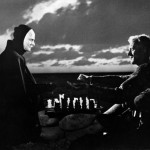
March 2, 2016 THE SEVENTH SEAL, the Hiddenness of God, and the Inescapability of Death
Browse Our Archives
Select a Category Books Charis Christian Witness Church Year Conversation Creativity Cultural Engagement Curiosity Current Events Film Jesus Lectionary Message Literature Lutheran Theology Politics Story Television Theology Uncategorized
Select a Month December 2017 November 2017 October 2017 September 2017 August 2017 July 2017 June 2017 May 2017 April 2017 March 2017 February 2017 December 2016 October 2016 August 2016 July 2016 June 2016 May 2016 April 2016 March 2016 February 2016 January 2016 December 2015 November 2015 October 2015 September 2015 August 2015 July 2015 June 2015 May 2015 April 2015 March 2015 February 2015 January 2015 December 2014 November 2014 October 2014
Follow Us!
TAKE THE
Religious Wisdom Quiz
In which city did David reign seven years before becoming king over all Israel?
Select your answer to see how you score.
Shechem Jerusalem Bethlehem Hebron
Related posts from Rebecca Florence Miller

A New Normal: Grief and Facing the Brokenness...

An Interview with the Christian and Atheist Friends...

#Loser: How the Call of Christ Is Antithetical...

Conflict and Challenge, instead of Cheap Grace
TRENDING AT PATHEOS Evangelical

How the author of the world's best hymn...
I've been working with John Newton for a while now. This makes...

Long before this Lectio Divina, Psalm 130 - the song - started...

What About the Trees? Another Living Parable
After I finished writing the last article about falling leaves as a...

Why Classical Education Is a Conversation, Not a...
Come and Read: Joy in Classical Education When I was a little...

Falling Leaves: A Living Parable on Letting Go
I’ve spent the vast majority of my life in the southeast corner...

Cornell University has received a great deal of negative publicity and intense...
view all Evangelical blogs
Ad-Free & Subscriber Log-In Subscription Support
- About Us
- 2026 Calendar
- Videos
- Podcasts
- Library of World Religions
- Faith In Media Tracker
- Advertise With Us
- Write for Us
- Privacy Policy
- Terms of Service
- Do Not Sell My Data
- Contact Us
- Radiant Digital
- Manage Newsletter Subscriptions
- Unsubscribe From Notifications
- Sitemap
Copyright 2008-2026, Patheos. All rights reserved.
Subscription Support Ad-Free & Subscriber Log-In
Follow Patheos