
BuddhistCatholicContemplativeEvangelicalGeneral ChristianHinduJewishLatter-day SaintMuslimNew VisionsProgressive Christian
Beliefs
- Buddhist
- Catholic
- Contemplative
- Evangelical
- General Christian
- Hindu
- Jewish
- Latter-day Saint
- More Voices
- Muslim
- New Visions
- Pagan
- Progressive Christian
Topics
- Religion News
- Food and Religion
- Sports and Religion
- Religious Art
- Religious Music and Entertainment
- Religious Events
- History and Religion
- Style and Religion
- Politics and Religion
- Women in Religion
- Recreation Outdoors and Religion
- Business Finance and Religion
- Careers Workplace and Religion
- Education and Religion
- Family Parenting and Religion
- Health Fitness and Religion
- Home and Religion
- Relationships and Religion
- Technology and Religion
- Travel and Religion
Columnists
- Buddhist Columnists
- Business Finance and Religion Columnists
- Careers Workplace and Religion Columnists
- Catholic Columnists
- Contemplative Columnists
- Education and Religion Columnists
- Evangelists Columnists
- Family Parenting and Religion Columnists
- General Christian Columnists
- Health Fitness and Religion Columnists
- Hindu Columnists
- History and Religion Columnists
- Home and Religion Columnists
- Jewish Columnists
- More Voices Columnists
- Latter Day Columnists
- Muslim Columnists
- New Visions Columnists
- Nonreligious Columnists
- Pagan Columnists
- Politics and Religion Columnists
- Progressive Columnists
- Recreation Outdoors and Religion Columnists
- Relationships and Religion Columnists
- Religion News Columnists
- Religious Art Columnists
- Religious Events Columnists
- Religious Music and Entertainment Columnists
- Sports and Religion Columnists
- Style and Religion Columnists
- Technology and Religion Columnists
- Travel and Religion Columnists
- Women in Religion Columnists
Resource Library
- 2026 Calendar
- Library of World Religions
- The 100 Most Holy Places on Earth
- Patheos Answers
- Podcasts
- Videos
- Faith Leaders Database
- Anglican Episcopalian
- Bahai
- Baptist
- Buddhism
- Christianity
- Confucianism
- Eastern Orthodoxy
- Hinduism
- Holiness and Pentecostal
- ISKCON
- Islam
- Judaism
- Lutheran
- Methodist
- The Church of Jesus Christ of Latter-day Saints
- New Age
- Paganism
- Presbytarian and Reformed
- Protestantism
- Religion Behind the Scenes
- Roman Catholic
- Scientology
- Shia Islam
- Sikhism
- Sufism
- Sunni Islam
- Taoism
- Zen
- See all religions
Research Tools
 Ad-Free & Subscriber Log-In Subscription Support
Ad-Free & Subscriber Log-In Subscription Support
Follow Patheos 

- Trending:
- Forgiveness
- |
- Marriage
- |
- Consciousness
- |
- Death Penalty
- |
- Election
- |
- Halloween
 Rebecca Florence Miller
- Home
- Evangelical
- The Blessing of Serving Refugees
The Blessing of Serving Refugees
Last updated on: December 14, 2015 at 4:09 pm by Rebecca Florence Miller
The Blessing of Serving Refugees 2015-12-14T16:09:13-06:00 Rebecca Florence Miller
Patheos Explore the world's faith through different perspectives on religion and spirituality! Patheos has the views of the prevalent religions and spiritualities of the world.
Pastor John Kline serves a congregation in Des Moines, Iowa, that is constantly reaching out to the most vulnerable and most in need. This congregation inspires me so much. You can read more about their values as a church here and about their story here. At the heart of this church’s mission is outreach to those who can’t pay them back, based on Jesus’s teaching that we should invite people to a banquet who cannot repay us. They believe in giving and expecting nothing in return. It so happens that their church has a lot of refugees who live nearby, including a Muslim community. (You really need to read their story. It’s incredibly powerful.) This is what Pastor Kline told me about his experience of the blessings of working with refugees:
At staff this week we talked about a particular, pastoral problem. Because of our unique situation, I found out that not only is this particular, pastoral problem a problem for pastors in the US, it’s also true in Congo and Myanmar. I think working with refugees and immigrants makes me understand that we’re all human and for the most part, we suffer from the same sins and the same temptations. And that means the answer is the same, too. Jesus, btw.
Likewise, Pastor April Dietz told me:
At Lutheran Church of the Master in Omaha, NE, we have a Sudanese congregation who worships at our East Campus on Sunday afternoons. Every so often, the congregation meets with other Sudanese Christians from the region in a Unity Service, either at our church or another church near the Eastern Nebraska region. These Christians are refugees, they work where they can in Nebraska region, they may be separated from their family and friends. So, the Unity Sunday worship services are very important for them to encourage each other and see one another. Our congregation members have pitched in to provide items when families had need, such as beds, tables, chairs, and coats. We have sent drugstore medicine with their members who have returned to the Sudan to take care of their loved ones back home. Some congregation members of ours have begun an afternoon Sunday School for the Sudanese children, and they have had Easter and Christmas celebrations with the children.
Some of their members worship with us on Sunday morning, but many don’t yet know English as well. Sometimes their members will share worship songs in their language at our worship services, which is such a blessing. It has stretched our congregation members to be more gracious with the use of our church building space and time, and some of our members have been able to use their God-given gifts for ministry to love these women and children. The men of their congregation encourage one another, and are encouraged by our male pastoral staff of our congregation.
I feel like our congregation is blessed more by their presence, but I know it’s a mutual blessing.
Krispin Mayfield has worked with refugees in the past (as has his wife, Danielle). He currently lives near refugees in a major city and continues to build relationships with them. He said this:
One thing I’ve loved is talking about God with Muslims, as we recognize together lies we believe about God–they highlight the blindspots we have in our traditions.
Also, it reminds me of what Jesus meant when he said the poor are blessed in the Kingdom–those who have gone through so much turmoil are more ready to accept the coming Kingdom and its everlasting peace than I am, because in some ways I still kind of like the way things are–but that’s because I’m not poor or hungry.
A fellow writer friend, Carolyn Astfalk, told me this about the experience of working with refugees as a child:
This may be kind of a different perspective, but when I was a little girl, our parish sponsored a family of Vietnamese refugees in suburban Pittsburgh. I tagged along with my mom when she drove them to doctor appointments, took them shopping, dropped off clothes, furniture, etc. While they headed to a warmer climate after a couple of years (CA), they were so very grateful and exchanged letters and Christmas cards with my mom for many, many years. …
Until that time, I don’t know that we really knew anyone that wasn’t of European heritage. Despite our differences and limited ability to communicate, their desires and needs were quite simple and like those of anyone that we knew–they wanted to keep their family together, work, and provide for their own needs. (I believe they ended up starting their own businesses.) It wasn’t until later that I understood why they were here and admired their courage in traveling across the world to a foreign country, speaking no English, almost entirely dependent on the kindness of strangers. I guess it put names and faces to anonymous persecuted people and opened our hearts and minds to their plight and their humanity.
Another writer friend, Martha Artyomenko, who consistently responds to any issue or situation that arises with compassion and gentleness, told me about her experience with refugees:
I was only about 12 when we gathered at the airport to meet a bewildered group of foreign refugees that our church was sponsoring. I am still unclear about how many families our small church sponsored. I will never forget the lessons I learned about serving others from different cultures. They were not all believers that we helped. But each one had something they taught us. I learned that even though sometimes I may not understand the culture, the customs or why they did things, they had something to offer, just as we had something to offer them. The man I later married was originally a refugee. I would not be the person I am today if it were not for the people termed refugees.
Pastor Steve Shipman told me this about working with refugees:
I still hear regularly from a Vietnamese refugee the congregation I sponsored served back in the 1970’s. We wanted a family and got three unrelated males. It was interesting; I was young and even more foolish than I am now. I served a two-point parish, but none of the big town churches were interested in sponsorship. I walked in to the local newspaper with a small article hoping against hope I could find some helpers in the community. I was marched right in to the editor who said, “I’ve been waiting for somebody to do this,” and he gave us huge amounts of free publicity. One of the first phone calls was from a Jewish physician: “I was a refugee from Hitler, and I will give free medical care for one year.” Yes, I got all the usual stuff. Some Vietnam veterans were still angry from their experiences there, and muttered threats. I was told they were taking jobs from Americans (who weren’t lining up to clean toilets in an Elby’s Restaurant). But God put an amazing group together, and the man I still hear from is one of the most patriotic Americans you will find anywhere (who still loves his native country too). He also was a Buddhist when he came, and is now a very active Lutheran.
… Another congregation I served sponsored a Bosnian family (father, mother, two children). Two families got off the plane at Harrisburg, and before they arrived I met and was speaking with the sponsor of the other one. As “our” family came off the airplane carrying a large duffle bag my new friend said, “That is their whole life, in that bag.” I still have trouble controlling my emotions when I think about that.
What about you? How have you been blessed by serving refugees or others among the poor?
——————-
Community discussion guidelines:
Because this is a Christian blog, the things I’m talking about will obviously be topics that people feel strongly about in one direction or another. Please keep in mind that this is a place for substantive, respectful, constructive conversation. All perspectives are welcome to discuss here as long as all can treat each other with kindness and respect. Please ignore trolls, refuse to engage in personal attacks, try not to derail the conversation into divisive rabbit trails, and observe the comment policy listed on the right side of the page. Comments that violate these guidelines may be deleted. Vulgar remarks may result in immediate blacklisting. For those who clearly violate these policies repeatedly, my policy is to issue a warning which, if not regarded, may lead to blacklisting. This is not about censorship, but about creating a healthy, respectful environment for discussion.
P.S. Please also note that I am not a scientist, but a person with expertise in theology and the arts. While I am very interested in the relationship between science and faith, I do not believe I personally will be able to adequately address the many questions that inevitably come up related to science and religion. I encourage you to seek out the writings of theistic or Christian scientists to help with those discussions.
———————-
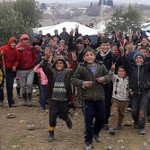
photo credit: Knitting a brighter future for Syrian refugees in Lebanon via photopin (license)
Next Post

January 7, 2016 A New Year, A New Series: The Intersection of Film and Faith
Browse Our Archives
Select a Category Books Charis Christian Witness Church Year Conversation Creativity Cultural Engagement Curiosity Current Events Film Jesus Lectionary Message Literature Lutheran Theology Politics Story Television Theology Uncategorized
Select a Month December 2017 November 2017 October 2017 September 2017 August 2017 July 2017 June 2017 May 2017 April 2017 March 2017 February 2017 December 2016 October 2016 August 2016 July 2016 June 2016 May 2016 April 2016 March 2016 February 2016 January 2016 December 2015 November 2015 October 2015 September 2015 August 2015 July 2015 June 2015 May 2015 April 2015 March 2015 February 2015 January 2015 December 2014 November 2014 October 2014
Follow Us!
TAKE THE
Religious Wisdom Quiz
What was the primary method of food preservation in Biblical times?
Select your answer to see how you score.
Salting Smoking Drying Pickling
Related posts from Rebecca Florence Miller


A New Normal: Grief and Facing the Brokenness...

An Interview with the Christian and Atheist Friends...

Our Response to Sexual Abuse Should Not Be...
TRENDING AT PATHEOS Evangelical

The REST of Your Life: A Creative Wrestles...
This week I had a conversation with a good friend from church....

How the author of the world's best hymn...
I've been working with John Newton for a while now. This makes...

Long before this Lectio Divina, Psalm 130 - the song - started...

What About the Trees? Another Living Parable
After I finished writing the last article about falling leaves as a...

Why Classical Education Is a Conversation, Not a...
Come and Read: Joy in Classical Education When I was a little...

Cornell University has received a great deal of negative publicity and intense...
view all Evangelical blogs
Ad-Free & Subscriber Log-In Subscription Support
- About Us
- 2026 Calendar
- Videos
- Podcasts
- Library of World Religions
- Faith In Media Tracker
- Advertise With Us
- Write for Us
- Privacy Policy
- Terms of Service
- Do Not Sell My Data
- Contact Us
- Radiant Digital
- Manage Newsletter Subscriptions
- Unsubscribe From Notifications
- Sitemap
Copyright 2008-2026, Patheos. All rights reserved.
Subscription Support Ad-Free & Subscriber Log-In
Follow Patheos