
BuddhistCatholicContemplativeEvangelicalGeneral ChristianHinduJewishLatter-day SaintMuslimNew VisionsProgressive Christian
Beliefs
- Buddhist
- Catholic
- Contemplative
- Evangelical
- General Christian
- Hindu
- Jewish
- Latter-day Saint
- More Voices
- Muslim
- New Visions
- Pagan
- Progressive Christian
Topics
- Religion News
- Food and Religion
- Sports and Religion
- Religious Art
- Religious Music and Entertainment
- Religious Events
- History and Religion
- Style and Religion
- Politics and Religion
- Women in Religion
- Recreation Outdoors and Religion
- Business Finance and Religion
- Careers Workplace and Religion
- Education and Religion
- Family Parenting and Religion
- Health Fitness and Religion
- Home and Religion
- Relationships and Religion
- Technology and Religion
- Travel and Religion
Columnists
- Buddhist Columnists
- Business Finance and Religion Columnists
- Careers Workplace and Religion Columnists
- Catholic Columnists
- Contemplative Columnists
- Education and Religion Columnists
- Evangelists Columnists
- Family Parenting and Religion Columnists
- General Christian Columnists
- Health Fitness and Religion Columnists
- Hindu Columnists
- History and Religion Columnists
- Home and Religion Columnists
- Jewish Columnists
- More Voices Columnists
- Latter Day Columnists
- Muslim Columnists
- New Visions Columnists
- Nonreligious Columnists
- Pagan Columnists
- Politics and Religion Columnists
- Progressive Columnists
- Recreation Outdoors and Religion Columnists
- Relationships and Religion Columnists
- Religion News Columnists
- Religious Art Columnists
- Religious Events Columnists
- Religious Music and Entertainment Columnists
- Sports and Religion Columnists
- Style and Religion Columnists
- Technology and Religion Columnists
- Travel and Religion Columnists
- Women in Religion Columnists
Resource Library
- 2026 Calendar
- Library of World Religions
- The 100 Most Holy Places on Earth
- Patheos Answers
- Podcasts
- Videos
- Faith Leaders Database
- Anglican Episcopalian
- Bahai
- Baptist
- Buddhism
- Christianity
- Confucianism
- Eastern Orthodoxy
- Hinduism
- Holiness and Pentecostal
- ISKCON
- Islam
- Judaism
- Lutheran
- Methodist
- The Church of Jesus Christ of Latter-day Saints
- New Age
- Paganism
- Presbytarian and Reformed
- Protestantism
- Religion Behind the Scenes
- Roman Catholic
- Scientology
- Shia Islam
- Sikhism
- Sufism
- Sunni Islam
- Taoism
- Zen
- See all religions
Research Tools
 Ad-Free & Subscriber Log-In Subscription Support
Ad-Free & Subscriber Log-In Subscription Support
Follow Patheos 

- Trending:
- Forgiveness
- |
- Marriage
- |
- Consciousness
- |
- Death Penalty
- |
- Election
- |
- Halloween
 Rebecca Florence Miller
- Home
- Evangelical
- With Pathos and Humor, The Skeleton Twins Evokes Water as Both Life and Death
With Pathos and Humor, The Skeleton Twins Evokes Water as Both Life and Death
Last updated on: August 17, 2015 at 11:32 am by Rebecca Florence Miller
With Pathos and Humor, The Skeleton Twins Evokes Water as Both Life and Death 2015-08-17T11:32:30-06:00 Rebecca Florence Miller
Patheos Explore the world's faith through different perspectives on religion and spirituality! Patheos has the views of the prevalent religions and spiritualities of the world.
© 2014 – Roadside Attractions
Water can mean death. It can be a place of drowning, suicide, natural disaster. For those unable to swim, it can be a source of terror. In wild rapids, water can be a place where we feel trapped against the current, unable to free ourselves.
It can also mean life. It can be the source of satisfaction for our thirst, the washing and cleansing of our dirty bodies. Babies are born when the “water” of the womb breaks forth. New life pushes into the world after this splash and dribble of water.
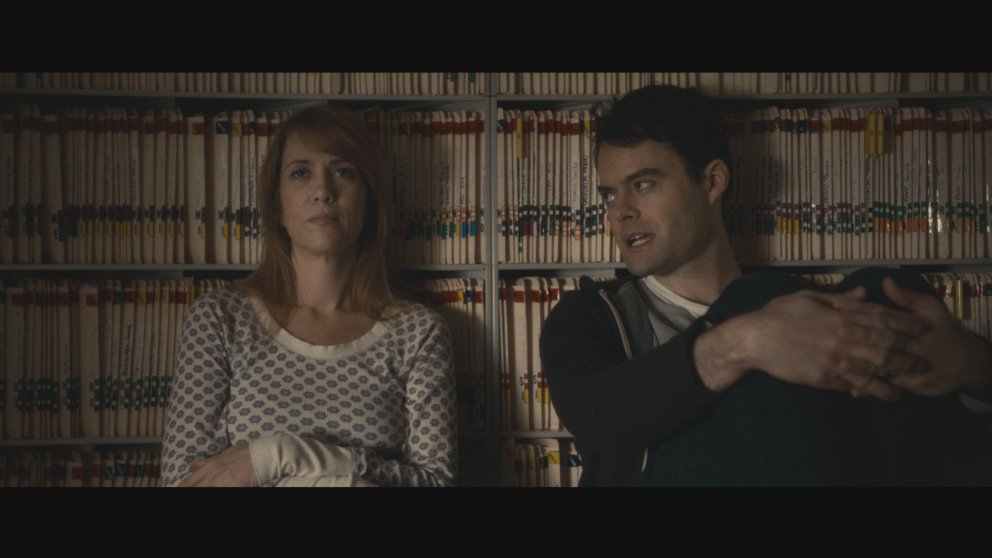
A recent film provides marvelous images of the death and life found in water. The Skeleton Twins, a film now streaming on Netflix, stars Kristen Wiig and Bill Hader and evokes these themes with a strikingly authentic mix of pathos and humor.
Though this film deals with serious themes, its genuine, quiet humor provides an entry point for us in what can be awkward, difficult topics. Because the humor seems to be shot through with love, it never feels off-key or inappropriate to the subject matter. The genuine, engaging platonic chemistry between Wiig and Hader provides us with a deep emotional connection to their well-being as well.
The comedians play twins Maggie and Milo, dubbed “my gruesome twosome” by their Halloween-loving, eccentric father. After an upbringing with a pair of dysfunctional parents (Mom is lost in navel-gazing “spirituality,” and Dad is lost in an obsession with death and depression that ultimately leads to suicide by means of jumping off a bridge), both are lost in depression and isolation.
Though a dispute ten years in the past has kept them apart until now, their personal struggles are shockingly parallel. They live in a morass of lies they are telling themselves (and others), patterns of self-destructive behavior, and deep despair, even as they long to escape all of these patterns.
The film begins with Milo attempting suicide, evoking the death-dealing qualities of water when he dumps a photo of him and a lover into his fish tank of beloved goldfish and then sinks into a tub and slits his wrists. (As an aside, the way this film handles this violent act should be a primer for the sensitive, compassionate handling of potentially graphic material in film; we are shown a potent image, but it is never gratuitous or voyeuristic. This continues to be a trend for the rest of the film as it interacts with some self-destructive choices made by both Maggie and Milo.) I’ve never seen Hader more vulnerable than when the camera looks into his eyes before and during this act of despair. As viewers, we feel we have been let in to see legitimate pain; although we know that Hader is acting, it is also true that the opposite side of the coin of comedy is pain and suffering. Many comedians begin their careers as a way of coping with pain and alienation. The moment of vulnerability is so believable that the viewer feels they are being allowed to see not only Milo’s pain but something of the private pain that Hader has experienced in life. His willingness to let down the defense mechanisms of loud jokes and frenetic comedic activity to allow the viewer in in this way should be commended.
Meanwhile, across the country, a despairing Maggie is ready to pop a handful of pills and end her life on the same day. All that was said above of Hader can be said again of Wiig. She too allows us into a quiet vulnerability that is daring and courageous. Just as she is about to swallow these pills and end her life, she receives a phone call that her brother has tried to commit suicide and has been rescued. Pulled out of her inner despair by her brother’s need, she rushes to his side in the mental health ward at the hospital. The hospital room again evokes water with its washed-out aqua color. Will water mean life or death for Milo?
Initially, Maggie tries to maintain her role of “put-together older sister.” She has the normal, caring husband; she is trying to have a baby; she is taking classes to learn new hobbies. Perfect. But her inner disquiet continues. She has secrets–big ones–and she is slowly drowning in her despair.
Milo tries to portray an image of “having it together” too. Even as the actors evoke tremendous vulnerability, the characters they play struggle to maintain relationships of vulnerability and truth. Over the course of the film, however, the walls begin to come down. Throughout the film, we see the repeated image of water being evoked, but until the very end, it is used to convey death. Maggie and Milo are drowning in death-dealing despair, constantly returning to that which is destroying them and returning to the patterns they saw in childhood, but seemingly powerless to get free. In one scene, when water becomes the site of yet another death, Maggie memorably tries to revive that which is dead, with utter futility.
In the end, it is only the fellowship of brokenness that will save Maggie and Milo. In two powerful closing images (which I will not spoil for you), when we see them come together, they discover the power of water to bring new life. Alone in water, we can feel we are drowning. With a community of fellow broken people, we can begin to see hope and become fellow swimmers side by side, no longer afraid of the depths.
Although the filmmakers in their visualization of the themes of life and death through water are undoubtedly intending a secular interpretation, as a Christian, I could not help but connect the images and themes of the film with images and themes found in my faith.
Previous Post

August 3, 2015
Blood Brother: A Documentary That Shows How Deeds Can Preach
Next Post

August 20, 2015 Straight Outta Compton: Some Truth, But Too Much Hagiography
Browse Our Archives
Select a Category Books Charis Christian Witness Church Year Conversation Creativity Cultural Engagement Curiosity Current Events Film Jesus Lectionary Message Literature Lutheran Theology Politics Story Television Theology Uncategorized
Select a Month December 2017 November 2017 October 2017 September 2017 August 2017 July 2017 June 2017 May 2017 April 2017 March 2017 February 2017 December 2016 October 2016 August 2016 July 2016 June 2016 May 2016 April 2016 March 2016 February 2016 January 2016 December 2015 November 2015 October 2015 September 2015 August 2015 July 2015 June 2015 May 2015 April 2015 March 2015 February 2015 January 2015 December 2014 November 2014 October 2014
Follow Us!
TAKE THE
Religious Wisdom Quiz
How many commandments were written on stone tablets?
Select your answer to see how you score.
Seven Ten Twelve Thirteen
Related posts from Rebecca Florence Miller

A New Normal: Grief and Facing the Brokenness...

An Interview with the Christian and Atheist Friends...

#Loser: How the Call of Christ Is Antithetical...

Conflict and Challenge, instead of Cheap Grace
TRENDING AT PATHEOS Evangelical

How the author of the world's best hymn...
I've been working with John Newton for a while now. This makes...

Long before this Lectio Divina, Psalm 130 - the song - started...

What About the Trees? Another Living Parable
After I finished writing the last article about falling leaves as a...

Why Classical Education Is a Conversation, Not a...
Come and Read: Joy in Classical Education When I was a little...

Falling Leaves: A Living Parable on Letting Go
I’ve spent the vast majority of my life in the southeast corner...

Cornell University has received a great deal of negative publicity and intense...
view all Evangelical blogs
Ad-Free & Subscriber Log-In Subscription Support
- About Us
- 2026 Calendar
- Videos
- Podcasts
- Library of World Religions
- Faith In Media Tracker
- Advertise With Us
- Write for Us
- Privacy Policy
- Terms of Service
- Do Not Sell My Data
- Contact Us
- Radiant Digital
- Manage Newsletter Subscriptions
- Unsubscribe From Notifications
- Sitemap
Copyright 2008-2026, Patheos. All rights reserved.
Subscription Support Ad-Free & Subscriber Log-In
Follow Patheos