
BuddhistCatholicContemplativeEvangelicalGeneral ChristianHinduJewishLatter-day SaintMuslimNew VisionsProgressive Christian
Beliefs
- Buddhist
- Catholic
- Contemplative
- Evangelical
- General Christian
- Hindu
- Jewish
- Latter-day Saint
- More Voices
- Muslim
- New Visions
- Pagan
- Progressive Christian
Topics
- Religion News
- Food and Religion
- Sports and Religion
- Religious Art
- Religious Music and Entertainment
- Religious Events
- History and Religion
- Style and Religion
- Politics and Religion
- Women in Religion
- Recreation Outdoors and Religion
- Business Finance and Religion
- Careers Workplace and Religion
- Education and Religion
- Family Parenting and Religion
- Health Fitness and Religion
- Home and Religion
- Relationships and Religion
- Technology and Religion
- Travel and Religion
Columnists
- Buddhist Columnists
- Business Finance and Religion Columnists
- Careers Workplace and Religion Columnists
- Catholic Columnists
- Contemplative Columnists
- Education and Religion Columnists
- Evangelists Columnists
- Family Parenting and Religion Columnists
- General Christian Columnists
- Health Fitness and Religion Columnists
- Hindu Columnists
- History and Religion Columnists
- Home and Religion Columnists
- Jewish Columnists
- More Voices Columnists
- Latter Day Columnists
- Muslim Columnists
- New Visions Columnists
- Nonreligious Columnists
- Pagan Columnists
- Politics and Religion Columnists
- Progressive Columnists
- Recreation Outdoors and Religion Columnists
- Relationships and Religion Columnists
- Religion News Columnists
- Religious Art Columnists
- Religious Events Columnists
- Religious Music and Entertainment Columnists
- Sports and Religion Columnists
- Style and Religion Columnists
- Technology and Religion Columnists
- Travel and Religion Columnists
- Women in Religion Columnists
Resource Library
- 2026 Calendar
- Library of World Religions
- The 100 Most Holy Places on Earth
- Patheos Answers
- Podcasts
- Videos
- Faith Leaders Database
- Anglican Episcopalian
- Bahai
- Baptist
- Buddhism
- Christianity
- Confucianism
- Eastern Orthodoxy
- Hinduism
- Holiness and Pentecostal
- ISKCON
- Islam
- Judaism
- Lutheran
- Methodist
- The Church of Jesus Christ of Latter-day Saints
- New Age
- Paganism
- Presbytarian and Reformed
- Protestantism
- Religion Behind the Scenes
- Roman Catholic
- Scientology
- Shia Islam
- Sikhism
- Sufism
- Sunni Islam
- Taoism
- Zen
- See all religions
Research Tools
 Ad-Free & Subscriber Log-In Subscription Support
Ad-Free & Subscriber Log-In Subscription Support
Follow Patheos 

- Trending:
- Forgiveness
- |
- Marriage
- |
- Consciousness
- |
- Death Penalty
- |
- Election
- |
- Halloween
 Rebecca Florence Miller
- Home
- Evangelical
- Show Me a Hero: HBO’s Zeitgeisty Historical Miniseries Deals with Housing Desegregation in the ’80s
Show Me a Hero: HBO’s Zeitgeisty Historical Miniseries Deals with Housing Desegregation in the ’80s
Last updated on: August 26, 2015 at 8:00 pm by Rebecca Florence Miller
Show Me a Hero: HBO’s Zeitgeisty Historical Miniseries Deals with Housing Desegregation in the ’80s 2015-08-26T20:00:52-06:00 Rebecca Florence Miller
Patheos Explore the world's faith through different perspectives on religion and spirituality! Patheos has the views of the prevalent religions and spiritualities of the world.
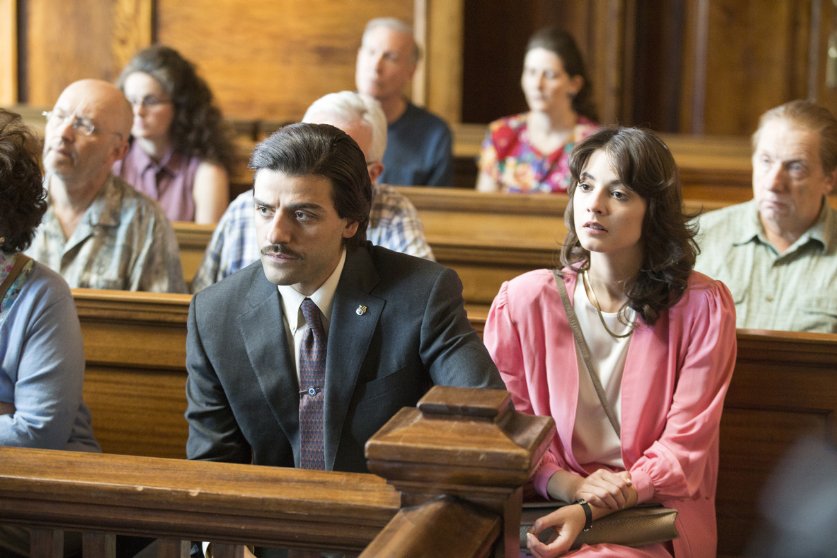
Photo by Paul Schiraldi/HBO Entertai – © 2015 HBO
“Show me a hero and I will write you a tragedy,” F. Scott Fitzgerald said.
Political heroism certainly does have its costs. Our current election cycle–and past history–have made abundantly clear that playing into people’s fears of “the other” is politically advantageous. You can get popular suggesting we throw out the fourteenth amendment to the Constitution or that most illegal immigrants are rapists and murderers who should be deported. You can get elected promising to be tough on crime, promising “three strikes and you’re out,” and promising harsh mandatory minimum sentences. You can get elected trumpeting against “welfare queens,” regardless of how true the stereotype is.
When politicians validate our fears, they encourage us to consider that we the hearers are fundamentally good at heart. They urge us to regard the other as the corrupter of our fundamental goodness. They encourage even Christians to effectively reject original sin in themselves but affirm it in their neighbor. If you just tell people that they are right to fear “the other,” they will love you and make you successful. People will cheer loudly, not regarding the reality that your proposals might be expensive and unrealistic, not regarding that they will stoke violent hatred in some, not regarding the lack of empathy that such proposals include.
HBO’s miniseries Show Me a Hero (written and produced by The Wire‘s David Simon and directed by Paul Haggis) brings a zeitgeisty, everything-old-is-new-again political sensibility to us today in the era of #BlackLivesMatter. As so much of the white community has become reawakened to the current reality of civil rights violations against our African-American brothers and sisters, we are more ready than ever to learn about yet another dark chapter from the history of black-white relations. I watched this miniseries fresh on the heels of listening to the very important This American Life podcast, “The Problem We All Live With,” which deals with the one thing that helps inner city students better their performance: school integration. In this episode, we hear recordings of real (and recent) school board meetings full of raucous, angry white parents who cannot bear the idea that inner city black students would come to their white school. We hear parents convinced that the black students will bring crime and drugs, simply because they come from an underprivileged area (fears that do not come to fruition). We hear parents clueless about the fact that whites use drugs at about the same rate as do blacks (and if there is a group that uses them at a higher rate than the other, it’s whites). It’s not the black community that will bring drugs to the school; they’re already there, of course. Sin and brokenness are not outside the camp; they are already inside it.
In Show Me a Hero, nearly identical scenes to those in the This American Life episode play out at city council meetings in Yonkers, New York. The story centers around a Councilman who becomes Mayor Nick Wasicsko. Only 28 when he was elected mayor in 1987, Wasicsko is an unusual focal point for a film about racial injustice in America. In a normal historical drama like this one, the focal point would be NAACP attorney Michael H. Sussman or the courageous and beleaguered Judge Sand. You know the one. The long-suffering white guy (or gal) who has come to deliver black people–just as soon as he (or she) wins their trust! The white guy (or gal) who never wavers from his (or her) commitment to civil rights. The good guy (or gal)). Think Atticus Finch (at least until Set Me a Watchman came out) or teacher Louanne Johnson in Dangerous Minds.
But in this miniseries, Sussman and Sand are tangential characters, and Wasicsko is the focal point. Rather than neatly and deftly cleaning up history for us so that we can have our white savior while we munch our white, buttery popcorn, we get Wasicsko, a leader who is much more complicated in his relationship to civil rights–and yet also ultimately courageous.
As the miniseries begins, after forty years of intentionally segregated housing and schools, Judge Leonard Sand has handed down a ruling that new public housing (which was largely used by black and Hispanic residents) be built on the white, middle class side of Yonkers. New councilman Nick Wasicsko starts out opposed to the judge’s ruling and determined to challenge it all the way through the appeal court process. In fact, he ends up getting elected mayor precisely based on that position.
The angry white residents of Yonkers don’t want to give up until their dying breath. In fact, as Judge Sand continues to impose penalties on the City of Yonkers for refusing to obey his order, penalties that will bankrupt the city, lay people off from their jobs, and shut down city services, some residents still want to fight the court order out of sheer stubbornness. Wasicsko begins to see the writing on the wall, however. He realizes that resisting the judge’s order–even though he initially does not agree with it–is ultimately going to be bad for the City of Yonkers. Courageously, he begins to fight for the city council to go along with the judge’s order and stop resisting it.
In the midst of the melee, we see the impact of the housing situation on a number of secondary characters who live in public housing. We also see the bitter, raucous city council meetings. In the height of irony and lack of self-awareness, we see whites who are opposed to Judge Sand marching and chanting, “What do want? Justice! When do we want it? Now!” We see the weariness of the black community, a community who has just gotten used to the way things are. “We’re at the point where if they don’t want to live with us, why would we want to live with them?” says the tired Executive Director of the NAACP.
Previous Post

August 20, 2015
Straight Outta Compton: Some Truth, But Too Much Hagiography

Browse Our Archives
Select a Category Books Charis Christian Witness Church Year Conversation Creativity Cultural Engagement Curiosity Current Events Film Jesus Lectionary Message Literature Lutheran Theology Politics Story Television Theology Uncategorized
Select a Month December 2017 November 2017 October 2017 September 2017 August 2017 July 2017 June 2017 May 2017 April 2017 March 2017 February 2017 December 2016 October 2016 August 2016 July 2016 June 2016 May 2016 April 2016 March 2016 February 2016 January 2016 December 2015 November 2015 October 2015 September 2015 August 2015 July 2015 June 2015 May 2015 April 2015 March 2015 February 2015 January 2015 December 2014 November 2014 October 2014
Follow Us!
TAKE THE
Religious Wisdom Quiz
True or False: Mark's Gospel is the shortest of the four Gospels.
Select your answer to see how you score.
FALSE TRUE
Related posts from Rebecca Florence Miller


A New Normal: Grief and Facing the Brokenness...

An Interview with the Christian and Atheist Friends...

Our Response to Sexual Abuse Should Not Be...
TRENDING AT PATHEOS Evangelical

How the author of the world's best hymn...
I've been working with John Newton for a while now. This makes...

Long before this Lectio Divina, Psalm 130 - the song - started...

What About the Trees? Another Living Parable
After I finished writing the last article about falling leaves as a...

Why Classical Education Is a Conversation, Not a...
Come and Read: Joy in Classical Education When I was a little...

Falling Leaves: A Living Parable on Letting Go
I’ve spent the vast majority of my life in the southeast corner...

Cornell University has received a great deal of negative publicity and intense...
view all Evangelical blogs
Ad-Free & Subscriber Log-In Subscription Support
- About Us
- 2026 Calendar
- Videos
- Podcasts
- Library of World Religions
- Faith In Media Tracker
- Advertise With Us
- Write for Us
- Privacy Policy
- Terms of Service
- Do Not Sell My Data
- Contact Us
- Radiant Digital
- Manage Newsletter Subscriptions
- Unsubscribe From Notifications
- Sitemap
Copyright 2008-2026, Patheos. All rights reserved.
Subscription Support Ad-Free & Subscriber Log-In
Follow Patheos