
BuddhistCatholicContemplativeEvangelicalGeneral ChristianHinduJewishLatter-day SaintMuslimNew VisionsProgressive Christian
Beliefs
- Buddhist
- Catholic
- Contemplative
- Evangelical
- General Christian
- Hindu
- Jewish
- Latter-day Saint
- More Voices
- Muslim
- New Visions
- Pagan
- Progressive Christian
Topics
- Religion News
- Food and Religion
- Sports and Religion
- Religious Art
- Religious Music and Entertainment
- Religious Events
- History and Religion
- Style and Religion
- Politics and Religion
- Women in Religion
- Recreation Outdoors and Religion
- Business Finance and Religion
- Careers Workplace and Religion
- Education and Religion
- Family Parenting and Religion
- Health Fitness and Religion
- Home and Religion
- Relationships and Religion
- Technology and Religion
- Travel and Religion
Columnists
- Buddhist Columnists
- Business Finance and Religion Columnists
- Careers Workplace and Religion Columnists
- Catholic Columnists
- Contemplative Columnists
- Education and Religion Columnists
- Evangelists Columnists
- Family Parenting and Religion Columnists
- General Christian Columnists
- Health Fitness and Religion Columnists
- Hindu Columnists
- History and Religion Columnists
- Home and Religion Columnists
- Jewish Columnists
- More Voices Columnists
- Latter Day Columnists
- Muslim Columnists
- New Visions Columnists
- Nonreligious Columnists
- Pagan Columnists
- Politics and Religion Columnists
- Progressive Columnists
- Recreation Outdoors and Religion Columnists
- Relationships and Religion Columnists
- Religion News Columnists
- Religious Art Columnists
- Religious Events Columnists
- Religious Music and Entertainment Columnists
- Sports and Religion Columnists
- Style and Religion Columnists
- Technology and Religion Columnists
- Travel and Religion Columnists
- Women in Religion Columnists
Resource Library
- 2026 Calendar
- Library of World Religions
- The 100 Most Holy Places on Earth
- Patheos Answers
- Podcasts
- Videos
- Faith Leaders Database
- Anglican Episcopalian
- Bahai
- Baptist
- Buddhism
- Christianity
- Confucianism
- Eastern Orthodoxy
- Hinduism
- Holiness and Pentecostal
- ISKCON
- Islam
- Judaism
- Lutheran
- Methodist
- The Church of Jesus Christ of Latter-day Saints
- New Age
- Paganism
- Presbytarian and Reformed
- Protestantism
- Religion Behind the Scenes
- Roman Catholic
- Scientology
- Shia Islam
- Sikhism
- Sufism
- Sunni Islam
- Taoism
- Zen
- See all religions
Research Tools
 Ad-Free & Subscriber Log-In Subscription Support
Ad-Free & Subscriber Log-In Subscription Support
Follow Patheos 

- Trending:
- Forgiveness
- |
- Marriage
- |
- Consciousness
- |
- Death Penalty
- |
- Election
- |
- Halloween
 Rebecca Florence Miller
- Home
- Evangelical
- Rachel Held Evans: Willing to Be a Messy Christian for the Sake of a Messy World
Rachel Held Evans: Willing to Be a Messy Christian for the Sake of a Messy World
Last updated on: May 11, 2015 at 5:55 pm by Rebecca Florence Miller
Rachel Held Evans: Willing to Be a Messy Christian for the Sake of a Messy World 2015-05-11T17:55:09-06:00 Rebecca Florence Miller
Patheos Explore the world's faith through different perspectives on religion and spirituality! Patheos has the views of the prevalent religions and spiritualities of the world.
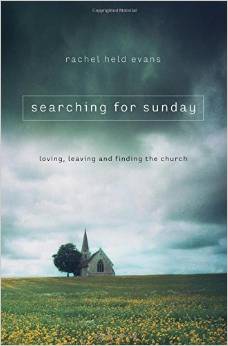 Rachel Held Evans wrestles with the Church and with faith and she does it publicly. This makes some people uncomfortable, but it uniquely positions her as a Christian messenger in the postmodern era.
In Evans’s new book, Searching for Sunday, she gives us artful meditations, grounded in church history and tradition, reaching to postmodern seekers today. Evans has landed in an Anglican church for now, but she still views her roots in the evangelical church with gratitude. A work of creative nonfiction that could well be compared to the work of writers such as Kathleen Norris (Dakota, Amazing Grace, The Cloister Walk), Searching for Sunday is structured around the seven sacraments (baptism, confession, holy orders, communion, confirmation, anointing the sick, and marriage) of Roman Catholic and Orthodox churches (Evans is an admirer of Orthodox faith). She says, “My aim in employing these seven sacraments is not theological or ecclesiological, but rather literary. They are the tent pegs anchoring my little tabernacle of a story to the ground. I chose them because they have something of a universal quality, for even in churches that are not expressly sacramental, the truths of the sacraments are generally shared” (xvii). Evans is drawing us all back together to a common core of Christian belief that is ancient but also freshly expressed in our own time and she’s doing it by pointing to the deeply earthy and real and grounded practices of the sacraments.
I resonate with this hearkening back to the traditions and beliefs of an ancient church. In Evans’s desire to connect with more liturgical connections, with the history of the church, and with old theology, Evans is able to step outside of the boxing in that often occurs in American evangelicalism. She is able to transform the conversation in new (and old) ways. She also rediscovers some very concrete aspects of Christianity: the material stuff of the sacraments (oil, bread, wine, water), the structure of history, the comfort of prayers and creeds and theology that are thousands of years old.
Evans’s reconnection to church history is particularly helpful and instructive for the Church today. Oftentimes, American evangelicals act as if there were only a few periods of church history that truly mattered: the book of Acts, the martyrs (but only their death, not their teaching), Martin Luther (who saved Christianity from Catholicism, but who should be ignored on infant baptism), other reformers, and American Christianity. We do ourselves a great disservice when we ignore our roots. Not only that, but when we ignore the mistakes of the past, we risk making similar mistakes all over again. Knowing the whole of our church history is deeply important to being church today. More and more young evangelicals and post-evangelicals are becoming conscious of the importance of these dynamics. It is a wonderful development.
Evans’s meditations on baptism are beautiful and shot through with grace. She writes of the centrality of death and resurrection in baptism:
Baptism reminds us that there’s no ladder to holiness to climb, no self-improvement plan to follow. It’s just death and resurrection, over and over again, day after day, as God reaches down into our deepest graves and with the same power that raised Jesus from the dead wrests us from our pride, our apathy, our fear, our prejudice, our anger, our hurt, and our despair. Most days I don’t know which is harder for me to believe: that God reanimated the brain function of a man three days dead, or that God can bring back to life all the beautiful things we have killed (21).
This quotation leads into another strength of the book: Evans’s willingness to be very open about her struggles with the Church and her experience of doubt.
I think so often of how the world changed forever when the internet was born. I lived through this change. Most of my readers did as well. You can remember a time before the internet, and you can compare that time to today. Before the internet, when you wanted knowledge, you went to an arbitrator of knowledge: a pastor, a teacher, a professor, a head of an institution, a political leader. Now, we all have access to all kinds of information over the internet. We all can get information from many sources: some credible, some not. It’s sometimes difficult to sort out which sources are credible. But what has done is probably not going to be undone. The world has changed forever. Institutional heads no longer control us.
Previous Post
May 11, 2015
An Open Letter of Gratitude to Police Officers
Next Post
May 18, 2015 G-Dog: Christian Love in Action
Browse Our Archives
Select a Category Books Charis Christian Witness Church Year Conversation Creativity Cultural Engagement Curiosity Current Events Film Jesus Lectionary Message Literature Lutheran Theology Politics Story Television Theology Uncategorized
Select a Month December 2017 November 2017 October 2017 September 2017 August 2017 July 2017 June 2017 May 2017 April 2017 March 2017 February 2017 December 2016 October 2016 August 2016 July 2016 June 2016 May 2016 April 2016 March 2016 February 2016 January 2016 December 2015 November 2015 October 2015 September 2015 August 2015 July 2015 June 2015 May 2015 April 2015 March 2015 February 2015 January 2015 December 2014 November 2014 October 2014
Follow Us!
TAKE THE
Religious Wisdom Quiz
Who rebelled against David and declared himself king at Hebron?
Select your answer to see how you score.
Adonijah Sheba Amnon Absalom
Related posts from Rebecca Florence Miller


A New Normal: Grief and Facing the Brokenness...

An Interview with the Christian and Atheist Friends...

Our Response to Sexual Abuse Should Not Be...
TRENDING AT PATHEOS Evangelical

How the author of the world's best hymn...
I've been working with John Newton for a while now. This makes...

Long before this Lectio Divina, Psalm 130 - the song - started...

What About the Trees? Another Living Parable
After I finished writing the last article about falling leaves as a...

Why Classical Education Is a Conversation, Not a...
Come and Read: Joy in Classical Education When I was a little...

Falling Leaves: A Living Parable on Letting Go
I’ve spent the vast majority of my life in the southeast corner...

Cornell University has received a great deal of negative publicity and intense...
view all Evangelical blogs
Ad-Free & Subscriber Log-In Subscription Support
- About Us
- 2026 Calendar
- Videos
- Podcasts
- Library of World Religions
- Faith In Media Tracker
- Advertise With Us
- Write for Us
- Privacy Policy
- Terms of Service
- Do Not Sell My Data
- Contact Us
- Radiant Digital
- Manage Newsletter Subscriptions
- Unsubscribe From Notifications
- Sitemap
Copyright 2008-2026, Patheos. All rights reserved.
Subscription Support Ad-Free & Subscriber Log-In
Follow Patheos