
BuddhistCatholicContemplativeEvangelicalGeneral ChristianHinduJewishLatter-day SaintMuslimNew VisionsProgressive Christian
Beliefs
- Buddhist
- Catholic
- Contemplative
- Evangelical
- General Christian
- Hindu
- Jewish
- Latter-day Saint
- More Voices
- Muslim
- New Visions
- Pagan
- Progressive Christian
Topics
- Religion News
- Food and Religion
- Sports and Religion
- Religious Art
- Religious Music and Entertainment
- Religious Events
- History and Religion
- Style and Religion
- Politics and Religion
- Women in Religion
- Recreation Outdoors and Religion
- Business Finance and Religion
- Careers Workplace and Religion
- Education and Religion
- Family Parenting and Religion
- Health Fitness and Religion
- Home and Religion
- Relationships and Religion
- Technology and Religion
- Travel and Religion
Columnists
- Buddhist Columnists
- Business Finance and Religion Columnists
- Careers Workplace and Religion Columnists
- Catholic Columnists
- Contemplative Columnists
- Education and Religion Columnists
- Evangelists Columnists
- Family Parenting and Religion Columnists
- General Christian Columnists
- Health Fitness and Religion Columnists
- Hindu Columnists
- History and Religion Columnists
- Home and Religion Columnists
- Jewish Columnists
- More Voices Columnists
- Latter Day Columnists
- Muslim Columnists
- New Visions Columnists
- Nonreligious Columnists
- Pagan Columnists
- Politics and Religion Columnists
- Progressive Columnists
- Recreation Outdoors and Religion Columnists
- Relationships and Religion Columnists
- Religion News Columnists
- Religious Art Columnists
- Religious Events Columnists
- Religious Music and Entertainment Columnists
- Sports and Religion Columnists
- Style and Religion Columnists
- Technology and Religion Columnists
- Travel and Religion Columnists
- Women in Religion Columnists
Resource Library
- 2026 Calendar
- Library of World Religions
- The 100 Most Holy Places on Earth
- Patheos Answers
- Podcasts
- Videos
- Faith Leaders Database
- Anglican Episcopalian
- Bahai
- Baptist
- Buddhism
- Christianity
- Confucianism
- Eastern Orthodoxy
- Hinduism
- Holiness and Pentecostal
- ISKCON
- Islam
- Judaism
- Lutheran
- Methodist
- The Church of Jesus Christ of Latter-day Saints
- New Age
- Paganism
- Presbytarian and Reformed
- Protestantism
- Religion Behind the Scenes
- Roman Catholic
- Scientology
- Shia Islam
- Sikhism
- Sufism
- Sunni Islam
- Taoism
- Zen
- See all religions
Research Tools
 Ad-Free & Subscriber Log-In Subscription Support
Ad-Free & Subscriber Log-In Subscription Support
Follow Patheos 

- Trending:
- Forgiveness
- |
- Marriage
- |
- Consciousness
- |
- Death Penalty
- |
- Election
- |
- Halloween
 Rebecca Florence Miller
- Home
- Evangelical
- Kernels of Wisdom from Ken Wytsma in The Grand Paradox
Kernels of Wisdom from Ken Wytsma in The Grand Paradox
Last updated on: February 12, 2015 at 4:15 pm by Rebecca Florence Miller
Kernels of Wisdom from Ken Wytsma in The Grand Paradox 2015-02-12T16:15:54-06:00 Rebecca Florence Miller
Patheos Explore the world's faith through different perspectives on religion and spirituality! Patheos has the views of the prevalent religions and spiritualities of the world.
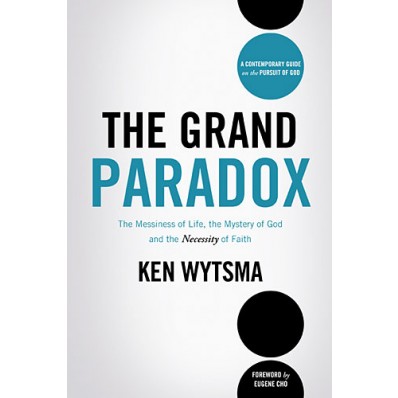
Our current selection for Patheos Book Club is Ken Wytsma’s The Grand Paradox: The Messiness of Life, the Mystery of God, and the Necessity of Faith.
Wytsma’s book reads somewhat like a collection of sermons, and toward the end I found myself wondering if the loose arrangement of topics in the book might be explained by each chapter being originally an oral address which was then adapted into a book. Nonetheless, if there is a common thread that holds together the different chapters, it is the idea of paradox, that two seemingly opposite things can be true at the same time. Wytsma illustrates the counterintuitive nature of paradox with a story from his childhood in Holland:
Because I was so young, my mom was careful to communicate time and again the danger of falling through thin ice while skating. She repeatedly taught me that if I ever fell through the ice, I should swim for the dark–not the light–spot above me. This is certainly counterintuitive, but the ice itself looks white from underneath, while the hole in the ice–the path of salvation appears dark (10).
Wytsma point is that what is true may not be immediately obvious. It may, in fact, be the opposite of what feels or looks right. He contends that the walk of faith is full of counter-intuitive truths like this:
-
Die to live.
-
Serve to gain.
-
Give to receive.
-
Lose your life to find it.
-
The first will be last.
-
The weak will be strong.
-
Walk by faith, not by sight.
-
Suffering can be a blessing (12-13).
Sometimes I did feel Wytsma was overly general and did not always make his case for each individual paradox, and sometimes I felt he needed to develop the answer to the “why?” question better: Why make the leap of faith and decide to trust God? Just because? I also felt that although I agree that many paradoxes do lie at the center of the Christian faith–and at the center of life itself–that does not mean that every single truth in life is a paradox. Nevertheless, despite these caveats, I was rewarded with some great gems of wisdom throughout this book and with the author’s genuine heart to love God and neighbor. Like the writer of Proverbs, Wytsma sprinkles memorable sayings (from himself and other writers) throughout his text. Many of these are helpful correctives to much of today’s American Christianity.
For example, Wytsma actively engages how the way of Jesus challenges the American Dream in his chapter on justice, “A World Made Right.” He writes:
There’s some bad news involved in discovering what God is up to. Engaging in justice–and especially, seeking to redress injustice–is not the shortest route to fulfilling the American Dream.
In material terms, in terms of personal comfort and ease, living justly is likely to be counterproductive (51).
Previous Post

February 10, 2015
50 Shades of Grey Glamorizes Intimate Partner Violence
Next Post
February 14, 2015 Samuel James on Comments on the Internet
Browse Our Archives
Select a Category Books Charis Christian Witness Church Year Conversation Creativity Cultural Engagement Curiosity Current Events Film Jesus Lectionary Message Literature Lutheran Theology Politics Story Television Theology Uncategorized
Select a Month December 2017 November 2017 October 2017 September 2017 August 2017 July 2017 June 2017 May 2017 April 2017 March 2017 February 2017 December 2016 October 2016 August 2016 July 2016 June 2016 May 2016 April 2016 March 2016 February 2016 January 2016 December 2015 November 2015 October 2015 September 2015 August 2015 July 2015 June 2015 May 2015 April 2015 March 2015 February 2015 January 2015 December 2014 November 2014 October 2014
Follow Us!
TAKE THE
Religious Wisdom Quiz
Which Psalm opens and closes with "Bless the Lord, O my soul"?
Select your answer to see how you score.
Psalm 103 Psalm 37 Psalm 1 Psalm 22
Related posts from Rebecca Florence Miller


A New Normal: Grief and Facing the Brokenness...

#Loser: How the Call of Christ Is Antithetical...

Conflict and Challenge, instead of Cheap Grace
TRENDING AT PATHEOS Evangelical

How the author of the world's best hymn...
I've been working with John Newton for a while now. This makes...

Long before this Lectio Divina, Psalm 130 - the song - started...

What About the Trees? Another Living Parable
After I finished writing the last article about falling leaves as a...

Why Classical Education Is a Conversation, Not a...
Come and Read: Joy in Classical Education When I was a little...

Falling Leaves: A Living Parable on Letting Go
I’ve spent the vast majority of my life in the southeast corner...

Cornell University has received a great deal of negative publicity and intense...
view all Evangelical blogs
Ad-Free & Subscriber Log-In Subscription Support
- About Us
- 2026 Calendar
- Videos
- Podcasts
- Library of World Religions
- Faith In Media Tracker
- Advertise With Us
- Write for Us
- Privacy Policy
- Terms of Service
- Do Not Sell My Data
- Contact Us
- Radiant Digital
- Manage Newsletter Subscriptions
- Unsubscribe From Notifications
- Sitemap
Copyright 2008-2026, Patheos. All rights reserved.
Subscription Support Ad-Free & Subscriber Log-In
Follow Patheos