
BuddhistCatholicContemplativeEvangelicalGeneral ChristianHinduJewishLatter-day SaintMuslimNew VisionsProgressive Christian
Beliefs
- Buddhist
- Catholic
- Contemplative
- Evangelical
- General Christian
- Hindu
- Jewish
- Latter-day Saint
- More Voices
- Muslim
- New Visions
- Pagan
- Progressive Christian
Topics
- Religion News
- Food and Religion
- Sports and Religion
- Religious Art
- Religious Music and Entertainment
- Religious Events
- History and Religion
- Style and Religion
- Politics and Religion
- Women in Religion
- Recreation Outdoors and Religion
- Business Finance and Religion
- Careers Workplace and Religion
- Education and Religion
- Family Parenting and Religion
- Health Fitness and Religion
- Home and Religion
- Relationships and Religion
- Technology and Religion
- Travel and Religion
Columnists
- Buddhist Columnists
- Business Finance and Religion Columnists
- Careers Workplace and Religion Columnists
- Catholic Columnists
- Contemplative Columnists
- Education and Religion Columnists
- Evangelists Columnists
- Family Parenting and Religion Columnists
- General Christian Columnists
- Health Fitness and Religion Columnists
- Hindu Columnists
- History and Religion Columnists
- Home and Religion Columnists
- Jewish Columnists
- More Voices Columnists
- Latter Day Columnists
- Muslim Columnists
- New Visions Columnists
- Nonreligious Columnists
- Pagan Columnists
- Politics and Religion Columnists
- Progressive Columnists
- Recreation Outdoors and Religion Columnists
- Relationships and Religion Columnists
- Religion News Columnists
- Religious Art Columnists
- Religious Events Columnists
- Religious Music and Entertainment Columnists
- Sports and Religion Columnists
- Style and Religion Columnists
- Technology and Religion Columnists
- Travel and Religion Columnists
- Women in Religion Columnists
Resource Library
- 2026 Calendar
- Library of World Religions
- The 100 Most Holy Places on Earth
- Patheos Answers
- Podcasts
- Videos
- Faith Leaders Database
- Anglican Episcopalian
- Bahai
- Baptist
- Buddhism
- Christianity
- Confucianism
- Eastern Orthodoxy
- Hinduism
- Holiness and Pentecostal
- ISKCON
- Islam
- Judaism
- Lutheran
- Methodist
- The Church of Jesus Christ of Latter-day Saints
- New Age
- Paganism
- Presbytarian and Reformed
- Protestantism
- Religion Behind the Scenes
- Roman Catholic
- Scientology
- Shia Islam
- Sikhism
- Sufism
- Sunni Islam
- Taoism
- Zen
- See all religions
Research Tools
 Ad-Free & Subscriber Log-In Subscription Support
Ad-Free & Subscriber Log-In Subscription Support
Follow Patheos 

- Trending:
- Forgiveness
- |
- Marriage
- |
- Consciousness
- |
- Death Penalty
- |
- Election
- |
- Halloween
 RDC: Reverend - Doctor - Coach
- Home
- Progressive Christian
- War Is Not Normal
War Is Not Normal
Last updated on: January 22, 2020 at 12:58 pm by Craig Morton
War Is Not Normal 2020-01-22T12:58:04-07:00 Craig Morton
Patheos Explore the world's faith through different perspectives on religion and spirituality! Patheos has the views of the prevalent religions and spiritualities of the world.
The United States’ has been at war in Iraq, Afghanistan, and other Persian or Southwest Asian for nearly 20 years. This is not normal. This is wrong. A generation of war is a costly human tragedy in terms of lives and money. It is a soul-souring force in terms of understanding, allowing us to become embittered toward others. It destroys imagination of the possibilities of hope and peace, coloring all our ingenuity toward feeding destruction. War has become normal. Allowing war to be come normal is a sin. If we think war is normal, we are broken people. War is wrong. It represents a failure. War deadens creative problem solving. War is not normal. 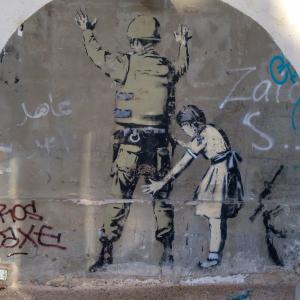
“Normal” Changes
Normal is a strange concept. A norm, is a rule, a standard, something to conform to. War, is the absolute breakdown of norms. It is the opposite of normal. Though, it is familiar, it is still not the norm toward which we aspire.
It is true, we are always in state of change. The cliché is true: “The only thing that is constant is change.” Try as we might, though, as social beings, taking our cues from others, we are constantly seeking to find a way to be, or to get back to, or approach “normal.” Whatever normal is, as ambiguous as it may be, it does have a force of gravity about it. Whether it be in economics, psychology, health and fitness, daily schedules, or politics, we have a hunch about normality. When we get sick, or have had a chaotic schedule, a hectic time at work, or a relationship that has gone off the rails, we will speak of normal as a goal, something to recapture. We say, “when things get back to normal.”
But what happens when something which was once abnormal, an aberration, a skewed form of living, becomes so familiar? In family systems theory, those situations become the setting for continuing pathology. A simple family genogram will demonstrate that normal can be unhealthy and damaging. In certain families, codependency is normal, or violence, or substance abuse, or toxic relationships are normal. Because something is normal it is not necessarily right.
Are we discerning enough to catch the difference between situational normality and ethical normality? In one view one accepts the familiarity and predictability as normal, and therefore correct, or even “good”. The other however, regardless of how commonplace, denies it from being morally acceptable. War is a failure. War is a moral failure. War is wrong.
War Deadens the Imagination
This is not a geopolitical commentary. This is an existential and psychological challenge. I don’t want my imagination to become militarized. One can find diapers in military camo print designs. When imagination sees all the opposition and challenge in the language of warfare, we limit our choices for response and reaction. Dr Lisa Schirch, research professor with the Center for Justice and Peacebuilding at Eastern Mennonite University, made a simple discovery. When defense and military responses are your only solutions, we escalate the problem. Schirch developed the “3D” initiative to deal with international conflict: development and dialogue before defense.
Schrich, a chapel address, pointed listeners Jesus’ approach as well as his words:
In Matthew [5:43-48], Jesus suggests we walk toward those with whom we disagree and those who are different. We greet them. We ask questions. We recognize their humanity. This is God’s security strategy. It is not just a moral strategy. It is also effective (A Mennonite in the Pentagon).
Her research and teaching has lead her to teach peacebuilding in the centers of military might: West Point, The US Army War College, and the Pentagon. “The top generals in the Pentagon have had one consistent message about conflict in the Middle East,” Schirch said. “’There is no military solution.” The lack of a military solution is the same as no solution – if your only frame of reference is warfare. In Martin Luther King’s Beyond Vietnam sermon at Riverside Church in New York, April 4, 1967, he quoted a Vietnamese monk who has said:
Each day the war goes on the hatred increased in the hearts of the Vietnamese and in the hearts of those of humanitarian instinct. The Americans are forcing even their friends into becoming their enemies. It is curious that the Americans, who calculate so carefully on the possibilities of military victory, do not realize that in the process they are incurring deep psychological and political defeat. The image of America will never again be the image of revolution, freedom, and democracy, but the image of violence and militarism.
A Longer View
In a typical myopic fashion, we look at our current context and quickly assert normalcy. We are prone, perhaps as a coping mechanism, to have a wide definition of normal. We adapt. Adaptation is required. But in the longer view of our history – is war normal? In view of our aspirations, is war normal? In view of our coping mechanisms, is war preferred to other alternatives? Is this the norm we go by? Has war and warring become our “go-to” response?
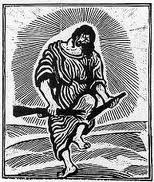
I remember as a kid when the war in Viet Nam concluded. I remember seeing the evening news, during which casualties and wounded were numbered like scores in a football game. Daily body counts. There were voices, loud voices that protested – arguing that war was not the normal state of things. Artists, especially popular musicians, tried to persuade that there was a competing normal toward which we should aspire. But then in 1974, it was done. We left Viet Nam. I remember thinking that this was the first time in my life that we were not at war. Now, since we have a generation of young people who have not known that experience of warlessness. How do we now, after nearly two decades, attempt to awaken the realization that war is wrong? How do we inspire the conception that war is a failure of diplomacy and humanity?
A Few Ideas
- Know the real toll: Estimated 500,000 in Afghanistan and Iraq, when including civilians, contractors, and other combatants. Thoughtfully become aware with the fact that 37,000 people are displaced daily due to conflict.
- Know the real cost: Since military spending, and much of the spending on warfare is with borrowed money, the 1.7 trillion, may end up costing about 7.9 trillion.
- Know the human experience: The Independent’s story about “NM” and how she and her family would “wait for death.” Watch this, from Save the Children and allow yourself to imagine the experiences of families.
Begin with these. Then expand your search for firsthand stories. When conversations arise about “defense” wonder, perhaps out loud, how much investment has there been in development and dialogue.
War is not normal. War is always wrong. Begin with these convictions.
Previous Post

January 16, 2020
Bravado, Cowardice, and De-escalation
Next Post

January 27, 2020 Giving Up on Civility
Browse Our Archives
Select a Category Advent Athletics Bible Bonhoeffer christianity church Coach Coaching common ground conflict devotional Doctor Faith Gospel of Luke Gospel of Matthew Hebrew Bible Hippies hospitality Immigration Jesus liturgical year loss memorial Missional music parish Politicians Politics pop music Preaching protest Racism Reverend self-image social cohesion social justice spirituality sterotypes theological Uncategorized welcome Wendy Wright workout mix
Select a Month January 2022 December 2021 November 2021 October 2021 September 2021 April 2021 December 2020 November 2020 October 2020 February 2020 January 2020 December 2019 November 2019 October 2019 September 2019 August 2019
Follow Us!
TAKE THE
Religious Wisdom Quiz
Who interpreted the handwriting on the wall?
Select your answer to see how you score.
Joseph Daniel Peter Paul
Related posts from RDC: Reverend - Doctor - Coach

RDC: Reverend – Doctor – Coach

Gaudete Sunday, the Third Week of Advent
RDC: Reverend – Doctor – Coach

RDC: Reverend – Doctor – Coach

RDC: Reverend – Doctor – Coach
TRENDING AT PATHEOS Progressive Christian

Why Christians Have a Sacred Duty to Vote:...
The Bible offers strong support for the sacred duty to vote. Here...

What Being a Modern-Day Apostle Means to Me
In my last column, I discussed the ins and outs of modern-day...

Did Ancient China Once Worship the God of...
Across human history, a common thread weaves through the origins of the...

Love Your Neighbor – Including Earth-Kin: Lev. 19,...
God’s command to love your neighbor means acting in an ethical and...

Lead a Church Study of “Jesus and Lao...
Guest writer Jack Thomas (The Irreverent Reverend) reflects on leading his church...

Principles for Understanding the Apostolic Ministry Today
Whenever people discover that my formal ministry title is "apostle," as in...
view all Progressive Christian blogs
Ad-Free & Subscriber Log-In Subscription Support
- About Us
- 2026 Calendar
- Videos
- Podcasts
- Library of World Religions
- Faith In Media Tracker
- Advertise With Us
- Write for Us
- Privacy Policy
- Terms of Service
- Do Not Sell My Data
- Contact Us
- Radiant Digital
- Manage Newsletter Subscriptions
- Unsubscribe From Notifications
- Sitemap
Copyright 2008-2026, Patheos. All rights reserved.
Subscription Support Ad-Free & Subscriber Log-In
Follow Patheos