
BuddhistCatholicContemplativeEvangelicalGeneral ChristianHinduJewishLatter-day SaintMuslimNew VisionsProgressive Christian
Beliefs
- Buddhist
- Catholic
- Contemplative
- Evangelical
- General Christian
- Hindu
- Jewish
- Latter-day Saint
- More Voices
- Muslim
- New Visions
- Pagan
- Progressive Christian
Topics
- Religion News
- Food and Religion
- Sports and Religion
- Religious Art
- Religious Music and Entertainment
- Religious Events
- History and Religion
- Style and Religion
- Politics and Religion
- Women in Religion
- Recreation Outdoors and Religion
- Business Finance and Religion
- Careers Workplace and Religion
- Education and Religion
- Family Parenting and Religion
- Health Fitness and Religion
- Home and Religion
- Relationships and Religion
- Technology and Religion
- Travel and Religion
Columnists
- Buddhist Columnists
- Business Finance and Religion Columnists
- Careers Workplace and Religion Columnists
- Catholic Columnists
- Contemplative Columnists
- Education and Religion Columnists
- Evangelists Columnists
- Family Parenting and Religion Columnists
- General Christian Columnists
- Health Fitness and Religion Columnists
- Hindu Columnists
- History and Religion Columnists
- Home and Religion Columnists
- Jewish Columnists
- More Voices Columnists
- Latter Day Columnists
- Muslim Columnists
- New Visions Columnists
- Nonreligious Columnists
- Pagan Columnists
- Politics and Religion Columnists
- Progressive Columnists
- Recreation Outdoors and Religion Columnists
- Relationships and Religion Columnists
- Religion News Columnists
- Religious Art Columnists
- Religious Events Columnists
- Religious Music and Entertainment Columnists
- Sports and Religion Columnists
- Style and Religion Columnists
- Technology and Religion Columnists
- Travel and Religion Columnists
- Women in Religion Columnists
Resource Library
- 2026 Calendar
- Library of World Religions
- The 100 Most Holy Places on Earth
- Patheos Answers
- Podcasts
- Videos
- Faith Leaders Database
- Anglican Episcopalian
- Bahai
- Baptist
- Buddhism
- Christianity
- Confucianism
- Eastern Orthodoxy
- Hinduism
- Holiness and Pentecostal
- ISKCON
- Islam
- Judaism
- Lutheran
- Methodist
- The Church of Jesus Christ of Latter-day Saints
- New Age
- Paganism
- Presbytarian and Reformed
- Protestantism
- Religion Behind the Scenes
- Roman Catholic
- Scientology
- Shia Islam
- Sikhism
- Sufism
- Sunni Islam
- Taoism
- Zen
- See all religions
Research Tools
 Ad-Free & Subscriber Log-In Subscription Support
Ad-Free & Subscriber Log-In Subscription Support
Follow Patheos 

- Trending:
- Forgiveness
- |
- Marriage
- |
- Consciousness
- |
- Death Penalty
- |
- Election
- |
- Halloween
 RDC: Reverend - Doctor - Coach
- Home
- Progressive Christian
- Stumps: The In-between and the Not-Yet
Stumps: The In-between and the Not-Yet
Last updated on: December 9, 2019 at 3:12 pm by Craig Morton
Stumps: The In-between and the Not-Yet 2019-12-09T15:12:27-07:00 Craig Morton
Patheos Explore the world's faith through different perspectives on religion and spirituality! Patheos has the views of the prevalent religions and spiritualities of the world.
A familiar motif in theological conversations is the “already but not yet” motif. The coming of Jesus? He has come already, but has not yet returned. The reign of peace and love announced as present by Jesus’ preaching, teaching, and living? It is already here…but not yet. Justice, compassion, mercy, the presence of God among God’s people and creation? Already here, and not yet.
There’s a painful gap between what was begun and what fulfillment looks like.
Life in the Not Yet
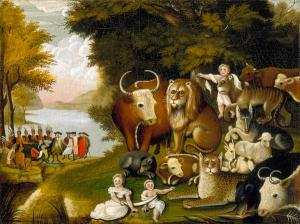 The prophet Isaiah comes up a lot in Advent readings. Isaiah lived in the midst of a longing for the initiation of God’s promise and our hope of a peaceable kingdom. But Isaiah lived between promise and fulfillment. Between promise and fulfillment is a difficult space. Freed from Egypt, the Israelites witnessed the down payment on the promise of liberty in how God alone freed them from Pharaoh:
The Lord is a warrior;
the Lord is his name.
‘Pharaoh’s chariots and his army he cast into the sea;
his picked officers were sunk in the Red Sea…
The enemy said, “I will pursue, I will overtake,
I will divide the spoil, my desire shall have its fill of them.
I will draw my sword, my hand shall destroy them.”
You blew with your wind, the sea covered them;
they sank like lead in the mighty waters. (Exodus 15:3-4,9-10)
But after this, the beginning of liberty, they roam the wilderness for decades. The pattern follows, when there is God’s grace and movement, the people of God move into the wilderness. From the united kingdom of David, to wilderness exile. From Jesus own baptism and annunciation, directly into wilderness and temptation. This pattern of blessing to wilderness is repeated.
In the short statement of “already but not yet”, we do not find adequate articulation of the nature of space between the “already” and the “not yet”. There is a space of waiting and journey. This is wilderness. The “already” is past and the “not yet” is looking forward. The present moment in the is wilderness.
Stumps
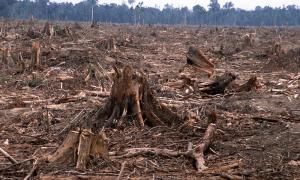
Isaiah paints a picture of the wilderness by focusing on one image. A stump. Isaiah speaks of a stump. Likely, there was more than one stump. I can imagine fields of stumps. Jeremiah describes Jerusalem as a wilderness or rubble and wild dogs (Jeremiah 9.11). Wilderness is no longer somewhere else, at a distance, but among us.
Armies in the ancient world would decimate the land or the conquered. Fields were salted, either out of a ritual of purity or just to make the soil unsuitable to crops. And forests were decimated:
Warfare was a particularly salient driver of deforestation, and the trees of Palestine paid heavilt for a litant of conquerors rapacity. Accounts of battles throughout the ages suggest that the modern abuse of nature – such as the application of Agent Orange by Americian tropps in Vietnam – is only the most recent link of a merciless chain. Vegetative destruction was certainly a part of conventional combat strategy in the ancient near east. (pg 19, All the Trees of the Forest: Israel’s Woodlands from the Bible to the Present).
Advent is Wilderness
Sometimes we enter a wilderness alone. Sometimes we share that place with others. In the wilderness we are confronted by small annoying questions about money, jobs, boredom and distraction. In the wilderness we are also confronted larger questions which threaten to undo our world. The wandering children of Israel, Elijah, and Jesus are tempted in the wilderness. Tempted to rely on their own wits, to run away, to leave God.
To enter the wilderness, though, is not place bereft of God. On the contrary. Distress, disappointment, impatience, boredom are all in the wilderness. Temped to look behind for what was or to peek over the horizon to the “not yet”, is an escape from the present grace of God’s love in the moment.
To escape the distress caused by regret for the past or fear about the future, this is the rule to follow: leave the past to the infinite mercy of God, the future to His good Providence, give the present wholly to His love by being faithful to His grace (Jean Pierre de Caussade).
At Advent we are invited to enter the desolation of stumps and devastated fields. But we find ways to skirt the wilderness, to take long paths around them, to stay out. But don’t avoid the wilderness. As Isaiah claims (Isaiah 40), it is in the wilderness the path from God emerges and calls us to make a way for God.
Avoiding the wilderness does not make it less desolate. But invite another to journey there with you. God calls in the wilderness in each of us to build a path from desolate oppression to the joy of the kingdom of Heaven, which has come upon us (Matt 4).
Previous Post

November 29, 2019
I Don’t Do Black Friday
Next Post

December 11, 2019 Advent: Adentus, Novum, Futurum
Browse Our Archives
Select a Category Advent Athletics Bible Bonhoeffer christianity church Coach Coaching common ground conflict devotional Doctor Faith Gospel of Luke Gospel of Matthew Hebrew Bible Hippies hospitality Immigration Jesus liturgical year loss memorial Missional music parish Politicians Politics pop music Preaching protest Racism Reverend self-image social cohesion social justice spirituality sterotypes theological Uncategorized welcome Wendy Wright workout mix
Select a Month January 2022 December 2021 November 2021 October 2021 September 2021 April 2021 December 2020 November 2020 October 2020 February 2020 January 2020 December 2019 November 2019 October 2019 September 2019 August 2019
Follow Us!
TAKE THE
Religious Wisdom Quiz
Which church tradition celebrates the Feast of Epiphany as "Three Kings' Day"?
Select your answer to see how you score.
Baptist Quakerism Western Christianity Eastern Christianity
Related posts from RDC: Reverend - Doctor - Coach

RDC: Reverend – Doctor – Coach

Gaudete Sunday, the Third Week of Advent
RDC: Reverend – Doctor – Coach

RDC: Reverend – Doctor – Coach

RDC: Reverend – Doctor – Coach
TRENDING AT PATHEOS Progressive Christian

Why Christians Have a Sacred Duty to Vote:...
The Bible offers strong support for the sacred duty to vote. Here...

What Being a Modern-Day Apostle Means to Me
In my last column, I discussed the ins and outs of modern-day...

Did Ancient China Once Worship the God of...
Across human history, a common thread weaves through the origins of the...

Love Your Neighbor – Including Earth-Kin: Lev. 19,...
God’s command to love your neighbor means acting in an ethical and...

Lead a Church Study of “Jesus and Lao...
Guest writer Jack Thomas (The Irreverent Reverend) reflects on leading his church...

Principles for Understanding the Apostolic Ministry Today
Whenever people discover that my formal ministry title is "apostle," as in...
view all Progressive Christian blogs
Ad-Free & Subscriber Log-In Subscription Support
- About Us
- 2026 Calendar
- Videos
- Podcasts
- Library of World Religions
- Faith In Media Tracker
- Advertise With Us
- Write for Us
- Privacy Policy
- Terms of Service
- Do Not Sell My Data
- Contact Us
- Radiant Digital
- Manage Newsletter Subscriptions
- Unsubscribe From Notifications
- Sitemap
Copyright 2008-2026, Patheos. All rights reserved.
Subscription Support Ad-Free & Subscriber Log-In
Follow Patheos