
BuddhistCatholicContemplativeEvangelicalGeneral ChristianHinduJewishLatter-day SaintMuslimNew VisionsProgressive Christian
Beliefs
- Buddhist
- Catholic
- Contemplative
- Evangelical
- General Christian
- Hindu
- Jewish
- Latter-day Saint
- More Voices
- Muslim
- New Visions
- Pagan
- Progressive Christian
Topics
- Religion News
- Food and Religion
- Sports and Religion
- Religious Art
- Religious Music and Entertainment
- Religious Events
- History and Religion
- Style and Religion
- Politics and Religion
- Women in Religion
- Recreation Outdoors and Religion
- Business Finance and Religion
- Careers Workplace and Religion
- Education and Religion
- Family Parenting and Religion
- Health Fitness and Religion
- Home and Religion
- Relationships and Religion
- Technology and Religion
- Travel and Religion
Columnists
- Buddhist Columnists
- Business Finance and Religion Columnists
- Careers Workplace and Religion Columnists
- Catholic Columnists
- Contemplative Columnists
- Education and Religion Columnists
- Evangelists Columnists
- Family Parenting and Religion Columnists
- General Christian Columnists
- Health Fitness and Religion Columnists
- Hindu Columnists
- History and Religion Columnists
- Home and Religion Columnists
- Jewish Columnists
- More Voices Columnists
- Latter Day Columnists
- Muslim Columnists
- New Visions Columnists
- Nonreligious Columnists
- Pagan Columnists
- Politics and Religion Columnists
- Progressive Columnists
- Recreation Outdoors and Religion Columnists
- Relationships and Religion Columnists
- Religion News Columnists
- Religious Art Columnists
- Religious Events Columnists
- Religious Music and Entertainment Columnists
- Sports and Religion Columnists
- Style and Religion Columnists
- Technology and Religion Columnists
- Travel and Religion Columnists
- Women in Religion Columnists
Resource Library
- 2026 Calendar
- Library of World Religions
- The 100 Most Holy Places on Earth
- Patheos Answers
- Podcasts
- Videos
- Faith Leaders Database
- Anglican Episcopalian
- Bahai
- Baptist
- Buddhism
- Christianity
- Confucianism
- Eastern Orthodoxy
- Hinduism
- Holiness and Pentecostal
- ISKCON
- Islam
- Judaism
- Lutheran
- Methodist
- The Church of Jesus Christ of Latter-day Saints
- New Age
- Paganism
- Presbytarian and Reformed
- Protestantism
- Religion Behind the Scenes
- Roman Catholic
- Scientology
- Shia Islam
- Sikhism
- Sufism
- Sunni Islam
- Taoism
- Zen
- See all religions
Research Tools
 Ad-Free & Subscriber Log-In Subscription Support
Ad-Free & Subscriber Log-In Subscription Support
Follow Patheos 

- Trending:
- Forgiveness
- |
- Marriage
- |
- Consciousness
- |
- Death Penalty
- |
- Election
- |
- Halloween

- Home
- Progressive Christian
- Relationships and Religion
- Did Ancient China Once Worship the God of the Bible?
Did Ancient China Once Worship the God of the Bible?
Last updated on: October 14, 2026 at 9:50 am by Benjamin Raven Pressley
Did Ancient China Once Worship the God of the Bible? 2026-10-14T09:50:26-04:00 Benjamin Raven Pressley
Patheos Explore the world's faith through different perspectives on religion and spirituality! Patheos has the views of the prevalent religions and spiritualities of the world.
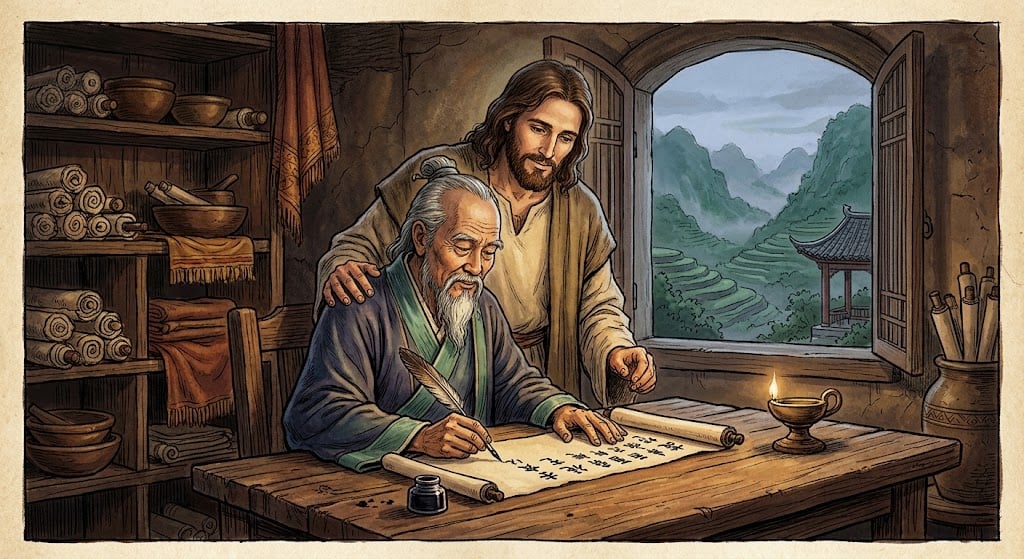
Is it possible that God communicated with other cultures and ancient philosophers like Lao Tzu? Image Source AI
Across human history, a common thread weaves through the origins of the world’s ancient civilizations: a memory of one transcendent Creator who spoke order into chaos. Even in ancient China, this supreme being was revered as Shangdi—a sovereign Lord whose attributes closely mirror the God of Biblical revelation. Yet, a central question remains: how does a culture move from worshiping an invisible, all-powerful Creator to venerating a pantheon of nature spirits and localized deities?
The shift in ancient China was not a sudden rejection of God, but a gradual spiritual decay—driven by a growing fear of divine distance, a desire for immediate control over local elements, and a reliance on ancestral middlemen.
The Shared Beginnings of Mankind
To understand how ancient China once held a knowledge of the Creator in the first place, we must ask a fundamental question: Where did the Chinese people—and indeed all ancient cultures—originally come from?
According to the Book of Genesis, the entire human race shares a single origin point in Adam and Eve, restarting through Noah’s three sons following the flood. Genesis 11 records that all humanity once lived together in the plains of Shinar (Mesopotamia), speaking a single language until God scattered humanity across the globe at the Tower of Babel. The migrating tribes traveled east through Central Asia, eventually settling in the fertile valleys of the Yellow River and Yangtze River, where early Chinese civilization took root.
Noah and the Patriarchs
Interestingly, this shared beginning is supported by modern human genetics through monogenism—DNA studies confirming that all human beings on Earth belong to a single biological species sharing a common ancestral pool, which would rule out independent origins for different ethnic groups, as cited in studies like Cann, R. L., Stoneking, M., & Wilson, A. C. (1987). “Mitochondrial DNA and human evolution.” Nature, 325(6102), 31–36.
When the ancestors of the Chinese migrated east, there was no “Hebraic” or Jewish culture yet (Abraham lived centuries after the dispersion at Babel). They did not abandon Israel; rather, they carried the universal, pre-covenant faith of Noah and the Patriarchs, worshiping the one God through open-air altars and animal sacrifices. Over centuries of geographical isolation, while Israel received written revelation, China preserved its memory of God through imperial rites, oral traditions, and pictographic script, which soon developed into a highly developed writing system.
Listen to this article:
https://wp-media.patheos.com/blogs/sites/2216/2026/10/God-and-Chinese.mp3
Preserved “Memories” in Chinese Culture
Because the early ancestors of the Chinese migrated away shortly after Babel, they took with them pre-Abrahamic memories of the Creator, the creation of man from dust, and the Great Flood.
- The Miao (Hmong) Oral Recitations
One of the most striking pieces of evidence comes from the Miao people, an ancient indigenous group in southwestern China. Long before they met Western missionaries, the Miao passed down ancient poetic chants that paralleled Genesis line-by-line:
- They chanted that God created man (Patriarch Dirt) from clay and formed woman.
- They recalled a lineage of patriarchs (Se-teh / Seth, Lama / Lamech, and Nuah / Noah).
- They recited a detailed account of a global deluge where Nuah built a vast vessel, saved his family alongside paired animals, sent out a dove, and offered animal sacrifices upon landing.
- They explicitly chanted about a city where people built a high tower, leading God to confuse their languages and scatter them into clans.
- Source: “Genesis According to the Miao People”, written by missionary Edgar A. Truax.
- Ideograms in Oracle Bone Script
Some researchers have suggested that beyond oral traditions, remarkable evidence of this ancient connection remains preserved in early Chinese written characters (known as oracle bone script). Consider these concepts preserved in their root symbols (As referenced in Kang and Nelson’s The Discovery of Genesis):
- The Character for “Boat” (船, chuán): Constructed from three radicals: Vessel (舟) + Eight (八) + Mouth/People (口)—literally describing a boat carrying eight people (matching the eight souls saved on Noah’s Ark).
- The Character for “Create” (造, zào): Combines the root symbols for Dust/Mud, Breath/Life, To Walk, and To Speak.
The High Worship of Shangdi
In ancient China (prior to ~1000 BCE, spanning the pre-dynastic and early Shang periods), there are some historical records that point to a pure, uncorrupted belief in a supreme, sovereign Creator known as Shangdi (上帝, the “Lord on High”). Early texts like the Shujing (Classic of History) and Shijing (Classic of Poetry) describe Shangdi as the omnipotent, righteous ruler over nations, weather, harvests, and human destiny. Crucially, Shangdi was never depicted by physical images or idols—a strict prohibition similar to the Second Commandment, described in Exodus 20.
Long before Daoism or Buddhism entered China, emperors performed the Border Sacrifice (Jiao Ceremony) annually at the winter solstice. The emperor—acting as the representative of the people—sacrificed an unblemished bull or lamb to Shangdi alone on an open-air circular altar, reciting prayers that acknowledged Shangdi as the uncreated Maker of heaven, earth, and humanity. Centuries later, when Christian missionaries like Matteo Ricci arrived in China, cited Tianzhu (Lord of Heaven) and pointed to Shangdi in the classics as the translation for “God” in the Chinese Bible because they recognized this original monotheism. God goes by many different names throughout history and different cultures. Though he goes by different names, this does not mean the God they speak of is a different God. After all, many scholars estimate there are anywhere from over 50 to more than 100 distinct names and titles for God across the Old and New Testaments (Source: gregmauro.com )
The Philosophers Remember: God in the Classical Era
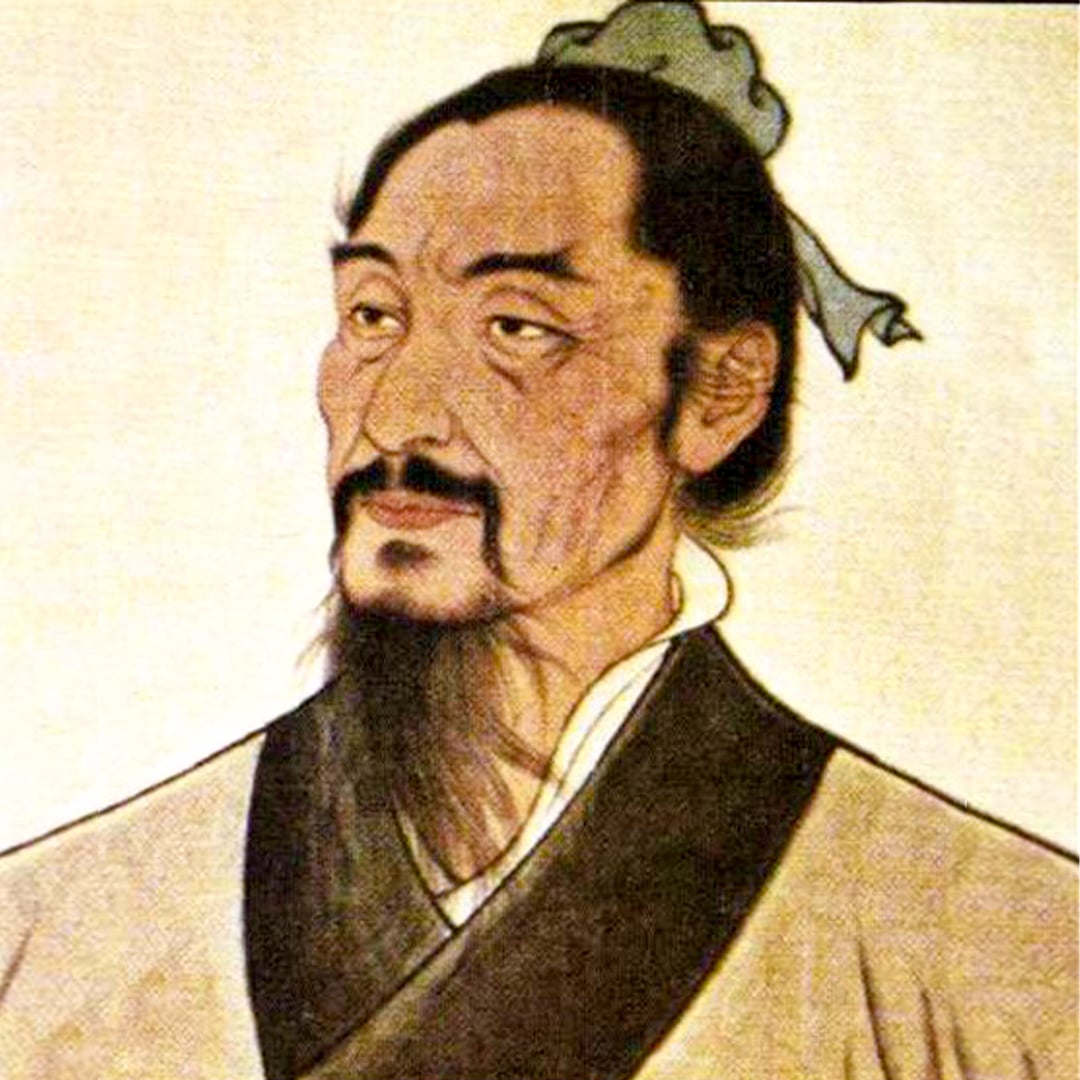
Mozi (c. 470–391 BCE) | Image: Vjacheslav Rublevskiy, CC0, via Wikimedia Commons
Even as popular culture descended into folk polytheism during the 6th to 3rd centuries BCE, China’s greatest classical philosophers recognized something beyond religion that belonged to a single, benevolent God and the importance of a personal relationship with him:
-
Mozi (c. 470–391 BCE): Explicitly taught that Heaven (Tian) is a living, loving God: “How do we know Heaven loves the people of the world? Because Heaven claims all, feeds all, and sustains all…” (Book 7: The Will of Heaven). Compare to: “The eyes of all look to you, and you give them their food at the proper time. You open your hand and satisfy the desires of every living thing… The Lord is good to all; he has compassion on all he has made.” — Psalm 145:15–16, 9
-
Confucius (551–479 BCE): Maintained a deep faith in divine authority, famously warning: “He who sins against Heaven has no one left to whom he can pray.” (Analects 3:13). Compare to: **“**Then they will cry out to the Lord, but he will not answer them. At that time he will hide his face from them because of the evil they have done.”— Micah 3:4
Mencius (372–289 BCE) | Image: anonymous, Public domain, via Wikimedia Commons
-
Mencius (372–289 BCE): Declared that human conscience is given directly by God: “He who searches his own heart knows his own nature. And knowing his own nature, he knows Heaven.” (Works of Mencius 7A:1). Compare to: **“**The kingdom of God does not come with observation; nor will they say, ‘See here!’ or ‘See there!’ For indeed, the kingdom of God is within you.”— Luke 17:20–21
-
Xunzi (c. 310–235 BCE): Preserved ancient hymns to the Creator: “The Lord on High (Shangdi) is majestic in His power, and His decree is unyielding.” Compare to: “Mightier than the thunder of the great waters, mightier than the breakers of the sea—the Lord on high is mighty. Your statutes, Lord, stand firm; holiness adorns your house for days without end.”— Psalm 93:4–5 (Source: ” Xunzi: Discussion on Ritual” (Xunzi: Li Lun 荀子·禮論): A famous ancient Confucian essay)


The Transition: From One God to Many
How did China drift away from this original monotheism? The shift occurred gradually across three distinct stages:
- Shang Dynasty (c. 1600–1046 BCE) — Ancestor Intercession: Over time, people began to feel that Shangdi was too elevated and holy to approach directly. Oracle bone inscriptions reveal that kings began praying to deceased ancestors and nature spirits (river and mountain gods) to act as middlemen to Shangdi.
- Zhou Dynasty (c. 1046–256 BCE) — Shift to Abstract Tian: The Zhou introduced the term Tian (“Heaven”). While initially used interchangeably with Shangdi, Tian gradually took on a more abstract, impersonal tone rather than a personal Creator.
- Axial Age & Proliferation of Deities (c. 500 BCE – 200 CE): During political chaos, folk beliefs, Daoist pantheons, and localized spirit veneration expanded. Deified historical figures and elemental spirits were elevated to godhood, replacing direct devotion to the Creator with transactional deities made in humanity’s own image.
Rather than sudden influences from outside pagan nations, the emergence of nature spirits and localized deities in ancient China was a natural, internal decay of original monotheism. It was driven by the desire for immediate control over daily life and an increasing feeling that the Supreme God was too distant and holy to approach directly. This goes back to the original temptation of Adam and Eve when the serpent tempted them to eat of the tree of the Knowledge of Good and Evil that they were told not to eat from when he said, In Genesis 3:4-5, “You will not certainly die,” the serpent said to the woman. “For God knows that when you eat from it your eyes will be opened, and you will be like God, knowing good and evil.” Humanity is still tempted to this day to want to be its own gods and make decisions based on their comfort and philosophies.
The Chinese highly developed writing system helped to preserve their history
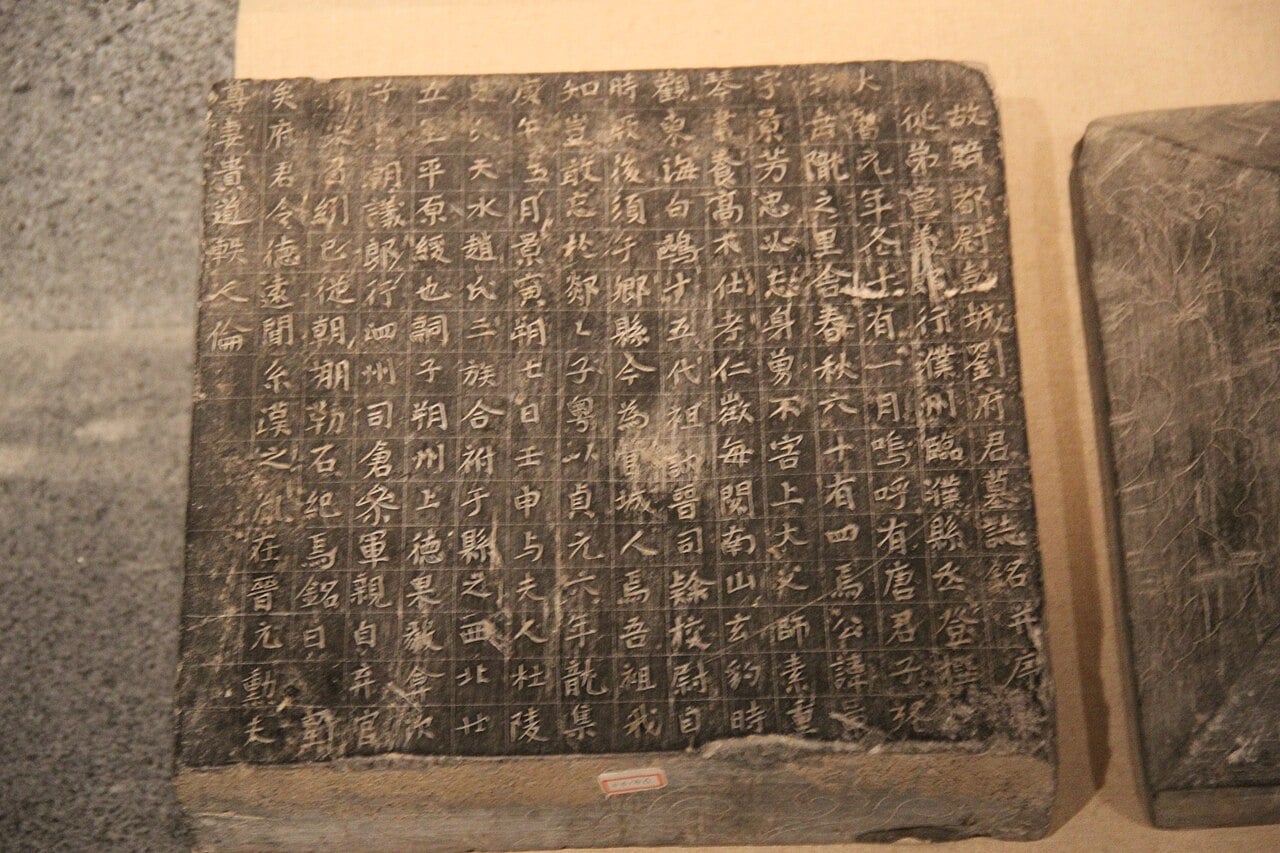
Gary Todd, CC0, via Wikimedia Commons.

This is evident in the earliest written records in China, which exist because of religious communication. They had quite a well-developed writing system early on. The written language could be observed carved on oracle bones to record inquiries, prayers, and divinations addressed to Shangdi and the ancestral spirits. The developed Chinese writing system dates back to at least c. 1250–1200 BCE during the late Shang Dynasty, though its origins likely reach back hundreds of years prior. Archaeologists discovered over 150,000 fragments of ox scapulae and turtle plastrons in Anyang, Henan Province (the Shang capital). Diviners inscribed questions to the supreme god (Shangdi) and ancestors, heated the bone until it cracked, and interpreted the cracks as responses.
The oracle bone script is not that primitive—it contains roughly 4,500 distinct characters, with around 2,000 deciphered today. Because it was already a fully functional, highly sophisticated writing system capable of expressing complex grammar, many scholars believe that Chinese writing must have been developing for centuries before these surviving inscriptions. By 1250 BCE, written Chinese was well-established. This means the historical period in which China shifted from pure monotheism toward ancestor intercession is directly documented in some of the earliest surviving texts of Asian history. Shang oracle bones show Shangdi alongside ancestor veneration, in some cases, so they often existed side by side.
Who Changed The Truth of God
Ancient China was an agrarian society entirely dependent on local environmental conditions—such as river floods, seasonal rains, droughts, and soil fertility. While Shangdi was viewed as the supreme governor of the cosmos, ancient people struggled with immediate, daily anxieties. If a specific river flooded or a localized drought threatened a harvest, praying to a distant, holy Creator felt intimidating. People began personifying the natural forces around them—assigning a spirit to a specific mountain, river, or wind (such as the spirit of the Yellow River). They believed these local spirits controlled localized weather, making them seem more accessible and controllable through immediate rituals of their own making. A central driver in the decay of monotheism was the belief that ordinary humans were unholy or unworthy to communicate with the supreme Creator. During the Shang Dynasty, kings and commoners began using deceased ancestors as middlemen. They believed ancestral spirits resided in the realm of the divine and could ask Shangdi for favors on behalf of the living. However, it should be noted that the Bible is very plain that there is only one God and one mediator between God and man: the man Christ Jesus (1 Timothy 2:5). Over centuries, people stopped praying through ancestors and nature spirits to Shangdi, and instead began praying to the spirits directly. The intermediaries eventually replaced the supreme God in daily devotion. Sounds like Romans 1:25: “Who changed the truth of God into a lie, and worshipped and served the creature more than the Creator, who is blessed forever.”
Middlemen and Local Spirits
Throughout the ages, people have created gods and religions that align more directly with their preferences, creating self-serving gods that aren’t gods at all. Some scholars call this polytheistic degradation. People seem to prefer transactional religion. Shangdi demanded moral integrity, justice, and righteousness from rulers and citizens. In contrast, lesser nature spirits and localized deities were transactional. People believed they could bargain with local spirits through offerings, sacrifices, or specific rituals regardless of their personal morality. How many times have you heard it said even to this day, ‘God, if you will do this, then I promise to do that ’-bargaining with God. After all, a god who can be appeased with a physical sacrifice to grant rain is far easier to manage than a holy God who demands moral obedience, repentance, and justice. Localizing deities allowed people to feel in control of their spiritual destiny. Before long, the middlemen and local spirits became worshipped in their own right, replacing the memory of the original Creator.
Assimilating Other Cultures
While China was largely geographically isolated from the Near East or Europe, early China was not a single unified culture. It was a mosaic of surrounding tribes and regional cultures. As the core Chinese dynasties expanded and conquered neighboring tribes (such as the Dongyi or Rong tribes), they incorporated local tribal animism, shamanism, and local spirit cults into their own practices. Early regional shamans practiced spirit-channeling and localized nature worship. Over time, these folk practices blended into mainstream royal religion, diluting the original, pure monotheistic traditions. This pattern is similar to historical accounts of early Israel as they began assimilating other cultures into their society. Judges 2:11–13 records “Then the Israelites did evil in the eyes of the Lord and served the Baals. They forsook the Lord… and followed and worshiped various gods of the peoples around them.” They specifically worshiped Baal and the Ashtoreths (Canaanite deities).
Writing around the 6th century BCE, philosopher Lao Tzu observed this exact spiritual decay occurring in his culture. In Chapter 38 of the Tao Te Ching, he captured the step-by-step decay of true faith into empty formalism:
“When the Tao is lost, there is goodness. When goodness is lost, there is morality. When morality is lost, there is ritual. Ritual is the husk of true faith.” (Paraphrased)
To Lao Tzu, when a society loses its direct connection to the ultimate Source (Tao), it relies on secondary human concepts like moral codes, until finally settling for empty, external rituals.
Conclusion
As we look into China’s ancient roots and many historical records, the evidence is very compelling that behind the layers of later polytheism stands a foundational memory of the one true Creator. The story of ancient China is a familiar one—a narrative of a culture that started with an understanding of God, drifted through distance and fear into manageable substitutes, yet preserved the memory of the Creator in its oldest words, rites, and classical writings. Let us learn from history, or as the Spanish philosopher George Santayana wrote in his 1905 book The Life of Reason: “Those who cannot remember the past are condemned to repeat it.”
Sources:
For the philosophical quotes:
- The Analects (Lúnyǔ, 論語) by Confucius
- The Book of Mozi (Mòzǐ, 墨子) by Mozi
- The Works of Mencius (Mèngzǐ, 孟子) by Mencius
- The Tao Te Ching (Dàodéjīng, 道德經) by Lao Tzu
For the ancient Shangdi worship and Border Sacrifice:
- The Shujing (Classic of History / Book of Documents)
- The Shijing (Classic of Poetry / Book of Odes)
- The Liji (Book of Rites)
- The Records of the Grand Historian (Shǐjì, 史記) by Sima Qian
For more on the subject of God before Christianity, I recommend the following articles, also written by me, as well as my book ‘God B.C. Before Christianity’
- Did God Speak To The World Before Jesus Came?
- Did Christ Appear To The Native Americans?
- My Book God B.C. Before Christianity
Raven’s Study Notes
Here is a comparable timeline tracing the parallel spiritual and historical developments in the ancient Near East (the Hebrew/Biblical tradition) and Ancient China, from pre-history down to the time of Jesus Christ.
- Pre-Dynastic Era to Early Shang (c. 2200 BCE – 1600 BCE)
Biblical / Middle East Timeline
- Patriarchal Era: Abraham, Isaac, and Jacob flourish in Canaan and Mesopotamia.
- Core Theology: Worship of the one Supreme God (El Shaddai / Yahweh). God is worshiped at open-air altars with burnt animal sacrifices (such as Abraham’s sacrifices). There are no temple buildings, physical statues, or idols representing God.
Early China Timeline
- Pre-Dynastic & Xia Period: Semi-legendary era of King Yu the Great and early bronze cultures.
- Core Theology: Pure worship of Shangdi (上帝, the Lord on High). The king/ruler performs open-air sacrifices (Jiao / Border Sacrifice) on elevated, open mounts. Like the Patriarchs, early Chinese worship involves no physical statues or images of the Creator.
- Shang Dynasty to Late Shang (c. 1600 BCE – 1046 BCE)
Biblical / Middle East Timeline
- Moses and the Exodus (c. 1440–1250 BCE): God delivers Israel from Egypt.
- Giving of the Law: The Ten Commandments prohibit idolatry (“You shall have no other gods before Me”).
- Written Records: Moses writes down the Torah. The Tabernacle and unblemished sacrificial system are formally established.
Ancient China Timeline
- Shang Dynasty Height: Development of the Oracle Bone Script (c. 1250 BCE)—the earliest confirmed written Chinese language.
- Spiritual Shift Begins: While Shangdi remains the supreme sovereign, people begin fearing He is too distant/holy. Inscriptions reveal people praying to ancestral spirits and regional nature spirits (river and mountain gods) to act as intermediaries to Shangdi.
- Parallels: Both cultures are recording written scripture/oracle records and practicing unblemished animal sacrifices at this time.
- Zhou Dynasty to the Axial Age (c. 1046 BCE – 500 BCE)
Biblical / Middle East Timeline
- The Monarchy (David & Solomon, c. 1000 BCE): The First Temple is built in Jerusalem.
- The Era of the Prophets (800–500 BCE): Israel frequently falls into idolatry by worshiping local Canaanite nature spirits (Baal, Asherah). Prophets (Isaiah, Jeremiah) warn Israel to return to the exclusive worship of the one true God.
Ancient China Timeline
- Zhou Dynasty Establishment (1046 BCE): The Zhou introduce the concept of Tian (天, “Heaven”) and the Mandate of Heaven.
- Semantic Shift: Shangdi becomes increasingly referred to as Tian, shifting the perception of God from a personal Creator to a more impersonal, abstract Heaven.
- Lao Tzu & Confucius (c. 500 BCE): During the decline of the Zhou, Lao Tzu writes the Tao Te Ching, seeking a return to the uncreated Source (Tao), while Confucius attempts to restore moral order through ritual and virtue.
- Warring States to the Imperial Dynasties (c. 475 BCE – 221 BCE)
Biblical / Middle East Timeline
- Babylonian Exile & Return (586–400 BCE): Judah is exiled for idolatry, then returns to rebuild Jerusalem. Idolatry is permanently purged from Jewish society.
- Intertestamental / Silent Period (400–4 BCE): The Old Testament canon is closed. The Hebrew Scriptures are translated into Greek (the Septuagint), spreading monotheistic theology across the Mediterranean.
Ancient China Timeline
- Warring States Period: Widespread political chaos and social breakdown.
- Proliferation of Polytheism: Folk religion flourishes. Nature spirits, local deities, and deified heroes are widely worshipped.
- Unification under Qin & Han (221 BCE – 206 BCE): Emperor Qin Shi Huang unifies China. While imperial sacrifices to Shangdi continue at the state level, popular religion becomes deeply polytheistic and syncretic.
- The First Century (c. 4 BCE – 33 CE)
Biblical / Middle East Timeline
- Incarnation of Jesus Christ: Jesus of Nazareth is born in Judea.
- The Logos Revealed: The Gospel of John declares that the Logos (translated as Tao in Chinese Bibles)—the uncreated Word through whom all things were made—became flesh.
- New Covenant: Christ offers Himself as the final, unblemished sacrifice, fulfilling the ancient sacrificial systems.
Ancient China Timeline
- Han Dynasty (Western & Eastern Han):
- State Confucianism: The Han Dynasty formalizes the Imperial Rites. The Emperor continues to offer the annual Border Sacrifice to Shangdi alone, keeping the ancient memory of the Creator alive at the state altar, even while the broader population practices polytheism and Daoist folk rituals.
- Arrival of Buddhism: Within a few decades after the death and resurrection of Christ (c. 67 CE), Buddhism enters China from India, adding another layer to China’s religious landscape.
This parallel timeline demonstrates that both East and West began with a shared foundation: an uncreated, transcendent Creator who was worshiped without physical idols through burnt offerings.
While Israel was repeatedly pulled back to monotheism through prophets and divine intervention, ancient China experienced a gradual cultural drift—moving from exclusive devotion to Shangdi, to intermediary ancestor worship, to abstract Tian, and finally into widespread polytheism, while still preserving the original memory of Shangdi in their highest imperial rites.
Thanks for reading this week’s article. I hope you found this study as fascinating as I did. As I said earlier, be sure to read previous articles I have written and I think you will find my book God B.C. Before Christianity is a welcome addition to your library. Be sure to check out other resources I offer and consider donating. One more thing: If you haven’t already done so, be sure to sign up for notifications so you won’t miss a single article and be sure to share this column with your friends and social media.

About Benjamin Raven Pressley
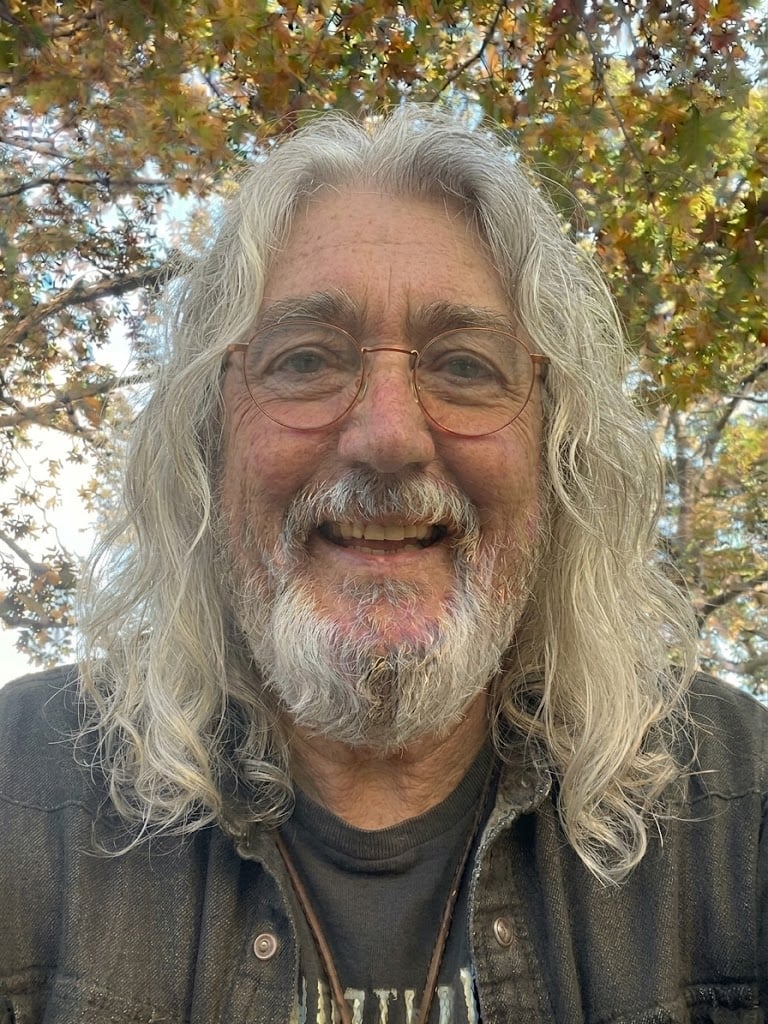
Benjamin Raven Pressley is an author, teacher and spiritual guide. He is of Cherokee heritage. He has been a follower of the teachings of Jesus Christ and the apostles since 1975. His independent studies include the Holy Bible as well as other holy books of other religions. He is ordained by the Universal Life Church. He is a self-taught naturalist and his love and respect for nature is evident in many of the things he writes. He has authored several books on spirituality as well as a fantasy series and books on survival skills. He does not consider himself to be a religious person but believes true spirituality is an all-encompassing view of life and invites open discussion on matters of spirituality. You can read more about the author here.
Previous Post
October 7, 2026
Did God Speak To The World Before Jesus Came?
Browse Our Archives
Select a Category balance body soul spirit born again occult organized religion reconnecting our spirit self-improvement Uncategorized walking spiritually
Select a Month October 2026 September 2026 August 2026 July 2026 June 2026 May 2026 April 2026 March 2026 February 2026 January 2026 December 2025 November 2025 October 2025 September 2025 August 2025 July 2025 June 2025 May 2025 April 2025 March 2025 February 2025 January 2025 December 2024 November 2024 October 2024 September 2024 August 2024 July 2024 June 2024 May 2024 April 2024 March 2024
TAKE THE
Religious Wisdom Quiz
What language was the New Testament originally written in?
Select your answer to see how you score.
Hebrew Aramaic Greek Latin
Books by This Author Books by Raven's Writing Desk
Related posts from Raven's Writing Desk
Did God Speak To The World Before Jesus...
Doing Enough for God? Why the Small Things...
The Sword of the Spirit Is Not What...
What Is God’s Design for Humankind?
TRENDING AT PATHEOS Progressive Christian

What Being a Modern-Day Apostle Means to Me
In my last column, I discussed the ins and outs of modern-day...

Did Ancient China Once Worship the God of...
Across human history, a common thread weaves through the origins of the...

Love Your Neighbor – Including Earth-Kin: Lev. 19,...
God’s command to love your neighbor means acting in an ethical and...

Lead a Church Study of “Jesus and Lao...
Guest writer Jack Thomas (The Irreverent Reverend) reflects on leading his church...

Pastoral Wisdom for Responding to Sermon Pushback
Getting sermon pushback on your social justice sermon? Learn practical, Proverbs-based strategies...

Principles for Understanding the Apostolic Ministry Today
Whenever people discover that my formal ministry title is "apostle," as in...
view all Progressive Christian blogs
Ad-Free & Subscriber Log-In Subscription Support
- About Us
- 2026 Calendar
- Videos
- Podcasts
- Library of World Religions
- Faith In Media Tracker
- Advertise With Us
- Write for Us
- Privacy Policy
- Terms of Service
- Do Not Sell My Data
- Contact Us
- Radiant Digital
- Manage Newsletter Subscriptions
- Unsubscribe From Notifications
- Sitemap
Copyright 2008-2026, Patheos. All rights reserved.
Subscription Support Ad-Free & Subscriber Log-In
Follow Patheos