
BuddhistCatholicContemplativeEvangelicalGeneral ChristianHinduJewishLatter-day SaintMuslimNew VisionsProgressive Christian
Beliefs
- Buddhist
- Catholic
- Contemplative
- Evangelical
- General Christian
- Hindu
- Jewish
- Latter-day Saint
- More Voices
- Muslim
- New Visions
- Pagan
- Progressive Christian
Topics
- Religion News
- Food and Religion
- Sports and Religion
- Religious Art
- Religious Music and Entertainment
- Religious Events
- History and Religion
- Style and Religion
- Politics and Religion
- Women in Religion
- Recreation Outdoors and Religion
- Business Finance and Religion
- Careers Workplace and Religion
- Education and Religion
- Family Parenting and Religion
- Health Fitness and Religion
- Home and Religion
- Relationships and Religion
- Technology and Religion
- Travel and Religion
Columnists
- Buddhist Columnists
- Business Finance and Religion Columnists
- Careers Workplace and Religion Columnists
- Catholic Columnists
- Contemplative Columnists
- Education and Religion Columnists
- Evangelists Columnists
- Family Parenting and Religion Columnists
- General Christian Columnists
- Health Fitness and Religion Columnists
- Hindu Columnists
- History and Religion Columnists
- Home and Religion Columnists
- Jewish Columnists
- More Voices Columnists
- Latter Day Columnists
- Muslim Columnists
- New Visions Columnists
- Nonreligious Columnists
- Pagan Columnists
- Politics and Religion Columnists
- Progressive Columnists
- Recreation Outdoors and Religion Columnists
- Relationships and Religion Columnists
- Religion News Columnists
- Religious Art Columnists
- Religious Events Columnists
- Religious Music and Entertainment Columnists
- Sports and Religion Columnists
- Style and Religion Columnists
- Technology and Religion Columnists
- Travel and Religion Columnists
- Women in Religion Columnists
Resource Library
- 2026 Calendar
- Library of World Religions
- The 100 Most Holy Places on Earth
- Patheos Answers
- Podcasts
- Videos
- Faith Leaders Database
- Anglican Episcopalian
- Bahai
- Baptist
- Buddhism
- Christianity
- Confucianism
- Eastern Orthodoxy
- Hinduism
- Holiness and Pentecostal
- ISKCON
- Islam
- Judaism
- Lutheran
- Methodist
- The Church of Jesus Christ of Latter-day Saints
- New Age
- Paganism
- Presbytarian and Reformed
- Protestantism
- Religion Behind the Scenes
- Roman Catholic
- Scientology
- Shia Islam
- Sikhism
- Sufism
- Sunni Islam
- Taoism
- Zen
- See all religions
Research Tools
 Ad-Free & Subscriber Log-In Subscription Support
Ad-Free & Subscriber Log-In Subscription Support
Follow Patheos 

- Trending:
- Forgiveness
- |
- Marriage
- |
- Consciousness
- |
- Death Penalty
- |
- Election
- |
- Halloween

- Home
- Progressive Christian
- Relationships and Religion
- Doing Enough for God? Why the Small Things Matter Most
Doing Enough for God? Why the Small Things Matter Most
Last updated on: September 24, 2026 at 9:09 am by Benjamin Raven Pressley
Doing Enough for God? Why the Small Things Matter Most 2026-09-24T09:09:10-04:00 Benjamin Raven Pressley
Patheos Explore the world's faith through different perspectives on religion and spirituality! Patheos has the views of the prevalent religions and spiritualities of the world.
Do The Little Things Matter To God?
I was at a men’s gathering at a church the other day. It was just a casual open discussion while we all ate breakfast together. And someone brought up that they never seemed to feel that they were doing enough for God. I don’t doubt their sincerity, for this person lived out his love for God in very tangible ways. This is not the first time I have heard anyone say this. There was a time in my life when I was so busy and committed to one church I attended that I literally had to carry a briefcase to church, organized with manila folders to keep up with all the ministries I was involved in. I, too, was sincere. I wasn’t trying to make a name for myself or garner people’s praise; I sincerely loved God and wanted to do all I could for him. But part of me thought that was what serving God was all about. I honestly thought it was a sin to say no to anything I was asked to do in church. And whether they meant to or not, they took advantage of me and didn’t mind piling more on me. Over time, though, what it got for me was burnout and being tired. And realizing that it was better to do one thing well than to do many things poorly. I mean, I did a pretty good job, but there is only so much that one person can do. I remember, even way back then, the Holy Spirit speaking to me, and I am paraphrasing from memory: “I haven’t asked you to do all those things. What if I wanted someone else in that position you said yes to, and now I can’t work with them to teach them because you took the job I planned for them?’. The Holy Spirit wasn’t condemning me; he just wanted me to realize that I could be hindering someone else’s growth, or maybe even someone who could do it better than me, and by not praying about it as I should have and saying no. I suppose one could argue that the person asking me to do it also should have been praying and seeking God for who he really wanted in that position. That really got me thinking. I had not been a Christian long at that time, so I really was a bit naïve, I admit. As I matured spiritually and studied the Scriptures for myself, I was able to hear more clearly from God and knew when to say no and not feel guilty about it.
Listen to this article:
https://wp-media.patheos.com/blogs/sites/2216/2026/09/Little-Things.mp3
The biblical teaching is pretty clear to the church that needs to fill a position in the church.
- When Judas had to be replaced among the apostles in Acts 1:12-26. They searched the Scriptures, they prayed for God’s guidance, they considered eligible replacements and then allowed God to do the choosing.
- Acts 13:1–3: The church at Antioch fasted, prayed, and laid hands on Barnabas and Saul (Paul), sending them out after the Holy Spirit said, “Set apart for me Barnabas and Saul for the work to which I have called them”.
 Adding to the confusion of my early days as a Christian, I attended a church where you only seemed to matter if you were a preacher, teacher, or singer. Oh sure, they needed greeters and janitors out of necessity, but they weren’t really honored, if you know what I mean. But I learned a valuable lesson from a janitor in the church who was cleaning the back of the toilet water tanks and I remember asking him why he bothered to do that because no one looked back there anyway and his answer changed my life as he said, ‘God sees it!’. The Holy Spirit took it from there and led me to the scriptures, “And whatsoever ye do, do it heartily, as to the Lord, and not unto men.” (Colossians 3:23). As I pondered this scripture, I decided to look a little deeper and the Spirit had me focus on that word ‘Heartily’. Here is what I found:
This word translates a dynamic two-word phrase in original Biblical Greek: ek psychēs
The Root Language
- Ek: A preposition meaning “out of” or “from”.
- Psychē: The Greek word for “soul,” “life,” or “innermost core”.
Literally translated, Paul isn’t just telling readers to work with enthusiasm—he is telling them to work “from the soul” or “out of the depths of your inner being.” That makes sense! Remember 1 Samuel 16:7: “Man looks on the outward appearance, but the Lord looks on the heart.” Also confirmed in scriptures like:
- Jeremiah 17:10: “I the Lord search the heart and test the mind, to give every man according to his ways.”
- Psalm 139:1: God knows everything about a person, searching and knowing our thoughts and motives.
- Proverbs 21:2: “Every way of a man is right in his own eyes, but the Lord weighs the hearts.”
What is he saying here?
He is saying, God cares more about True Character: God cares more about your inner truth and character even more so than your physical looks, status, or wealth. You can’t fool God; He knows about your Hidden Motives. People only see what you do on the outside, but God sees why you do it. God cares more about your spiritual growth. A heart focused on God matters more than empty religious rituals. It is more about your motives and what you offer to the Lord with a sincere heart. It isn’t about how big a thing is or how many things you do.
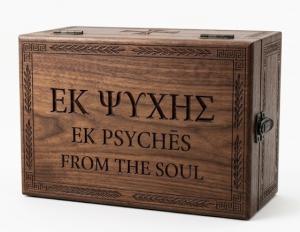
The original Greek language really opens up the meaning of what it means to do all we do ‘heartily’ as unto the Lord.
There is a reason, I think, that God chose the Hebrew and Greek scriptures to write down His Word. For example, in English, “heartily” can sometimes sound like superficial cheerfulness or simple vigor (e.g., “he laughed heartily”). However, ek psychēs addresses the source of the effort rather than just the visible energy. It contrasts doing something out of reluctant obligation or outward show with doing it from your innermost being.
When Paul wrote this, he was directly addressing enslaved persons working under earthly masters (kourioi). In a socio-economic system built on forced labor, the natural response was “eye-service” (ophthalmodoulia)—doing just enough to avoid punishment when the boss was looking.
Paul used ek psychēs to tell them: Don’t just give surface compliance. Reclaim the inner territory of your effort. Engage your soul, because your true work is being offered to a higher Master.
Ek psychēs eliminates the distinction between “sacred” work (like preaching or praying) and “secular” work (like chores, manual labor, or daily tasks). By declaring that whatever you do can be done “from the soul,” the verse teaches that the spiritual value of an action comes from the internal depth and target of the work, not the prestige of the task itself.
Charles Spurgeon put it well when he said:
“To a man who lives unto God nothing is secular, everything is sacred. He puts on his workday garment and it is a vestment to him. He sits down to his meal and it is a sacrament. He goes forth to his labor, and therein exercises the office of the priesthood. His breath is incense and his life a sacrifice. He sleeps on the bosom of God, and lives and moves in the divine presence. The Lord hath cleansed your houses, he has cleansed your bed chambers, your tables, your shops, he has made the bells upon your horses holiness to the Lord; he has made the common pots and pans of your kitchens to be as the bowls before the altar, if you know what you are and live according to your high calling. You housemaids, you cooks, you nurses, you ploughmen, you housewives, you traders, you sailors, your labor is holy if you serve the Lord Christ in it, by living unto him as you ought to live. The sacred has absorbed the secular.”
Bringing Your Whole Self To The Task At Hand.
Do you understand now? To do something “heartily” according to Colossians 3:23 means bringing your whole self to the task at hand. It is an intentional choice to align your internal motive with your external action, turning ordinary labor into an act of personal integrity and worship.

Every little act of generosity honors God.
Never consider that hug you give to someone suffering insignificant. I remember when I had to raise two little boys on my own; someone came up to me, hugged me and I drew so much strength from that one hug. It was like life flowed into me and renewed my strength to carry on. So many think that serving God has to look impressive: a large ministry, a dramatic sacrifice, or an achievement that others notice. Yet much of faithful Christian living happens quietly—in kitchens, workplaces, waiting rooms, text messages, and ordinary conversations. The world may overlook these moments, but God does not.
Jesus taught that whoever is faithful with very little will also be faithful with much (Luke 16:10). He praised a widow whose tiny offering appeared insignificant beside the gifts of the wealthy, because He saw the trust and devotion behind it (Mark 12:41–44). He even said that giving a cup of cold water in His name would not be forgotten (Matthew 10:42). These passages remind us that heaven measures differently than the world does.
Love Gives the Smallest Act Eternal Weight.
God is not impressed by size; He looks at why we act and whom we are seeking to honor. A great accomplishment done for recognition can be spiritually empty, while a simple kindness offered from a loving heart can become genuine worship. This means we can please God by listening patiently when someone needs to talk, preparing a meal with gratitude, encouraging a discouraged friend, praying for someone who may never know, forgiving a small offense, or choosing gentleness when revenge would be easier. None of these acts may seem remarkable, but love makes them precious to God. “Whatsoever you do, do it HEARTILY AS UNTO THE LORD.” He is your audience of One. His assessment of you is all that matters and he is pleased with you because you have accepted the great salvation obtained by the selfless sacrifice of his Son, Jesus. God is pleased with believers because of the perfect life and sacrifice of Jesus Christ, not because of human effort or good deeds. He honors even our smallest gift of service. Remember the Pharisee and the tax collector praying in the temple in Luke 18:9–14? When the Pharisee prayed, he stood by himself and thanked God that he was not like other people—thieves, evil people, cheaters, or the tax collector. He listed his good religious habits, saying he fasted twice a week and gave a tenth (a tithe) of all his income. Then beside him there was a despised Publican, a tax collector who stood far off, would not even look up to heaven, and beat his chest in sorrow. He prayed simply: “God, be merciful to me, a sinner.” Jesus said that the publican went away forgiven and justified rather than the Pharisee who just came and bragged about all the ‘good’ he had done. God knew which one offered himself from a sincere heart.
We do not need to wait for a grand opportunity to serve. Each morning, we can place the day before God and ask, “How can I love You and the people around me in what is already in front of me?” The answer may be wonderfully ordinary. It may be one faithful decision, one gracious word, or one task completed with care. In God’s hands, no act of love is ever wasted, and no offering from the heart is ever too small. Perhaps the “big thing” God is asking of us today is simply to be faithful in the little thing before us. We may never see the full effect of our obedience, but God sees the heart, receives the love, and can multiply even the smallest gift for His purposes. God notices even when the tiniest sparrow falls and says we are of more value than many sparrows (Matthew 10:29–31).
Thinking we have to do big things to please God can actually distract from the significance of the small things.
Don’t allow thinking we have to do “big” things for God to distract us from the small things. What God holds as significant vastly differs from what we think is significant. We think big offerings in that church offering plate matter; Jesus thinks a widow’s last two coins matter more (Mark 12:41-44). When the people of Israel wanted a king, they chose the big, tall, handsome one, while God chose the small, youngest-of-eight shepherd boy (1 Samuel 16:1-13). The Jews thought the Messiah, when he came, would come and rule in the royal palace and seat of political power; God sent a babe born in a stable (Matthew 2). Being obsessed with the big means we can miss how God is moving in the world or working in our life.

Even the smallest gift is a gift fit for the King if given from the heart.
There is actually freedom when we accept that God is pleased with the small.
1 Corinthians 1:27: “But God chose the foolish things of the world to shame the wise; God chose the weak things of the world to shame the strong.” The big is beyond our control. What matters is the small right in front of you (being a good employee, a loving spouse, a patient father, and a caring person). The small matters to God, so the small should matter to us. Paul tells us, “Aspire to live quietly, and to mind your own affairs, and to work with your hands” (1 Thessalonians 4:11). To our egos, that may sound mundane, but to God, it is of profound, eternal significance. Don’t be discouraged if you aren’t doing something big. Enjoy the liberty of serving God in the small. Don’t let the allure of the large rob you of what you are doing for God.
Loving your family by folding laundry is serving God. Being kind to coworkers when work is stressful is serving God. Telling a person about Jesus, regardless of the outcome, is serving God. Praying for your neighbors is serving God. Working as unto the Lord in your vocation is serving God. Generosity in your money, no matter how small the amount, to minister to others is serving God. Cultivating the Fruit of the Spirit is serving God. Giving a grieving person a hug and sitting with them is serving God. Taking care of the aging is serving God. Encouraging someone for the good they are doing is serving God. Honoring your parents by washing the dishes is serving God. Stacking chairs for the next church event is serving God. Using your gifting for others around you is serving God.
Remember what Jesus said in Luke 16:10: “Whoever can be trusted with very little can also be trusted with much…”
The world values influence, platform size, and visible success. In God’s Kingdom, quiet faithfulness in unseen places holds equal or greater weight. Serving family members, offering hidden prayers, or encouraging a neighbor are acts of spiritual significance.
The next time you feel inadequate, like what you do doesn’t matter, or you feel the weight of religious burnout, remember the audience of One you serve. God does not demand an impressive resume; He delights in a quiet, wholehearted “yes” in the ordinary moments of your day. You don’t have to change the whole world to be pleasing to Him—you only need to love the person in front of you and honor Him in the task at hand. ‘Truly I tell you, whatever you did for one of the least of these brothers and sisters of mine, you do it unto me.’ (Matthew 25:40) Lean into the peace of knowing that your hidden labor is seen, your small offerings are cherished, and your simple faithfulness brings joy to the heart of God.
Thank you so much for reading this week’s study. Please share it with others and on your social media. Be sure to sign up below to receive reminder notifications when a new study is out. And please pray about sharing a regular donation or purchase one of my books.

General Christian
Family, Parenting and Religion

About Benjamin Raven Pressley
Benjamin Raven Pressley is an author, teacher and spiritual guide. He is of Cherokee heritage. He has been a follower of the teachings of Jesus Christ and the apostles since 1975. His independent studies include the Holy Bible as well as other holy books of other religions. He is ordained by the Universal Life Church. He is a self-taught naturalist and his love and respect for nature is evident in many of the things he writes. He has authored several books on spirituality as well as a fantasy series and books on survival skills. He does not consider himself to be a religious person but believes true spirituality is an all-encompassing view of life and invites open discussion on matters of spirituality. You can read more about the author here.
Previous Post

September 16, 2026
The Sword of the Spirit Is Not What You Think!
Next Post
September 30, 2026 Plowing the Heart: How the Spirit Reveals Truth
Browse Our Archives
Select a Category balance body soul spirit born again occult organized religion reconnecting our spirit self-improvement Uncategorized walking spiritually
Select a Month October 2026 September 2026 August 2026 July 2026 June 2026 May 2026 April 2026 March 2026 February 2026 January 2026 December 2025 November 2025 October 2025 September 2025 August 2025 July 2025 June 2025 May 2025 April 2025 March 2025 February 2025 January 2025 December 2024 November 2024 October 2024 September 2024 August 2024 July 2024 June 2024 May 2024 April 2024 March 2024
TAKE THE
Religious Wisdom Quiz
What does "Pentecost" mean?
Select your answer to see how you score.
Fiftieth Forty Firstfruits Twelve
Books by This Author Books by Raven's Writing Desk
Related posts from Raven's Writing Desk
Did Ancient China Once Worship the God of...
Did God Speak To The World Before Jesus...

The Sword of the Spirit Is Not What...
What Is God’s Design for Humankind?
TRENDING AT PATHEOS Progressive Christian

What Being a Modern-Day Apostle Means to Me
In my last column, I discussed the ins and outs of modern-day...

Did Ancient China Once Worship the God of...
Across human history, a common thread weaves through the origins of the...

Love Your Neighbor – Including Earth-Kin: Lev. 19,...
God’s command to love your neighbor means acting in an ethical and...

Lead a Church Study of “Jesus and Lao...
Guest writer Jack Thomas (The Irreverent Reverend) reflects on leading his church...

Pastoral Wisdom for Responding to Sermon Pushback
Getting sermon pushback on your social justice sermon? Learn practical, Proverbs-based strategies...

Principles for Understanding the Apostolic Ministry Today
Whenever people discover that my formal ministry title is "apostle," as in...
view all Progressive Christian blogs
Ad-Free & Subscriber Log-In Subscription Support
- About Us
- 2026 Calendar
- Videos
- Podcasts
- Library of World Religions
- Faith In Media Tracker
- Advertise With Us
- Write for Us
- Privacy Policy
- Terms of Service
- Do Not Sell My Data
- Contact Us
- Radiant Digital
- Manage Newsletter Subscriptions
- Unsubscribe From Notifications
- Sitemap
Copyright 2008-2026, Patheos. All rights reserved.
Subscription Support Ad-Free & Subscriber Log-In
Follow Patheos