
BuddhistCatholicContemplativeEvangelicalGeneral ChristianHinduJewishLatter-day SaintMuslimNew VisionsProgressive Christian
Beliefs
- Buddhist
- Catholic
- Contemplative
- Evangelical
- General Christian
- Hindu
- Jewish
- Latter-day Saint
- More Voices
- Muslim
- New Visions
- Pagan
- Progressive Christian
Topics
- Religion News
- Food and Religion
- Sports and Religion
- Religious Art
- Religious Music and Entertainment
- Religious Events
- History and Religion
- Style and Religion
- Politics and Religion
- Women in Religion
- Recreation Outdoors and Religion
- Business Finance and Religion
- Careers Workplace and Religion
- Education and Religion
- Family Parenting and Religion
- Health Fitness and Religion
- Home and Religion
- Relationships and Religion
- Technology and Religion
- Travel and Religion
Columnists
- Buddhist Columnists
- Business Finance and Religion Columnists
- Careers Workplace and Religion Columnists
- Catholic Columnists
- Contemplative Columnists
- Education and Religion Columnists
- Evangelists Columnists
- Family Parenting and Religion Columnists
- General Christian Columnists
- Health Fitness and Religion Columnists
- Hindu Columnists
- History and Religion Columnists
- Home and Religion Columnists
- Jewish Columnists
- More Voices Columnists
- Latter Day Columnists
- Muslim Columnists
- New Visions Columnists
- Nonreligious Columnists
- Pagan Columnists
- Politics and Religion Columnists
- Progressive Columnists
- Recreation Outdoors and Religion Columnists
- Relationships and Religion Columnists
- Religion News Columnists
- Religious Art Columnists
- Religious Events Columnists
- Religious Music and Entertainment Columnists
- Sports and Religion Columnists
- Style and Religion Columnists
- Technology and Religion Columnists
- Travel and Religion Columnists
- Women in Religion Columnists
Resource Library
- 2026 Calendar
- Library of World Religions
- The 100 Most Holy Places on Earth
- Patheos Answers
- Podcasts
- Videos
- Faith Leaders Database
- Anglican Episcopalian
- Bahai
- Baptist
- Buddhism
- Christianity
- Confucianism
- Eastern Orthodoxy
- Hinduism
- Holiness and Pentecostal
- ISKCON
- Islam
- Judaism
- Lutheran
- Methodist
- The Church of Jesus Christ of Latter-day Saints
- New Age
- Paganism
- Presbytarian and Reformed
- Protestantism
- Religion Behind the Scenes
- Roman Catholic
- Scientology
- Shia Islam
- Sikhism
- Sufism
- Sunni Islam
- Taoism
- Zen
- See all religions
Research Tools
 Ad-Free & Subscriber Log-In Subscription Support
Ad-Free & Subscriber Log-In Subscription Support
Follow Patheos 

- Trending:
- Forgiveness
- |
- Marriage
- |
- Consciousness
- |
- Death Penalty
- |
- Election
- |
- Halloween

- Home
- Progressive Christian
- Relationships and Religion
- Who Am I? The Answer to Society’s Identity Crisis.
Who Am I? The Answer to Society’s Identity Crisis.
Last updated on: August 19, 2026 at 3:12 pm by Benjamin Raven Pressley
Who Am I? The Answer to Society’s Identity Crisis. 2026-08-19T15:12:54-04:00 Benjamin Raven Pressley
Patheos Explore the world's faith through different perspectives on religion and spirituality! Patheos has the views of the prevalent religions and spiritualities of the world.
The Solution to Society’s Identity Crisis
Discover the solution to society’s identity crisis. Learn how to overcome modern emptiness, move past digital distraction, and find true purpose in Christ.
“Over the past 15 years:
- Depression has tripled among young adults
- Anxiety has doubled
Arthur Brooks — Professor, Social Scientist and Author of The Meaning of Your Life: Finding Purpose in an Age of Emptiness argues the real cause is a dramatic rise in people saying:
“My life feels meaningless.”
Listen to this article:
https://wp-media.patheos.com/blogs/sites/2216/2026/08/Identity.mp3
For decades, most people reported a strong sense of meaning. But around 2008–2010, something changed. Reports of meaninglessness began to climb sharply, especially among people under 30.”
Source: Big Think Interview Arthur Brooks — Professor, Social Scientist and Without a doubt, this world is suffering from an identity crisis. And because most people don’t know who they are, they wrap themselves up in all kinds of identities that still aren’t who they really are. People wrap themselves up in their sexuality, their race, their hate, even their religion, but guess what? Any of those identities will not satisfy and will just lead to more frustration. So, what is the solution? Who am I is a question that we all need to ask ourselves and be able to answer. If you don’t know who you are, it leaves you subject to any influence that comes around. Arthur Brooks studies the science of human happiness. In the above-mentioned interview, he argues that the modern epidemic of depression and anxiety—especially among young adults—comes down to one core issue: a collapse of meaning.
Add to that society’s addiction to technology and it only makes things worse. Brooks identifies one major factor: technology has replaced real-life relationships with digital substitutes.
Young adults frequently tell him:
- “My life feels fake.”
- “Something’s missing.”
- “It feels like I’m living in a simulation.”

Screens create distance between people. Instead of living in real life, many live in a technological simulation of their own creation
Screens create distance between people. Instead of living in real life, many live in a technological simulation of their own creation—a “Matrix” that drains meaning.
The people most immersed in digital life are the ones who most often report loneliness, meaninglessness and emotional numbness.
The fastest-growing group today can only be described as Lost In Place, having no meaning and aren’t looking for it. It is an ‘all about me’ culture; self-esteem and you, no matter how detrimental you are to yourself or society, are king according to the mantra of this modern day and time. In true warrior societies, they knew what it meant to lay down their life for another or for God and country, knowing even the loss of your own life was to be valued if it served the greater good. We do ooo and ahhh the occasional hero’s story of doing this, but we fail to apply it to ourselves. Don’t misunderstand me. I’m not telling anyone to allow themselves to be killed for just any greater cause. There are religious fanatics blowing themselves up for an utterly wrong ideal.
Humans Are Meaning-Based Creatures
Brooks argues that humans evolved to understand life through relationships, love, conflict, community, and spiritual reflection. For most of human history, meaning was built naturally through daily life. People lived in small groups, interacted constantly, and relied on one another. Before constant distraction, people didn’t need to think about meaning — they simply experienced it. If you asked someone 30–50 years ago, “Are you having a meaning crisis?” they would have laughed. The concept wasn’t part of ordinary life.
Psychologists Michael F. Steiger and Frank Martela define meaning as three “big whys”:
- Coherence — Why things happen the way they do
- Purpose — Why I do the things I do
- Significance — Why my life matters
There are fewer and fewer people asking themselves these questions and as a result, more and more people are more greedy and selfish than ever.
Technology is not the answer
Around 2008, society embraced the idea that every problem has a technological fix:
- Lonely? There’s an app for that.
- Sad? There’s content for that.
- Bored? There’s a screen for that.
But Brooks argues: “Loneliness is a complex human problem. Social media is a complicated technological solution. When complicated tools try to solve complex emotional issues, the problems get worse. Every additional hour spent on social media increases loneliness.”
The average American checks their phone:
- 205 times per day
- 13 times per hour
- Every 5 minutes
This constant stimulation prevents the brain from entering the state required for meaning.
Brooks cites a study where participants sat alone for 15 minutes with nothing to do except press a button that delivered a painful electric shock:
- 25% of women shocked themselves
- 67% of men shocked themselves
- One man shocked himself 190 times!
Phones have become our “shock device”—a way to avoid boredom at any cost. When in reality our brains need times of boredom, reflection and just downtime in general because that is when our brains stimulate more creativity. Our brains need mystery, love, and human connection. Devices make us worse at tolerating boredom and rob us of that time for reflection. The more we use our devices, the more we reach for them, which in turn makes our life feel emptier and meaning collapses before we even realize it has happened. This loop fuels both addiction and meaninglessness.

I have many great books for sale. Check them out!
The Reality
In reality, we were created with meaning and purpose and a need for meaning and purpose and we will not ever have true meaning and purpose if we don’t stop and take time to think and reflect and look outside our bubble for that true meaning and purpose to the one who created us and knows what we need most and that is a reconnecting to him. Consider this: it isn’t about you; it is about the greater good for all of creation and as a side benefit, you become completely fulfilled and content and spiritually powerful. God believes in you more than you believe in yourself. He wants you to be all that you can be, but in order to fully be all we can be, we must get our eyes off of ourselves and, for that matter, others and what they think. We must get our eyes off of our failures, frailty and even our own ego. When we realize it isn’t about us then we can rise to be all we were meant to be.
“But you are a chosen race, a royal priesthood, a holy nation, a people for his own possession, that you may proclaim the excellencies of him who called you out of darkness into his marvelous light.” —1 Peter 2:9
“For we are his workmanship, created in Christ Jesus for good works, which God prepared beforehand, that we should walk in them.” —Ephesians 2:10
“But to all who did receive him, who believed in his name, he gave the right to become children of God.”—John 1:12
“Before I formed you in the womb I knew you, and before you were born I consecrated you; I appointed you a prophet to the nations.” —Jeremiah 1:5
“Or do you not know that your body is a temple of the Holy Spirit within you, whom you have from God? You are not your own, for you were bought with a price. So, glorify God in your body.” —1 Corinthians 6:19-20
“The natural person does not accept the things of the Spirit of God, for they are folly to him, and he is not able to understand them because they are spiritually discerned. The spiritual person judges all things, but is himself to be judged by no one. “For who has understood the mind of the Lord so as to instruct him?” But we have the mind of Christ.” — 1 Corinthians 2:14-16
When we consider and realize we are created for more than what our puny minds, technology and society say we are, then we are casting off the limitations we have placed on our own minds and bodies. We connect to a greater mind. The Bible says our body is the dwelling place of the Holy Spirit (1 Corinthians 6:19) and our mind is the mind of Christ (1 Corinthians 2:16). We were not just some physical or cosmic accident. We were knit together in our mother’s womb for a purpose (Psalm 139:13-16). We are spiritual beings that have a soul that dwells in a physical body, not the other way around. Jesus performed many miracles while here on Earth. He showed his disciples the infinite possibilities of being in Him, and even though he was amazing, he wanted them to know they, too, were capable of so much more. He even told them in John 14:12 that those who believe in Him will do the works He does, and even greater works, because He is going to the Father. This emphasizes believers’ empowerment to continue His mission and perform significant acts in His name. He even empowered them with a baptism of power to accomplish this (Acts 2). We aren’t limited in what we are physically capable of doing in ourselves, but have the power of his Spirit. “Not by might nor by power, but by my Spirit” Zechariah 4:6. In Him we live and breathe and move in a spiritual realm of power connected to Him, and we are able to manifest his power in our physical world. The weak become strong, the foolish become wise (1 Corinthians 1:27). “Let the weak say, I am strong.” Joel 3:10.
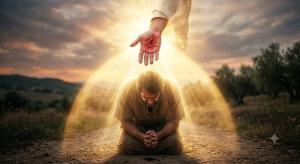
Jesus Christ empowers us to do more than we ever dreamed we could.
We operate so far below our potential
We operate so far below our potential and it is chiefly because we are not plugged into the source of all power. Those identities society says we must relate to will not satisfy and will just lead to more frustration. So, what is the solution? At the heart of the scriptures is the answer. Our identity is IN CHRIST. There are many scriptures that describe the identity of believers “in Christ.” Key verses include 2 Corinthians 5:17, which states that anyone in Christ is a new creation, and Romans 8:1, which emphasizes that there is no condemnation for those in Christ Jesus. He is our Creator. We are created of His essence and who He is. When we immerse ourselves in who He is and realize our identities are in a person, Jesus Christ, then our true potential begins to be revealed. I’m not talking about some religion or set of rules; I’m talking about dying to ourselves and rising into who we were truly meant to be. If you immerse yourself in your sexuality or power or whatever it is you define yourself by, you will be absorbed into that and will never be anything else. Sure, there will be some temporary resemblance of satisfaction, but that is just to throw you off so you will settle for something less than what you really are. When you immerse your identity in Christ, it is the only thing you can immerse yourself in and not be lost. He shows you and allows you to rise up to what your full potential is, who you really are. He doesn’t require you to be some imitation of someone else. He shows you who you really are and He shows you how to be the best you that you can be and He gives you the power to achieve it. Your identity does not get absorbed into something that is temporary or that will ultimately lead you into a state of bondage. He shows you how free and powerful you really are. Then you will find yourself able to do things you could never dream of doing on your own. He places HIS heart within you and then you see as He sees; you love as He loves.
As I said earlier, who am I is a question that we all need to ask ourselves and be able to answer. If you don’t know who you are, it leaves you subject to any influence that comes around. Stand for something, or you will fall for anything. In the Bible, this is described as ‘dying to self’. Which makes no sense to some, thinking*, ‘How can I find myself when the Bible is telling me to die to myself?’* It may seem to be a contradiction at first, but in reality, when you seek God’s meaning for your life and who you are, you die to your old understanding and it releases your ego and confusion and you learn who you are truly meant to be. Apostle Paul explains it well in Galatians 2:20: Paul states that he is “crucified together with Christ,” and then he states, “nevertheless I live,” and “the life I now live in the flesh, I live by God’s faith operating in me.”
“That we henceforth be no more children, tossed to and fro, and carried about with every wind of doctrine, by the sleight of men, and cunning craftiness, whereby they lie in wait to deceive.”
—Ephesians 4:14“I have been crucified with Christ. It is no longer I who live, but Christ who lives in me. And the life I now live in the flesh I live by faith in the Son of God, who loved me and gave himself for me.” —Galatians 2:20
Dani’El Garvin summarizes this well in his book God Esteem:
“In Psalm 139:13–18, we find the truth about who we really are through our Creator’s eyes. As redeemed souls, we are reconciled back to the honored position of being created in the very image of God, and with that image fully restored through the blood of Christ. Forgiven, we become fully alive! (John 10:10) The truth about who we now really are, is as follows (Psalm 139):
- We are wonderful, marvelous creations of God.
- We are created in His image and for His glory.
- We are worthwhile and special.
- As God masterfully created the universe, the sun, the moon, and the stars, we too are masterpieces of His excellent craftsmanship. Even God said “Very good!” after creating us (Genesis 1:31).
- We have been intricately woven together by God in our mother’s womb. Each part of our body, soul, and spirit has been recorded, including all the days we will live.
- Before we were born, He knew us. He personally designed us, and He also designed the paths in which we were to walk. We originated from God.
- God puts His signature upon His artwork. We are rare and valuable!
- God used all of His resources and attributes in creating us, including His wisdom, His knowledge, His power, and His love. All these flowed into the creation of each of us.
As a Christian, to put your redeemed self down, or to degrade yourself, is to put your creator down. As a part of our worship and praise to God, we should “Esteem God” for the marvelous way He has created us. This in no way elevates the human “self,” but honors and esteems the One who created us, saves us, and restores us back to our true God-given, redeemed identities. “
So you see, dying to self in no way minimizes who we are but maximizes who we truly are.
Rick Warren summarizes this approach in his book The Purpose Driven Life as:
-
- It’s Not About You: True meaning comes from submitting to a divine plan rather than optimizing personal ambition.
- Life Is a Test and a Trust: Earthly life is temporary—a preparation phase for eternity where resources, relationships, and time are managed as stewardship.
- Eternity Changes Perspective: Viewing current choices through an eternal lens reduces anxiety about temporary status, wealth, or worldly metrics of success.
Conclusion
The modern crisis of meaning will never be solved by better technology, self-help trends, or temporary cultural identities. As Arthur Brooks observes, treating complex human longings with complicated digital fixes only accelerates our isolation, leaving us trapped in an “all-about-me” loop that drains true significance. Ultimate fulfillment requires stepping out of the digital simulation and surrendering the self-centered ego to connect with our Creator. Dying to self does not erase your identity; it unveils it. By anchoring who you are “in Christ,” you cast off societal limitations, step into the power of the Holy Spirit, and realize the masterpiece you were designed to be. Stop settling for digital substitutes and temporary labels—look beyond yourself, plug into the true source of life, and step boldly into the purpose, freedom, and power you were created to live out.

Learn even more by taking my free Bible study course, FIRST STEPS
MORE RECOMMENDED READING
The On-Purpose Person by Kevin W. McCarthy
The Purpose Driven Life by Rick Warren

Donations are not required but if you wish to support my ministry any amount is appreciated.
Thanks so much for reading this week’s blog. I hope you were blessed. Please sign up below for notifications so you don’t miss a single study, and please share with your friends and on social media.
General Christian
Family, Parenting and Religion
christian identity and purpose
dying to self biblical meaning
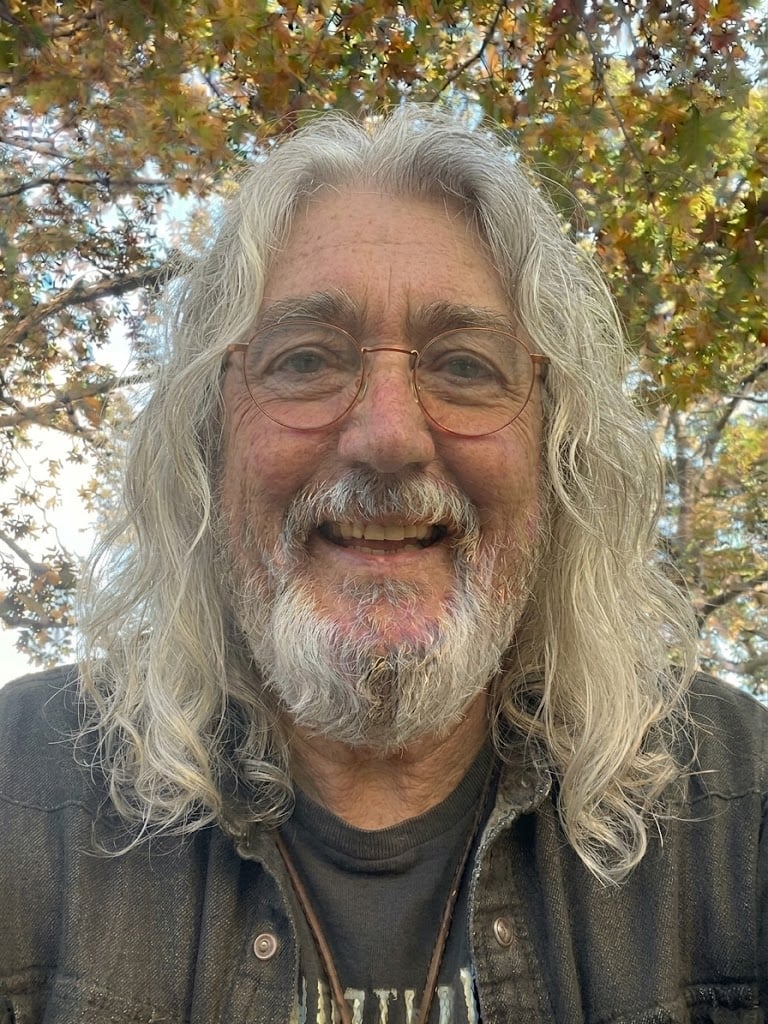
About Benjamin Raven Pressley
Benjamin Raven Pressley is an author, teacher and spiritual guide. He is of Cherokee heritage. He has been a follower of the teachings of Jesus Christ and the apostles since 1975. His independent studies include the Holy Bible as well as other holy books of other religions. He is ordained by the Universal Life Church. He is a self-taught naturalist and his love and respect for nature is evident in many of the things he writes. He has authored several books on spirituality as well as a fantasy series and books on survival skills. He does not consider himself to be a religious person but believes true spirituality is an all-encompassing view of life and invites open discussion on matters of spirituality. You can read more about the author here.
Previous Post

August 12, 2026
The Unbreakable Promise: The Truth About God's Covenant
Next Post

August 26, 2026 UFO/UAP: Real, Fake, or Demonic Delusion?
Browse Our Archives
Select a Category balance body soul spirit born again occult organized religion reconnecting our spirit self-improvement Uncategorized walking spiritually
Select a Month October 2026 September 2026 August 2026 July 2026 June 2026 May 2026 April 2026 March 2026 February 2026 January 2026 December 2025 November 2025 October 2025 September 2025 August 2025 July 2025 June 2025 May 2025 April 2025 March 2025 February 2025 January 2025 December 2024 November 2024 October 2024 September 2024 August 2024 July 2024 June 2024 May 2024 April 2024 March 2024
TAKE THE
Religious Wisdom Quiz
What year did the Great Schism occur, splitting the Eastern and Western churches?
Select your answer to see how you score.
325 AD 1054 AD 1517 AD 500 AD
Books by This Author Books by Raven's Writing Desk
Related posts from Raven's Writing Desk
Did Ancient China Once Worship the God of...
Did God Speak To The World Before Jesus...

Doing Enough for God? Why the Small Things...
The Sword of the Spirit Is Not What...
TRENDING AT PATHEOS Progressive Christian

What Being a Modern-Day Apostle Means to Me
In my last column, I discussed the ins and outs of modern-day...

Did Ancient China Once Worship the God of...
Across human history, a common thread weaves through the origins of the...

Love Your Neighbor – Including Earth-Kin: Lev. 19,...
God’s command to love your neighbor means acting in an ethical and...

Lead a Church Study of “Jesus and Lao...
Guest writer Jack Thomas (The Irreverent Reverend) reflects on leading his church...

Pastoral Wisdom for Responding to Sermon Pushback
Getting sermon pushback on your social justice sermon? Learn practical, Proverbs-based strategies...

Principles for Understanding the Apostolic Ministry Today
Whenever people discover that my formal ministry title is "apostle," as in...
view all Progressive Christian blogs
Ad-Free & Subscriber Log-In Subscription Support
- About Us
- 2026 Calendar
- Videos
- Podcasts
- Library of World Religions
- Faith In Media Tracker
- Advertise With Us
- Write for Us
- Privacy Policy
- Terms of Service
- Do Not Sell My Data
- Contact Us
- Radiant Digital
- Manage Newsletter Subscriptions
- Unsubscribe From Notifications
- Sitemap
Copyright 2008-2026, Patheos. All rights reserved.
Subscription Support Ad-Free & Subscriber Log-In
Follow Patheos