
BuddhistCatholicContemplativeEvangelicalGeneral ChristianHinduJewishLatter-day SaintMuslimNew VisionsProgressive Christian
Beliefs
- Buddhist
- Catholic
- Contemplative
- Evangelical
- General Christian
- Hindu
- Jewish
- Latter-day Saint
- More Voices
- Muslim
- New Visions
- Pagan
- Progressive Christian
Topics
- Religion News
- Food and Religion
- Sports and Religion
- Religious Art
- Religious Music and Entertainment
- Religious Events
- History and Religion
- Style and Religion
- Politics and Religion
- Women in Religion
- Recreation Outdoors and Religion
- Business Finance and Religion
- Careers Workplace and Religion
- Education and Religion
- Family Parenting and Religion
- Health Fitness and Religion
- Home and Religion
- Relationships and Religion
- Technology and Religion
- Travel and Religion
Columnists
- Buddhist Columnists
- Business Finance and Religion Columnists
- Careers Workplace and Religion Columnists
- Catholic Columnists
- Contemplative Columnists
- Education and Religion Columnists
- Evangelists Columnists
- Family Parenting and Religion Columnists
- General Christian Columnists
- Health Fitness and Religion Columnists
- Hindu Columnists
- History and Religion Columnists
- Home and Religion Columnists
- Jewish Columnists
- More Voices Columnists
- Latter Day Columnists
- Muslim Columnists
- New Visions Columnists
- Nonreligious Columnists
- Pagan Columnists
- Politics and Religion Columnists
- Progressive Columnists
- Recreation Outdoors and Religion Columnists
- Relationships and Religion Columnists
- Religion News Columnists
- Religious Art Columnists
- Religious Events Columnists
- Religious Music and Entertainment Columnists
- Sports and Religion Columnists
- Style and Religion Columnists
- Technology and Religion Columnists
- Travel and Religion Columnists
- Women in Religion Columnists
Resource Library
- 2026 Calendar
- Library of World Religions
- The 100 Most Holy Places on Earth
- Patheos Answers
- Podcasts
- Videos
- Faith Leaders Database
- Anglican Episcopalian
- Bahai
- Baptist
- Buddhism
- Christianity
- Confucianism
- Eastern Orthodoxy
- Hinduism
- Holiness and Pentecostal
- ISKCON
- Islam
- Judaism
- Lutheran
- Methodist
- The Church of Jesus Christ of Latter-day Saints
- New Age
- Paganism
- Presbytarian and Reformed
- Protestantism
- Religion Behind the Scenes
- Roman Catholic
- Scientology
- Shia Islam
- Sikhism
- Sufism
- Sunni Islam
- Taoism
- Zen
- See all religions
Research Tools
 Ad-Free & Subscriber Log-In Subscription Support
Follow Patheos 

- Trending:
- Advent
- |
- Forgiveness
- |
- Thanksgiving
- |
- Election
- |
- Seasonal Holidays
- |
- Marriage

- Home
- Progressive Christian
- Relationships and Religion
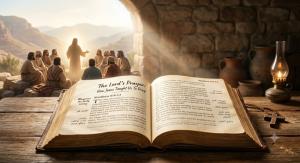
- The Lord’s Prayer: How Jesus Taught Us to Pray
The Lord’s Prayer: How Jesus Taught Us to Pray
Last updated on: July 29, 2026 at 10:22 am by Benjamin Raven Pressley
The Lord’s Prayer: How Jesus Taught Us to Pray 2026-07-29T10:22:55-04:00 Benjamin Raven Pressley
Patheos Explore the world's faith through different perspectives on religion and spirituality! Patheos has the views of the prevalent religions and spiritualities of the world.
I would venture to say that Psalms 23 and The Lord’s Prayer are probably the two most quoted scriptures in the Bible. And for good reason. You know the Lord’s Prayer in Matthew 6:9-13:
Our Father which art in heaven, Hallowed be your name.
Your kingdom come, Your will be done in earth, as it is in heaven.
Give us this day our daily bread.
And forgive us our debts, as we forgive our debtors.
And lead us not into temptation, but deliver us from evil: For yours is the kingdom, and the power, and the glory, for ever. Amen.
 Not Just A Pretty Prayer
This prayer was never meant just for vain repetition. It was a model that Jesus used to teach the Disciples how they should pray and what should be included when they pray. Jesus made this very clear in Matthew 6:7, **“But when ye pray, use not vain repetitions, as the heathen do: for they think that they shall be heard for their much speaking.” In ancient pagan (heathen) beliefs, they believed that the louder they prayed or if they repeated something over and over, it would force a deity’s hand. Jesus said this was empty or useless. Jesus wasn’t condemning sincere, repeated requests, but rather thoughtless repeating of words that weren’t sincerely from the heart. In the ancient Greco-Roman and pagan worlds, people would chant long lists of names or phrases to appease or trick their gods. The pagan mindset assumed the gods were distant or reluctant, so humans had to “wear them down” with many words. Jesus contrasts this by teaching that God is an attentive Father who already knows what you need before you ask (Matthew 6:8). Therefore, true prayer should be honest, relational, and grounded in a sincere heart rather than focused on word counts or flowery formulas. You can take this truth all the way back to 1 Samuel 16:7: “**But the Lord said to Samuel, “For the Lord sees not as man sees: man looks on the outward appearance, but the Lord looks on the heart.” God knows if your words are just from your mouth or if they are from your heart. So you might as well be truthful when you pray because God already knows whether you are or not.
Consider the context that Jesus taught this prayer in. Jesus had been teaching his disciples many things that day and then one of them asked: Luke 11:1 **“**And it came to pass, that, as he was praying in a certain place, when he ceased, one of his disciples said unto him, Lord, teach us to pray, as John also taught his disciples.”
Personally, I would cite John 17 as ‘the Lord’s Prayer’ rather than this prayer because this prayer was a teaching. It was a model, a teaching aid, if you will, to teach the disciples how they should pray. And as I break it down, I think you will see it opens up the deep revelation as to how we should pray. It is a direct alignment with Heaven itself, not just a ritual, not just a pretty recitation. Jesus didn’t say, “This is a prayer you can say before meals or in church or something.” No, he said, “This is how you should pray.” This is a blueprint he gave for how to approach God.
Let’s break it down line by line:
“Our Father who art in heaven…”
From the very start, Jesus is teaching the disciples who they are to pray to. Not some vague entity that is unapproachable, but someone as close as a father. In other scriptures he taught, we could even address God as ‘Abba’. The phrase “Abba, Father” appears in three verses in the New Testament: Mark 14:36, Romans 8:15, and Galatians 4:6. “Abba” is an intimate Aramaic word for a close, trusted father, akin to ‘Daddy’. Jesus could have said, ‘Mighty Creator of the universe’ or ‘Great King’ and been correct, but he wanted to make it clear what he came to earth for, which was to restore a relationship and a close connection to the Father. Jesus was bringing a whole new view to people who only knew the Old Testament fiery, lightning-striking God of judgment and wrath and wanted people to know that God viewed them as his children whom he loved so much that he sent his Son to restore that intimate connection to him. It is your enemy, the devil, that wants you to believe that God is distant, cold, uninterested and cruel and too holy to approach. He wants to make you think that God is hard to reach. I know there are some reading this that perhaps did not have a good earthly father and cannot relate to this comparison, but be assured that God is a good father. He is the father that your earthly father was meant to be, loving and compassionate and a protector and provider. And then he goes one step farther when he says ‘in heaven’ to let you know we have a heavenly home to look forward to, a place he has prepared for you to one day be forever with him. This is not a religion, this is a forever home where he lives and invites us to come and be with him!
“My Father’s house has many rooms; if that were not so, would I have told you that I am going there to prepare a place for you? And if I go and prepare a place for you, I will come back and take you to be with me that you also may be where I am.” John 14:2-3
**“**Come unto me, all ye that labour and are heavy laden, and I will give you rest.” Matthew 11:28
“Let us therefore come boldly unto the throne of grace, that we may obtain mercy, and find grace to help in time of need.” Hebrews 4:16
Jesus wanted us to know that prayer was not just wishful thinking or hoping for good things. He wanted you to know that when you pray, you are speaking to someone who loves you, knows you, and already has a plan for you. When you come before God, you don’t come as a beggar; you come as a son or a daughter. 150 times Jesus called God Father in the gospels. And he welcomes all who follow him to be family, brothers and sisters.
“Hallowed Be Your Name”
Hallowed is not a word we use in everyday conversation. It means ‘holy and sacred’. ‘Father’ changes the way we approach God, but ‘hallowed’ changes the way we see him. Though he is our holy, approachable Father, we are not to forget that he is also holy and worthy of praise. Jesus was teaching us in this prayer that God is not just a name that we acknowledge but also challenges us to live a life of holiness. When we say “Hallowed Be Your Name,” we’re making a declaration: that because God is holy, so we must treat Him as holy and live our lives reflecting that sacredness. Hallowed has to do with living it every day of the week. It is living like you are the child of a holy father. It is not just about living it on Sunday; it is about acknowledging whose family you are in by living it out. It is a commitment to represent His name in the way we live and to reveal His name to a world that has forgotten his power. Look at the results of a world that doesn’t hallow his name. People don’t just ignore God; they openly oppose Him and blaspheme his name. He is being ‘canceled’ from our schools, culture, and public life. Remove the name of God, and remove the fear of God. Ask yourself, when you pray, do you just say the words, or does your life truly hallow God’s name? Do you live in a way that shows the world who He really is and makes it evident that you are his child?
“These people honor me with their lips, but their hearts are far from me. They worship me in vain; they are teaching for doctrines the commandments of men.” Matthew 15:8-9
 “Your Kingdom Come”
When you pray this, you are literally inviting God’s rule on earth. You are calling for a complete shift in power—a spiritual takeover. There are two kingdoms at war right now, battling for your soul: the kingdom of God and the kingdom of this world and Satan (2 Corinthians 4:4). And the question is: Which one are you building? Surely you see it. This world is in opposition to everything the Word of God teaches, from no prayer in school in the 60’s to transgender drag queens indoctrinating children in our public libraries and schoolrooms. The Pledge of Allegiance to a nation under God is being replaced with a tolerance for flags, religions and causes in opposition to safe and godly principles our country was founded upon. The sacredness of marriage and commitment has been replaced with anything goes in sexuality. Look at the world today: it is proof that people are choosing the wrong kingdom. The division, the deception, the corruption—it’s all evidence of a world that has rejected God’s rule. But Jesus didn’t tell us to sit back and wait for Heaven; He told us to not only pray for the kingdom to come, but He told US to bring it!
Thy kingdom come is not just some future reality. it is something we are called to bring into the world right now. People want to go to heaven sometime in the future and that is a great hope, but what about the here and now? Jesus didn’t just preach about Heaven; He preached about the kingdom now. He said, “Repent, for the Kingdom of Heaven is at hand” (Matthew 4:17). He cast out demons, healed the sick, and forgave sins. He didn’t just do this for show he did it to show us what the kingdom of God looks like in action. And called us to do the same.
**“**And these signs shall follow them that believe; In my name shall they cast out devils; they shall speak with new tongues; They shall take up serpents; and if they drink any deadly thing, it shall not hurt them; they shall lay hands on the sick, and they shall recover.” Mark 16:17-18
He made it clear that the Kingdom of God is within us.
“And when he was demanded of the Pharisees, when the kingdom of God should come, he answered them and said, The kingdom of God cometh not with observation: Neither shall they say, Lo here! or, lo there! for, behold, the kingdom of God is within you.” Luke 17:20-21
The church is waiting for pie in the sweet by and by when we are told to ‘occupy’ till he comes (Luke 19:13). So What Does “Occupy” Look Like? 1 Corinthians 15:57-58 explains:
“But thanks be to God, who gives us the victory through our Lord Jesus Christ. Therefore, my beloved brethren, be steadfast, immovable, always abounding in the work of the Lord, knowing that your labor is not in vain in the Lord.” We are to show forth God’s love and manifest it in good works, proclaiming that THIS is what the kingdom looks like (2 Corinthians 1:4 ). And as it says in 1 Corinthians 15:57-58, be steadfast, unshakeable; in other words, no matter how crazy the world around us gets, we are to show the world an alternative and live it out no matter what. This is how we proclaim the kingdom, not by just sitting idly hoping for the rapture to take place and take us out of this world.
Jesus made this very clear when he was handed over to Pontius Pilate to be crucified and Pilate challenged Jesus, mocking him when his followers did not stand up for him in John 1:36-37 when Jesus said, “My kingdom is not of this world. If it were, my servants would fight to prevent my arrest by the Jewish leaders. But now my kingdom is from another place.”
“You are a king, then!” said Pilate.
Jesus answered, “You say that I am a king. In fact, the reason I was born and came into the world is to testify to the truth. Everyone on the side of truth listens to me.”
That is a charge to us as believers. The Jews were expecting a Messiah that would conquer Rome and put them in charge, a great military figure, but Jesus knew that kingdoms of the world come and go. He came to build a kingdom that would be within us that would stand no matter how the world went. He proclaimed a kingdom that would make us stand and have hope in the midst of persecution and tribulation and could not be destroyed, for his kingdom would be within us! Think about that!
And you will be opposed because to pray such a prayer and to live such a life is a direct threat to the enemy, the devil and this world system. It is a declaration of war to the spiritual realm. We are to bring a gospel of love to the people of this world, but we also must realize, as Ephesians 6:12 says, “For our struggle is not against flesh and blood, but against the rulers, against the authorities, against the powers of this dark world and against the spiritual forces of evil in the heavenly realms.” And live like you are of His kingdom, living in a way that invites God’s kingdom, not just building your own.
“Your Will Be Done on Earth as It Is in Heaven”
This prayer will take you deeper and deeper. This part of the prayer challenges you to surrender to His will, his way, his truth, his life. Are you ready to choose and trust God’s plan over your own? Are you ready to acknowledge that His ways are higher and superior to our ways even when we don’t understand? Are you ready to trust him even though he doesn’t give you that job you were praying for? Are you ready to trust him when you pray for healing and it doesn’t come? Job knew the meaning of surrender when everything was taken from him, and still he proclaimed, “Though skin worms destroy this body, yet in my flesh shall I see God.” (Job 19:26). Surrender is not just about saying the words; it’s about trusting God when His answer is different from what we wanted. Jesus understood our pain well when he knew he was fixing to face the worst kind of death and torture ever dreamed up by man, as he saw the Roman cross before him when He prayed: “Father, if you are willing, take this cup from me; yet not my will, but yours be done” (Luke 22:42). That prayer wasn’t easy. It wasn’t emotionless—it was a battle. But in that moment, Jesus showed us what true surrender looks like. He trusted the Father completely, even when it led Him to the Cross. Praying like this means laying down control. All through the Bible we see stories like that of Joseph, chosen son of his father, sold into slavery, imprisoned for crimes he didn’t commit, but as he walked with God’s plan he was soon promoted to second in command in Egypt and saved entire nations from starving during a famine. Apostle Paul, who only dreamed of spreading the gospel, was beaten and imprisoned and even stoned and left for dead, but counted it all joy to be found worthy to suffer for the sake of Christ. I know that doesn’t sound very attractive, but it is true peace when you just let go and let God have his way, trusting he will reward you and deliver you in his time and teach us lessons along the way that will empower us like nothing else.
**“**There hath no temptation taken you but such as is common to man: but God is faithful, who will not suffer you to be tempted above that ye are able; but will with the temptation also make a way to escape, that ye may be able to bear it.” 1 Corinthians 10:13
“Give Us This Day Our Daily Bread”
One of the names of God is ‘Jehovah-Jireh’ which literally translates to ‘The Lord will provide’. And literally the root Hebrew word for Jireh means “to see” or “to foresee”. God’s provision comes from His clear vision of human needs before they even happen. It means God does not just notice trouble; He steps in and acts at the right time. You first see this name of God used when Abraham was about to sacrifice his son Isaac and God stayed his hand and provided a ram to be sacrificed instead (Genesis 22).
It is significant that Jesus taught us to pray for ‘daily’ bread, not monthly, not yearly but daily. God wants us to trust him daily for our provision. He doesn’t want us to worry about tomorrow.
“25 Therefore I say unto you, Be not anxious for your life, what ye shall eat, or what ye shall drink; nor yet for your body, what ye shall put on. Is not the life more than the food, and the body than the raiment? 26 Behold the birds of the heaven, that they sow not, neither do they reap, nor gather into barns; and your heavenly Father feedeth them. Are not ye of much more value than they? 27 And which of you by being anxious can add one cubit unto [a]the measure of his life? 28 And why are ye anxious concerning raiment? Consider the lilies of the field, how they grow; they toil not, neither do they spin: 29 yet I say unto you, that even Solomon in all his glory was not arrayed like one of these. 30 But if God doth so clothe the grass of the field, which to-day is, and to-morrow is cast into the oven, shall he not much more clothe you, O ye of little faith? 31 Be not therefore anxious, saying, What shall we eat? or, What shall we drink? or, Wherewithal shall we be clothed? 32 For after all these things do the Gentiles seek; for your heavenly Father knoweth that ye have need of all these things. 33 But seek ye first his kingdom, and his righteousness; and all these things shall be added unto you. 34 Be not therefore anxious for the morrow: for the morrow will be anxious for itself. Sufficient unto the day is the evil thereof.” Matthew 6:25-34
Remember the children of Israel travelling to the Promised Land? They were provided daily manna from heaven and told not to save any of it for the next day but to trust God for their daily provision. (Deuteronomy 8). In our daily walk with Christ, we are to trust him for all our needs and he promises to provide: Philippians 4:19 says, **“**But my God shall supply all your need according to his riches in glory by Christ Jesus.” He provides for our every need, not just money, but also we can experience a freedom emotionally and spiritually that the world can’t offer. Anxiety fades when we realize we are in the hands of a faithful Provider.
Today’s culture is all about the pressure to achieve, the obsession with wealth, the constant worry about the future. It’s exhausting. But Jesus is saying, “Let it go. Ask for what you need today. Trust Me to handle tomorrow.” I have been through some times in my life I could barely trust God for my next breath, my next minute, my next hour but I learned during those times that that was alright and I didn’t have to trust him for ten years from now I just needed to trust him for what I could and take it day by day and don’t worry about tomorrow, No ‘what ifs’. Just trust. And you know what? I found from experience he could be trusted and is faithful.
“Forgive Us Our Debts As We Forgive Our Debtors”
Some versions of this prayer substitute ‘Debts’ for ‘Trespasses’. The choice between “debts” and “trespasses” stems from the historical influence of early English prayer books and the context of the verses immediately following the prayer.
While the original Greek text in Matthew 6:12 strictly uses the word for financial or moral obligation (opheilemata, meaning “debts”), the word “trespasses” entered the liturgical tradition due to translation choices and context. While Jesus uses the word “debts” during the prayer in Matthew 6:12, he immediately clarifies his meaning in the two verses directly following the prayer: “For if ye forgive men their trespasses, your heavenly Father will also forgive you: But if ye forgive not men their trespasses, neither will your Father forgive your trespasses.” — Matthew 6:14-15. So either variation is acceptable and doesn’t change its context or meaning.
The main focus, though, is forgiveness. How we rejoice that he has forgiven us of all our sins. Yet Jesus says, now take it a step further: forgive others. We all have someone that has wronged us in some way, some more severe and life-threatening than others and I feel your pain. Jesus knew this more than most. People were believing Jesus and following him by the hundreds and yet his own brothers didn’t believe in him (John 7:3-5). They even said he was out of his mind (Mark 3:21). Jesus even noted how people rejected him in his hometown, stating: *“A prophet is not without honor except in his own town, among his relatives and in his own home. (*Mark 6:4 and Matthew 13:57). Yes, they eventually came to believe in him, but still it had to hurt to be rejected by his own family. Perhaps some of you have been hurt by someone whom you loved, perhaps even abused by a spouse. And yet, knowing this, Jesus instructs his disciples to forgive others.
He even goes so far as to say:
- Matthew 5:23–24: Leave your gift at the altar, go first and make peace with your brother or sister, and then come back to offer your gift.
- 1 Peter 3:7: Husbands must treat their wives with respect so that nothing will block or hinder their prayers.
- Mark 11:25: When you stand praying, forgive anyone you hold a grudge against so your Father in heaven will forgive your sins too.
- Matthew 6:14-15: For if you forgive other people when they sin against you, your heavenly Father will also forgive you. 15 But if you do not forgive others their sins, your Father will not forgive your sins.
Holding a grudge is like drinking poison and hoping the other person dies. It only hurts you to hold a grudge. It doesn’t hurt the person you are holding a grudge against. It eats you up inside. It will keep you from moving forward in life. You end up spending energy and hurting yourself to the point they not only hurt you once, but you allow them to continue to destroy you.
I think one thing that keeps people from forgiving others is that they wrongly think that if you forgive someone, you are saying it is alright and some even think they have to let that person back in their lives. Nothing could be further from the truth. Especially in a case where someone was abused by a spouse. You do not have to let them back in your house or in your life. Forgiveness and trust are two different things. Forgiveness is between you and God. It frees you! It takes back your power. (Read my article on Taking Back Your Power). Sure, you can tell the other person you forgive them if you wish and if it will not endanger you or your children; that is up to you though; it isn’t necessary. In some cases, it will be a witness to them and possibly put them under conviction so that they seek God’s forgiveness. I taught my children from very young that if someone apologizes, don’t say it’s alright; say I forgive you. What they did may not be alright, but you still can forgive them.
We may say, “But they hurt me,” “But they don’t deserve it,” “But they haven’t even apologized.” But did we deserve forgiveness? Did we come to God perfectly cleaned up, apologizing for every sin before He chose to send Jesus? Romans 5:8 tells us that while we were still sinners, Christ died for us. That means we forgive not because people deserve it, but because we didn’t deserve it either. Just do it. Forgive and be set free. Don’t give them power over you.
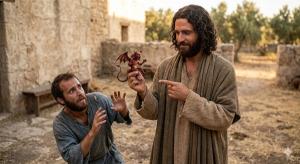
“Seriously? You’re scared of this?”
“Lead Us Not Into Temptation”
Does God lead us into temptation? No, James 1:3 makes this very clear: “When tempted, no one should say, “God is tempting me.” For God cannot be tempted by evil, nor does he tempt anyone.” What he is saying here is to be prepared, for you will be tempted by sin, the devil and the world. He is telling you to prepare for war. You have a new nature but that old nature just doesn’t want to let go (Romans 7:15-17) and there are so many things to tempt us in this world but I want you to be clear on something, it isn’t a sin to be tempted: “But every man is tempted, when he is drawn away of his own lust, and enticed. Then when lust hath conceived, it bringeth forth sin: and sin, when it is finished, bringeth forth death. “(James 1:14-15). This line in this prayer is teaching us that we need to ask God, the Holy Spirit, to strengthen us for when the time comes so we can resist the temptation and not let it become sin. It isn’t sin till we perform the act it is tempting us to do. Jesus even warned that to look upon a woman with lust is to have already committed adultery. (Matthew 5:28). He wasn’t saying we had actually committed the act or sinned, yet he was telling us to stop it while it was still a thought. Think about it: How often do people fall into sin, into addiction, into bad choices because they weren’t on guard? They weren’t praying against temptation; they were just hoping they’d be strong enough in the moment. But Jesus is teaching us that we don’t wait until temptation comes to start fighting. We ask God to guide us in a way that helps us avoid it altogether. We must stay alert. 1 Peter 5:8 tells us: “Be sober-minded and watchful. Your adversary the devil prowls around like a roaring lion looking for someone to devour.” The enemy is always watching for an opportunity, so we cannot afford to live carelessly. Be careful what we look at and read and feed our minds on. The good news is that God has already given us the weapons we need to win. The question is: Will we use them?
“But Deliver Us From Evil”
This one goes hand in hand with the previous line. Jesus has broken the power of sin, but he hasn’t broken the practice of sin, that is up to us. Because it has no power over us, we no longer have to give in to it. But we must make that choice every day. This part of the prayer reminds us that we will need God’s help to overcome evil and temptation when we are faced with it. There is a spiritual battle that we are facing; it is not just the world we live in or us against them. We have a very real enemy who is out to steal, kill and destroy (John 10:10). Ephesians 6:12 makes it clear: “For we do not wrestle against flesh and blood, but against rulers, against authorities, against the cosmic powers over this present darkness, against the spiritual forces of evil in the heavenly places.” In other words, the real fight is not what we see; it’s what we don’t see. The battles we face in our minds, in our families, and in our struggles are not just physical issues—they have spiritual roots. Psalm 50:15 says: “Call on Me in the day of trouble; I will deliver you, and you will honor Me.” This is not just a nice idea—it is a promise.
So how do we live this out?
- Recognize that we need God’s power every single day. It is not a one-time thing; it is daily depending on Him.
- Don’t fight alone. We need a community of believers praying for each other and standing in the gap for one another.
- Trust that God is already working on your behalf. Deliverance may not come instantly, but hang on and don’t give up. God is faithful.
Yes, the battles you’re facing are bigger than you, but the God you serve is greater than every attack of the enemy. When you pray “Deliver us from evil,” you are not just speaking words—you are calling on the very power of Heaven to fight for you, and that changes everything.
“For Yours is the Kingdom the Power and the Glory Forever”
This is not just a closing phrase. This is a shout of victory. It is a battle cry. It is a declaration that you believe what you have prayed and you are ready for battle. This is a statement of certainty—a declaration that despite what we see and feel, we believe God’s reign is eternal. It is an alignment with God’s plan, will and power. There is power in coming in agreement (Matthew 18:19-20) with what the Word of God says and a declaration of confidence in him. This is true faith when we shift our focus from how big our problems are to how big our God is. It is declaring I don’t have control, but You do… I may not have strength, but You do… It is praising and worshipping him even though things don’t look good. It is what King Jehoshaphat did in 2 Chronicles 20. It is what Elisha prayed in 2 Kings 6:17-20, “Open his eyes, LORD, so that he may see.” Then the LORD opened the servant’s eyes, and he looked and saw the hills full of horses.” God is with you. You are not alone. And if God be for us, who can be against us (Romans 8:31).
“In all these things we are more than conquerors through him that loved us.
For I am persuaded, that neither death, nor life, nor angels, nor principalities, nor powers, nor things present, nor things to come, nor height, nor depth, nor any other creature, shall be able to separate us from the love of God, which is in Christ Jesus our Lord.” (Romans 8:38-39).
Regardless of how the world and the headlines scream out that darkness and chaos are winning, we can boldly and confidently proclaim that God is still in control. He will have the final say. Read the end of the book: We Win! We need not live in fear. He has the final word over every circumstance, every battle, and every fear: For Yours is the kingdom, the power, and the glory forever. No matter what happens in this world, no matter what you face in your life, God reigns, and that is why we pray.
Let this prayer change you. Let it position you. Prayer is not just to get God’s attention and persuade Him; it is about changing our focus to a God who is the kingdom and the power and the glory forever. Approach prayer differently. Prayer is not a monologue; it’s a conversation. Too often we treat prayer like a checklist—we say our part, list our requests, and then move on. Think about it: if we prayed the way Jesus taught, truly grasping the depth of what Jesus was teaching, we would never pray the same way again. The Lord’s Prayer is not just something we repeat—it is the battle cry of those who live by faith. So the next time you pray the Lord’s Prayer, let it activate something inside you. Let it transform you. Don’t just repeat this prayer as some pretty recitation; let it teach you how to truly pray and connect to the Jesus who taught it.
https://wp-media.patheos.com/blogs/sites/2216/2026/07/Lords-prayer.mp3
Thanks for taking time for this week’s study on the Lord’s Prayer. You may read or click above and listen to the author read. Be sure to share with your friends and social media and sign up below for notifications when the next study comes out. I also have other resources and books. Click below for more information. You may also support me by donating below if you wish.



FREE Bible study course. Listen or read. No sign up needed.

About Benjamin Raven Pressley
Benjamin Raven Pressley is an author, teacher and spiritual guide. He is of Cherokee heritage. He has been a follower of the teachings of Jesus Christ and the apostles since 1975. His independent studies include the Holy Bible as well as other holy books of other religions. He is ordained by the Universal Life Church. He is a self-taught naturalist and his love and respect for nature is evident in many of the things he writes. He has authored several books on spirituality as well as a fantasy series and books on survival skills. He does not consider himself to be a religious person but believes true spirituality is an all-encompassing view of life and invites open discussion on matters of spirituality. You can read more about the author here.
Previous Post

July 22, 2026
Where Fear Belongs: Awe, Position, and Peace
Next Post

August 5, 2026 Never "Get Over God:" Reclaiming Wonder
Browse Our Archives
Select a Category balance body soul spirit born again occult organized religion reconnecting our spirit self-improvement Uncategorized walking spiritually
Select a Month November 2026 October 2026 September 2026 August 2026 July 2026 June 2026 May 2026 April 2026 March 2026 February 2026 January 2026 December 2025 November 2025 October 2025 September 2025 August 2025 July 2025 June 2025 May 2025 April 2025 March 2025 February 2025 January 2025 December 2024 November 2024 October 2024 September 2024 August 2024 July 2024 June 2024 May 2024 April 2024 March 2024
TAKE THE
Religious Wisdom Quiz
Where was Paul headed when he encountered the risen Christ?
Select your answer to see how you score.
Rome Damascus Jerusalem Antioch
Books by This Author Books by Raven's Writing Desk
Related posts from Raven's Writing Desk

Uncaging Truth: Spirituality Beyond Institutions

Created for an Eternal World: How Will You...

The Anchor of Absolute Truth in a Relative...
Understanding the Oneness of God and Function of...
TRENDING AT PATHEOS Progressive Christian

Can a Chatbot Touch Your Soul?
Can a chatbot offer genuine spiritual counsel? One conversation brought me to...

Religion and Politics: How Should We Then Live?
Two cultural axioms get repeated in polite company. Don't mix religion and...

7 Things We Get Wrong About Giving Thanks
It's a time of year when many of us turn to the...

Uncaging Truth: Spirituality Beyond Institutions
The Lost Connection: Why True Spirituality, Not Religion, Is the Key to...

Christ the King? Maybe We've Misunderstood the Crown
What do we mean when we say that Jesus is King? What...

Counter “Christ Is King” Nationalism with Christ THE...
Christ the King Sunday is an ideal time to address the heresy...
view all Progressive Christian blogs
Ad-Free & Subscriber Log-In Subscription Support
- About Us
- 2026 Calendar
- Videos
- Podcasts
- Library of World Religions
- Faith In Media Tracker
- Advertise With Us
- Write for Us
- Privacy Policy
- Terms of Service
- Do Not Sell My Data
- Contact Us
- Radiant Digital
- Manage Newsletter Subscriptions
- Unsubscribe From Notifications
- Sitemap
Copyright 2008-2026, Patheos, part of the Radiant Digital network of media brands. All rights reserved.
Subscription Support Ad-Free & Subscriber Log-In
Follow Patheos