
BuddhistCatholicContemplativeEvangelicalGeneral ChristianHinduJewishLatter-day SaintMuslimNew VisionsProgressive Christian
Beliefs
- Buddhist
- Catholic
- Contemplative
- Evangelical
- General Christian
- Hindu
- Jewish
- Latter-day Saint
- More Voices
- Muslim
- New Visions
- Pagan
- Progressive Christian
Topics
- Religion News
- Food and Religion
- Sports and Religion
- Religious Art
- Religious Music and Entertainment
- Religious Events
- History and Religion
- Style and Religion
- Politics and Religion
- Women in Religion
- Recreation Outdoors and Religion
- Business Finance and Religion
- Careers Workplace and Religion
- Education and Religion
- Family Parenting and Religion
- Health Fitness and Religion
- Home and Religion
- Relationships and Religion
- Technology and Religion
- Travel and Religion
Columnists
- Buddhist Columnists
- Business Finance and Religion Columnists
- Careers Workplace and Religion Columnists
- Catholic Columnists
- Contemplative Columnists
- Education and Religion Columnists
- Evangelists Columnists
- Family Parenting and Religion Columnists
- General Christian Columnists
- Health Fitness and Religion Columnists
- Hindu Columnists
- History and Religion Columnists
- Home and Religion Columnists
- Jewish Columnists
- More Voices Columnists
- Latter Day Columnists
- Muslim Columnists
- New Visions Columnists
- Nonreligious Columnists
- Pagan Columnists
- Politics and Religion Columnists
- Progressive Columnists
- Recreation Outdoors and Religion Columnists
- Relationships and Religion Columnists
- Religion News Columnists
- Religious Art Columnists
- Religious Events Columnists
- Religious Music and Entertainment Columnists
- Sports and Religion Columnists
- Style and Religion Columnists
- Technology and Religion Columnists
- Travel and Religion Columnists
- Women in Religion Columnists
Resource Library
- 2026 Calendar
- Library of World Religions
- The 100 Most Holy Places on Earth
- Patheos Answers
- Podcasts
- Videos
- Faith Leaders Database
- Anglican Episcopalian
- Bahai
- Baptist
- Buddhism
- Christianity
- Confucianism
- Eastern Orthodoxy
- Hinduism
- Holiness and Pentecostal
- ISKCON
- Islam
- Judaism
- Lutheran
- Methodist
- The Church of Jesus Christ of Latter-day Saints
- New Age
- Paganism
- Presbytarian and Reformed
- Protestantism
- Religion Behind the Scenes
- Roman Catholic
- Scientology
- Shia Islam
- Sikhism
- Sufism
- Sunni Islam
- Taoism
- Zen
- See all religions
Research Tools
 Ad-Free & Subscriber Log-In Subscription Support
Ad-Free & Subscriber Log-In Subscription Support
Follow Patheos 

- Trending:
- Forgiveness
- |
- Marriage
- |
- Consciousness
- |
- Death Penalty
- |
- Election
- |
- Halloween

- Home
- Progressive Christian
- Relationships and Religion
- Real-World Skills Every Kid Needs
Real-World Skills Every Kid Needs
Last updated on: June 24, 2026 at 7:44 pm by Benjamin Raven Pressley
Real-World Skills Every Kid Needs 2026-06-24T19:44:41-04:00 Benjamin Raven Pressley
Patheos Explore the world's faith through different perspectives on religion and spirituality! Patheos has the views of the prevalent religions and spiritualities of the world.
Practical Self-Reliance & Resilience
We raise our children inside the safety of our homes, but the ultimate goal of parenting is to prepare them to navigate a world we cannot fully control. We do this by teaching them practical self-reliance and resilience.
Modeling Behavior and Living with Perspective
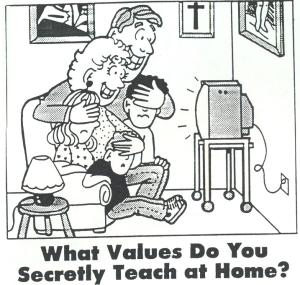
Image courtesy free church clip art
We live in a world where you cannot shield your children from everything. For example, when profanity or nudity unexpectedly pops up on the television or radio, don’t just run over and frantically cover your kids’ eyes and ears. While you should absolutely set age-appropriate boundaries and restrict explicit content, you must also recognize that we have to live in the world but we don’t have to be ‘of it’ (John 17:16-26)
Use those uncomfortable moments as teachable opportunities. If you hear profanity on the radio or witness poor behavior in public, turn it into a conversation. If you see someone acting out in a grocery store, ask your child: “What was wrong with the way that man just screamed at his wife?” or “How do you think that child should have spoken to their mother?” Give them the analytical tools they need so they can weigh these situations out for themselves and choose a better path.
Redefining Gender Dynamics and Equality
We must teach our daughters that they are worthy of respect and should never allow anyone to degrade or mistreat them. Concurrently, we must teach our boys to treat girls as absolute equals and human beings, rather than sex objects. Encourage platonic friendships with the opposite sex early on so they learn to view each other as peers; romantic and dating aspects will follow naturally when the time is right.
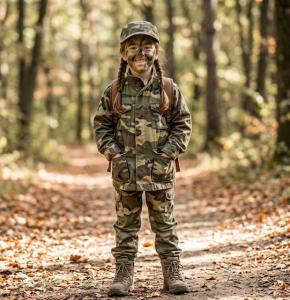
Daughters can learn independent life skills as well as sons.
Avoid rigid, outdated traditions that limit your children’s potential.
- For Daughters: Teach them the value of self-reliance. Too many young girls grow up believing they don’t need an education, a career, or financial independence because they can just find a man to depend on. Doing that puts your entire life and security into someone else’s hands. Teach your daughters to have their own money, their own career goals, and their own car. Teach them that just because a guy buys them dinner, they don’t owe him anything. Let them learn self-defense so they can draw a hard line and protect themselves.
- For Relationships: Model a true partnership. My wife and I operate on a beautiful philosophy: We don’t need each other; we want each other. We are better together than we are apart, and we respect one another equally without falling into rigid traditions of forced submission that only breed resentment.
The Talk: Talk to your kids about sex by the time they are eight years old. Yes, it might feel awkward, and their initial reaction will likely be, “Gross!” However, it is vital that they hear the biological and moral truth from you first. If you don’t build that healthy foundation, the media, movies, or a kid in a school locker room will fill their heads with misinformation and toxic philosophies.
The Power of Example
Ultimately, you teach your children by the way you live your life. If you are a husband who screams at your wife, insults her, or refuses to listen, you are actively training your children to replicate that behavior. Your actions carry vastly more weight than your words. Model a healthy, communicative relationship so they can see what mutual respect looks like in practice. This is doubly important in blended families, where children may have come out of an unstable or abusive past environment. Show them, through daily action, that there is a right way and a wrong way to treat a life partner.

Involve children in community projects.
To keep them grounded, intentionally involve your kids in something bigger than themselves. Take them volunteering, get them involved in local charities, or participate in community outreach through a local church that actively lives out its faith.
Exposing your children to those who are less fortunate can be completely life-changing. If they are only surrounded by privileged, spoiled peers, they will constantly compare themselves upward and complain about the latest video game or shoes they don’t have. When they see people who are genuinely struggling, it fundamentally shifts their perspective. They realize they don’t need endless material possessions to be happy, and it instills a lifelong sense of gratitude.
Proverbs 19:17 states, “Whoever is kind to the poor lends to the Lord, and he will reward them for what they have done.”
Practical Life Skills and the “Game Face”
Fixing healthy meals for your family makes a massive difference in your children’s long-term well-being. It is definitely a challenge in modern times; everything is pre-packaged, fast food is convenient, and eating healthy, fresh food often costs more money. Regardless, do the absolute best you can. Don’t simply give them all the donuts, sodas, and pizza they want; teach them how to nourish their bodies.
Mealtime shouldn’t be a passive event—it is a prime teaching moment. While you are sitting together, explain what they are eating and why it matters. You can tell them simply, “This vegetable is great for this part of your body, and this protein helps you grow strong.” Teach them the basics: eating greens daily, balancing their macro-nutrients, and limiting sugar. If you don’t know much about nutrition yourself, take the time to learn. You are passing down vital habits that they will eventually need for themselves and their own future children. Just keep it casual and conversational—don’t be so preachy that you ruin the enjoyment of the meal.
Household Competence

Teach children basic household skills.
Get your kids actively involved in cooking and household chores. Teach them how to cook food and wash clothes from an early age. I don’t care if a child has to stand on a sturdy chair just to reach the washing machine and drop the clothes in—there is absolutely nothing unsafe about it if you are supervising them and making sure they do it correctly. Introduce it as a natural milestone: “I’ve shown you how to wash your laundry, and now you are old enough to handle your own clothes. Here is how we do it.”
[Basic Kitchen Competence] ➔ [Understanding Cooking & Recipes] ➔ [Outdoor/Survival Cooking] ➔ Complete Independence
When it comes to the kitchen, let them prepare food under your watchful eye. This is the perfect opportunity to instill fundamental safety habits:
- Teach them to always turn pot handles away from the front edge of the stove so they can’t be accidentally knocked over.
- Show them how to monitor pots so things don’t boil over.
- Train them to automatically use potholders rather than touching hot surfaces.
- Ensure they know how to safely use the stovetop and the oven, rather than relying exclusively on the microwave. The microwave is a convenient invention, but it should never be their only culinary resource.
Pass down adaptive, self-reliant skills. For example, I enjoy taking my kids camping and teaching them how to cook over an open fire. If a child can successfully manage a fire and cook a meal on it, they can survive and cook practically anywhere. You never know when they might face an emergency, a severe storm, or a prolonged power outage. Having those primal skills ensures they won’t be totally helpless. Have them follow basic recipes, but encourage them to understand the flavor profiles and techniques so they can eventually whip up chicken, beef, stir-fries, or simple sauces without needing an instruction sheet every time. If you don’t know how to bake biscuits from scratch or grill a proper steak, learn the skill together.
Practical Self-Reliance
It is a sad reality that so many grown adults today have absolutely no idea how to cook a basic meal or take care of a household. When I was growing up, my parents expected me to contribute. They would tell me, “When you get home from school, go ahead and put these ingredients in the pot, take this out of the refrigerator to thaw, or warm up dinner.” Because of those expectations, I grew up knowing exactly how to handle myself. We are losing these basic habits of personal responsibility.
If you possess practical technical skills, pass those down as well. Teach your kids how to use basic hand tools and perform simple car maintenance. I wish my dad had taught me more about cars; he shared what little he knew, but it wasn’t much. Do everything you can to prepare your children, because any task they can perform themselves will save them thousands of dollars over the course of their lives.
Even if it sometimes feels easier to just pay a quick-lube shop to service your vehicle, your children—this includes daughters—must know the fundamentals. Teach them how to pull the dipstick and check the oil, monitor the radiator coolant, and safely check tire pressure. Far too many teenagers drive around with zero knowledge of how to use a simple tire gauge. You only have a limited number of years with them before they leave your home. Fill those years with practical knowledge. It might seem uninteresting to them right now, but somewhere down the road, they will hit a rough spot and think, “I know exactly how to handle this because my parents took the time to show me.”
Maintaining a Balance
Human beings are simultaneously mental, physical, spiritual, and social creatures. It is incredibly easy for a developing child to get completely out of balance. If a child spends 100% of their energy absorbed in social media, texting, and peer groups, their life is heavily skewed. If they never exercise or eat poorly, they are neglecting their physical health—though they can also overdo it by becoming completely obsessed with physical vanity. Guide them toward a healthy, holistic equilibrium.
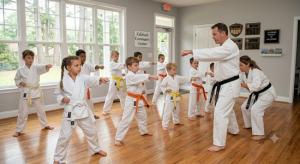
Children should learn basic self-defense.
Self-Defense and Personal Protection
I highly recommend enrolling your children in a reputable martial arts or self-defense class. Parents sometimes worry that combat sports will turn their child into an aggressive brawler, but the exact opposite is true. Legitimate martial arts instruction instills deep discipline and teaches kids how to de-escalate and walk away from a conflict. When a person knows they possess the physical ability to defend themselves, they have absolutely nothing to prove to anyone, which makes it far easier to simply walk away from an antagonist.
However, the world can be dangerous, and both boys and girls may eventually encounter a situation where they have no choice but to protect themselves. Do not be the type of parent who tells a child they cannot fight under any circumstances. Forcing a child into absolute, unconditional passivity simply turns them into an easy target for a bully.
Bullying is an enormous issue. While you must ensure your child is never the perpetrator, you must also ensure they are never a defenseless victim. Teach them that after they have informed the school authorities, alerted the teacher, and done everything they can do through the proper channels, they have every right to physically defend themselves if someone puts hands on them. If they have to fight back to protect themselves or stand up for a defenseless classmate who is being cornered, you should back them up 100% and defend them against school administrative overreaction. We have to stand up for one another. Yelling and fighting should never be the primary option, but there are absolutely times when standing up for your life or the safety of another person is entirely appropriate.
Keeping Your “Game Face” On
No matter what personal, financial, or emotional struggles you are going through as an adult, you must keep your “game face” on in front of your children. Never vent your personal stress onto them, and never burden them with adult anxieties. Children look to their parents to model strength, emotional stability, wisdom, and authority. They should never have to emotionally take care of you; your job is to take care of them.
As a single parent, I went through plenty of incredibly difficult times, financial strains, and emotional breaking points. But I made a strict, unyielding determination to keep my struggles entirely hidden from my children. My kids had absolutely no idea I was experiencing that kind of internal turmoil because I kept it to myself, refused to take my bad moods out on them, and forced a smile when necessary. I still took them to the park, played games, and invested quality time into their lives instead of lying around in depression or turning to a bottle. I kept my game face on because that is what my children deserved.
If you and your spouse or partner are going through a rough patch or disagreeing, make a solemn vow to never argue, scream, or bicker in front of your children. Take those conversations behind closed doors and work them out peaceably when the kids are asleep or away. Children should not be weighed down by adult problems. Make their childhood as secure, peaceful, and joyful as possible. Once they grow up and enter the real world, they will face plenty of their own challenges. Your ultimate job as a parent is to spend their youth giving them the emotional, spiritual, and practical tools they need to handle future situations beautifully.
Here Are A Few Final Tips
- Teach them the basics of your faith at home and take them to a good church that not only preaches it, but they live it. They need to be around other young people trying to live right. They need to be part of a church that cares and ministers to their community. Involve them in a youth group that ministers to their local community, especially those less fortunate. I also recommend they go on a mission trip. Mission trips can change a young person’s perspective when they see how people in impoverished countries live. It can build a caring attitude early on in their lives. It can vaccinate them from an ‘It’s all about me’ attitude.
- Teach them the difference between fantasy and reality. Most think that this is just something they know, and they may indeed know, but reinforcement from a parent helps to cement their perception. There are plenty of stories in the news where children and young people got so caught up in a violent video game and it carried over into their attitude and they ended up being an active shooter in their school or some other public forum of innocent people. You would be surprised by the effect video games have. I restrict games to those where they can play the hero and do what is right, not games that teach them to steal and be abusive, like Grand Theft Auto. This is one of many games that reward stealing, violence, and degrading women.
- Beware of changes in behavior. Lots of time in their rooms listening to screamo, violent, or occult-themed music. Spending much time secretly and sad. Watch for signs of drug use.
- Single parents can be good parents. Even if one or the other is totally not in their lives, reinforced by having adult friends of the missing gender. There are valuable lessons and insights to be learned from both genders. Don’t talk down to the absent parent, be truthful, and let them decide for themselves whether they are the person they want in their life. Don’t ever force them to spend time with the delinquent parent.
Preparing your children for the world isn’t about making their path easy; it is about making them capable of walking any path they choose. True parental success isn’t measured by how much we can shield our kids, but by how effectively we equip them with the practical skills, the grit, and the self-reliance to survive when we are no longer there to carry them. When you step into the kitchen to teach them to cook, show them how to defend themselves, or quietly hold your “game face” through a storm, you are giving them the ultimate gift: independence. Childhood is short, but the practical capability and resilient example you provide today will echo for generations, ensuring that when your sons and daughters finally step out on their own, they do so not as dependents looking for a rescue, but as leaders equipped to thrive.
https://wp-media.patheos.com/blogs/sites/2216/2026/06/Parenting-2.mp3
Thanks for reading this week’s blog. Please share it with your friends and social media. Also, if you would rather listen to this blog read by the author, just click above and also enjoy the accompanying video below.
This video is part 2 of a 3-part video series. To watch the other two parts, just go to the main channel for my YouTube channel, Lessons Learned.



General Christian
Family, Parenting and Religion

About Benjamin Raven Pressley
Benjamin Raven Pressley is an author, teacher and spiritual guide. He is of Cherokee heritage. He has been a follower of the teachings of Jesus Christ and the apostles since 1975. His independent studies include the Holy Bible as well as other holy books of other religions. He is ordained by the Universal Life Church. He is a self-taught naturalist and his love and respect for nature is evident in many of the things he writes. He has authored several books on spirituality as well as a fantasy series and books on survival skills. He does not consider himself to be a religious person but believes true spirituality is an all-encompassing view of life and invites open discussion on matters of spirituality. You can read more about the author here.
Previous Post

June 17, 2026
Correction, Not Punishment: A Parent's Field Guide
Next Post

July 1, 2026 Why Is Peace So Hard to Find in a Noisy World?
Browse Our Archives
Select a Category balance body soul spirit born again occult organized religion reconnecting our spirit self-improvement Uncategorized walking spiritually
Select a Month October 2026 September 2026 August 2026 July 2026 June 2026 May 2026 April 2026 March 2026 February 2026 January 2026 December 2025 November 2025 October 2025 September 2025 August 2025 July 2025 June 2025 May 2025 April 2025 March 2025 February 2025 January 2025 December 2024 November 2024 October 2024 September 2024 August 2024 July 2024 June 2024 May 2024 April 2024 March 2024
TAKE THE
Religious Wisdom Quiz
What year did the Great Schism occur, splitting the Eastern and Western churches?
Select your answer to see how you score.
325 AD 1054 AD 1517 AD 500 AD
Books by This Author Books by Raven's Writing Desk
Related posts from Raven's Writing Desk

Did Ancient China Once Worship the God of...

Did God Speak To The World Before Jesus...

Doing Enough for God? Why the Small Things...

The Sword of the Spirit Is Not What...
TRENDING AT PATHEOS Progressive Christian

What Being a Modern-Day Apostle Means to Me
In my last column, I discussed the ins and outs of modern-day...

Did Ancient China Once Worship the God of...
Across human history, a common thread weaves through the origins of the...

Love Your Neighbor – Including Earth-Kin: Lev. 19,...
God’s command to love your neighbor means acting in an ethical and...

Lead a Church Study of “Jesus and Lao...
Guest writer Jack Thomas (The Irreverent Reverend) reflects on leading his church...

Pastoral Wisdom for Responding to Sermon Pushback
Getting sermon pushback on your social justice sermon? Learn practical, Proverbs-based strategies...

Principles for Understanding the Apostolic Ministry Today
Whenever people discover that my formal ministry title is "apostle," as in...
view all Progressive Christian blogs
Ad-Free & Subscriber Log-In Subscription Support
- About Us
- 2026 Calendar
- Videos
- Podcasts
- Library of World Religions
- Faith In Media Tracker
- Advertise With Us
- Write for Us
- Privacy Policy
- Terms of Service
- Do Not Sell My Data
- Contact Us
- Radiant Digital
- Manage Newsletter Subscriptions
- Unsubscribe From Notifications
- Sitemap
Copyright 2008-2026, Patheos. All rights reserved.
Subscription Support Ad-Free & Subscriber Log-In
Follow Patheos