
BuddhistCatholicContemplativeEvangelicalGeneral ChristianHinduJewishLatter-day SaintMuslimNew VisionsProgressive Christian
Beliefs
- Buddhist
- Catholic
- Contemplative
- Evangelical
- General Christian
- Hindu
- Jewish
- Latter-day Saint
- More Voices
- Muslim
- New Visions
- Pagan
- Progressive Christian
Topics
- Religion News
- Food and Religion
- Sports and Religion
- Religious Art
- Religious Music and Entertainment
- Religious Events
- History and Religion
- Style and Religion
- Politics and Religion
- Women in Religion
- Recreation Outdoors and Religion
- Business Finance and Religion
- Careers Workplace and Religion
- Education and Religion
- Family Parenting and Religion
- Health Fitness and Religion
- Home and Religion
- Relationships and Religion
- Technology and Religion
- Travel and Religion
Columnists
- Buddhist Columnists
- Business Finance and Religion Columnists
- Careers Workplace and Religion Columnists
- Catholic Columnists
- Contemplative Columnists
- Education and Religion Columnists
- Evangelists Columnists
- Family Parenting and Religion Columnists
- General Christian Columnists
- Health Fitness and Religion Columnists
- Hindu Columnists
- History and Religion Columnists
- Home and Religion Columnists
- Jewish Columnists
- More Voices Columnists
- Latter Day Columnists
- Muslim Columnists
- New Visions Columnists
- Nonreligious Columnists
- Pagan Columnists
- Politics and Religion Columnists
- Progressive Columnists
- Recreation Outdoors and Religion Columnists
- Relationships and Religion Columnists
- Religion News Columnists
- Religious Art Columnists
- Religious Events Columnists
- Religious Music and Entertainment Columnists
- Sports and Religion Columnists
- Style and Religion Columnists
- Technology and Religion Columnists
- Travel and Religion Columnists
- Women in Religion Columnists
Resource Library
- 2026 Calendar
- Library of World Religions
- The 100 Most Holy Places on Earth
- Patheos Answers
- Podcasts
- Videos
- Faith Leaders Database
- Anglican Episcopalian
- Bahai
- Baptist
- Buddhism
- Christianity
- Confucianism
- Eastern Orthodoxy
- Hinduism
- Holiness and Pentecostal
- ISKCON
- Islam
- Judaism
- Lutheran
- Methodist
- The Church of Jesus Christ of Latter-day Saints
- New Age
- Paganism
- Presbytarian and Reformed
- Protestantism
- Religion Behind the Scenes
- Roman Catholic
- Scientology
- Shia Islam
- Sikhism
- Sufism
- Sunni Islam
- Taoism
- Zen
- See all religions
Research Tools
 Ad-Free & Subscriber Log-In Subscription Support
Ad-Free & Subscriber Log-In Subscription Support
Follow Patheos 

- Trending:
- Forgiveness
- |
- Marriage
- |
- Consciousness
- |
- Death Penalty
- |
- Election
- |
- Halloween

- Home
- Evangelical
- Hell Might Just Be the Most Unpopular Subject in the World (and Sometimes in the Church)
Hell Might Just Be the Most Unpopular Subject in the World (and Sometimes in the Church)
Last updated on: October 2, 2023 at 8:30 am by Randy Alcorn
Hell Might Just Be the Most Unpopular Subject in the World (and Sometimes in the Church) 2023-09-01T11:43:34-08:00 Randy Alcorn
Patheos Explore the world's faith through different perspectives on religion and spirituality! Patheos has the views of the prevalent religions and spiritualities of the world.
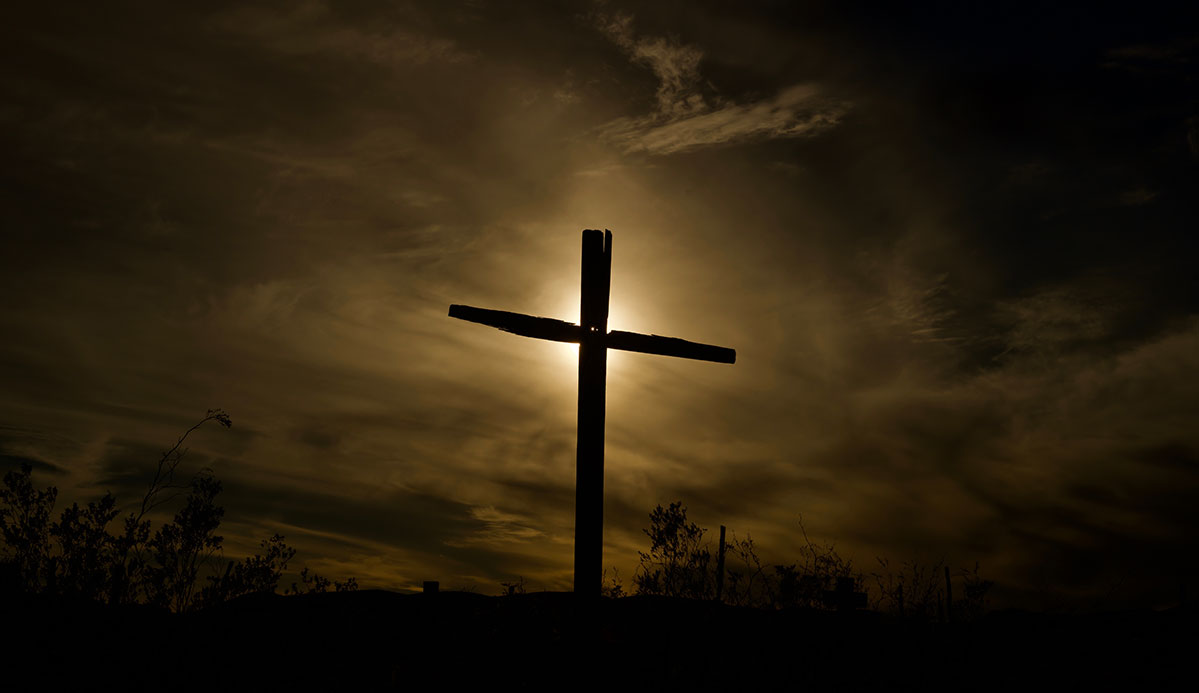
The evil of rebellion against God entered the universe through Satan, who dreamed of autonomy and of exalting himself above God. He sinned by desiring more power than God had given him.
Satan’s objective is evil and suffering—exactly what the Messiah came ultimately to defeat. From the beginning, God planned that his Son should deal the death blow to Satan, evil, and suffering—reversing the Curse triggered by Adam and Eve’s sin, redeeming a fallen humanity, and repairing a broken world.
We might think that a good and all-powerful God should disarm every shooter and prevent every drunk driver from crashing. But if He did, this would not be a real world in which people make consequential choices. It would be a world where people were happy to do evil as well as put up with evil, feeling no incentive to turn to God or to consider the gospel or to prepare for eternity. They would live with no sense of need—and then die, only to find themselves in Hell. Short-term suffering serves as a warning and a foretaste of eternal suffering. Without a taste of Hell, we would neither see its horrors nor feel motivated to do everything possible to avoid it.
Heaven and Hell represent God’s eternal two-part solution to the problem of the righteous presently suffering and the wicked presently prospering.
Jesus and Hell
In the Bible, Jesus spoke more about Hell than anyone else did. He couldn’t have painted a bleaker picture.
Jesus referred to Hell as a real place and described it in graphic terms (see Matthew 10:28; 13:40–42; Mark 9:43–48). He spoke of a fire that burns but doesn’t consume, an undying worm that eats away at the damned, and a lonely and foreboding darkness. Christ says the unsaved “will be thrown outside, into the darkness, where there will be weeping and gnashing of teeth” (Matthew 8:12). Jesus taught that an unbridgeable chasm separates the wicked in Hell from the righteous in paradise. The wicked suffer terribly, remain conscious, retain their desires and memories, long for relief, cannot find comfort, cannot leave their torment, and have no hope (see Luke 16: 19–31).
Jesus’ words tell us plainly that Hell is a place of eternal punishment—not annihilation. Annihilation is an attractive teaching compared to the alternative—I would gladly embrace it, were it taught in Scripture.
On the contrary, Jesus said, “Then they will go away to eternal punishment, but the righteous to eternal life” (Matthew 25:46). Here in the same sentence, Christ uses the word “eternal” (aionos) to describe the duration of both Heaven and Hell. Thus, according to our Lord, if some will consciously experience Heaven forever, then some must consciously experience Hell forever.
Since Jesus taught the reality of eternal Hell, who are we to think ourselves too loving to believe there is such a place? Do we think we are more loving than Jesus? Do we think we should trust ourselves or our culture rather than Him?
Hell as Justice
Sometimes we cry out for true and lasting justice, then fault God for taking evil too seriously by administering eternal punishment. But we can’t have it both ways. To argue against Hell is to argue against justice.
When speaking of what a terrible notion Hell is, people talk as if it involves the suffering of innocent people. That would indeed be unjust—but the Bible nowhere suggests that the innocent will spend a single moment in Hell!
Even if we acknowledge Hell as a necessary and just punishment for evildoers, however, we rarely see ourselves as worthy of Hell. After all, we are not ruthless dictators or serial killers or raging terrorists. Yet we are utterly unqualified to assess how sinful we are. “There is no one righteous, not even one” (Romans 3:10). We’ve never been anything other than sinful. If not for the testimony of God’s Word, as well as the conscience God has put in his image-bearers, we might have no clue of our sinfulness. Guilty people can always rationalize sin, but Hell exists because sin has no excuse.
Hell is morally good. Why? Because a good God must punish evil. That sounds like nonsense to Hell-hating moderns, but it makes perfect sense once we recognize and hate evil for what it is: an egregious offense against an absolutely righteous Creator.
If eternal Hell seems disproportionate punishment, it is precisely because we have no sense of proportion about what it means to sin against an infinitely holy being.
If we better understood both God’s nature and our own, we would not feel shocked that some people go to Hell. (Where else could sinners go?) Rather, we would feel shocked—as perhaps the angels do—that any fallen human would be permitted into Heaven.
We may pride ourselves in thinking we’re too loving to believe in Hell. But in saying this, we blaspheme, for we claim to be more loving than Jesus—more loving than the One who with outrageous love took upon himself the full penalty for our sin.
Good News
Our culture considers Heaven the default destination. (When did you last attend a funeral in which a speaker pictured the departed in Hell?) But since “all have sinned and fall short of the glory of God” (Romans 3:23) and “without holiness no one will see the Lord” (Hebrews 12:14), none of us will enter the presence of an infinitely holy God unless something in us radically changes. Until our sin problem gets resolved, Hell will remain our default destination. And that sin problem can be resolved only through faith in Christ. Only then will we find the doorway opened into Heaven.
Here’s a summary of what God calls the gospel or “the good news”:
Sin has terrible consequences, but God has provided a solution: “The wages of sin is death, but the gift of God is eternal life in Christ Jesus our Lord” (Romans 6:23).
Jesus lived a sinless life (see Hebrews 2: 17–18; 4:15–16) and died to pay the penalty for our sins (see 2 Corinthians 5:2 1). On the cross, he took upon himself the Hell we deserve, in order to purchase for us the Heaven we don’t deserve. When he died, he said, “It is finished” (John 19:30). This is the Greek word for canceling certificates of debt; it meant “paid in full.” Jesus then rose from the grave, defeating sin and conquering death (see 1 Corinthians 15:3–4, 54–57).
How many routes can take us to the Father in Heaven? Peter declared, “Salvation is found in no one else [but Jesus], for there is no other name under heaven given to men by which we must be saved” (Acts 4:12). Jesus said, “I am the way and the truth and the life. No one comes to the Father except through me” (John 14:6). That’s an exclusive statement, but Jesus made it. Do you believe him?
No Christian has the right to claim on his own authority that Jesus is the only way to God. It is Jesus himself who claimed this. He was either right or wrong. I can trust in myself and think “well, I wouldn’t send anybody to hell for eternity” and “I wouldn’t make just one way people can come to God.” But my opinion doesn’t matter, since I’m not God! If Jesus was and is God, we had better trust what he said, not what we would prefer or what our culture thinks!
“If you confess with your mouth, ‘Jesus is Lord,’ and believe in your heart that God raised him from the dead, you will be saved” (Romans 10:9). To believe in Him, is to trust Him, to embrace Him, to give ourselves over to His lordship.
Free Gift
Righteous deeds will not earn us a place in Heaven (see Titus 3:5). Christ offers us the gift of forgiveness and eternal life: “Whoever is thirsty, let him come; and whoever wishes, let him take the free gift of the water of life” (Revelation 22:17). If you haven’t accepted this gift offered by Christ—at such a great price to him—what’s stopping you?
“To all who received him [Jesus], to those who believed in his name, he gave the right to become children of God” (John 1:12).
If you get it right about Jesus, you can afford to get it wrong about secondary issues. But if you get it wrong about Jesus, in the end it won’t matter what else you got right.
More Resources
Here are several videos I’ve done on this topic, for further study:
The Reality of Hell (2 minutes)
Is Hell Just? (2:40 minutes)
What’s the Purpose of Hell? (3:27 minutes)
Will There Be Degrees of Punishment in Hell? (3:08 minutes)
Heaven, Hell, and the Afterlife: A Conversation with Sean McDowell (1 hour 6 minutes)
Answering Tough Questions About Heaven with Sean McDowell (1 hour 4:37 minutes)
I have chapters on Hell in my books Heaven and If God Is Good (see Hell: Eternal Sovereign Justice Exacted upon Evildoers, chapter 29 of If God Is Good). And I have one Hell scene in most of my novels, each a bit different than the others.
Photo: Unsplash
Previous Post

September 28, 2023
Will There Be Technology in Heaven?
Next Post

October 5, 2023 Studying God’s Word Will Change Your Life
Recent Comments
"The biblical references and examples make the message easy to follow, while the focus on ..."
Being with God Is the Heart ..."
"As we do good works (no matter how small), and struggle to live holy lives ..."
"Katy Faust's "articles" are junk science at best."
Every Child Is Known and Loved ..."
"People can feed their thoughts or a few notes into AI and be delighted with ..."
AI, Ghostwriting, and the Ethics of ..."
Browse Our Archives
Select a Category About Me Animals Books Books and Resources Christ Christian Life Christians Past and Present Church Creation Culture and Worldview Doctrine and Theology Eternal Perspective Ministries Fun Grace and Truth Grief Happiness Heaven Marriage and Family Missions Money and Giving Persecuted Church Politics Prayer Prolife Salvation Sexual Purity Sovereignty and Free Will Suffering and Evil Uncategorized Writing
Select a Month October 2026 September 2026 August 2026 July 2026 June 2026 May 2026 April 2026 March 2026 February 2026 January 2026 December 2025 November 2025 October 2025 September 2025 August 2025 July 2025 June 2025 May 2025 April 2025 March 2025 February 2025 January 2025 December 2024 November 2024 October 2024 September 2024 August 2024 July 2024 June 2024 May 2024 April 2024 March 2024 February 2024 January 2024 December 2023 November 2023 October 2023 September 2023 August 2023 July 2023 June 2023 May 2023 April 2023 March 2023 February 2023 January 2023 December 2022 November 2022 October 2022 September 2022 August 2022 July 2022 June 2022 May 2022 April 2022 March 2022 February 2022 January 2022 December 2021 November 2021 October 2021 September 2021 August 2021 July 2021 June 2021 May 2021 April 2021 March 2021 February 2021 January 2021 December 2020 November 2020 October 2020 September 2020 August 2020 July 2020 June 2020 May 2020 April 2020 March 2020 February 2020 January 2020 December 2019 November 2019 October 2019 September 2019 August 2019 July 2019 June 2019 May 2019 April 2019 March 2019 February 2019 January 2019 December 2018 October 2018 September 2018 August 2018 July 2018 June 2018 May 2018 April 2018 March 2018 February 2018 January 2018 December 2017 November 2017 October 2017 September 2017 August 2017 July 2017 June 2017 May 2017 April 2017 March 2017 February 2017 January 2017 December 2016 November 2016 October 2016 September 2016 August 2016 July 2016 June 2016 May 2016 April 2016 March 2016 February 2016 January 2016
Follow Us!
TAKE THE
Religious Wisdom Quiz
True or False: Balaam's donkey spoke to him.
Select your answer to see how you score.
TRUE FALSE
Books by This Author Books by Randy Alcorn
Related posts from Eternal Perspectives, with Randy Alcorn

What Will We Be Able to do on...
Eternal Perspectives, with Randy Alcorn

Should Animals Matter to Christians?
Eternal Perspectives, with Randy Alcorn

Are We Willing to Be Hated for Speaking...
Eternal Perspectives, with Randy Alcorn

God’s Limits Are a Sign of His Power
Eternal Perspectives, with Randy Alcorn
TRENDING AT PATHEOS Evangelical

The Sermon on the Mount, Part I: Matthew...
The Sermon on the Mount, Part I (Matthew 4:12-5:12) St. Matthew moves...

What's up from Crossway: Reviewing some of their latest A few weeks...

Janie Learns the Way of the Cross: A...
Teaching children about Jesus' Passion can be challenging. Many parents and educators...

Looking For Good Catholic Writing - October 2026
He alone extends the heavens, and he walks upon the waves of...

In "Irreplaceable," our book on vocation and technology, Trevor Sutton and I...

I was strolling through the top floor of the brand new Parthenon...
view all Evangelical blogs
What Are Your Thoughts?leave a comment
Ad-Free & Subscriber Log-In Subscription Support
- About Us
- 2026 Calendar
- Videos
- Podcasts
- Library of World Religions
- Faith In Media Tracker
- Advertise With Us
- Write for Us
- Privacy Policy
- Terms of Service
- Do Not Sell My Data
- Contact Us
- Radiant Digital
- Manage Newsletter Subscriptions
- Unsubscribe From Notifications
- Sitemap
Copyright 2008-2026, Patheos. All rights reserved.
Subscription Support Ad-Free & Subscriber Log-In
Follow Patheos