
BuddhistCatholicContemplativeEvangelicalGeneral ChristianHinduJewishLatter-day SaintMuslimNew VisionsProgressive Christian
Beliefs
- Buddhist
- Catholic
- Contemplative
- Evangelical
- General Christian
- Hindu
- Jewish
- Latter-day Saint
- More Voices
- Muslim
- New Visions
- Pagan
- Progressive Christian
Topics
- Religion News
- Food and Religion
- Sports and Religion
- Religious Art
- Religious Music and Entertainment
- Religious Events
- History and Religion
- Style and Religion
- Politics and Religion
- Women in Religion
- Recreation Outdoors and Religion
- Business Finance and Religion
- Careers Workplace and Religion
- Education and Religion
- Family Parenting and Religion
- Health Fitness and Religion
- Home and Religion
- Relationships and Religion
- Technology and Religion
- Travel and Religion
Columnists
- Buddhist Columnists
- Business Finance and Religion Columnists
- Careers Workplace and Religion Columnists
- Catholic Columnists
- Contemplative Columnists
- Education and Religion Columnists
- Evangelists Columnists
- Family Parenting and Religion Columnists
- General Christian Columnists
- Health Fitness and Religion Columnists
- Hindu Columnists
- History and Religion Columnists
- Home and Religion Columnists
- Jewish Columnists
- More Voices Columnists
- Latter Day Columnists
- Muslim Columnists
- New Visions Columnists
- Nonreligious Columnists
- Pagan Columnists
- Politics and Religion Columnists
- Progressive Columnists
- Recreation Outdoors and Religion Columnists
- Relationships and Religion Columnists
- Religion News Columnists
- Religious Art Columnists
- Religious Events Columnists
- Religious Music and Entertainment Columnists
- Sports and Religion Columnists
- Style and Religion Columnists
- Technology and Religion Columnists
- Travel and Religion Columnists
- Women in Religion Columnists
Resource Library
- 2026 Calendar
- Library of World Religions
- The 100 Most Holy Places on Earth
- Patheos Answers
- Podcasts
- Videos
- Faith Leaders Database
- Anglican Episcopalian
- Bahai
- Baptist
- Buddhism
- Christianity
- Confucianism
- Eastern Orthodoxy
- Hinduism
- Holiness and Pentecostal
- ISKCON
- Islam
- Judaism
- Lutheran
- Methodist
- The Church of Jesus Christ of Latter-day Saints
- New Age
- Paganism
- Presbytarian and Reformed
- Protestantism
- Religion Behind the Scenes
- Roman Catholic
- Scientology
- Shia Islam
- Sikhism
- Sufism
- Sunni Islam
- Taoism
- Zen
- See all religions
Research Tools
 Ad-Free & Subscriber Log-In Subscription Support
Ad-Free & Subscriber Log-In Subscription Support
Follow Patheos 

- Trending:
- Forgiveness
- |
- Marriage
- |
- Consciousness
- |
- Death Penalty
- |
- Election
- |
- Halloween

- Home
- Evangelical
- The Image of God, Race, Ethnicity, and Future Nations on the New Earth
The Image of God, Race, Ethnicity, and Future Nations on the New Earth
Last updated on: August 7, 2023 at 8:30 am by Randy Alcorn
The Image of God, Race, Ethnicity, and Future Nations on the New Earth 2023-06-23T16:06:27-08:00 Randy Alcorn
Patheos Explore the world's faith through different perspectives on religion and spirituality! Patheos has the views of the prevalent religions and spiritualities of the world.
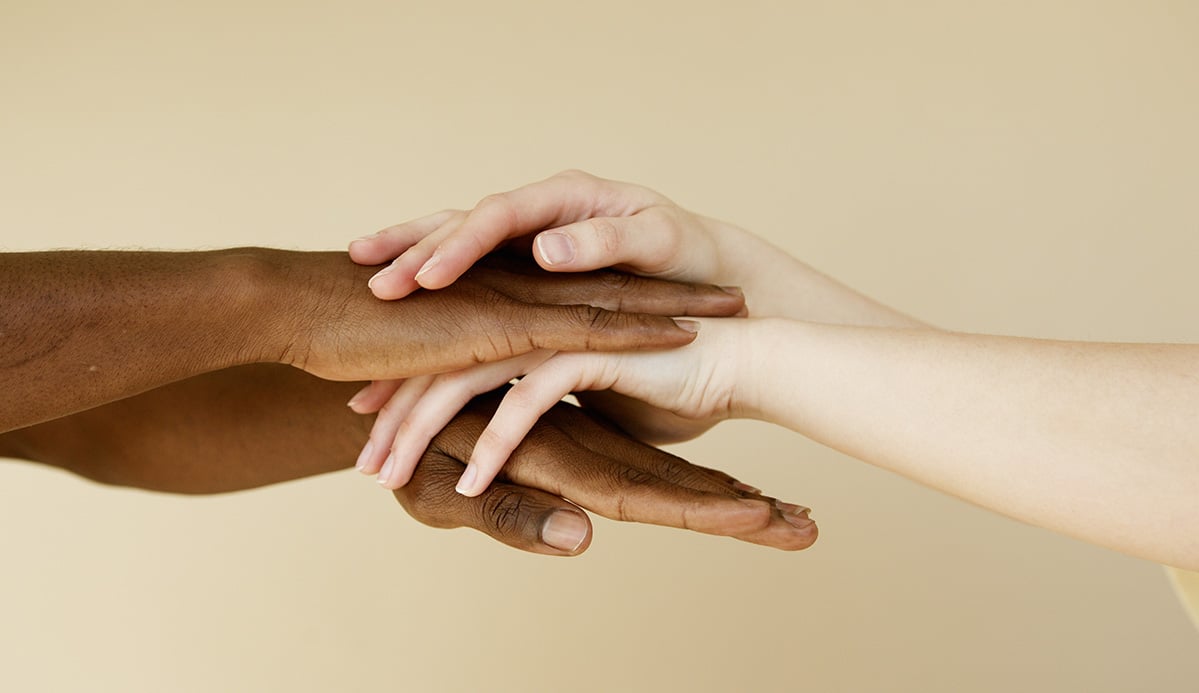
A reader responded to a blog post we shared several years ago by one of our EPM staff members, who encouraged readers to look for opportunities to love and serve people from other cultures. This person’s comments touched on the image of God, race, and the future of nations and ethnicities in eternity. I’m sharing my thoughts in response, as I think they may have a wider application to other readers.
“The image of God is not a corporate reality, but an individual reality. Otherwise, you can’t say that an individual is totally made in the image of God.”
The commenter is referring to my quoting Richard Mouw, who said:
“There is no one human individual or group who can fully bear or manifest all that is involved in the image of God, so that there is a sense in which that image is collectively possessed. …By looking at different individuals and groups we get glimpses of different aspects of the full image of God.”
Of course, we all know that each individual is made in God’s image. Mouw, and other biblical scholars, hold the same position that says the infinite character of God is more fully represented in a number and variety of His image bearers than in just one.
Adam and Eve were both made in God’s image, but more of God could be seen in the two of them than in Adam alone. This is one of the reasons it wasn’t good for man to be alone. So we are fully made in God’s image, but being finite, the fullness of God’s image is more fully seen in a community of image bearers, who can together give a larger picture of who God is. We may see God’s grace more evident in one person, His justice in another, His mercy in yet another.
Can’t we sometimes see aspects of God in men that we don’t always see in women? Can’t we sometimes see aspects of God in women that we don’t always see in men? Or can’t we see them in children more than adults? Having worshipped with Kenyan, Egyptian, Greek, Hungarian, German, Swiss, Chinese, Cambodian, Russian, Ukrainian, and Jewish (and others) believers in their countries, my awe and worship of God, and understanding of Him, did not contract but expand.
“Experiencing other cultures is not like experiencing Heaven. Last I checked, the reason we have different cultures and nations and ethnicities and languages is because we are cursed. That’s right, all those things that you’re reveling in are results of sin (Tower of Babel). Heaven undoes all of those things by uniting people from different cultures, languages, ethnicities, and nations into one people with one language with one culture in one kingdom that does not recognize ethnicity.”
In Genesis 11:4 we read of the sin surrounding the building of Babel: “Come, let us build ourselves a city, with a tower that reaches to the heavens, so that we may make a name for ourselves; otherwise we will be scattered over the face of the whole earth.” The thing they were trying to avoid is exactly what God had commanded—to spread out over the earth.
By gathering together in one location, people were opposing God’s mandate to multiply and have dominion over the earth (Genesis 1:28), which implied expansion, not a centralized existence in one location.
In fact, after the flood God repeated this to Noah and his family, saying, “Be fruitful and multiply and fill the earth” (Genesis 9:1). So when God gave them different languages to spread them out, He helped facilitate His original design.
Babel was not “the curse.” The curse happened with the first sin, in Genesis 3. What God did to Babel in Genesis 11 was a judgment. But the judgment had a sovereign purpose, and ultimately a redemptive one. The results were primarily good, since it stopped, or at least thwarted, the prideful human desire to centralize and exalt ourselves.
Also, this objection assumes that ethnicities came about as a direct result of God’s judgment at Babel. But the biblical text doesn’t say that. Genesis 11, the Babel passage, deals only with languages. There are different theories that suggest that the different language groups, spreading out to different places, naturally interbred and over time their limited gene pools developed distinctives, some of which might have been influenced by their environments.
But this is hypothetical. In any case, there is no statement in Scripture that God changed people’s skin colors when he gave them different languages. However and whenever those skin colors came about, God as the Creator governed them in the same way He did the different languages. So we should not view skin colors as the result of the curse. God designed human DNA and built into our genes the capacities for skin color differences. (This article presents different theories of how this all happened.)
I am concerned that if someone believes that ethnicity is the result of a curse, it’s a quick movement to thinking some races are more or less cursed than others, which sadly has happened in church history. Furthermore, are we to consider different languages as sinful? Obviously not. There is no single good language, nor are there any inherently bad ones.
We shouldn’t dismiss God’s design and glory that’s evident in different ethnicities. This implies that nothing under the curse can reflect God’s design or sovereign purpose. Biblically that’s not the case. Was God glorified by the redemption of Jesus that could only occur in a fallen world? Is He glorified by the redemption of people of every tribe and nation and language that all developed in a cursed world? Of course. The curse did not tie our Creator and Redeemer’s hands.
Paul said of God, “From one man he made all the nations, that they should inhabit the whole earth; and he marked out their appointed times in history and the boundaries of their lands” (Acts 17:26). Since God is God over all, including the fallen world, ultimately He—not the Curse—made all the nations. He is intimately involved in ethnicity and nations and even locations.
As Creator, doesn’t God put together the fine details of every person’s identity, not just David’s (Psalm 139:13-14)? The fact that I may be a different color than you does not mean that one of us is more or less made in God’s image than the other. We are equal in our humanity; equal in the fact that we are all sinners, living in a world under the curse; and equal that Jesus came to die for us and offer us eternal life.
It is incorrect that Heaven does not recognize ethnicity. (Wasn’t the risen Jesus still genetically a Jew? Or was His DNA altered to become a non-ethnic entity?) In Revelation 7:9-10, John says this about what he saw in Heaven: “After this I looked, and behold, a great multitude that no one could number, from every nation, from all tribes and peoples and languages, standing before the throne and before the Lamb, clothed in white robes, with palm branches in their hands, and crying out with a loud voice, ‘Salvation belongs to our God who sits on the throne, and to the Lamb!’” Something similar is said in Revelation 5:9.
These are not people who were once of or formerly of different tribes, nations, and languages, but people who John could clearly identify as such. Not only visually, but perhaps he heard them praising God in these different languages.
“Tribe” is an ethnic term. The beauty is not that Heaven doesn’t recognize ethnicity—it clearly does—but that people of all ethnicities are among the redeemed, and they are one in Christ and worship Him in concert! Heaven is NOT based on uniformity, but on a Christ-centered unity that embraces and celebrates differences.
When we gather with God’s redeemed from other cultures we receive a sneak-peak of Heaven. I have experienced this often as I’ve joined believers around the world in worship, even when I didn’t know their language. People of different ethnicities and languages and nations bring something to the table that those of a single culture do not.
I appreciated these thoughts that another commenter, Kristen, left on Facebook:
Shouting praises to God with one voice/tongue doesn’t mean we will lose our other languages any more than I lose my English language skills when I worship in other countries but use their local language, singing and praying in unison. It just means that we will have the ability to sing in a unity we’ve never experienced on Earth. God is so much bigger than we can grasp and Heaven will contain so much more than we can imagine! I get thrilled when I think of what we will learn in Heaven, but that doesn’t mean we will lose any element of what we’ve learned here on Earth.
“There is only one human race, so can we please stop saying there are multiple races? Christians need to use precise language.”
First, our staff member’s article didn’t use the word “race.” It was about people of different cultures. I used the word in my introduction to her article. Obviously we’re all aware there is only one human race. But the word “race,” like most terms, means different things in different contexts. The English term “races” still exists, and finding a substitute isn’t always easy. Ethnicity? Color? Geographic region of origin? One can be nationally or ethnically English, but black or white, with ancestors from various parts of the world. Terms such as Mexican-American combine ethnicity and nationality. It’s fine to prefer other synonyms to the word “race,” but we should realize the word has a long and established history and people will still talk about “race relations,” “racial unity,” “racial prejudice,” “racial reconciliation,” etc.
Again, my thanks to commenter Kristen for her thoughts on this:
…to ignore the commonly accepted usage of the word “race”—and risk the appearance of ignoring the serious problems associated with it—is neither wise nor healthy. Promoting racial peace has been an issue long before our time because people see differences, label them and then spew hate in regards to them. We can’t demand “precise language” without acknowledging the reality of what “imprecise language” does to our world.
“Ethnicity and background should never even cross our minds when we meet another believer. Unfortunately, we’re being told that the first thing we need to notice about someone in a local church is their skin color.”
I disagree. First of all, it obviously does and will cross our mind, and it’s silly to think we can or should close our eyes to differences.
Paul says, “There is neither Jew nor Gentile, neither slave nor free, nor is there male and female, for you are all one in Christ Jesus” (Galatians 3:28). What he’s saying is that we are all equal and should be in unity with each other. He doesn’t mean racial identity and gender and slavery do not exist. The same Paul speaks openly of Jewish and Gentile believers (Romans 2:10; 9:3-4), slaves and free believers (Philemon is free, Onesimus is a slave), and male and female believers (Ephesians 5:22, 25).
The notion of being “colorblind” doesn’t lend itself to oneness but to blindness. It suggests that if we recognize or admit differences we would be forced to say some are better than others. No, we should recognize the differences and celebrate that God’s image-bearers come in all shapes and sizes and colors, and we are the beneficiaries of His providence in creating us this way. (See Trillia Newbell’s excellent article 4 Reasons You Shouldn’t Be Colorblind.)
Saying someone’s skin color shouldn’t even cross our minds is like saying I shouldn’t notice whether I’m talking to a man or a woman, or that it’s somehow wrong to notice a man is 6’8” or 4’8”. What is wrong is when I judge or stereotype or think less of him, or more of him, because of a physical attribute. I can certainly thank God for creating diversity.
What about noticing someone is disabled, and looking for a way to assist them if needed? What about noticing someone is young or old, and they too may need my help? If I see someone of a different skin color at a store, staring at American money the same way I stared at Chinese money when I was in China, I should offer help. But I won’t if I fail to notice them.
To say that we are all image-bearers is NOT to deny we have differences. It is to say we who are different are all human, and we who are believers are, as Paul puts it, one in Christ. Not ceasing to be male or female, or ceasing to be whatever race we were created as, but fully united regardless of our differences. The glory of God is greater because people of different tribes, nations, and languages of different times and places will be forever united in Jesus.
“Scripture does plainly show that cultures, nations, languages, and ethnicities are A. a result of sin (Tower of Babel), and B. going to be undone in eternity. Yes, in eternity there will be people ‘from every tribe, tongue, people, and nation,’ but these people have been united as one people making up one nation with one language.”
How are we to be united into one family? Through the obliteration of our differences? The elimination of our uniquenesses? All skin colors blended into one so we all look the same?
No. “The city does not need the sun or the moon to shine on it, for the glory of God gives it light, and the Lamb is its lamp. The nations will walk by its light, and the kings of the earth will bring their splendor into it. On no day will its gates ever be shut…” (Revelation 21:23-25). The nations, with their different ethnicities and languages, regardless of their origins under the curse of Babel, are the creation of God Himself. In their redeemed versions it appears they will forever continue.
I share some more thoughts about nations on the New Earth in this video:
Photo by Anna Nekrashevich
Photo by Anna Nekrashevich

Next Post

August 7, 2023 Your Invitation to the Good Life—the Only Life Worth Living
Recent Comments
"The biblical references and examples make the message easy to follow, while the focus on ..."
Being with God Is the Heart ..."
"As we do good works (no matter how small), and struggle to live holy lives ..."
"Katy Faust's "articles" are junk science at best."
Every Child Is Known and Loved ..."
"People can feed their thoughts or a few notes into AI and be delighted with ..."
AI, Ghostwriting, and the Ethics of ..."
Browse Our Archives
Select a Category About Me Animals Books Books and Resources Christ Christian Life Christians Past and Present Church Creation Culture and Worldview Doctrine and Theology Eternal Perspective Ministries Fun Grace and Truth Grief Happiness Heaven Marriage and Family Missions Money and Giving Persecuted Church Politics Prayer Prolife Salvation Sexual Purity Sovereignty and Free Will Suffering and Evil Uncategorized Writing
Select a Month October 2026 September 2026 August 2026 July 2026 June 2026 May 2026 April 2026 March 2026 February 2026 January 2026 December 2025 November 2025 October 2025 September 2025 August 2025 July 2025 June 2025 May 2025 April 2025 March 2025 February 2025 January 2025 December 2024 November 2024 October 2024 September 2024 August 2024 July 2024 June 2024 May 2024 April 2024 March 2024 February 2024 January 2024 December 2023 November 2023 October 2023 September 2023 August 2023 July 2023 June 2023 May 2023 April 2023 March 2023 February 2023 January 2023 December 2022 November 2022 October 2022 September 2022 August 2022 July 2022 June 2022 May 2022 April 2022 March 2022 February 2022 January 2022 December 2021 November 2021 October 2021 September 2021 August 2021 July 2021 June 2021 May 2021 April 2021 March 2021 February 2021 January 2021 December 2020 November 2020 October 2020 September 2020 August 2020 July 2020 June 2020 May 2020 April 2020 March 2020 February 2020 January 2020 December 2019 November 2019 October 2019 September 2019 August 2019 July 2019 June 2019 May 2019 April 2019 March 2019 February 2019 January 2019 December 2018 October 2018 September 2018 August 2018 July 2018 June 2018 May 2018 April 2018 March 2018 February 2018 January 2018 December 2017 November 2017 October 2017 September 2017 August 2017 July 2017 June 2017 May 2017 April 2017 March 2017 February 2017 January 2017 December 2016 November 2016 October 2016 September 2016 August 2016 July 2016 June 2016 May 2016 April 2016 March 2016 February 2016 January 2016
Follow Us!
TAKE THE
Religious Wisdom Quiz
What does "Sheol," often found in Psalms, mean?
Select your answer to see how you score.
Blessing The grave or abode of the dead Eternal light Above the mountain
Books by This Author Books by Randy Alcorn
Related posts from Eternal Perspectives, with Randy Alcorn

The Problem of False Advertising by Christian Colleges
Eternal Perspectives, with Randy Alcorn

The Showdown Moment in Western Civilization
Eternal Perspectives, with Randy Alcorn

Eternal Perspectives, with Randy Alcorn

Some Biblically-Based Resources for News and Current Events
Eternal Perspectives, with Randy Alcorn
TRENDING AT PATHEOS Evangelical

When Halloween Unmasks Married Hearts
Written by Dr. David K. Ewen from Eternal Truth Bible College Behind...

Aristotle. He’s been called the father of logic, the father of the...

Methodist Central Hall and Westminster Abbey
Situated on the same square is Methodist Central Hall and Westminster Abbey. ...

57th Dove Awards Honor Dolly Parton, Crown New...
On gospel music’s biggest night, the 57th annual GMA Dove Awards honored...

The First Eucharistic Controversy: Christ’s Real Presence
For Catholics, the Eucharist is the source and summit of the Christian...

What a Stop Sign Can Teach Us About...
How to Make a Decision When You Can't Hear God Main point:...
view all Evangelical blogs
What Are Your Thoughts?leave a comment
Ad-Free & Subscriber Log-In Subscription Support
- About Us
- 2026 Calendar
- Videos
- Podcasts
- Library of World Religions
- Faith In Media Tracker
- Advertise With Us
- Write for Us
- Privacy Policy
- Terms of Service
- Do Not Sell My Data
- Contact Us
- Radiant Digital
- Manage Newsletter Subscriptions
- Unsubscribe From Notifications
- Sitemap
Copyright 2008-2026, Patheos. All rights reserved.
Subscription Support Ad-Free & Subscriber Log-In
Follow Patheos