
BuddhistCatholicContemplativeEvangelicalGeneral ChristianHinduJewishLatter-day SaintMuslimNew VisionsProgressive Christian
Beliefs
- Buddhist
- Catholic
- Contemplative
- Evangelical
- General Christian
- Hindu
- Jewish
- Latter-day Saint
- More Voices
- Muslim
- New Visions
- Pagan
- Progressive Christian
Topics
- Religion News
- Food and Religion
- Sports and Religion
- Religious Art
- Religious Music and Entertainment
- Religious Events
- History and Religion
- Style and Religion
- Politics and Religion
- Women in Religion
- Recreation Outdoors and Religion
- Business Finance and Religion
- Careers Workplace and Religion
- Education and Religion
- Family Parenting and Religion
- Health Fitness and Religion
- Home and Religion
- Relationships and Religion
- Technology and Religion
- Travel and Religion
Columnists
- Buddhist Columnists
- Business Finance and Religion Columnists
- Careers Workplace and Religion Columnists
- Catholic Columnists
- Contemplative Columnists
- Education and Religion Columnists
- Evangelists Columnists
- Family Parenting and Religion Columnists
- General Christian Columnists
- Health Fitness and Religion Columnists
- Hindu Columnists
- History and Religion Columnists
- Home and Religion Columnists
- Jewish Columnists
- More Voices Columnists
- Latter Day Columnists
- Muslim Columnists
- New Visions Columnists
- Nonreligious Columnists
- Pagan Columnists
- Politics and Religion Columnists
- Progressive Columnists
- Recreation Outdoors and Religion Columnists
- Relationships and Religion Columnists
- Religion News Columnists
- Religious Art Columnists
- Religious Events Columnists
- Religious Music and Entertainment Columnists
- Sports and Religion Columnists
- Style and Religion Columnists
- Technology and Religion Columnists
- Travel and Religion Columnists
- Women in Religion Columnists
Resource Library
- 2026 Calendar
- Library of World Religions
- The 100 Most Holy Places on Earth
- Patheos Answers
- Podcasts
- Videos
- Faith Leaders Database
- Anglican Episcopalian
- Bahai
- Baptist
- Buddhism
- Christianity
- Confucianism
- Eastern Orthodoxy
- Hinduism
- Holiness and Pentecostal
- ISKCON
- Islam
- Judaism
- Lutheran
- Methodist
- The Church of Jesus Christ of Latter-day Saints
- New Age
- Paganism
- Presbytarian and Reformed
- Protestantism
- Religion Behind the Scenes
- Roman Catholic
- Scientology
- Shia Islam
- Sikhism
- Sufism
- Sunni Islam
- Taoism
- Zen
- See all religions
Research Tools
 Ad-Free & Subscriber Log-In Subscription Support
Ad-Free & Subscriber Log-In Subscription Support
Follow Patheos 

- Trending:
- Forgiveness
- |
- Marriage
- |
- Consciousness
- |
- Death Penalty
- |
- Election
- |
- Halloween

- Home
- Evangelical
- “What Was It Like, Grampy?” Obadiah Abernathy Tells Stories at Family Supper
“What Was It Like, Grampy?” Obadiah Abernathy Tells Stories at Family Supper
Last updated on: September 12, 2022 at 8:30 am by Randy Alcorn
“What Was It Like, Grampy?” Obadiah Abernathy Tells Stories at Family Supper 2022-08-25T12:49:33-08:00 Randy Alcorn
Patheos Explore the world's faith through different perspectives on religion and spirituality! Patheos has the views of the prevalent religions and spiritualities of the world.
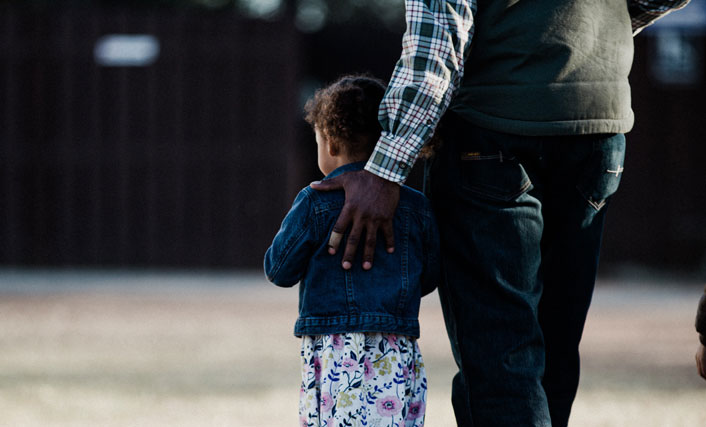
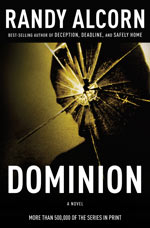
As I’ve shared before, when I’m asked who my favorite character is from my novels, I always say Obadiah Abernathy from my novel Dominion. (I share more about my inspiration for his character in this past blog.) In this excerpt from the book, Obadiah shares memories with his family, and talks about black history.
“Powerful good dinner, ladies, powerful good,” Obadiah said, voice weak but energized by having his family together. “Menfolk gotsta come up with some pretty big whoppers to match this!”
Soon the stories flowed like melting butter on steaming okra. As usual, Obadiah was right in the thick of them. “We was crossing through Kentucky on horse and buggy, round about 1915 or somethin’, my daddy, Freeman Abernathy, a drivin’ proud as you can imagine. We comes to a car—nicest Model T you ever seen—but this white man had run it off the road. He was standin’ there with his three chillens and one in the pantry, wife pregnant as you ever seen. It was gettin’ dark, five miles at least to the next town.
“My daddy stopped, of course, like any Christian would. He offered to pull it out with our wagon. We had two strong horses, could’ve done it sure. This fellow looks at Daddy and says, ‘I don’t need no help from the likes of you, nigger.’
“Daddy just climbed up in the wagon and shooed off them horses. We looked back and the man’s wife started cryin’ and the chillens looked so bewildered. Mama said she felt sorriest for the chillens ’cause of the way they was gonna grow up. She said, ‘You raised up in the garbage and you can’t help but stink.’”
They laughed, but the laughter was restrained, held in check by pain. As usual, Obadiah’s stories were a string of pearls without the string. There seemed no logical connection between them.
“Your mama’s daddy, he went from being a Kentucky slave to a Lincoln Republican livin’ in N’awlins. When he heard people say, ‘Lincoln freed the slaves,’ and such hullabaloo, he’d always say to us, ‘No man gives freedom, not even Honest Abe. God gives freedom. He’s the one who delivered us out of bondage like he did his people Israel. Ol’ Abe just had the good sense to agree with God.’”
Obadiah looked at the children, most of them huddled on and around three big beanbag chairs.
“Did you know,” Obadiah said, “Mr. Lincoln was good friends with ol’ Frederick Douglass, the former slave? After the president gave a speech once, they wouldn’t let Frederick in to see him, so Abe sent word to let that black man in. And ol’ Abe says to him right in front of everybody, ‘Mr. Douglass, there’s no man whose opinion I respect more than yours.’ That’s the kind of man Mr. Lincoln was. And that’s the kind of man Mr. Douglass was. Don’t let nobody tell you different.”
“Tell us more about Frederick Douglass, Daddy,” Marny said. “For the children.”
“Frederick, well he born a slave in the early 1800s. He taught himself to read at age twelve. He got his freedom by runnin’ away, always feared maybe they’d lock him up and haul him off yet. You know how many books he had when he died?”
“A hundred?” Keisha asked, wide eyed.
“A hundred would have been a lot those days. Books hard to come by then. But Mr. Frederick Douglass, he had more than ten thousand books.”
“Funny you should mention Frederick Douglass,” Harley said. “I was just quoting from him this week in my African American literature class. He was talking about hypocrisy in the Christian churches. See, Douglass rejected this Christianity of yours.”
“Just ’cause there’s counterfeit money,” Obadiah said, “don’t mean real money’s no good. You ain’t paintin’ the whole picture, Son. Frederick Douglass was an ordained AME deacon, a church man. I may not have your degrees, boy, but I’ve read his autobiography a half-dozen times. You get me a copy, and I’ll read you somethin’.”
Sophie went to the bookcase and took a book off the shelf, bringing it to Obadiah, who opened it eagerly and started searching.
“Here it is,” Obadiah announced. “This is what Mr. Frederick Douglass said.” He cleared his throat, with the look of pride that came over him whenever he read aloud. “‘Between the Christianity of this land, and the Christianity of Christ, I recognize the widest possible difference—so wide, that to receive the one as good, pure, and holy, is of necessity to reject the other as bad, corrupt, and wicked. To be the friend of the one, is of necessity to be the enemy of the other. I love the pure, peaceable, and impartial Christianity of Christ: I therefore hate the corrupt, slaveholding, women-whipping, cradle-plundering, partial and hypocritical Christianity of this land. Indeed, I can see no reason, but the most deceitful one, for calling the religion of this land Christianity. I look upon it as the climax of all misnomers, the boldest of all frauds, and the grossest of all libels.’ See, Son, he rejected the perversion of Christianity, but he embraced true Christianity. You need to see that difference—don’t throws out the baby with the bathwater.”
“Tell us another story, Grampy,” Celeste said.
“Well, let’s see now. Here’s a story. Colored folk used to drive through Mississippi, comin’ or goin’ from Louisiana or ’Bama or Arkansas. One day this preacher was travelin’ and had to go through Ol’ Miss. He prayed loud and hard like black preachers do, ‘O God, help me make it through Mississippi!’
“Well, there was a few moments silence and then the preacher heard a voice from heaven. It was God himself and he says to the preacher, ‘You don’t know what you’re askin’, son. Even I don’t go through Mississippi!’”
Everyone laughed.
“Now, that’s just a story, chillens. The Almighty’s in Mississippi just like everywhere else, and don’t say your grampy said otherwise, you hear me now? Good people and bad people there just like everywhere else.”
“Tell us about the Klan, Granddaddy,” Jonah said.
“Well, my daddy explained the Klan to us one time after they rode up on their horses and put a burnin’ cross in front of our ol’ shanty. Daddy said that when God was makin’ peoples, there was some folk at the very back of the line, and he ran plumb outta brains to give ’em. He felt bad he didn’t have no brains left to pass out, so he decided to give ’em white sheets instead. That way they could cover up their heads and nobody could see their brains was missin’. That’s how the Klan started.”
Laughter and knee slapping and howls filled the room. Then Harley gave a serious explanation of what the Klan was. Clarence liked his daddy’s explanation better. Harley started telling about the freedom rides and the battle against segregation in the South. Imitating their drawls, he made fun of white southerners who couldn’t comprehend why blacks rose up in opposition to segregation:
“I dawn’t unda-stay’en what’s goin’ awn. It’s like some’mm dun jumped inta allda nigras ova’night.” The older family members laughed and laughed, including Clarence, while for the most part the children didn’t get it. It was true, though. White folk could talk so funny.
“What was it like living in your ol’ shotgun house, Grampy?” Keisha asked. “Well, let’s see now. At night we chillens slept with each other, cuddlin’ up to stay warm.”
“Yuk,” Jonah said.
“No yuk about it. Sometimes my ol’ nose was so frozen, don’t know what I would’ve done if brother Elijah hadn’t been there and let me snuggle it into his back. They was hard days, but good ones.” His eyes teared up. He looked up at the ceiling as if trying to peer beyond it. “I miss eatin’ sowbelly and corn pone and slicin’ up the catfish fresh out o’ the river and sittin’ on the porch those warm nights—Elijah and me and Daddy and Mama and the rest—jus’ listenin’ to those hound dogs bark and lookin’ up at heaven’s stars and seein’ the face of God.”
“I wish Uncle Elijah could come for Christmas this year,” Clarence said.
 “Not as much as I wish it, I reckon. But we both slowin’ down, Elijah and me. We both slowin’ down.” He looked at his oldest son. “Harley, you still got that music me and Elijah loved? Count Basie, Lena Horne, Duke Ellington? Now that was music, um, um. Elijah and me, we’d listen to ’em till the cows come home.”
Harley went over and put on the music while Daddy moved on to another story. Clarence watched Harley. He remembered when his brother had won a statewide essay competition for Mississippi high school students. But when they tried to make arrangements for him to stay in a local hotel, they couldn’t because it was segregated. Harley had never forgotten that, just as Clarence had never forgotten the teacher at the integrated school who thought his paper was so good he must have plagiarized it. Clarence could never convince her he hadn’t.
Photo by Phinehas Adams on Unsplash

Next Post

September 15, 2022 What Is the Difference Between Judgment and Discernment?
Browse Our Archives
Select a Category About Me Animals Books Books and Resources Christ Christian Life Christians Past and Present Church Creation Culture and Worldview Doctrine and Theology Eternal Perspective Ministries Fun Grace and Truth Grief Happiness Heaven Marriage and Family Missions Money and Giving Persecuted Church Politics Prayer Prolife Salvation Sexual Purity Sovereignty and Free Will Suffering and Evil Uncategorized Writing
Select a Month October 2026 September 2026 August 2026 July 2026 June 2026 May 2026 April 2026 March 2026 February 2026 January 2026 December 2025 November 2025 October 2025 September 2025 August 2025 July 2025 June 2025 May 2025 April 2025 March 2025 February 2025 January 2025 December 2024 November 2024 October 2024 September 2024 August 2024 July 2024 June 2024 May 2024 April 2024 March 2024 February 2024 January 2024 December 2023 November 2023 October 2023 September 2023 August 2023 July 2023 June 2023 May 2023 April 2023 March 2023 February 2023 January 2023 December 2022 November 2022 October 2022 September 2022 August 2022 July 2022 June 2022 May 2022 April 2022 March 2022 February 2022 January 2022 December 2021 November 2021 October 2021 September 2021 August 2021 July 2021 June 2021 May 2021 April 2021 March 2021 February 2021 January 2021 December 2020 November 2020 October 2020 September 2020 August 2020 July 2020 June 2020 May 2020 April 2020 March 2020 February 2020 January 2020 December 2019 November 2019 October 2019 September 2019 August 2019 July 2019 June 2019 May 2019 April 2019 March 2019 February 2019 January 2019 December 2018 October 2018 September 2018 August 2018 July 2018 June 2018 May 2018 April 2018 March 2018 February 2018 January 2018 December 2017 November 2017 October 2017 September 2017 August 2017 July 2017 June 2017 May 2017 April 2017 March 2017 February 2017 January 2017 December 2016 November 2016 October 2016 September 2016 August 2016 July 2016 June 2016 May 2016 April 2016 March 2016 February 2016 January 2016
Follow Us!
TAKE THE
Religious Wisdom Quiz
What woman followed Naomi to Bethlehem and later married Boaz?
Select your answer to see how you score.
Hannah Ruth Sarah Esther
Books by This Author Books by Randy Alcorn
Related posts from Eternal Perspectives, with Randy Alcorn

The Problem of False Advertising by Christian Colleges
Eternal Perspectives, with Randy Alcorn

The Showdown Moment in Western Civilization
Eternal Perspectives, with Randy Alcorn

Trust God to Write the Rest of Your...
Eternal Perspectives, with Randy Alcorn

Eternal Perspectives, with Randy Alcorn
TRENDING AT PATHEOS Evangelical

Methodist Central Hall and Westminster Abbey
Situated on the same square is Methodist Central Hall and Westminster Abbey. ...

57th Dove Awards Honor Dolly Parton, Crown New...
On gospel music’s biggest night, the 57th annual GMA Dove Awards honored...

The First Eucharistic Controversy: Christ’s Real Presence
For Catholics, the Eucharist is the source and summit of the Christian...

What a Stop Sign Can Teach Us About...
How to Make a Decision When You Can't Hear God Main point:...

Archdiocese Hosts Military Marriage Retreat in Germany
RASTATT, Germany — The transient military lifestyle, with its frequent deployments and...

Nearly every morning, I make the drive to Detroit with my high-school-age...
view all Evangelical blogs
Ad-Free & Subscriber Log-In Subscription Support
- About Us
- 2026 Calendar
- Videos
- Podcasts
- Library of World Religions
- Faith In Media Tracker
- Advertise With Us
- Write for Us
- Privacy Policy
- Terms of Service
- Do Not Sell My Data
- Contact Us
- Radiant Digital
- Manage Newsletter Subscriptions
- Unsubscribe From Notifications
- Sitemap
Copyright 2008-2026, Patheos. All rights reserved.
Subscription Support Ad-Free & Subscriber Log-In
Follow Patheos