
BuddhistCatholicContemplativeEvangelicalGeneral ChristianHinduJewishLatter-day SaintMuslimNew VisionsProgressive Christian
Beliefs
- Buddhist
- Catholic
- Contemplative
- Evangelical
- General Christian
- Hindu
- Jewish
- Latter-day Saint
- More Voices
- Muslim
- New Visions
- Pagan
- Progressive Christian
Topics
- Religion News
- Food and Religion
- Sports and Religion
- Religious Art
- Religious Music and Entertainment
- Religious Events
- History and Religion
- Style and Religion
- Politics and Religion
- Women in Religion
- Recreation Outdoors and Religion
- Business Finance and Religion
- Careers Workplace and Religion
- Education and Religion
- Family Parenting and Religion
- Health Fitness and Religion
- Home and Religion
- Relationships and Religion
- Technology and Religion
- Travel and Religion
Columnists
- Buddhist Columnists
- Business Finance and Religion Columnists
- Careers Workplace and Religion Columnists
- Catholic Columnists
- Contemplative Columnists
- Education and Religion Columnists
- Evangelists Columnists
- Family Parenting and Religion Columnists
- General Christian Columnists
- Health Fitness and Religion Columnists
- Hindu Columnists
- History and Religion Columnists
- Home and Religion Columnists
- Jewish Columnists
- More Voices Columnists
- Latter Day Columnists
- Muslim Columnists
- New Visions Columnists
- Nonreligious Columnists
- Pagan Columnists
- Politics and Religion Columnists
- Progressive Columnists
- Recreation Outdoors and Religion Columnists
- Relationships and Religion Columnists
- Religion News Columnists
- Religious Art Columnists
- Religious Events Columnists
- Religious Music and Entertainment Columnists
- Sports and Religion Columnists
- Style and Religion Columnists
- Technology and Religion Columnists
- Travel and Religion Columnists
- Women in Religion Columnists
Resource Library
- 2026 Calendar
- Library of World Religions
- The 100 Most Holy Places on Earth
- Patheos Answers
- Podcasts
- Videos
- Faith Leaders Database
- Anglican Episcopalian
- Bahai
- Baptist
- Buddhism
- Christianity
- Confucianism
- Eastern Orthodoxy
- Hinduism
- Holiness and Pentecostal
- ISKCON
- Islam
- Judaism
- Lutheran
- Methodist
- The Church of Jesus Christ of Latter-day Saints
- New Age
- Paganism
- Presbytarian and Reformed
- Protestantism
- Religion Behind the Scenes
- Roman Catholic
- Scientology
- Shia Islam
- Sikhism
- Sufism
- Sunni Islam
- Taoism
- Zen
- See all religions
Research Tools
 Ad-Free & Subscriber Log-In Subscription Support
Ad-Free & Subscriber Log-In Subscription Support
Follow Patheos 

- Trending:
- Forgiveness
- |
- Marriage
- |
- Consciousness
- |
- Death Penalty
- |
- Election
- |
- Halloween

- Home
- Evangelical
- Four Reasons Christians Distinguish Between Happiness and Joy
Four Reasons Christians Distinguish Between Happiness and Joy
Last updated on: May 18, 2020 at 8:30 am by Randy Alcorn
Four Reasons Christians Distinguish Between Happiness and Joy 2020-03-04T11:58:38-08:00 Randy Alcorn
Patheos Explore the world's faith through different perspectives on religion and spirituality! Patheos has the views of the prevalent religions and spiritualities of the world.

When I was writing my book Happiness, I knew that the chapter on “What’s the Difference Between Happiness and Joy?” would likely prove to be one of the most controversial. To verify my assertion that joy and happiness are synonyms, I cited more than one hundred verses in various translations that use joy and happiness together, as well as numerous quotes from trusted Christian pastors, writers, and thinkers who use the two synonymously. (A summarized version of the chapter is available on my blog.)
Still, the idea that the two words are synonyms can be radical to many readers. In response to a post I shared about happiness, a sincerely concerned person wrote me, “Joy, peace, and contentment do not equal happiness.” To some, the difference between the two words is as central as believing in the deity of Christ or the resurrection!
In talking to believers and researching the two words, I think there are at least four reasons why Christians see a need to distinguish between happiness and joy:
1. Many believers have been frequently taught through books and sermons, or have taught others, that happiness and joy are two completely different things.
A pastor friend wrote to tell me why it would be a big mistake to write a book about happiness: “Happiness changes from moment to moment and is reflected by our moods and emotions. Joy is a spiritual peace and contentment that only comes from God and is strong even during times of sadness. God’s desire is not to make us happy in this life but to fill our lives with joy as a result of our relationship with Christ.”
The following is typical of the artificial distinctions made by modern Christians:
Joy is something entirely different from happiness. Joy, in the Biblical context, is not an emotion. . . . Joy brings us peace in the middle of a storm. Joy is something that God deposits into us through the Holy Spirit. . . . There is a big difference between joy and happiness. Happiness is an emotion and temporary; joy is an attitude of the heart.
Judging from such articles (and there are hundreds more out there), you’d think the distinction between joy and happiness is biblical. It’s not. But when something like this is repeated often enough, as it has been from the last half of the 20th century until now, it’s easy to see how it becomes widely accepted truth. Yet there’s a long, rich history of equating joy with happiness in Christ, as shown by writings from the Puritans, Wesley, Spurgeon, and many others. As just one example, consider these words of Charles Spurgeon: “May you so come, and then may your Christian life be fraught with happiness, and overflowing with joy” (“A Happy Christian” Sermon #736).
2. Many Christians believe it’s important to use words to clearly differentiate between the Christian’s experience of godly happiness (specifically called “joy”) and the world’s false happiness.
Oswald Chambers, who I love, was the first I found to speak critically about happiness and make it opposed to joy. Chambers wrote in his book Biblical Ethics, “Happiness is no standard for men and women because happiness depends on my being determinedly ignorant of God and His demands.” Unfortunately, because Bible teachers such as Chambers saw people trying to find happiness in sin, they concluded that pursuing happiness was sinful in and of itself. It’s true that as sinful people, we chronically seek happiness in sin, but the core problem isn’t seeking happiness but choosing sin instead of God.
As Christians, don’t we know that when Scripture speaks of peace, hope, justice, and love, it routinely attaches deeper and more Christ-centered meanings to those words than our culture does? By all means, we should explain that there’s a difference between Christ-centered, God-honoring happiness, and secular, sinful happiness!
Happy isn’t the only word with baggage. Love is commonly used in superficial ways, as popular music has long demonstrated. People say they love hamburgers, hairstyles, and YouTube. They “make love” to someone they barely know. Since the word love has been so trivialized, should we remove it from Bible translations and stop using the word?
Of course not. Instead, we should clarify what Scripture actually means by love, holiness, hope, peace, pleasure, and yes, happiness. We should contrast the meaning in Scripture with our culture’s superficial and sometimes sinful connotations.
So can someone have false, superficial, and ungodly joy? Of course! Just as happiness can be spiritual or unspiritual, so can joy. Isaac Watts (1674–1748), who wrote “Joy to the World,” spoke of “carnal joys.” Charles Spurgeon recognized the difference between false and true joy:
Christ would not have us rejoice with the false joy of presumption, so He bares the sharp knife and cuts that joy away. Joy on a false basis would prevent us from having true joy, and therefore, . . . the joy we may get may be worth having—not the mere surf and foam of a wave that is driven with the wind and tossed, but the solid foundation of the Rock of Ages! (“Christ’s Joy and Ours,” Sermon #2935)
Someone can have Christ-centered happiness or Christ-denying happiness. The former will last forever; the latter has an exceedingly short shelf life.
3. Other Christians don’t want to accept that we should experience happiness that touches our hearts and emotions perhaps because they don’t feel happy, and don’t want to be told it’s what God desires for us.
An e-mail I received from a Christian leader said, “In Scripture we find that God is not about the pursuit of happiness. . . .What, then, of the widespread ambition to be happy? Is it, perhaps, an ultimate idol meant by God’s Enemy to distract us from joy?”
So what’s our problem with happiness? Does it stem from anti-world Christoplatonism? Are we suspicious that someone who’s happy must be sinning? Is it because we think we’re taking the spiritual high ground? Do we feel like “We are above this happiness nonsense,” but since we all want to experience heart-felt happiness and delight, we just call it something else (in this case, “joy”)?
Perhaps we marginalize happiness because something inside us testifies that we—who were snatched from the jaws of Hell to Heaven’s eternal delights, who are indwelt and empowered by a happy God—should be happier than we are. Maybe by defining joy as unemotional, positional, or transcendental, we can justify our unhappiness, in spite of God’s command to rejoice always in Him. Maybe saying that joy isn’t happiness allows us to lower the bar and accept a downtrodden, cheerless Christian life. And if that’s the case, we need to evaluate whether our attitudes are in need of a major paradigm shift.
Of course, no treatment of joy and happiness should deny or minimize the importance of realism and sorrow in the Christian life. The happiness described in Scripture is all the richer because it doesn’t involve denial or pretense and can be experienced amid severe difficulty. Christ-followers don’t preach the flimsy kind of happiness that’s built on wishful thinking. Instead, our rock-solid basis for happiness remains true—and sometimes becomes clearer—in suffering.
4. Satan has vested interests in keeping us from embracing what Scripture teaches about God’s happiness and ours. By convincing us that we can achieve a “joy” that’s stripped of all happy emotion and warmth, he blinds us to the truth about the God-honoring happiness Christ intends for us.
The prophet Isaiah said of a human king who appears to also represent the devil, “How you have fallen from heaven, morning star, son of the dawn! You have been cast down to the earth” (Isaiah 14:12, NIV). Jesus was actually there when this event happened. He told his disciples, “I saw Satan fall like lightning from heaven” (Luke 10:18).The devil has been unhappy ever since he rebelled against the God of happiness and was evicted from Heaven, the home of happiness.
Satan forfeited his own happiness, and he bitterly hates us—the objects of God’s love. His lie from the beginning was that God doesn’t care about our good. The truth is, God wants us to seek real happiness in Him.
The devil tempts us toward what will dishonor God by telling persuasive lies to convince us that the things that make us miserable will actually make us happy. After thousands of years of doing this, he’s remarkably good at it. Jesus said of Satan, “When he lies, he speaks his native language, for he is a liar and the father of lies” (John 8:44, NIV).
Satan hates God, he hates us, and he hates happiness—God’s and ours. He’s not about happiness; he is about sin and misery, which come from seeking happiness where it can’t be found. God is the one who planted our desire for happiness and joy.
So what difference does it make whether we see happiness and joy as synonyms?
To declare joy sacred and happiness secular closes the door to dialogue with unbelievers. If someone is told that joy is the opposite of happiness, any thoughtful person would say, “In that case, I don’t want joy!” If we say the gospel won’t bring happiness, any perceptive listener should respond, “Then how is it good news?”
We need to reverse the trend. My hope is that we can redeem the word happiness in light of both Scripture and church history. Our message shouldn’t be “Don’t seek happiness,” but “You’ll find in Jesus the happiness you’ve always longed for.”
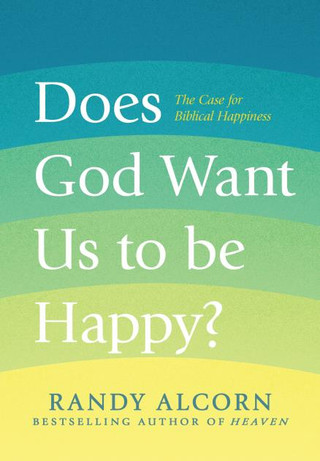
Because this issue is so important, I’ve written a small hard cover book called Does God Want Us to Be Happy? that expands and develops the themes of this article.
Photo by Preslie Hirsch on Unsplash
Previous Post

May 14, 2020
Ravi Zacharias and Hugh Ross Answer Questions from Non-Believers
Next Post

May 21, 2020 Why Don't We Often Focus on the Importance of Christ's Ascension?
Browse Our Archives
Select a Category About Me Animals Books Books and Resources Christ Christian Life Christians Past and Present Church Creation Culture and Worldview Doctrine and Theology Eternal Perspective Ministries Fun Grace and Truth Grief Happiness Heaven Marriage and Family Missions Money and Giving Persecuted Church Politics Prayer Prolife Salvation Sexual Purity Sovereignty and Free Will Suffering and Evil Uncategorized Writing
Select a Month October 2026 September 2026 August 2026 July 2026 June 2026 May 2026 April 2026 March 2026 February 2026 January 2026 December 2025 November 2025 October 2025 September 2025 August 2025 July 2025 June 2025 May 2025 April 2025 March 2025 February 2025 January 2025 December 2024 November 2024 October 2024 September 2024 August 2024 July 2024 June 2024 May 2024 April 2024 March 2024 February 2024 January 2024 December 2023 November 2023 October 2023 September 2023 August 2023 July 2023 June 2023 May 2023 April 2023 March 2023 February 2023 January 2023 December 2022 November 2022 October 2022 September 2022 August 2022 July 2022 June 2022 May 2022 April 2022 March 2022 February 2022 January 2022 December 2021 November 2021 October 2021 September 2021 August 2021 July 2021 June 2021 May 2021 April 2021 March 2021 February 2021 January 2021 December 2020 November 2020 October 2020 September 2020 August 2020 July 2020 June 2020 May 2020 April 2020 March 2020 February 2020 January 2020 December 2019 November 2019 October 2019 September 2019 August 2019 July 2019 June 2019 May 2019 April 2019 March 2019 February 2019 January 2019 December 2018 October 2018 September 2018 August 2018 July 2018 June 2018 May 2018 April 2018 March 2018 February 2018 January 2018 December 2017 November 2017 October 2017 September 2017 August 2017 July 2017 June 2017 May 2017 April 2017 March 2017 February 2017 January 2017 December 2016 November 2016 October 2016 September 2016 August 2016 July 2016 June 2016 May 2016 April 2016 March 2016 February 2016 January 2016
Follow Us!
TAKE THE
Religious Wisdom Quiz
True or False: The armor of God includes the belt of truth and the breastplate of fortitude.
Select your answer to see how you score.
FALSE TRUE
Books by This Author Books by Randy Alcorn
Related posts from Eternal Perspectives, with Randy Alcorn

Why Is Saying Goodbye to a Pet So...
Eternal Perspectives, with Randy Alcorn

Eternal Perspectives, with Randy Alcorn

If Christians Shouldn’t Be Happy, Who Should Be?
Eternal Perspectives, with Randy Alcorn

True Happiness Is Only Found in the Last...
Eternal Perspectives, with Randy Alcorn
TRENDING AT PATHEOS Evangelical

57th Dove Awards Honor Dolly Parton, Crown New...
On gospel music’s biggest night, the 57th annual GMA Dove Awards honored...

The First Eucharistic Controversy: Christ’s Real Presence
For Catholics, the Eucharist is the source and summit of the Christian...

What a Stop Sign Can Teach Us About...
How to Make a Decision When You Can't Hear God Main point:...

Archdiocese Hosts Military Marriage Retreat in Germany
RASTATT, Germany — The transient military lifestyle, with its frequent deployments and...

Nearly every morning, I make the drive to Detroit with my high-school-age...

The Real AI Story Is Adoption Without Trust
Artificial intelligence has crossed a political threshold. It is no longer a...
view all Evangelical blogs
Ad-Free & Subscriber Log-In Subscription Support
- About Us
- 2026 Calendar
- Videos
- Podcasts
- Library of World Religions
- Faith In Media Tracker
- Advertise With Us
- Write for Us
- Privacy Policy
- Terms of Service
- Do Not Sell My Data
- Contact Us
- Radiant Digital
- Manage Newsletter Subscriptions
- Unsubscribe From Notifications
- Sitemap
Copyright 2008-2026, Patheos. All rights reserved.
Subscription Support Ad-Free & Subscriber Log-In
Follow Patheos