
BuddhistCatholicContemplativeEvangelicalGeneral ChristianHinduJewishLatter-day SaintMuslimNew VisionsProgressive Christian
Beliefs
- Buddhist
- Catholic
- Contemplative
- Evangelical
- General Christian
- Hindu
- Jewish
- Latter-day Saint
- More Voices
- Muslim
- New Visions
- Pagan
- Progressive Christian
Topics
- Religion News
- Food and Religion
- Sports and Religion
- Religious Art
- Religious Music and Entertainment
- Religious Events
- History and Religion
- Style and Religion
- Politics and Religion
- Women in Religion
- Recreation Outdoors and Religion
- Business Finance and Religion
- Careers Workplace and Religion
- Education and Religion
- Family Parenting and Religion
- Health Fitness and Religion
- Home and Religion
- Relationships and Religion
- Technology and Religion
- Travel and Religion
Columnists
- Buddhist Columnists
- Business Finance and Religion Columnists
- Careers Workplace and Religion Columnists
- Catholic Columnists
- Contemplative Columnists
- Education and Religion Columnists
- Evangelists Columnists
- Family Parenting and Religion Columnists
- General Christian Columnists
- Health Fitness and Religion Columnists
- Hindu Columnists
- History and Religion Columnists
- Home and Religion Columnists
- Jewish Columnists
- More Voices Columnists
- Latter Day Columnists
- Muslim Columnists
- New Visions Columnists
- Nonreligious Columnists
- Pagan Columnists
- Politics and Religion Columnists
- Progressive Columnists
- Recreation Outdoors and Religion Columnists
- Relationships and Religion Columnists
- Religion News Columnists
- Religious Art Columnists
- Religious Events Columnists
- Religious Music and Entertainment Columnists
- Sports and Religion Columnists
- Style and Religion Columnists
- Technology and Religion Columnists
- Travel and Religion Columnists
- Women in Religion Columnists
Resource Library
- 2026 Calendar
- Library of World Religions
- The 100 Most Holy Places on Earth
- Patheos Answers
- Podcasts
- Videos
- Faith Leaders Database
- Anglican Episcopalian
- Bahai
- Baptist
- Buddhism
- Christianity
- Confucianism
- Eastern Orthodoxy
- Hinduism
- Holiness and Pentecostal
- ISKCON
- Islam
- Judaism
- Lutheran
- Methodist
- The Church of Jesus Christ of Latter-day Saints
- New Age
- Paganism
- Presbytarian and Reformed
- Protestantism
- Religion Behind the Scenes
- Roman Catholic
- Scientology
- Shia Islam
- Sikhism
- Sufism
- Sunni Islam
- Taoism
- Zen
- See all religions
Research Tools
 Ad-Free & Subscriber Log-In Subscription Support
Follow Patheos 

- Trending:
- Advent
- |
- Forgiveness
- |
- Thanksgiving
- |
- Election
- |
- Seasonal Holidays
- |
- Marriage
 Radical Christian Millennial
- Home
- Progressive Christian
- Easter is a Myth (and That’s Okay)
Easter is a Myth (and That’s Okay)
Last updated on: April 15, 2017 at 4:18 pm by Christian Chiakulas
Easter is a Myth (and That’s Okay) 2017-04-15T16:18:37-04:00 Christian Chiakulas
Patheos Explore the world's faith through different perspectives on religion and spirituality! Patheos has the views of the prevalent religions and spiritualities of the world.
Easter is nearly upon us, the time when all Christians reflect upon that most important event in our mythology: the resurrection of Christ after being nailed to a cross and then buried in a cave.
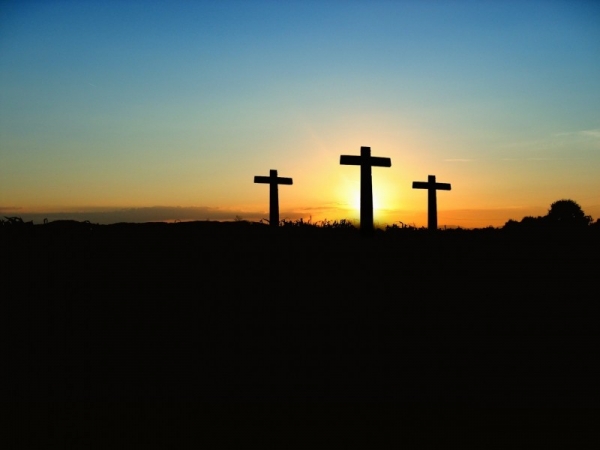
I do not use “mythology” as a disparaging term. Myths are nothing more (and nothing less) than the stories we tell in order to explain our world to each other.
In ancient times, mythology was used to explain nature. Think of Zeus and his thunderbolts. Or, for an example that hits closer to home, think of the explanation of the rainbow from Genesis: it represented God’s promise to never drown the world again after the flood.
Of course, very few people understand nature and science through mythology anymore, and many Christians have no problem with understanding Noah’s Ark as mythological (or metaphorical, if they prefer) on some level.
But if you told those same Christians, even the most skeptical, progressive ones you could find, that the Gospel is also mythology, you would be met by defensiveness and perhaps even hostility. In our common usage, mythology implies falseness or wrongness; nobody today thinks that lightning comes from Zeus throwing thunderbolts around.
Mythology has evolved beyond a focus on explaining natural phenomena, and indeed it has always had broader applications. Mythology also explains culture, society, people, and our beliefs about all of these things.
I am a virulent opponent of the Christ myth “theory.” I would stake my life on the existence of a historical Jesus, and I will debate anyone to the ends of the earth on this topic. However, sometimes it is useful as a thought exercise to pretend, just for a moment, that Jesus never really existed and the Gospel (meaning the story of Jesus from birth to death seen as a whole) is entirely fictional, that it is “merely” mythology.
What then would this mythology tell us about the world of 1st-century Palestine? What would it tell us about ourselves, and the world of over 2 billion Christians we live in?
If we pretend for a moment that it never really happened, then the Gospel becomes the story of a God of loving but righteous justice, a God opposed to the evil worldly powers of inequality, imperialism, and violence. It becomes the story of a man so devoted to this ideal, to the vision of a radically transformed Earth marked by distributive justice, that he was willing to give his life for it.
The ultimate meaning of this mythology, then, could be discerned from the fate of its protagonist: Jesus is crucified by the Powers That Be, in a violent rebuke of everything he stands for. But three days later, in a stunning turn of events, this God of justice that Jesus had been so devoted to says “no” to the powers of this world, and “yes” to the vision of Jesus, and so raises him from the dead.
Of course, there really was a preacher from Galilee named Jesus (or Yeshua), and he really was crucified. Whether he truly rose from the dead is another story. That is a matter of history, and it should be important to all Christians.
But equally important is the mythology, and that is important whether or not it “really” happened. The mythology of Easter should explain something to us about the world, about ourselves. What does it say?
It says that the triumph of evil over good is not final. Remember, we’re still pretending: “evil” does not mean “Satan” or “the devil” or any other supernatural entity. The only evil is injustice: a few having so much, while many have so little. Jesus (as well as the rest of the scriptures) spoke again and again against this.
Easter is a dialectic of world-against-God, of evil-against-good, of injustice-against-justice. This world says “this is the way it will always be,” while the Kingdom of God says, “No, it’s not.” The Kingdom is not of this world.
It is only fitting that Easter is so intimately connected with Passover, that celebration of Israel’s liberation from bondage in Egypt. Again: God’s denial of the evil of this world.
I don’t believe Jesus literally rose from the dead. You can believe that if you want to. It does not matter, because Jesus rises from the dead every day.
Jesus rises from the dead every time the oppressed stand against the injustice of the world. Jesus rises from the dead every time the evil powers of capitalism, racism, sexism, et al. try to crush their resistance, and fail.
Jesus is raised every time demonstrators take to the streets with renewed fervor when unarmed black people are murdered by police. Jesus is raised every time water protectors in South Dakota are brutalized by police. Jesus is raised every time someone speaks out against imperialism, even if it is dangerous for them to do so. Jesus is raised every time someone commits themselves to the struggle against injustice, whatever form that may take for them.
Don’t be ashamed of the word “mythology.” Mythology is how we relate to our world.
And as mythologies go, Easter may be the most powerful ever devised, because it reminds us that we do not have to make peace with the status quo. Jesus didn’t, and that is why He is risen.
If you have any questions for me, about my personal life, communism/socialism, Christianity, or anything else, leave them in the comments and when I collect enough I’ll do a Q&A post!
Previous Post
April 13, 2017
The Crucifixion is Just as Important as the Resurrection
Next Post

April 26, 2017 How Jimmy Dore Became an Unlikely Hero to the Left
Browse Our Archives
Select a Category Activism Bible Communism Communism and Socialism Faith Historical Jesus History Justice Millennials Personal Politics The Kingdom of God Uncategorized
Select a Month December 2017 November 2017 October 2017 September 2017 August 2017 June 2017 May 2017 April 2017 March 2017 December 2016 October 2016 September 2016 August 2016 July 2016
Follow Us!
TAKE THE
Religious Wisdom Quiz
What is the Hebrew name for the first five books of the Bible?
Select your answer to see how you score.
Tanakh Mishnah Torah Apocrypha
Related posts from Radical Christian Millennial

While We're Outing Sexual Abusers, Let's Address Louis...

Free Speech is an Illusion: Why Leftists Silence

Polyamory and the Kingdom of God

No, Steve Chapman; The Unabomber Wasn't Right (And...
TRENDING AT PATHEOS Progressive Christian

Can a Chatbot Touch Your Soul?
Can a chatbot offer genuine spiritual counsel? One conversation brought me to...

Religion and Politics: How Should We Then Live?
Two cultural axioms get repeated in polite company. Don't mix religion and...

7 Things We Get Wrong About Giving Thanks
It's a time of year when many of us turn to the...

Uncaging Truth: Spirituality Beyond Institutions
The Lost Connection: Why True Spirituality, Not Religion, Is the Key to...

Christ the King? Maybe We've Misunderstood the Crown
What do we mean when we say that Jesus is King? What...

Counter “Christ Is King” Nationalism with Christ THE...
Christ the King Sunday is an ideal time to address the heresy...
view all Progressive Christian blogs
Ad-Free & Subscriber Log-In Subscription Support
- About Us
- 2026 Calendar
- Videos
- Podcasts
- Library of World Religions
- Faith In Media Tracker
- Advertise With Us
- Write for Us
- Privacy Policy
- Terms of Service
- Do Not Sell My Data
- Contact Us
- Radiant Digital
- Manage Newsletter Subscriptions
- Unsubscribe From Notifications
- Sitemap
Copyright 2008-2026, Patheos, part of the Radiant Digital network of media brands. All rights reserved.
Subscription Support Ad-Free & Subscriber Log-In
Follow Patheos