
BuddhistCatholicContemplativeEvangelicalGeneral ChristianHinduJewishLatter-day SaintMuslimNew VisionsProgressive Christian
Beliefs
- Buddhist
- Catholic
- Contemplative
- Evangelical
- General Christian
- Hindu
- Jewish
- Latter-day Saint
- More Voices
- Muslim
- New Visions
- Pagan
- Progressive Christian
Topics
- Religion News
- Food and Religion
- Sports and Religion
- Religious Art
- Religious Music and Entertainment
- Religious Events
- History and Religion
- Style and Religion
- Politics and Religion
- Women in Religion
- Recreation Outdoors and Religion
- Business Finance and Religion
- Careers Workplace and Religion
- Education and Religion
- Family Parenting and Religion
- Health Fitness and Religion
- Home and Religion
- Relationships and Religion
- Technology and Religion
- Travel and Religion
Columnists
- Buddhist Columnists
- Business Finance and Religion Columnists
- Careers Workplace and Religion Columnists
- Catholic Columnists
- Contemplative Columnists
- Education and Religion Columnists
- Evangelists Columnists
- Family Parenting and Religion Columnists
- General Christian Columnists
- Health Fitness and Religion Columnists
- Hindu Columnists
- History and Religion Columnists
- Home and Religion Columnists
- Jewish Columnists
- More Voices Columnists
- Latter Day Columnists
- Muslim Columnists
- New Visions Columnists
- Nonreligious Columnists
- Pagan Columnists
- Politics and Religion Columnists
- Progressive Columnists
- Recreation Outdoors and Religion Columnists
- Relationships and Religion Columnists
- Religion News Columnists
- Religious Art Columnists
- Religious Events Columnists
- Religious Music and Entertainment Columnists
- Sports and Religion Columnists
- Style and Religion Columnists
- Technology and Religion Columnists
- Travel and Religion Columnists
- Women in Religion Columnists
Resource Library
- 2026 Calendar
- Library of World Religions
- The 100 Most Holy Places on Earth
- Patheos Answers
- Podcasts
- Videos
- Faith Leaders Database
- Anglican Episcopalian
- Bahai
- Baptist
- Buddhism
- Christianity
- Confucianism
- Eastern Orthodoxy
- Hinduism
- Holiness and Pentecostal
- ISKCON
- Islam
- Judaism
- Lutheran
- Methodist
- The Church of Jesus Christ of Latter-day Saints
- New Age
- Paganism
- Presbytarian and Reformed
- Protestantism
- Religion Behind the Scenes
- Roman Catholic
- Scientology
- Shia Islam
- Sikhism
- Sufism
- Sunni Islam
- Taoism
- Zen
- See all religions
Research Tools
 Ad-Free & Subscriber Log-In Subscription Support
Ad-Free & Subscriber Log-In Subscription Support
Follow Patheos 

- Trending:
- Forgiveness
- |
- Marriage
- |
- Consciousness
- |
- Death Penalty
- |
- Election
- |
- Halloween
 Radical Christian Millennial
- Home
- Progressive Christian
- Maybe Christians Shouldn’t Celebrate the 4th of July
Maybe Christians Shouldn’t Celebrate the 4th of July
Last updated on: July 3, 2016 at 3:11 pm by Christian Chiakulas
Maybe Christians Shouldn’t Celebrate the 4th of July 2016-07-03T15:11:07-04:00 Christian Chiakulas
Patheos Explore the world's faith through different perspectives on religion and spirituality! Patheos has the views of the prevalent religions and spiritualities of the world.
Another year, another 4th of July. Burgers and sausages are being bought, grills are being revved up, and in my hometown of Chicago, thousands of people are streaming across the border (help us, Donald Trump, you’re our only hope!) into Indiana to load up on fireworks with which to smuggle back into Illinois to take advantage of the temporarily-relaxed laws.
While the Fourth is supposed to be a celebration of America’s Independence Day, the day we pulled the original Brexit and became our own sovereign nation, today it has expanded into a celebration not just of that momentous occasion in the late 18th century, but a sort of catch-all holiday to celebrate America and the values we ostensibly stand for: liberty, justice, equality, and the like.
In practice, however, the United States of America has come to symbolize many other less positive things to people both at home and abroad. Entire generations in Central America and the Middle East associate America not with the land of the free, but with the coming of helicopters and drones that kill their families and burn their homes to the ground.
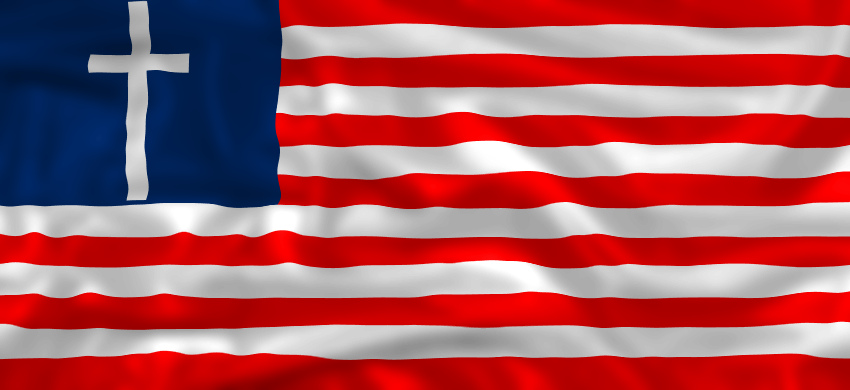
Photo credit: CJF20 via Small Kitchen / CC BY-SA
Here at home, we are a long, long way off from real equality or justice or even liberty. The edifices of white supremacy still loom over entire communities, keeping people of color economically disenfranchised and ensuring that the justice system treats them more harshly than their white brothers and sisters. Meanwhile, millions languish in poverty and do not have access to clean water, a good education, or decent healthcare.
These negatives are actually in many ways a direct result of the quintessential American attitude of self-reliance and our narrow definition of liberty. How often has “freedom” been used as a justification for America’s brutal overseas adventures? How many times have you heard the poor and dispossessed accused of being victims of their own “laziness”? How many pundits and politicians have fought against measures to help these people on the basis of “liberty”?
See, it’s not enough to hold up a founding document from centuries ago to claim the mantle of a beacon of liberty, justice, and equality (just ask the slaves who were alive when that document was written). If your nation does not truly embody the values it claims as foundational, then perhaps that nation is not worth celebrating.
When Jesus of Nazareth spoke of “The Kingdom of God” he was not referring to an afterlife. His Kingdom was meant for “Earth, as it is in Heaven” (Matthew 6:10; by the way, Matthew’s term “Kingdom of Heaven” is equivalent to “Kingdom of God” and its meaning is probably similar to the way we use “The White House” or “Washington” to stand in for the President).
The Evangelist John has Jesus say to Pilate: “My kingdom is not of this world” (John 18:36) but the next line make’s Jesus’s meaning absolutely clear: “If my kingdom were of this world, my servants would have been fighting, that I might not be delivered over to the Jews.”
Leaving aside the fact that Jesus never actually said any of this (very little of the Gospel of John can actually be reliably attributed to the historical Jesus), even John’s meaning was not that the Kingdom referred to an afterlife.
While we know the Roman political establishment of Jesus’s time as the Roman “Empire,” at the time Rome called itself the “Kingdom” of Rome. Kingdom was an inherently political term, and Jesus’s usage of it was intended to contrast the way of Rome (or of Caesar) with the way of God (“Render unto Caesar…”). When you consider that the Jewish Messiah’s identity and purpose in Second-Temple Jewish belief was as an heir to King David and to re-establish an independent Kingdom of Israel, you can see where Jesus got the idea.
So knowing this, “My kingdom is not of this world” means that the Kingdom of God is not like the kingdoms of this world (specifically the Roman Empire).
Continued on next page…
Next Post

July 7, 2016 Why Don't Black Lives Matter to White Christians?
Browse Our Archives
Select a Category Activism Bible Communism Communism and Socialism Faith Historical Jesus History Justice Millennials Personal Politics The Kingdom of God Uncategorized
Select a Month December 2017 November 2017 October 2017 September 2017 August 2017 June 2017 May 2017 April 2017 March 2017 December 2016 October 2016 September 2016 August 2016 July 2016
Follow Us!
TAKE THE
Religious Wisdom Quiz
Which Christian holiday marks the beginning of the Lenten season?
Select your answer to see how you score.
Epiphany Ash Wednesday Advent Good Friday
Related posts from Radical Christian Millennial
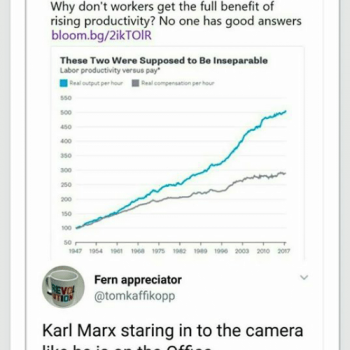
Here's Why Productivity Doesn't Raise Wages Anymore

Free Speech is an Illusion: Why Leftists Silence

Polyamory and the Kingdom of God

What the Hell is Ta-Nehisi Coates Talking About?
TRENDING AT PATHEOS Progressive Christian

Why Christians Have a Sacred Duty to Vote:...
The Bible offers strong support for the sacred duty to vote. Here...

What Being a Modern-Day Apostle Means to Me
In my last column, I discussed the ins and outs of modern-day...

Did Ancient China Once Worship the God of...
Across human history, a common thread weaves through the origins of the...

Love Your Neighbor – Including Earth-Kin: Lev. 19,...
God’s command to love your neighbor means acting in an ethical and...

Lead a Church Study of “Jesus and Lao...
Guest writer Jack Thomas (The Irreverent Reverend) reflects on leading his church...

Principles for Understanding the Apostolic Ministry Today
Whenever people discover that my formal ministry title is "apostle," as in...
view all Progressive Christian blogs
Ad-Free & Subscriber Log-In Subscription Support
- About Us
- 2026 Calendar
- Videos
- Podcasts
- Library of World Religions
- Faith In Media Tracker
- Advertise With Us
- Write for Us
- Privacy Policy
- Terms of Service
- Do Not Sell My Data
- Contact Us
- Radiant Digital
- Manage Newsletter Subscriptions
- Unsubscribe From Notifications
- Sitemap
Copyright 2008-2026, Patheos. All rights reserved.
Subscription Support Ad-Free & Subscriber Log-In
Follow Patheos