
BuddhistCatholicContemplativeEvangelicalGeneral ChristianHinduJewishLatter-day SaintMuslimNew VisionsProgressive Christian
Beliefs
- Buddhist
- Catholic
- Contemplative
- Evangelical
- General Christian
- Hindu
- Jewish
- Latter-day Saint
- More Voices
- Muslim
- New Visions
- Pagan
- Progressive Christian
Topics
- Religion News
- Food and Religion
- Sports and Religion
- Religious Art
- Religious Music and Entertainment
- Religious Events
- History and Religion
- Style and Religion
- Politics and Religion
- Women in Religion
- Recreation Outdoors and Religion
- Business Finance and Religion
- Careers Workplace and Religion
- Education and Religion
- Family Parenting and Religion
- Health Fitness and Religion
- Home and Religion
- Relationships and Religion
- Technology and Religion
- Travel and Religion
Columnists
- Buddhist Columnists
- Business Finance and Religion Columnists
- Careers Workplace and Religion Columnists
- Catholic Columnists
- Contemplative Columnists
- Education and Religion Columnists
- Evangelists Columnists
- Family Parenting and Religion Columnists
- General Christian Columnists
- Health Fitness and Religion Columnists
- Hindu Columnists
- History and Religion Columnists
- Home and Religion Columnists
- Jewish Columnists
- More Voices Columnists
- Latter Day Columnists
- Muslim Columnists
- New Visions Columnists
- Nonreligious Columnists
- Pagan Columnists
- Politics and Religion Columnists
- Progressive Columnists
- Recreation Outdoors and Religion Columnists
- Relationships and Religion Columnists
- Religion News Columnists
- Religious Art Columnists
- Religious Events Columnists
- Religious Music and Entertainment Columnists
- Sports and Religion Columnists
- Style and Religion Columnists
- Technology and Religion Columnists
- Travel and Religion Columnists
- Women in Religion Columnists
Resource Library
- 2026 Calendar
- Library of World Religions
- The 100 Most Holy Places on Earth
- Patheos Answers
- Podcasts
- Videos
- Faith Leaders Database
- Anglican Episcopalian
- Bahai
- Baptist
- Buddhism
- Christianity
- Confucianism
- Eastern Orthodoxy
- Hinduism
- Holiness and Pentecostal
- ISKCON
- Islam
- Judaism
- Lutheran
- Methodist
- The Church of Jesus Christ of Latter-day Saints
- New Age
- Paganism
- Presbytarian and Reformed
- Protestantism
- Religion Behind the Scenes
- Roman Catholic
- Scientology
- Shia Islam
- Sikhism
- Sufism
- Sunni Islam
- Taoism
- Zen
- See all religions
Research Tools
 Ad-Free & Subscriber Log-In Subscription Support
Ad-Free & Subscriber Log-In Subscription Support
Follow Patheos 

- Trending:
- Forgiveness
- |
- Marriage
- |
- Consciousness
- |
- Death Penalty
- |
- Election
- |
- Halloween
 Radical Christian Millennial
- Home
- Progressive Christian
- Exodus – Israel Deals With Its Separation Anxiety
Exodus – Israel Deals With Its Separation Anxiety
Last updated on: July 24, 2016 at 8:00 am by Christian Chiakulas
Exodus – Israel Deals With Its Separation Anxiety 2016-07-24T01:54:22-04:00 Christian Chiakulas
Patheos Explore the world's faith through different perspectives on religion and spirituality! Patheos has the views of the prevalent religions and spiritualities of the world.
Therapy didn’t exist in the 6th century BCE, so the Jews exiled from their homeland by the Chaldean Empire had to deal with their issues in other ways, such as writing sometimes beautiful, sometimes horrific origin stories for themselves that repurposed the mythology of their captors, combined it with a few shreds of ancient history, and used it as a framing device for their covenantal laws.
Before we get to the real meat of Exodus, which basically just develops and intensifies the themes already present in Genesis, we have to deal with the question of historicity. Did any of the events of Exodus really happen?
Nope!
What, not a good enough answer?
Well, essentially (and like Genesis) much of Exodus is drawn from ancient Mesopotamian mythology (see: Sargon being placed as an infant in a basket on the river; Hammurabi’s Code). Combine that with the fact that it was most likely written six or seven hundred years after the events it purports to describe, and the truly damning fact that there is no archaeological evidence whatsoever to support its historicity, and the case becomes insurmountable.
There is a theory about a kernel of history behind the events depicted in Exodus, however, that’s just too interesting not to share, and if true would have serious implications for all of Israel’s history. It is discussed in the link above, but here’s a short, clarified version, with some more speculative elements removed:
The Hyksos were a Semitic people that occupied much of Egypt, especially in the north, around the 17th century BCE. They warred with the Egyptians for about a century before being defeated by the 18th dynasty.
Basically, the theory goes that remnants of the Hyksos lived in Egypt as slaves (or impoverished laborers) until the rise of Atenism under Akhenaten. Atenism is an excellent contender for the title of “the first monotheistic religion ever” and some historians have suggested that Moses may have been a Hyksos descendant and Aten-worshiper who fled Egypt when Atenism fell into disfavor upon Akhenaten’s death. This would suggest that Judaism has its origins in Egypt with the cult of Aten!
Now, as I stressed earlier, there is no archaeological evidence at all to support this theory, as interesting as it is. Unless new evidence arises, it must be confined to speculation.
With respect to Jewish readers who may have a different take on this, I’m completely unbothered by the fact that the Exodus never really happened, or the fact that Moses was most likely not a real person. The point of the story, continuing from Genesis, is that God will remain faithful to His people no matter the hardships they face, or even if they should stray.
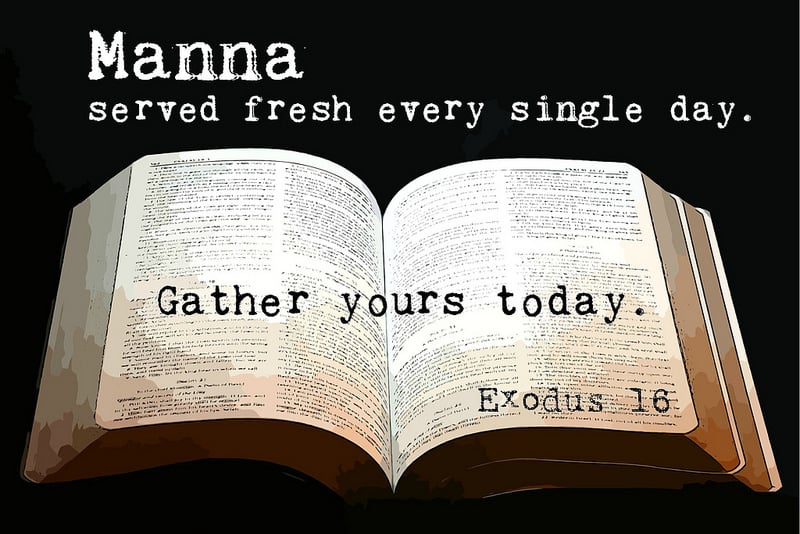
Consider the well-known tale of the Golden Calf. Moses is up on Mount Sinai for a while, so long that the Israelites say to Aaron, “Come, make gods for us, who shall go before us; this Moses, the man who brought us up out of the land of Egypt, we do not know what has become of him.” Moses was only gone for forty days, which in the grand scheme of things is not a very long time, and makes the Israelites look hilariously fickle. God literally just brought an entire nation (Egypt) to its knees, as well as parted a sea and made bread rain from the sky, and after a few weeks without Moses they’re like, “Eh, God’s probably gone, we need something to worship.”
To make matters worse, Aaron, Moses’s brother and viceroy, immediately accedes to their request and then lies about it later, and ends up facing no consequences. This Aaron is held up as the standard all priests should aspire to, so his baffling incompetence here is a little surprising.
In any case, God decides to slaughter everyone, as He is wont to do, and start over with Moses. Moses, bless his heart, intercedes, and makes the great point that if God does that, the Egyptians would be vindicated after all. He also reminds God (isn’t it curious that God tends to forget things like this on occasion?) of the covenant He had made with Abraham.
God changes His mind (again, it’s strange that an omniscient, omnipotent, omnipresent being can change its mind, but whatever, I’ll roll with it) and spares (most of) the Israelites, and after a couple super-long, supremely boring sections on carpentry, we come to the end.
Ultimately the Exodus is a beautiful, if somewhat redundant, origin story for the Jewish people. It also serves to introduce the Jewish legal system in a brief and illuminating passage beginning at 20:1 with the Ten Commandments and ending abruptly and humorously with the very random “You shall not boil a kid in its mother’s milk” in 23:19, which is the reason my friend Amanda never got to try my cousin’s veal tortellini in cream sauce.
I remarked to Amanda (who is a Messianic Jew) that many of the laws were concerned less with “not being a bad person” and more with “actively being kind and doing good to others” such as “You shall not follow a majority in wrongdoing” (23:2) or “When you come upon your enemy’s ox or donkey going astray, you shall bring it back” (23:4). She introduced me to the rabbinical concept of “tikkun olam” which in modern thought means, essentially, that Jews should be concerned with the well-being not just of themselves or their community, but the world at large.
Of course, there are other laws that are horrifying (“If [a slave’s] master gives him a wife and she bears him sons or daughters, the wife and her children shall be her master’s and [the slave] shall go out alone” (21: 4)) or downright hilarious (“You shall not permit a female sorcerer to live” 22:18; why only female sorcerers?), but hey, if we held all of these people up to our modern moral standards, we’d have to throw almost the entire Bible out. You’ve got to take the good with the bad; that’s something I think the ancient Priestly and Yahwist writers living through or after the Babylonian Captivity would’ve agreed with.
Next week: Leviticus. God help me.
Previous Post

July 22, 2016
Towards A Non-Apocalyptic Jesus
Next Post

July 25, 2016 I Decided To Engage An Anti-Abortion Activist - Here's What I Learned
Browse Our Archives
Select a Category Activism Bible Communism Communism and Socialism Faith Historical Jesus History Justice Millennials Personal Politics The Kingdom of God Uncategorized
Select a Month December 2017 November 2017 October 2017 September 2017 August 2017 June 2017 May 2017 April 2017 March 2017 December 2016 October 2016 September 2016 August 2016 July 2016
Follow Us!
TAKE THE
Religious Wisdom Quiz
Which Old Testament book is entirely written as a dialogue between God and a prophet?
Select your answer to see how you score.
Malachi Amos Habakkuk Zechariah
Related posts from Radical Christian Millennial

Here's Why Productivity Doesn't Raise Wages Anymore

Polyamory and the Kingdom of God

What the Hell is Ta-Nehisi Coates Talking About?

How Jesus Saves Me From Fascism
TRENDING AT PATHEOS Progressive Christian

Why Christians Have a Sacred Duty to Vote:...
The Bible offers strong support for the sacred duty to vote. Here...

What Being a Modern-Day Apostle Means to Me
In my last column, I discussed the ins and outs of modern-day...

Did Ancient China Once Worship the God of...
Across human history, a common thread weaves through the origins of the...

Love Your Neighbor – Including Earth-Kin: Lev. 19,...
God’s command to love your neighbor means acting in an ethical and...

Lead a Church Study of “Jesus and Lao...
Guest writer Jack Thomas (The Irreverent Reverend) reflects on leading his church...

Principles for Understanding the Apostolic Ministry Today
Whenever people discover that my formal ministry title is "apostle," as in...
view all Progressive Christian blogs
Ad-Free & Subscriber Log-In Subscription Support
- About Us
- 2026 Calendar
- Videos
- Podcasts
- Library of World Religions
- Faith In Media Tracker
- Advertise With Us
- Write for Us
- Privacy Policy
- Terms of Service
- Do Not Sell My Data
- Contact Us
- Radiant Digital
- Manage Newsletter Subscriptions
- Unsubscribe From Notifications
- Sitemap
Copyright 2008-2026, Patheos. All rights reserved.
Subscription Support Ad-Free & Subscriber Log-In
Follow Patheos