
BuddhistCatholicContemplativeEvangelicalGeneral ChristianHinduJewishLatter-day SaintMuslimNew VisionsProgressive Christian
Beliefs
- Buddhist
- Catholic
- Contemplative
- Evangelical
- General Christian
- Hindu
- Jewish
- Latter-day Saint
- More Voices
- Muslim
- New Visions
- Pagan
- Progressive Christian
Topics
- Religion News
- Food and Religion
- Sports and Religion
- Religious Art
- Religious Music and Entertainment
- Religious Events
- History and Religion
- Style and Religion
- Politics and Religion
- Women in Religion
- Recreation Outdoors and Religion
- Business Finance and Religion
- Careers Workplace and Religion
- Education and Religion
- Family Parenting and Religion
- Health Fitness and Religion
- Home and Religion
- Relationships and Religion
- Technology and Religion
- Travel and Religion
Columnists
- Buddhist Columnists
- Business Finance and Religion Columnists
- Careers Workplace and Religion Columnists
- Catholic Columnists
- Contemplative Columnists
- Education and Religion Columnists
- Evangelists Columnists
- Family Parenting and Religion Columnists
- General Christian Columnists
- Health Fitness and Religion Columnists
- Hindu Columnists
- History and Religion Columnists
- Home and Religion Columnists
- Jewish Columnists
- More Voices Columnists
- Latter Day Columnists
- Muslim Columnists
- New Visions Columnists
- Nonreligious Columnists
- Pagan Columnists
- Politics and Religion Columnists
- Progressive Columnists
- Recreation Outdoors and Religion Columnists
- Relationships and Religion Columnists
- Religion News Columnists
- Religious Art Columnists
- Religious Events Columnists
- Religious Music and Entertainment Columnists
- Sports and Religion Columnists
- Style and Religion Columnists
- Technology and Religion Columnists
- Travel and Religion Columnists
- Women in Religion Columnists
Resource Library
- 2026 Calendar
- Library of World Religions
- The 100 Most Holy Places on Earth
- Patheos Answers
- Podcasts
- Videos
- Faith Leaders Database
- Anglican Episcopalian
- Bahai
- Baptist
- Buddhism
- Christianity
- Confucianism
- Eastern Orthodoxy
- Hinduism
- Holiness and Pentecostal
- ISKCON
- Islam
- Judaism
- Lutheran
- Methodist
- The Church of Jesus Christ of Latter-day Saints
- New Age
- Paganism
- Presbytarian and Reformed
- Protestantism
- Religion Behind the Scenes
- Roman Catholic
- Scientology
- Shia Islam
- Sikhism
- Sufism
- Sunni Islam
- Taoism
- Zen
- See all religions
Research Tools
 Ad-Free & Subscriber Log-In Subscription Support
Ad-Free & Subscriber Log-In Subscription Support
Follow Patheos 

- Trending:
- Forgiveness
- |
- Marriage
- |
- Consciousness
- |
- Death Penalty
- |
- Election
- |
- Halloween
 Rachel Marie Stone
- Home
- Progressive Christian
- The Most Stunning Children’s Bible — That’s No Longer in Print (But Should Be)
The Most Stunning Children’s Bible — That’s No Longer in Print (But Should Be)
Last updated on: October 13, 2014 at 8:33 pm by Rachel Marie Stone
The Most Stunning Children’s Bible — That’s No Longer in Print (But Should Be) 2014-10-13T20:33:16-04:00 Rachel Marie Stone
Patheos Explore the world's faith through different perspectives on religion and spirituality! Patheos has the views of the prevalent religions and spiritualities of the world.
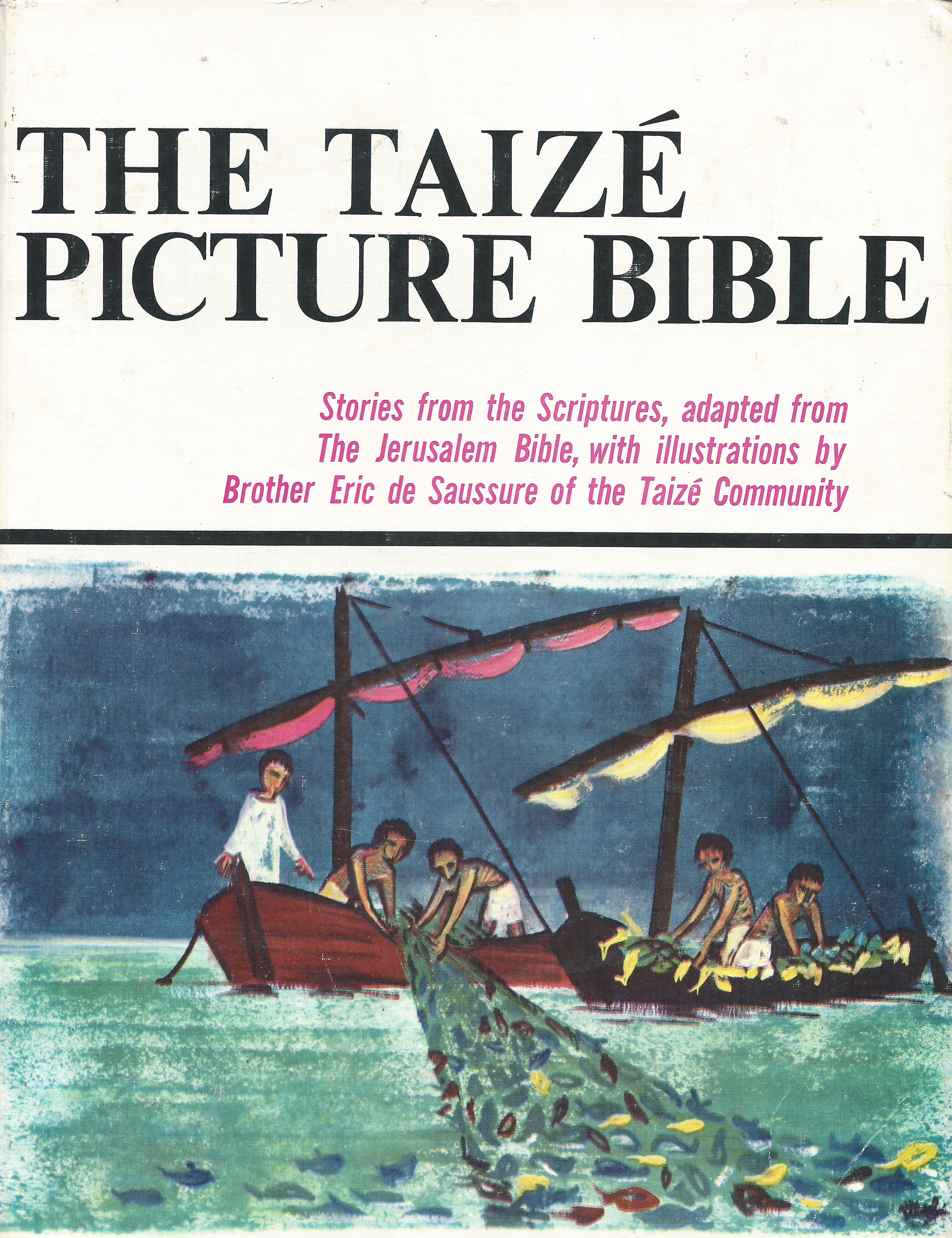
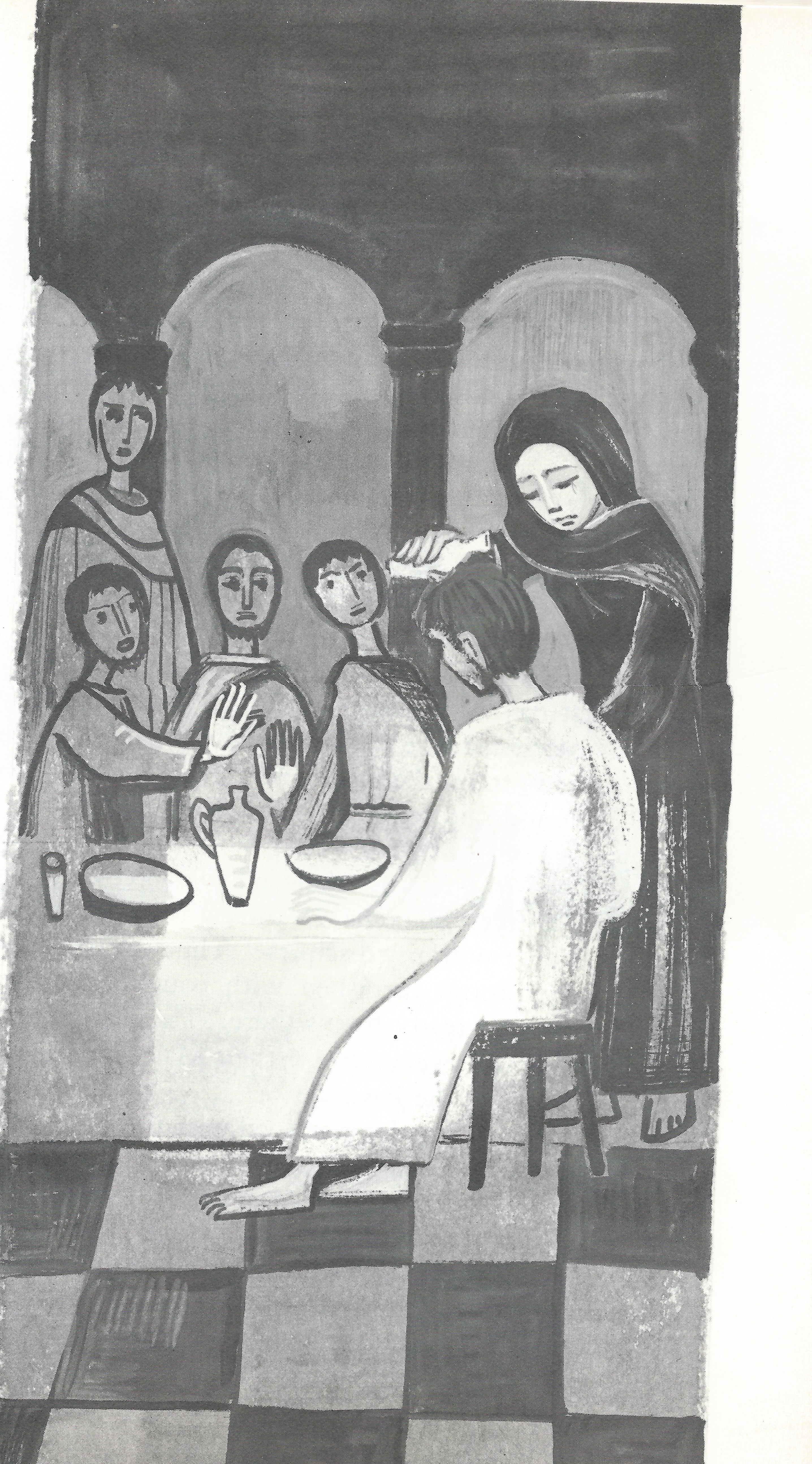
There is an appealing, almost haunting spareness to the Taize Picture Bible (1968) in both word and image. Published in the USA by Fortress Press (mine is a fourth edition, 1978), the “note to readers” says
“The guiding editorial policy in this adaptation has been to facilitate understanding by readers of many age levels while remaining faithful to the words and meaning of the Biblical text.”
There is nothing prettified or cutesy about the images or the storytelling in this book. In fact there’s very little that makes it a children’s Bible at all except the stunning illustrations, which, frankly, I, as an adult, find help me move more deeply into the story.
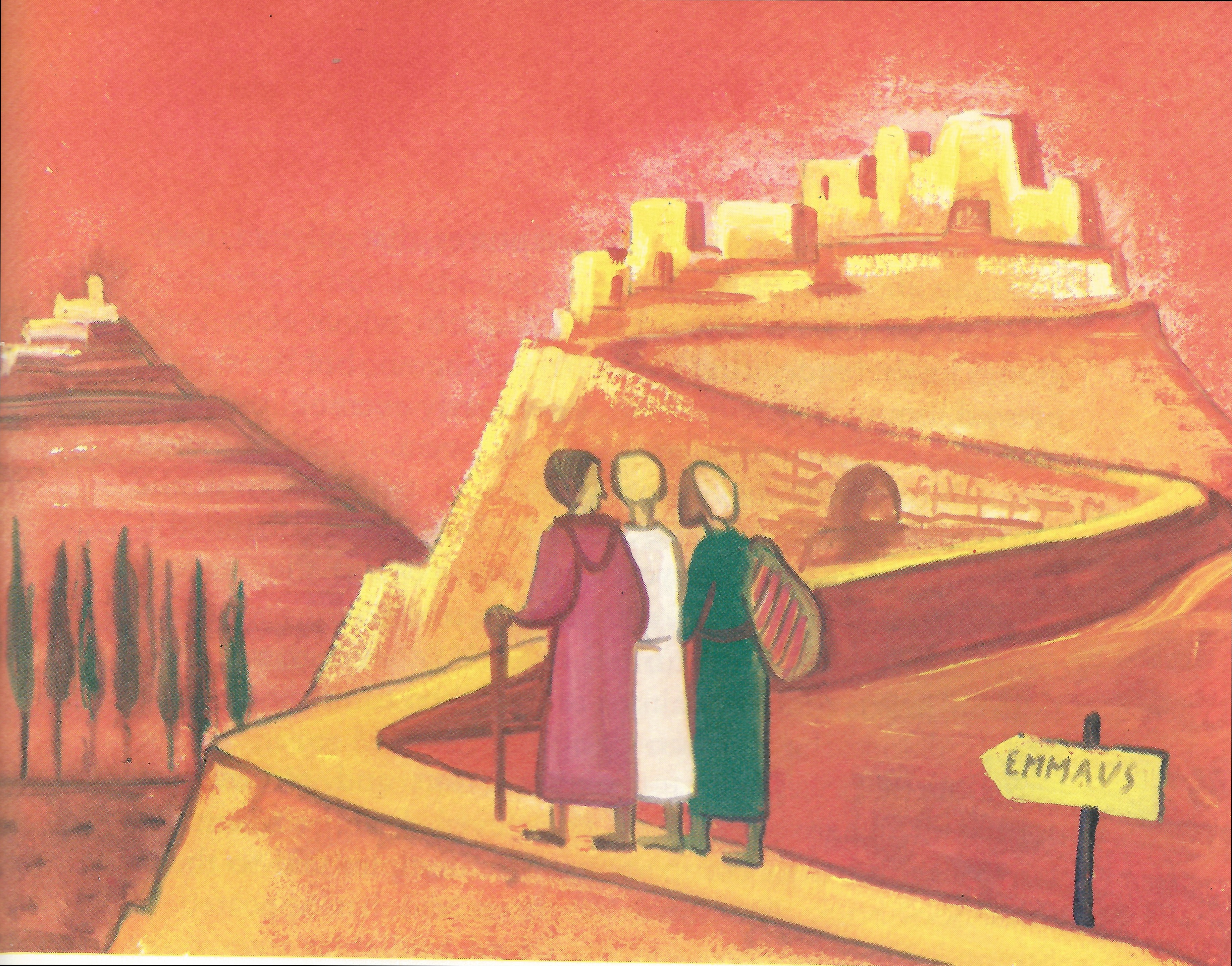
I’m not an expert in children’s Bible’s–but this one is precious to me.
I don’t feel like it is manipulating me or conning me into feeling emotions I don’t feel or thoughts I don’t think. I don’t feel like it’s trying to do anything except reflect the strange beauty of God. In a world where it feels like everyone is trying to sell something–even “right” doctrine and the “right” perspective are items for sale–this is a profound relief.
It seems to me there is value in offering some of the Bible to children in all of its unvarnished strangeness, perhaps for a similar reason that Grimm’s fairy tales in all their grimness are read to children in Waldorf schools:
“Although many of the [word-]images in these stories are ‘grim,’ many experienced teachers believe that the inner pictures the children form are only as vivid or harsh as they can handle. The value of these stories is thought to be in their power to stimulate the child’s imagination by bringing archetypal images. It seems fitting that the range of these images should be as full as possible, since each strengthens the child for certain challenges he or she may face during life. I chose not to alter any of the stories when I told them. If I was not comfortable with a story in its entirety, I did not tell it at all.”
“The style of storytelling that I prefer is when the storyteller does very little with voice or movement to dramatize the story. The goal is to let the images of the story speak within the child’s imagination.“
(David Darcy at Waldorf Without Walls)
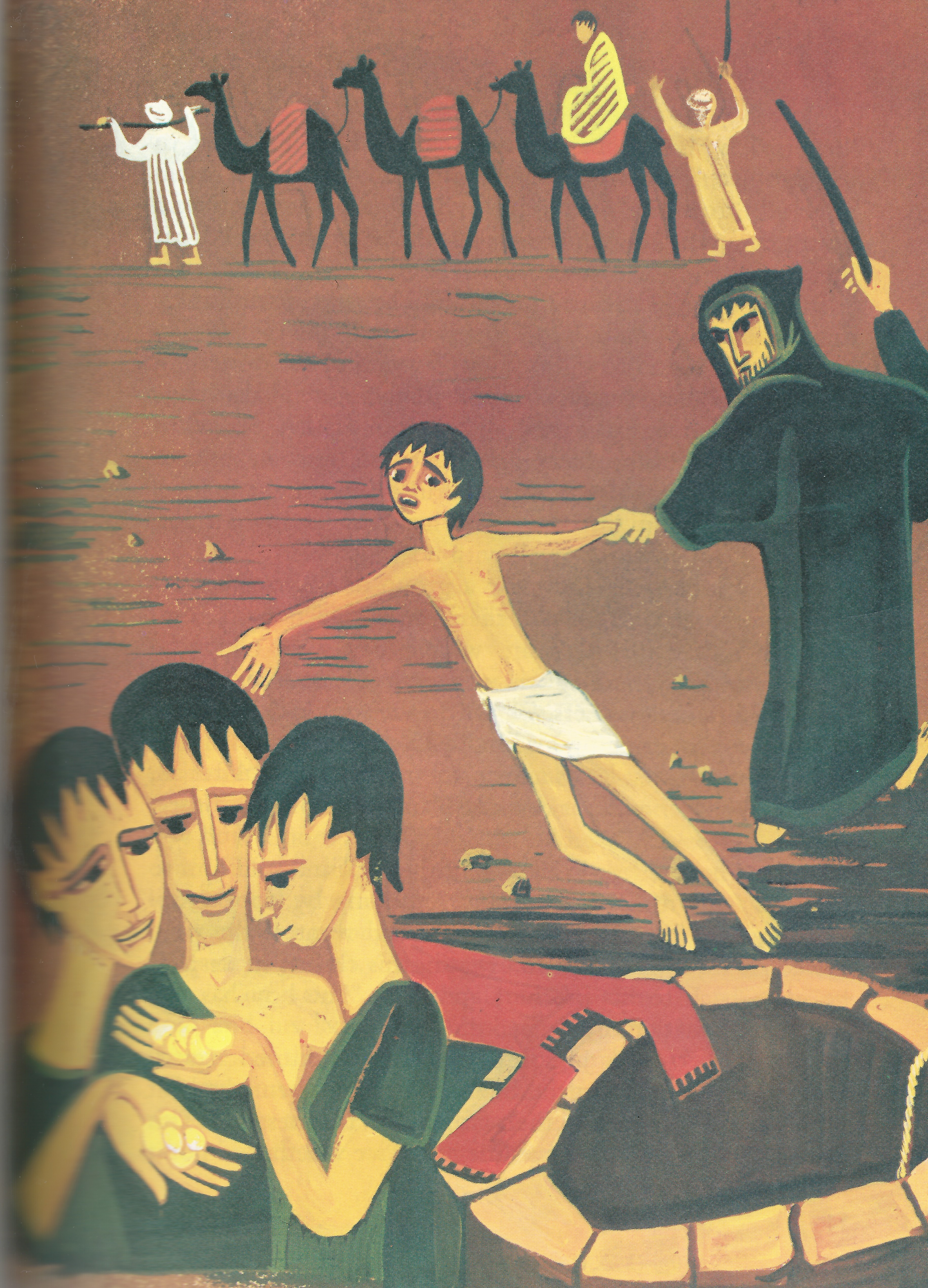
“In the art and fantasy of fairy tales lies a very deep wisdom which has power to awaken children from the sleep of ordinary life. Forces of healing are also hidden in each fairy tale. The most important effect of the fairy tale is that they stimulate the feeling that man is a being of development, of struggle, of metamorphosis, and that behind all the adverse forces of giants and dwarfs, witches and demons there lies the good world of the true genius of man.”
“Children experience the greed of the wolf and the evil of the witch quite differently than we adults do. They experience these qualities more as archetypal pictures about life, but do not yet identify themselves personally with the suffering. They trust that there will be a happy ending or that good will triumph over evil.”
(Fairy Tales: Healing Food for the Child’s Soul)
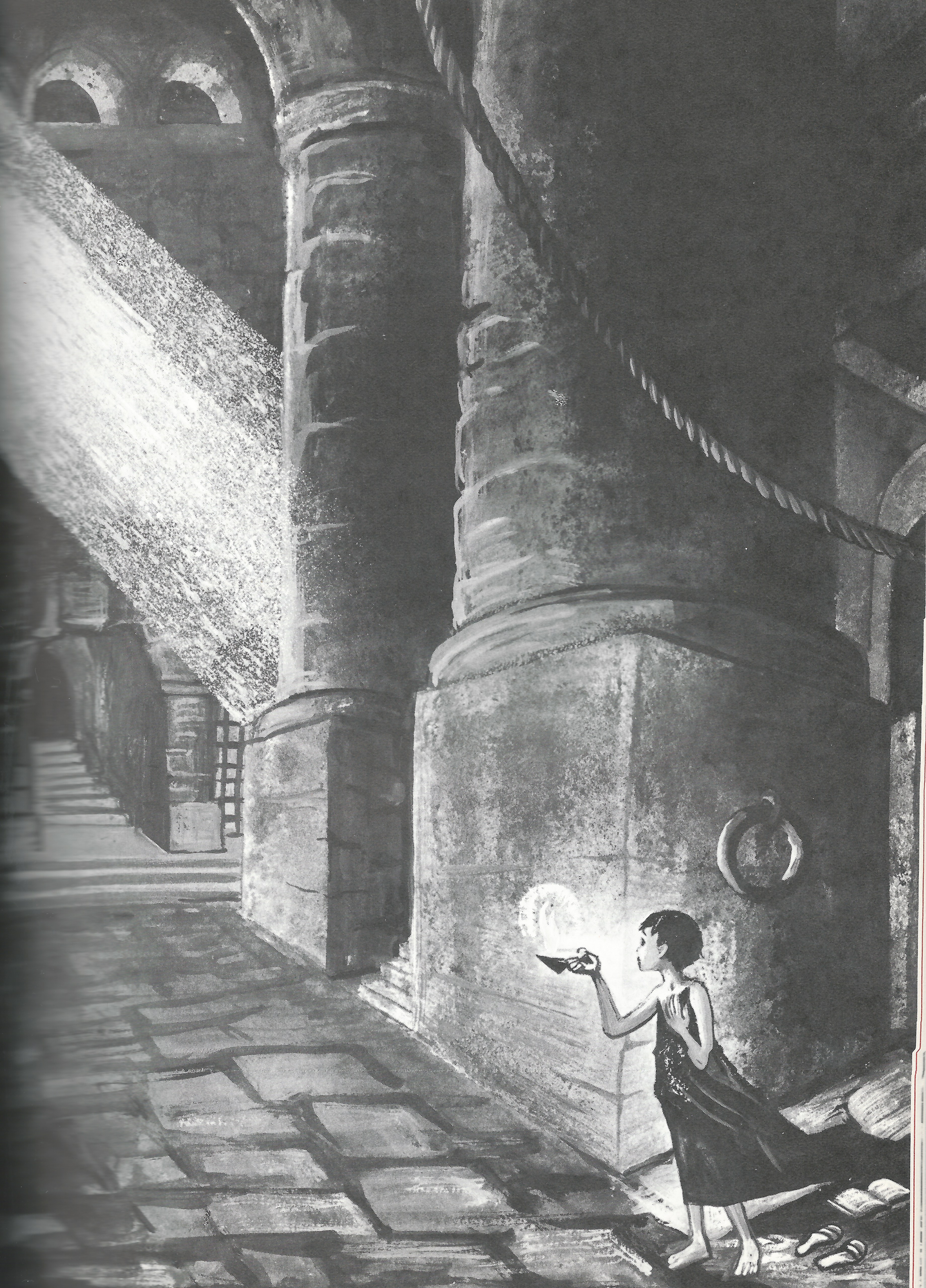
And now you may be wondering why I am citing the imagination-enhancing power of fairy tale when we began by talking about the Bible, which for many people has less to do with imagination (so we think) than belief:
“In Mere Christianity, C.S. Lewis wrote that to pretend helps one to experience God as real. In “Narnia” he offered a way to pretend — by depicting a God who is so explicitly not a God from an ordinary human church. Aslan keeps God safe from human clumsiness and error.”
Safe? Of course the Bible is not safe for children. Which is not the same thing as saying parts of it are not good for children.
“What does it mean that our society places such a premium on fantasy and imagination? ‘No culture,’ observes the child psychologist Suzanne Gaskins, ‘comes close to the level of resources for play provided by middle-class Euro-American parents.’ In many traditional societies, children play by imitating adults. They pretend to cook, marry, plant, fish, hunt.”
“Observing the lack of fantasy play among the Manus children in New Guinea, Margaret Mead noted that ‘the great majority of children will not even imagine bears under the bed unless the adult provides the bear.’”
“[Fictions] help us to learn what we find emotionally true in the face of irreconcilable contradictions. That is what Joshua Landy, a professor of French literature, argues in How to Do Things with Fictions: fiction teaches us how to think about what we take to be true. In the cacophony of an information-soaked age, we need it.”
(T.M. Luhrmann in the New York Times )
Previous Post

October 10, 2014
The Things We Can't -- and Shouldn't -- Make Our Children Do
Next Post
October 14, 2014 The Best Pumpkin Spice Brownies You Will Ever Bake
Browse Our Archives
Select a Category "health" activism agriculture animals anorexia Anticipating anxiety art autumn Baking beauty beer Bible Big Food binge eating blogging body image Books Bread of Life breastfeeding brokenness candy cartoons celebrity chefs children chocolate Classical Duckfaces Connecting consumption cooking creation care creativity current events death Dessert diabetes Dieting Eating Together Emotional Eating fair trade Faith Family Fannie Farmer fast food fat talk Films Food Food Policy formula feeding Gardening gluten free Grace gratitude guest posts guilt HIV/AIDS holiday hospitality housekeeping Jesus Joy just for fun Justice kindness Local media moment of joy north fork, long island OI parties personal pharmaceuticals photo photography plumpy'nut popular culture poverty pregnancy Preserving real food recipes rest restaurants School Food Seasons spring starvation summer Table Talk taste television theology travel Tuesdays With Fannie Uncategorized winter
Select a Month April 2015 March 2015 February 2015 January 2015 December 2014 November 2014 October 2014 August 2014 May 2014 March 2014 February 2014 January 2014 December 2013 November 2013 October 2013 September 2013 August 2013 July 2013 June 2013 May 2013 April 2013 March 2013 February 2013 January 2013 December 2012 November 2012 October 2012 September 2012 August 2012 July 2012 June 2012 May 2012 April 2012 March 2012 February 2012 January 2012 December 2011 November 2011 October 2011 September 2011 August 2011 July 2011
Follow Us!
TAKE THE
Religious Wisdom Quiz
What does "Bethel" mean in Hebrew?
Select your answer to see how you score.
God's Dwelling Holy Ground House of God City of Light
Related posts from Rachel Marie Stone
The Stunningly Illustrated Children's Bible That Should Still...

How Patriarchy Gave Me an Eating Disorder, Part...

Is Religion Harmful to Children? A Prominent MD...

Long before Bittman, the classic, quietly bestselling cookbook...
TRENDING AT PATHEOS Progressive Christian

Why Christians Have a Sacred Duty to Vote:...
The Bible offers strong support for the sacred duty to vote. Here...

What Being a Modern-Day Apostle Means to Me
In my last column, I discussed the ins and outs of modern-day...

Did Ancient China Once Worship the God of...
Across human history, a common thread weaves through the origins of the...

Love Your Neighbor – Including Earth-Kin: Lev. 19,...
God’s command to love your neighbor means acting in an ethical and...

Lead a Church Study of “Jesus and Lao...
Guest writer Jack Thomas (The Irreverent Reverend) reflects on leading his church...

Principles for Understanding the Apostolic Ministry Today
Whenever people discover that my formal ministry title is "apostle," as in...
view all Progressive Christian blogs
Ad-Free & Subscriber Log-In Subscription Support
- About Us
- 2026 Calendar
- Videos
- Podcasts
- Library of World Religions
- Faith In Media Tracker
- Advertise With Us
- Write for Us
- Privacy Policy
- Terms of Service
- Do Not Sell My Data
- Contact Us
- Radiant Digital
- Manage Newsletter Subscriptions
- Unsubscribe From Notifications
- Sitemap
Copyright 2008-2026, Patheos. All rights reserved.
Subscription Support Ad-Free & Subscriber Log-In
Follow Patheos