
BuddhistCatholicContemplativeEvangelicalGeneral ChristianHinduJewishLatter-day SaintMuslimNew VisionsProgressive Christian
Beliefs
- Buddhist
- Catholic
- Contemplative
- Evangelical
- General Christian
- Hindu
- Jewish
- Latter-day Saint
- More Voices
- Muslim
- New Visions
- Pagan
- Progressive Christian
Topics
- Religion News
- Food and Religion
- Sports and Religion
- Religious Art
- Religious Music and Entertainment
- Religious Events
- History and Religion
- Style and Religion
- Politics and Religion
- Women in Religion
- Recreation Outdoors and Religion
- Business Finance and Religion
- Careers Workplace and Religion
- Education and Religion
- Family Parenting and Religion
- Health Fitness and Religion
- Home and Religion
- Relationships and Religion
- Technology and Religion
- Travel and Religion
Columnists
- Buddhist Columnists
- Business Finance and Religion Columnists
- Careers Workplace and Religion Columnists
- Catholic Columnists
- Contemplative Columnists
- Education and Religion Columnists
- Evangelists Columnists
- Family Parenting and Religion Columnists
- General Christian Columnists
- Health Fitness and Religion Columnists
- Hindu Columnists
- History and Religion Columnists
- Home and Religion Columnists
- Jewish Columnists
- More Voices Columnists
- Latter Day Columnists
- Muslim Columnists
- New Visions Columnists
- Nonreligious Columnists
- Pagan Columnists
- Politics and Religion Columnists
- Progressive Columnists
- Recreation Outdoors and Religion Columnists
- Relationships and Religion Columnists
- Religion News Columnists
- Religious Art Columnists
- Religious Events Columnists
- Religious Music and Entertainment Columnists
- Sports and Religion Columnists
- Style and Religion Columnists
- Technology and Religion Columnists
- Travel and Religion Columnists
- Women in Religion Columnists
Resource Library
- 2026 Calendar
- Library of World Religions
- The 100 Most Holy Places on Earth
- Patheos Answers
- Podcasts
- Videos
- Faith Leaders Database
- Anglican Episcopalian
- Bahai
- Baptist
- Buddhism
- Christianity
- Confucianism
- Eastern Orthodoxy
- Hinduism
- Holiness and Pentecostal
- ISKCON
- Islam
- Judaism
- Lutheran
- Methodist
- The Church of Jesus Christ of Latter-day Saints
- New Age
- Paganism
- Presbytarian and Reformed
- Protestantism
- Religion Behind the Scenes
- Roman Catholic
- Scientology
- Shia Islam
- Sikhism
- Sufism
- Sunni Islam
- Taoism
- Zen
- See all religions
Research Tools
 Ad-Free & Subscriber Log-In Subscription Support
Ad-Free & Subscriber Log-In Subscription Support
Follow Patheos 

- Trending:
- Forgiveness
- |
- Marriage
- |
- Consciousness
- |
- Death Penalty
- |
- Election
- |
- Halloween
 Rachel Marie Stone
- Home
- Progressive Christian
- Can reading help us to become better people?
Can reading help us to become better people?
Last updated on: October 3, 2014 at 6:33 pm by Rachel Marie Stone
Can reading help us to become better people? 2014-10-03T18:33:47-04:00 Rachel Marie Stone
Patheos Explore the world's faith through different perspectives on religion and spirituality! Patheos has the views of the prevalent religions and spiritualities of the world.
I have a confession: sometimes when I’ve finished a really good novel, I miss the characters badly. I worry about what’s going to happen to those whose fates are left mysterious; I grieve for those who have suffered or died, I rejoice over marriages and babies and feel and think all sorts of things about people who don’t actually exist.
But of course, there’s nothing unusual in that confession; it’s the thing that keeps us turning pages — immersing ourselves in an imaginary world and caring deeply about the people that live there, and what happens to them. If we didn’t care, we wouldn’t continue reading. And the best books, I think, are those that make us care the most deeply.
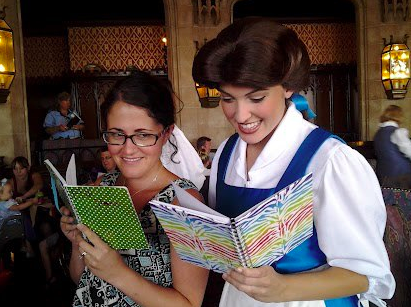
Belle and I, just doing a little reading together.
People have debated the value and potential of stories — particularly the fictional kind — for millennia. Plato felt that his ideal republic should exclude poets because of their extraordinary power over the imagination, and a great many parents and teachers have spent a great deal of time fretting over the effect certain books might have on kids.
Yet even as people have struggled to make sense of what feels like a need for stories that simply aren’t true, we can’t seem to stop ourselves. And most of us have a sense that reading is somehow good for us, even if we don’t know exactly why. That, too, is an argument that goes back a long way, although it has become less popular of late.
{from my most recent post at iBelieve. Continue reading here.}

Next Post

March 12, 2014 Why I hope there will be more cartoon characters like Hiccup
Browse Our Archives
Select a Category "health" activism agriculture animals anorexia Anticipating anxiety art autumn Baking beauty beer Bible Big Food binge eating blogging body image Books Bread of Life breastfeeding brokenness candy cartoons celebrity chefs children chocolate Classical Duckfaces Connecting consumption cooking creation care creativity current events death Dessert diabetes Dieting Eating Together Emotional Eating fair trade Faith Family Fannie Farmer fast food fat talk Films Food Food Policy formula feeding Gardening gluten free Grace gratitude guest posts guilt HIV/AIDS holiday hospitality housekeeping Jesus Joy just for fun Justice kindness Local media moment of joy north fork, long island OI parties personal pharmaceuticals photo photography plumpy'nut popular culture poverty pregnancy Preserving real food recipes rest restaurants School Food Seasons spring starvation summer Table Talk taste television theology travel Tuesdays With Fannie Uncategorized winter
Select a Month April 2015 March 2015 February 2015 January 2015 December 2014 November 2014 October 2014 August 2014 May 2014 March 2014 February 2014 January 2014 December 2013 November 2013 October 2013 September 2013 August 2013 July 2013 June 2013 May 2013 April 2013 March 2013 February 2013 January 2013 December 2012 November 2012 October 2012 September 2012 August 2012 July 2012 June 2012 May 2012 April 2012 March 2012 February 2012 January 2012 December 2011 November 2011 October 2011 September 2011 August 2011 July 2011
Follow Us!
TAKE THE
Religious Wisdom Quiz
True or False: The parable of the Prodigal Son appears only in Luke's Gospel.
Select your answer to see how you score.
FALSE TRUE
Related posts from Rachel Marie Stone
The Valentine's Gift That Costs Everything

Is Religion Harmful to Children? A Prominent MD...

Long before Bittman, the classic, quietly bestselling cookbook...
No, vaccinating your children (or not) is not...
TRENDING AT PATHEOS Progressive Christian

Why Christians Have a Sacred Duty to Vote:...
The Bible offers strong support for the sacred duty to vote. Here...

What Being a Modern-Day Apostle Means to Me
In my last column, I discussed the ins and outs of modern-day...

Did Ancient China Once Worship the God of...
Across human history, a common thread weaves through the origins of the...

Love Your Neighbor – Including Earth-Kin: Lev. 19,...
God’s command to love your neighbor means acting in an ethical and...

Lead a Church Study of “Jesus and Lao...
Guest writer Jack Thomas (The Irreverent Reverend) reflects on leading his church...

Principles for Understanding the Apostolic Ministry Today
Whenever people discover that my formal ministry title is "apostle," as in...
view all Progressive Christian blogs
Ad-Free & Subscriber Log-In Subscription Support
- About Us
- 2026 Calendar
- Videos
- Podcasts
- Library of World Religions
- Faith In Media Tracker
- Advertise With Us
- Write for Us
- Privacy Policy
- Terms of Service
- Do Not Sell My Data
- Contact Us
- Radiant Digital
- Manage Newsletter Subscriptions
- Unsubscribe From Notifications
- Sitemap
Copyright 2008-2026, Patheos. All rights reserved.
Subscription Support Ad-Free & Subscriber Log-In
Follow Patheos