
BuddhistCatholicContemplativeEvangelicalGeneral ChristianHinduJewishLatter-day SaintMuslimNew VisionsProgressive Christian
Beliefs
- Buddhist
- Catholic
- Contemplative
- Evangelical
- General Christian
- Hindu
- Jewish
- Latter-day Saint
- More Voices
- Muslim
- New Visions
- Pagan
- Progressive Christian
Topics
- Religion News
- Food and Religion
- Sports and Religion
- Religious Art
- Religious Music and Entertainment
- Religious Events
- History and Religion
- Style and Religion
- Politics and Religion
- Women in Religion
- Recreation Outdoors and Religion
- Business Finance and Religion
- Careers Workplace and Religion
- Education and Religion
- Family Parenting and Religion
- Health Fitness and Religion
- Home and Religion
- Relationships and Religion
- Technology and Religion
- Travel and Religion
Columnists
- Buddhist Columnists
- Business Finance and Religion Columnists
- Careers Workplace and Religion Columnists
- Catholic Columnists
- Contemplative Columnists
- Education and Religion Columnists
- Evangelists Columnists
- Family Parenting and Religion Columnists
- General Christian Columnists
- Health Fitness and Religion Columnists
- Hindu Columnists
- History and Religion Columnists
- Home and Religion Columnists
- Jewish Columnists
- More Voices Columnists
- Latter Day Columnists
- Muslim Columnists
- New Visions Columnists
- Nonreligious Columnists
- Pagan Columnists
- Politics and Religion Columnists
- Progressive Columnists
- Recreation Outdoors and Religion Columnists
- Relationships and Religion Columnists
- Religion News Columnists
- Religious Art Columnists
- Religious Events Columnists
- Religious Music and Entertainment Columnists
- Sports and Religion Columnists
- Style and Religion Columnists
- Technology and Religion Columnists
- Travel and Religion Columnists
- Women in Religion Columnists
Resource Library
- 2026 Calendar
- Library of World Religions
- The 100 Most Holy Places on Earth
- Patheos Answers
- Podcasts
- Videos
- Faith Leaders Database
- Anglican Episcopalian
- Bahai
- Baptist
- Buddhism
- Christianity
- Confucianism
- Eastern Orthodoxy
- Hinduism
- Holiness and Pentecostal
- ISKCON
- Islam
- Judaism
- Lutheran
- Methodist
- The Church of Jesus Christ of Latter-day Saints
- New Age
- Paganism
- Presbytarian and Reformed
- Protestantism
- Religion Behind the Scenes
- Roman Catholic
- Scientology
- Shia Islam
- Sikhism
- Sufism
- Sunni Islam
- Taoism
- Zen
- See all religions
Research Tools
 Ad-Free & Subscriber Log-In Subscription Support
Ad-Free & Subscriber Log-In Subscription Support
Follow Patheos 

- Trending:
- Forgiveness
- |
- Marriage
- |
- Consciousness
- |
- Death Penalty
- |
- Election
- |
- Halloween
 Quaker Pagan Reflections
- Home
- Pagan
- Altruism, Becoming the Crone, and the Grandmother Effect
Altruism, Becoming the Crone, and the Grandmother Effect
Last updated on: October 8, 2015 at 9:44 am by Cat Chapin-Bishop
Altruism, Becoming the Crone, and the Grandmother Effect 2015-10-08T09:44:26-04:00 Cat Chapin-Bishop
Patheos Explore the world's faith through different perspectives on religion and spirituality! Patheos has the views of the prevalent religions and spiritualities of the world.
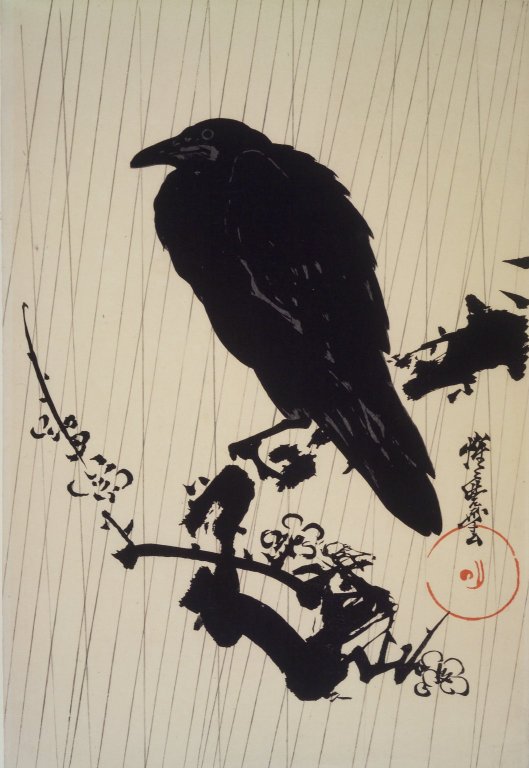

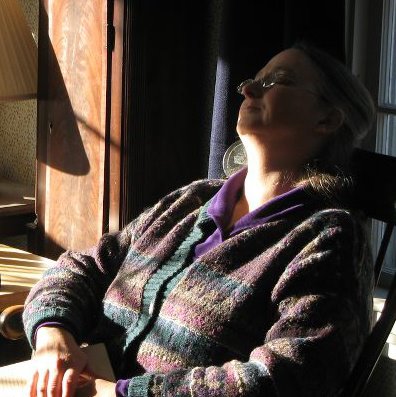
I’ve been working on my Crone’s Wings this year, and I’m here to tell you: menopause is a nuisance.
I never know, from one month to the next, whether I’m going to skip a period, spot every day for three weeks and then have a period, open the flood gates and have a super-period for three weeks in a row, or even whether this month is the end of the show.
And, yeah, I have mood swings, hot flashes, and migraine headaches–my record is three in one day–along with a host of other bothersome physical changes, from suddenly having hyper-sensitive skin to developing an allergy to chocolate. (Now that was epic!)
I comfort myself with the knowledge that all this misery is what has given the human race its weirdly long lifespan.
No, seriously–I don’t just mean life feels longer when I’m having menopausal symptoms. I mean that, according to theory, the evolution of menopause and the evolution of our long lives are linked.
At first blush, that may seem unlikely. How could menopause–the process of leaving our fertile years behind us–have any evolutionary advantages at all? Evolution is all about winning the competition to reproduce, right?
Well, yes… but also no.
Evolution is driven by competition. But it’s also driven by cooperation. Darwin was right… but he didn’t have the whole story. Modern biology recognizes that our lives, all of our lives, literally depend on the willingness of life to cooperate with life.
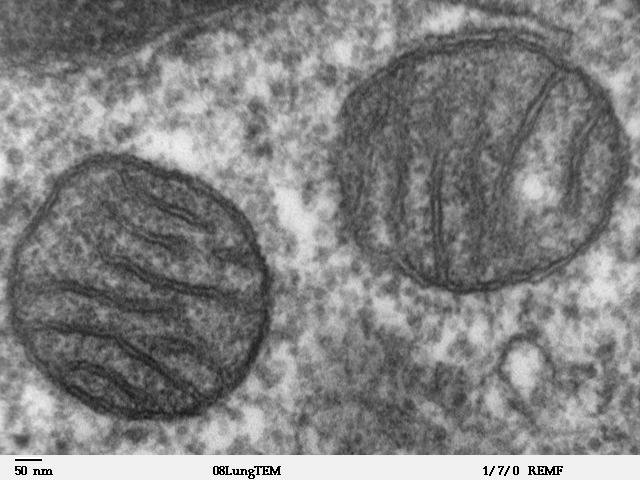
Got energy? Thank your mitochondria–little passengers inside every one of the cells of every eukaryote.
Your mitochondria do not share your DNA–they have their own genetic inheritance, their own evolutionary story. And yet, without these longtime hitchhikers inside of our cells, not a multicellular organism on the planet would be able to fully break down the glucose from our food, the process that gives us the power to do what must be done, as they say in the Powdermilk Biscuit commercials.
None of us would have the energy to get out of bed in the morning without the millions of tiny critters that share our bodies with us… cooperatively, not competitively. We thrive because they thrive. They thrive because we do.
It turns out, life is generous as well as selfish. And that idea is key to understanding, of all things, menopause: why humans have it, and why we live so long after it.

What I’m talking is a thing called the grandmother hypothesis, or the grandmother effect. This theory looks at why it should be that human females, unlike other primates, have lifespans that are naturally much, much longer than our reproductive years.
Unlike gorillas, orangutans, or chimpanzees, human women live many healthy and otherwise productive years after it becomes impossible for us to conceive and bear children.
A strictly competitive view of evolution would have a hard time explaining this. Why would a selfish gene lend us, via evolution, the ability to outlive our fertility? Of course, some mutations arise spontaneously, randomly, without any survival benefit. Menopause could be an evolutionary fluke, a random cosmic joke with no particular usefulness to us. (I admit, sometimes, in the grip of a migraine, it does feel that way to me.)
But it’s not the likeliest explanation.
It turns out, one way evolution can favor cooperation is through altruism. Our selfish genes can actually select for altruism–for putting the good of others ahead of our own; for caring for one another as members of the same family, tribe, or species, rather than caring for ourselves and our direct descendants alone.
When I help a member of my family to survive, I help at least some portion of my own genes to survive. After all, I share many genes with my cousins, and even more with my brother. When I help them, I help some of my own genes to survive into the future. Likewise, when I help a member of my tribe… or my species… or actually, any living creature on the earth, though we’re less and less genetically related the further out we go.
In the case of menopause? That theory I mentioned suggests that human evolution has actually selected for that sort of indirect benefit for my selfish genes, by building into my body a time of life in which I will still be healthy, but no longer involved with raising children of my own.
Human women do not enter menopause because we have “run out of eggs” or worn out our reproductive equipment. Menopause, it turns out, is a time when my body uses hormonal signals essentially to dump the eggs I still have–to spend them all at once, burning through my remaining fertility in hot flash after hot flash, in order to transform me from a mother into a grandmother: a woman with the time and energy to assist my descendants in caring for their descendants–or at any rate, in assisting the members of my wider society to do so.
Grandmothers, it turns out, are special. Those who have one in their infancy are far more likely to live long enough to grow up, and so to have descendants of their own. The presence of grandmothers–of experienced nurturers, those repositories of “old wives tales” and veterans of the challenges that meet generations of human beings on this planet–makes it much more likely that a genetic chain will continue unbroken.
I know this, because math.
Seriously, though it is obviously impossible for us to travel back in time and watch the rise of the evolution of grandmothers as it occurred, and this is a hard theory to test, the grandmother hypothesis can be modeled mathematically… and that is exactly what researcher Kristen Hawkes has done.
Years ago, Hawkes and her partner James O’Connell studied a group of hunter-gatherers. They noticed that grandmothers spent a lot of their time gathering food for their grandchildren, and it got them to wondering.
What does it do for their own DNA, looking out for their grandchildren? What does it mean for how many years women stay fertile, or live after their fertility ends?
It turns out that the more years grandmothers live as grandmothers–as crones–the more of the children human mothers give birth to survive to grow up and have children themselves. In fact, mathematical models show the genes of grandmothers who have longer lives wind up outcompeting other genes enough to double the human lifespan in a pretty short time. (Evolutionarily speaking, at least.)
Grandmothering, in effect, doubled our life expectancy. Crones are the reason anyone gets to live to be old.
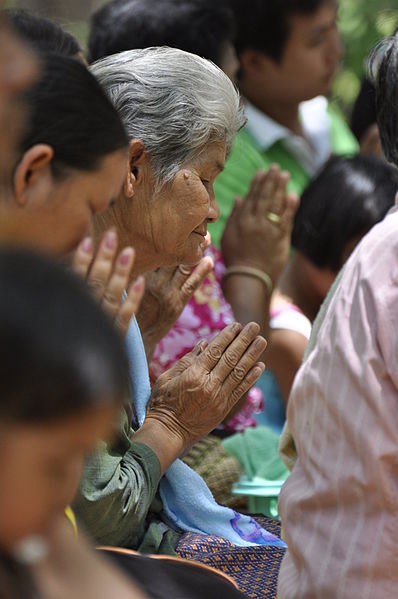

As a Pagan woman, I’ve been taught that all stages of life are sacred. Also as a Pagan, I’ve come value the spiritual good of honoring the Land, the Gods… and the People, both my living tribe and my ancestors.
As a modern woman who loves science and finds it a source of delight in its own right, I admit, I am love the way the science and my spiritual values line up on this one.
Here’s to the power of grandmothers, and here’s to the power of the Crone. May we all grow in wisdom over the course of long, long and productive lives… even if it means more night sweats and hormone surges for me, personally.
(Now would someone please open a window? It’s awfully stuffy in here.)
Previous Post

September 30, 2015
The What They Did, Not the What They Are Conversation
Next Post

October 22, 2015 Samhain Is My Fertility Festival
Browse Our Archives
Select a Category Cat's posts Peter's posts Uncategorized
Select a Month March 2017 February 2017 November 2016 July 2016 June 2016 May 2016 April 2016 February 2016 January 2016 December 2015 November 2015 October 2015 September 2015 August 2015 July 2015 June 2015 April 2015 March 2015 February 2015 January 2015 December 2014 November 2014 October 2014 September 2014 August 2014 July 2014 June 2014 May 2014 April 2014 March 2014 January 2014 December 2013 November 2013 October 2013 September 2013 July 2013 June 2013 March 2013 February 2013 December 2012 November 2012 August 2012 July 2012 June 2012 April 2012 February 2012 January 2012 November 2011 October 2011 September 2011 August 2011 July 2011 June 2011 May 2011 April 2011 March 2011 February 2011 January 2011 December 2010 November 2010 October 2010 September 2010 August 2010 July 2010 June 2010 May 2010 April 2010 March 2010 February 2010 January 2010 December 2009 November 2009 October 2009 September 2009 August 2009 July 2009 June 2009 May 2009 April 2009 March 2009 February 2009 January 2009 December 2008 November 2008 October 2008 September 2008 August 2008 July 2008 June 2008 May 2008 April 2008 March 2008 February 2008 January 2008 December 2007 November 2007 October 2007 September 2007 August 2007 July 2007 June 2007 May 2007 April 2007 March 2007 February 2007 January 2007 December 2006 October 2006 September 2006 August 2006 July 2006 June 2006 May 2006 April 2006 March 2006 July 2000
Follow Us!
TAKE THE
Religious Wisdom Quiz
Which Old Testament book is entirely written as a dialogue between God and a prophet?
Select your answer to see how you score.
Habakkuk Zechariah Amos Malachi
Related posts from Quaker Pagan Reflections

Goodbye to Patheos Pagan Channel

TRENDING AT PATHEOS Pagan

I was recently chatting with someone on Instagram. She asked me what...

While there are many people who share their results, the end of...

On July 23, I saw Christopher Nolan's The Odyssey which is Homer’s...

As I write this two big events have just finished up. One...

Restoring the Watershed of Divine Love
Perhaps cooperation is not something we manufacture through legislation, ideology, or moral...

Many UUs don’t pray because of bad experiences in a previous religion,...
view all Pagan blogs
Ad-Free & Subscriber Log-In Subscription Support
- About Us
- 2026 Calendar
- Videos
- Podcasts
- Library of World Religions
- Faith In Media Tracker
- Advertise With Us
- Write for Us
- Privacy Policy
- Terms of Service
- Do Not Sell My Data
- Contact Us
- Radiant Digital
- Manage Newsletter Subscriptions
- Unsubscribe From Notifications
- Sitemap
Copyright 2008-2026, Patheos. All rights reserved.
Subscription Support Ad-Free & Subscriber Log-In
Follow Patheos