
BuddhistCatholicContemplativeEvangelicalGeneral ChristianHinduJewishLatter-day SaintMuslimNew VisionsProgressive Christian
Beliefs
- Buddhist
- Catholic
- Contemplative
- Evangelical
- General Christian
- Hindu
- Jewish
- Latter-day Saint
- More Voices
- Muslim
- New Visions
- Pagan
- Progressive Christian
Topics
- Religion News
- Food and Religion
- Sports and Religion
- Religious Art
- Religious Music and Entertainment
- Religious Events
- History and Religion
- Style and Religion
- Politics and Religion
- Women in Religion
- Recreation Outdoors and Religion
- Business Finance and Religion
- Careers Workplace and Religion
- Education and Religion
- Family Parenting and Religion
- Health Fitness and Religion
- Home and Religion
- Relationships and Religion
- Technology and Religion
- Travel and Religion
Columnists
- Buddhist Columnists
- Business Finance and Religion Columnists
- Careers Workplace and Religion Columnists
- Catholic Columnists
- Contemplative Columnists
- Education and Religion Columnists
- Evangelists Columnists
- Family Parenting and Religion Columnists
- General Christian Columnists
- Health Fitness and Religion Columnists
- Hindu Columnists
- History and Religion Columnists
- Home and Religion Columnists
- Jewish Columnists
- More Voices Columnists
- Latter Day Columnists
- Muslim Columnists
- New Visions Columnists
- Nonreligious Columnists
- Pagan Columnists
- Politics and Religion Columnists
- Progressive Columnists
- Recreation Outdoors and Religion Columnists
- Relationships and Religion Columnists
- Religion News Columnists
- Religious Art Columnists
- Religious Events Columnists
- Religious Music and Entertainment Columnists
- Sports and Religion Columnists
- Style and Religion Columnists
- Technology and Religion Columnists
- Travel and Religion Columnists
- Women in Religion Columnists
Resource Library
- 2026 Calendar
- Library of World Religions
- The 100 Most Holy Places on Earth
- Patheos Answers
- Podcasts
- Videos
- Faith Leaders Database
- Anglican Episcopalian
- Bahai
- Baptist
- Buddhism
- Christianity
- Confucianism
- Eastern Orthodoxy
- Hinduism
- Holiness and Pentecostal
- ISKCON
- Islam
- Judaism
- Lutheran
- Methodist
- The Church of Jesus Christ of Latter-day Saints
- New Age
- Paganism
- Presbytarian and Reformed
- Protestantism
- Religion Behind the Scenes
- Roman Catholic
- Scientology
- Shia Islam
- Sikhism
- Sufism
- Sunni Islam
- Taoism
- Zen
- See all religions
Research Tools
 Ad-Free & Subscriber Log-In Subscription Support
Ad-Free & Subscriber Log-In Subscription Support
Follow Patheos 

- Trending:
- Forgiveness
- |
- Marriage
- |
- Consciousness
- |
- Death Penalty
- |
- Election
- |
- Halloween
 Quaker Pagan Reflections
- Home
- Pagan
- Remorselessly
Remorselessly
Last updated on: October 29, 2010 at 6:22 pm by Cat Chapin-Bishop
Remorselessly 2010-10-29T18:22:00-04:00 Cat Chapin-Bishop
Patheos Explore the world's faith through different perspectives on religion and spirituality! Patheos has the views of the prevalent religions and spiritualities of the world.

One trait I’ve always had is “buyer’s remorse”: that tendency in human nature to regret commitments made, and to wonder if we haven’t made a terrible mistake as soon as a decision is irrevocable.
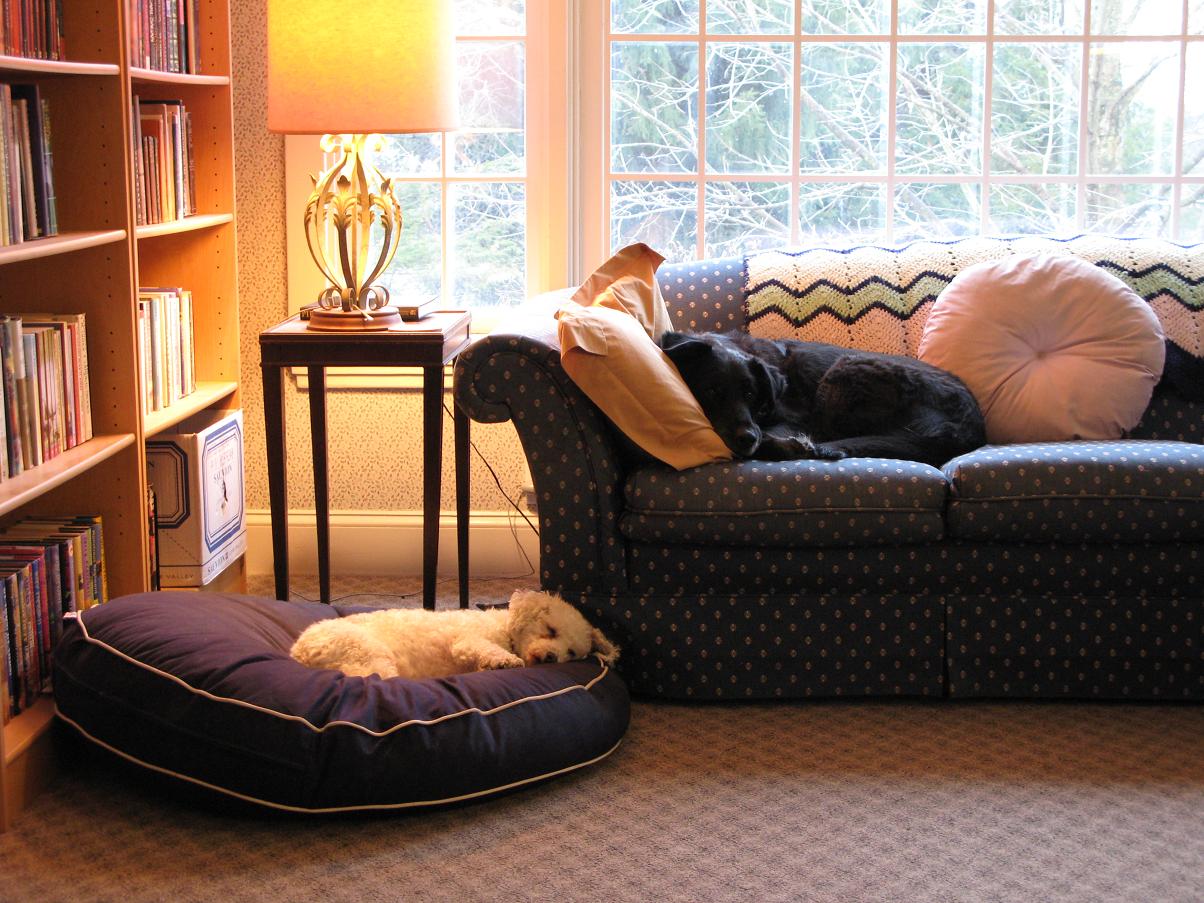
For instance, when I brought home Morgan, our 185 pound English mastiff and the dog of a lifetime, I spent at least a week fending off a sinking feeling that I had ruined my life (and this dog’s), and that it would never, ever work out! It did–Morgan eventually joined me in my therapy practice, working with me and with my trauma-survivor clients on a daily basis. She was enormous, she slobbered, but she could sense a painful emotion a mile away, and loved nothing better than to rest her head on someone’s knee and look up at them with the big, sincere gaze of a mastiff, telling them without words that she would never have treated them that way.
Of course, there is a difference between a dog, a living, breathing animal who can give and receive love, and stuff. I have a long and bitter history around buying stuff–I don’t like to.
So ubiquitous has been the experience of buyer’s remorse that I have learned to question closely every craving I have, every keen desire for yet another Thing. Shoes, cars, books, computers, houseplants and appliances… whatever the Thing is that I’m contemplating bringing into my world, I stare at the decision for as long as I can, fending off purchases as long as possible.
I ask myself, endlessly, “If you get this nifty new Thing, six months from now, will your life be any better? When the money is spent and the novelty has worn off, will this actually make you any happier?”
For me, at least, when I’m honest with myself the answer almost always turns out to be “no.” And then I’m left holding my remorse. (And maybe a big bill.)
We Americans love our cars. And I admit it–I drive mine until they are unreliable hulks, real beaters, and when I get one that I can be pretty sure won’t break down and strand me on the side of the road–maybe even one that has AC can actually cools the car–I like it. I like riding around in a new car as much as the next person.
At least, on the day I bring it home.
But six weeks later, stuck in traffic or driving home after working late? My satisfaction in life is no higher with the new car than it was with the old beater. (Though admittedly higher than it would be stuck at the side of the road.)
It’s that way with almost everything: new outfits, faster computers, even (though I’m ashamed to admit it) the new book purchases I convince myself I can’t live without. Six months later, I might as well have tossed my money in a well for all the satisfaction it has given me. And I’d very much better have saved it, or given it away.
Stuff doesn’t make me very happy, at least, not for very long.
But.
I asked myself these same questions when we were looking at buying our house two years ago. I asked myself if it would really make any difference to me, say, on a day when I was home with the flu, or came home late and weary… if on a steamy August afternoon or a frozen November morning, it would actually make the least difference to how I feel to be alive, knowing that there were woods behind the house, or that it was built in the mid 19th century, or had a garden outside.
I worried I might find it did not.
I was wrong.
I love living in the country. I love my commute, past the small town beach where I swim in the summers, under the red pines that stride in even rows back to the chaotic jumble of the real woods. I love hearing geese honking overhead as I pin my laundry onto the clothesline each week. I love my multi-layered view from the dining room window: phosphorescent-green lettuce growing on the windowsill flaming against the deep rose color of an autumn shrub just outside, hemlock tree jutting upwards in the middle distance, and behind it, down the hill, the vehemence of blazing oak and maple leaves catching the last of the afternoon sun.
I love my sloping ceilings; I love the deep blackness of the sky overhead at night, and the stars that are farther and cooler than they seem in the city. I love watching “my” oaks reemerge from the cluttered foreground of swamp maples and poplars as the lesser trees shed their leaves, and I love having the ability to plant and love and care for seedling trees of my own.
Even last winter, when pain from my back would not let me sleep, I loved to pace from room to room, chilled with night, waiting the emerging gray of morning, with the line of pine trees marking out the old boundary to this property. Even as I have worked long and hard hours this fall, with scarce the energy to climb my stairs to bed at night, never mind hike in the woods I love, I have been glad.
It may have taken the economic meltdown of 2008 to make it clear to everyone: a house is not necessarily a good investment. What goes up can indeed go down.
But love lasts. I am in love with my home; I am in love with the sweet autumn hills of New England. And I’m so glad I did not allow thoughts of caution or thrift or a faux-simplicity (for real simplicity is about clearing our lives of clutter in order to grow closer to Spirit, and living here has done that for me) to turn us aside from buying this house.
I am remorselessly grateful to be home.
var fctb_tool=null; function FCTB_Init_00b71001410027469eb073e46a99a89b(t) { fctb_tool=t; start(fctb_tool); }
var fctb_tool=null; function FCTB_Init_ceeba71b2d668e41af281b19d364b610(t) { fctb_tool=t; start(fctb_tool); }
var fctb_tool=null; function FCTB_Init_4d1ac8413a717b4a8c89a91f65f9a089(t) { fctb_tool=t; start(fctb_tool); }
Previous Post

October 22, 2010
Eating In
Next Post
November 11, 2010 November
Browse Our Archives
Select a Category Cat's posts Peter's posts Uncategorized
Select a Month March 2017 February 2017 November 2016 July 2016 June 2016 May 2016 April 2016 February 2016 January 2016 December 2015 November 2015 October 2015 September 2015 August 2015 July 2015 June 2015 April 2015 March 2015 February 2015 January 2015 December 2014 November 2014 October 2014 September 2014 August 2014 July 2014 June 2014 May 2014 April 2014 March 2014 January 2014 December 2013 November 2013 October 2013 September 2013 July 2013 June 2013 March 2013 February 2013 December 2012 November 2012 August 2012 July 2012 June 2012 April 2012 February 2012 January 2012 November 2011 October 2011 September 2011 August 2011 July 2011 June 2011 May 2011 April 2011 March 2011 February 2011 January 2011 December 2010 November 2010 October 2010 September 2010 August 2010 July 2010 June 2010 May 2010 April 2010 March 2010 February 2010 January 2010 December 2009 November 2009 October 2009 September 2009 August 2009 July 2009 June 2009 May 2009 April 2009 March 2009 February 2009 January 2009 December 2008 November 2008 October 2008 September 2008 August 2008 July 2008 June 2008 May 2008 April 2008 March 2008 February 2008 January 2008 December 2007 November 2007 October 2007 September 2007 August 2007 July 2007 June 2007 May 2007 April 2007 March 2007 February 2007 January 2007 December 2006 October 2006 September 2006 August 2006 July 2006 June 2006 May 2006 April 2006 March 2006 July 2000
Follow Us!
TAKE THE
Religious Wisdom Quiz
What does James say is the implanted word able to do?
Select your answer to see how you score.
Heal your body Judge the nations Defeat your enemies Save your souls
Related posts from Quaker Pagan Reflections

Goodbye to Patheos Pagan Channel


Peter on Mysticism and Facebook in a Time...

TRENDING AT PATHEOS Pagan

I was recently chatting with someone on Instagram. She asked me what...

While there are many people who share their results, the end of...

On July 23, I saw Christopher Nolan's The Odyssey which is Homer’s...

As I write this two big events have just finished up. One...

Restoring the Watershed of Divine Love
Perhaps cooperation is not something we manufacture through legislation, ideology, or moral...

Many UUs don’t pray because of bad experiences in a previous religion,...
view all Pagan blogs
Ad-Free & Subscriber Log-In Subscription Support
- About Us
- 2026 Calendar
- Videos
- Podcasts
- Library of World Religions
- Faith In Media Tracker
- Advertise With Us
- Write for Us
- Privacy Policy
- Terms of Service
- Do Not Sell My Data
- Contact Us
- Radiant Digital
- Manage Newsletter Subscriptions
- Unsubscribe From Notifications
- Sitemap
Copyright 2008-2026, Patheos. All rights reserved.
Subscription Support Ad-Free & Subscriber Log-In
Follow Patheos