
BuddhistCatholicContemplativeEvangelicalGeneral ChristianHinduJewishLatter-day SaintMuslimNew VisionsProgressive Christian
Beliefs
- Buddhist
- Catholic
- Contemplative
- Evangelical
- General Christian
- Hindu
- Jewish
- Latter-day Saint
- More Voices
- Muslim
- New Visions
- Pagan
- Progressive Christian
Topics
- Religion News
- Food and Religion
- Sports and Religion
- Religious Art
- Religious Music and Entertainment
- Religious Events
- History and Religion
- Style and Religion
- Politics and Religion
- Women in Religion
- Recreation Outdoors and Religion
- Business Finance and Religion
- Careers Workplace and Religion
- Education and Religion
- Family Parenting and Religion
- Health Fitness and Religion
- Home and Religion
- Relationships and Religion
- Technology and Religion
- Travel and Religion
Columnists
- Buddhist Columnists
- Business Finance and Religion Columnists
- Careers Workplace and Religion Columnists
- Catholic Columnists
- Contemplative Columnists
- Education and Religion Columnists
- Evangelists Columnists
- Family Parenting and Religion Columnists
- General Christian Columnists
- Health Fitness and Religion Columnists
- Hindu Columnists
- History and Religion Columnists
- Home and Religion Columnists
- Jewish Columnists
- More Voices Columnists
- Latter Day Columnists
- Muslim Columnists
- New Visions Columnists
- Nonreligious Columnists
- Pagan Columnists
- Politics and Religion Columnists
- Progressive Columnists
- Recreation Outdoors and Religion Columnists
- Relationships and Religion Columnists
- Religion News Columnists
- Religious Art Columnists
- Religious Events Columnists
- Religious Music and Entertainment Columnists
- Sports and Religion Columnists
- Style and Religion Columnists
- Technology and Religion Columnists
- Travel and Religion Columnists
- Women in Religion Columnists
Resource Library
- 2026 Calendar
- Library of World Religions
- The 100 Most Holy Places on Earth
- Patheos Answers
- Podcasts
- Videos
- Faith Leaders Database
- Anglican Episcopalian
- Bahai
- Baptist
- Buddhism
- Christianity
- Confucianism
- Eastern Orthodoxy
- Hinduism
- Holiness and Pentecostal
- ISKCON
- Islam
- Judaism
- Lutheran
- Methodist
- The Church of Jesus Christ of Latter-day Saints
- New Age
- Paganism
- Presbytarian and Reformed
- Protestantism
- Religion Behind the Scenes
- Roman Catholic
- Scientology
- Shia Islam
- Sikhism
- Sufism
- Sunni Islam
- Taoism
- Zen
- See all religions
Research Tools
 Ad-Free & Subscriber Log-In Subscription Support
Ad-Free & Subscriber Log-In Subscription Support
Follow Patheos 

- Trending:
- Forgiveness
- |
- Marriage
- |
- Consciousness
- |
- Death Penalty
- |
- Election
- |
- Halloween
 Pursued by Truth
- Home
- Catholic
- Christological Battles Around “The Young Messiah”
Christological Battles Around “The Young Messiah”
Last updated on: March 21, 2016 at 9:56 am by Guest Contributor
Christological Battles Around “The Young Messiah” 2016-03-21T09:56:03-04:00 Guest Contributor
Patheos Explore the world's faith through different perspectives on religion and spirituality! Patheos has the views of the prevalent religions and spiritualities of the world.
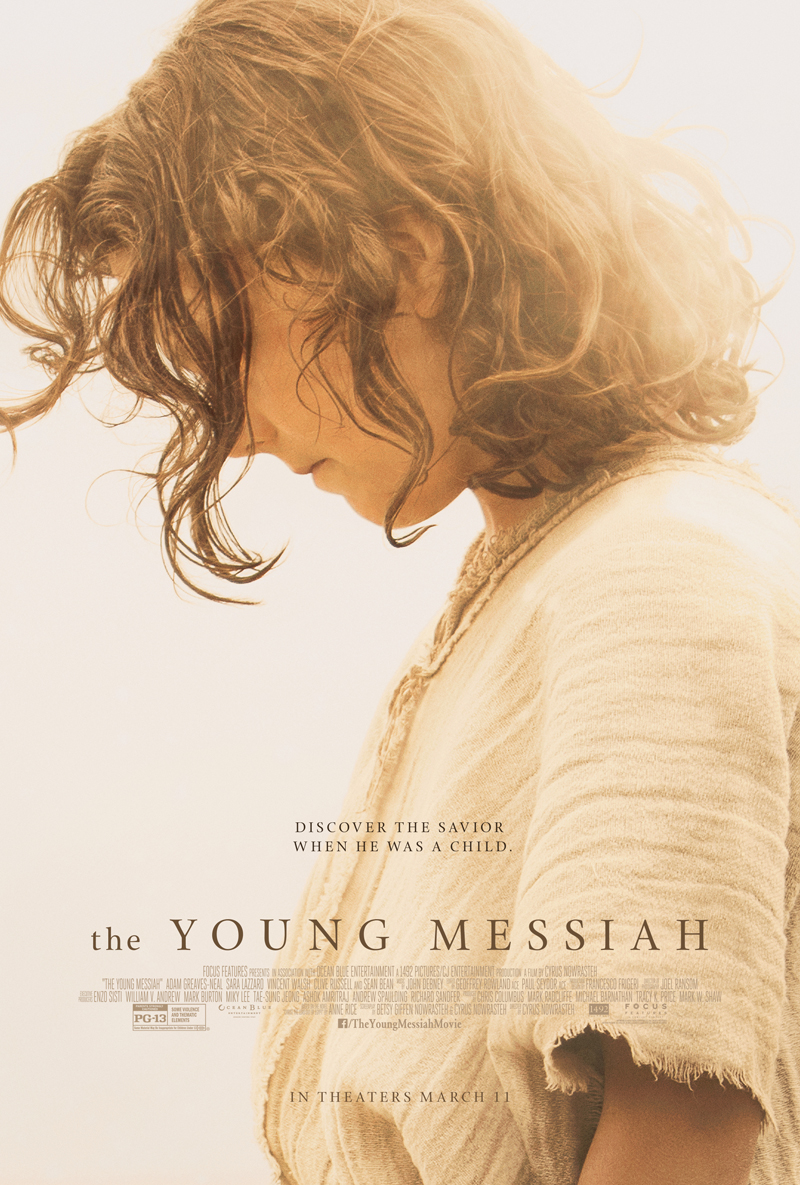
By Sr. Anne Joan Flanagan, FSP
Last week’s opening of The Young Messiah in theaters opened a theological can of worms in some circles. The controversy centered on the self-awareness of Jesus. Did the film imply that the boy Jesus did not know his own divine identity?
I’m not sure that everyone who wrote about or commented on the human knowledge of the Christ Child actually saw the movie, or if they were going more on the quote (from “Joseph”) used in some social media: “How do we explain God to His own Son?”
To me, it was clear in the movie that the seven-year-old Jesus was more than just precocious in his knowledge of God. When his dying uncle Cleophas was muttering incoherently, it was Jesus, yards away, who informed Cleophas’ wife “He is talking to God” as if he had been on the receiving end of that communication. In the subsequent healing of that same uncle, Jesus is portrayed praying to his “Father God.”
At the same time, Mary and Joseph have not told the little boy anything of his mysterious origin, despite his searching questions. (That is one of the questions that continues throughout the movie: When, and under what circumstances, should the young child learn about his conception?)
We know from the Gospels that Mary referred to Joseph as “your father” and the evangelist Luke speaks of Mary and Joseph as “the parents of Jesus.” It is only at age twelve that we hear the boy claim God as his father in a unique way, referring to the Temple as “my Father’s house.” (The same striking expression comes up again–at the cleansing of the Temple by the adult Christ.) Personally, I suspect that (pace The Young Messiah) Mary and Joseph never referred to God as Jesus’ “father”; that this was a revelation we received directly from Jesus himself. But I digress.
That Jesus possessed full divine knowledge, knowledge that was somehow accessible to him in his human nature, is part of the truth of our salvation. Pope Pius XII (in his encyclical Mystici Corporis, n. 63) wrote: “The loving knowledge with which the divine Redeemer has pursued us from the first moment of his incarnation is such as completely to surpass all the searchings of the human mind; for by means of the beatific vision, which he enjoyed from the time when he was received into the womb of the Mother of God, he has for ever and continuously had present to him all the members of his mystical Body, and embraced them with his saving love.” “The Son of God loved me and gave himself for me,” Paul asserts (Gal 2:20).
He knew who he was, he knew his mission, and he knew whom he was saving.
But how did that work itself out in a seven-year-old with two natures? How did the ongoing formation of synapses in a seven-year-old brain coordinate with the workings of a divine mind? The filmmakers take a legitimate look at one way this might have expressed itself in the life of Christ. Since we cannot refer to anyone else with two complete natures, all we can do is use our imagination to try to envision the real-life implications of the dogma, and I think the filmmakers did all they could to create a movie that respects the whole truth about Jesus (even though they may not have been aware of the finer points of doctrine on the human knowledge of Christ).
In theology there is an expression “That which was not assumed [that is, taken on personally by Christ] is not redeemed.” Jesus “grew in wisdom and age and grace before God and men” (Lk. 2:52). It is not unfathomable that part of Christ’s acceptance of a true and complete human nature might have been that he humbly submitted to the full natural process of personal development. (There is nothing in the Gospels to let us suspect that Christ’s childhood was somehow remarkable; the incident in the Temple when he was twelve is narrated as an outlier in an otherwise ordinary home life.)
“That which was not assumed is not redeemed.” Gregory Nazianzen coined this expression to teach that all of human nature was taken on and healed by Christ; could it not apply also to the entire process of growth and development?
– – – – – –
For more on Christ’s human and divine knowledge, see the Catechism of the Catholic Church, 470-472.
Also available to accompany the film:
Study guide for Catholic youth groups
Catholic family discussion guide for the film
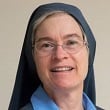 Sister Anne Flanagan, a Daughter of St Paul, a native of New Orleans, is author of Five Keys to Understanding Pope Francis. She has also recorded over two dozen albums as a soprano in the Daughters of St Paul choir. Follow her on Twitter @nunblogger. She blogs at Nun Blog.
Catechism of the Catholic Church
Previous Post

March 17, 2016
Lent and "Letting Go Moments"
Next Post

March 29, 2016 Praying Outside of Time's Jurisdiction
Browse Our Archives
Select a Category Advent Art Atheism Book Reviews Christmas Church Issues Discernment Easter Ecumenism Entertainment Environment Eucharist Evangelization Family Freebies Guest Post Holy Spirit Inspire Me Interreligious Dialogue Jesus Lectio Divina Lent Life Issues Liturgical Season Mary Media MISC Movie Reviews Pauline Pope Francis Prayer Prayer Intention Religious Life Saints Sanctity Scripture Social Justice Social Teaching St. Paul Theology of the Body Uncategorized US News Vocations World News Writing Year of Mercy
Select a Month September 2016 June 2016 May 2016 April 2016 March 2016 February 2016 January 2016 December 2015 November 2015 October 2015 September 2015 August 2015 July 2015 June 2015 May 2015 April 2015 March 2015 February 2015 January 2015 December 2014 November 2014 October 2014 September 2014 August 2014 July 2014 June 2014 May 2014 April 2014 March 2014 February 2014 January 2014 December 2013 November 2013 October 2013 September 2013 July 2013 June 2013 May 2013 April 2013 March 2013 February 2013 January 2013 December 2012 November 2012 October 2012 September 2012 August 2012 July 2012 June 2012 May 2012 April 2012 March 2012 February 2012 January 2012 December 2011 November 2011 October 2011 September 2011 August 2011 July 2011 June 2011 April 2011 March 2011 February 2011 January 2011 December 2010 November 2010 October 2010 September 2010 August 2010
Follow Us!
TAKE THE
Religious Wisdom Quiz
What was the primary beverage in biblical times?
Select your answer to see how you score.
Milk Beer Wine Water
Related posts from Pursued by Truth

WATCH: Sr. Maria Kim's Vocation Story
How God Hauled Me Kicking and Screaming Into...
Archbishop of Damascus: 4 Greatest Challenges to Christians...
TRENDING AT PATHEOS Catholic

Rejecting Doom: Christian Hope And Human Action
Christianity is a religion of hope. We are to have hope and...

It’s What Comes From Within Which Matters
One of the most difficult things for us to understand is why...

Why I Choose the Eucharist Over the Sermon
Choose the Eucharist, Not the Sermon What are we supposed to get...

5 Design Elements Found in Spiritually Rooted Homes
Putting Spirituality Into Home Decor Our homes are more than our living...

Credo: A Story of God Told with the...
About 10 years ago, I began to imagine a personal "Credo" that...

The Anatomy of Divine Revelation in Catholic Thought
The claim that God has made Himself known to human beings is...
view all Catholic blogs
Ad-Free & Subscriber Log-In Subscription Support
- About Us
- 2026 Calendar
- Videos
- Podcasts
- Library of World Religions
- Faith In Media Tracker
- Advertise With Us
- Write for Us
- Privacy Policy
- Terms of Service
- Do Not Sell My Data
- Contact Us
- Radiant Digital
- Manage Newsletter Subscriptions
- Unsubscribe From Notifications
- Sitemap
Copyright 2008-2026, Patheos. All rights reserved.
Subscription Support Ad-Free & Subscriber Log-In
Follow Patheos