
BuddhistCatholicContemplativeEvangelicalGeneral ChristianHinduJewishLatter-day SaintMuslimNew VisionsProgressive Christian
Beliefs
- Buddhist
- Catholic
- Contemplative
- Evangelical
- General Christian
- Hindu
- Jewish
- Latter-day Saint
- More Voices
- Muslim
- New Visions
- Pagan
- Progressive Christian
Topics
- Religion News
- Food and Religion
- Sports and Religion
- Religious Art
- Religious Music and Entertainment
- Religious Events
- History and Religion
- Style and Religion
- Politics and Religion
- Women in Religion
- Recreation Outdoors and Religion
- Business Finance and Religion
- Careers Workplace and Religion
- Education and Religion
- Family Parenting and Religion
- Health Fitness and Religion
- Home and Religion
- Relationships and Religion
- Technology and Religion
- Travel and Religion
Columnists
- Buddhist Columnists
- Business Finance and Religion Columnists
- Careers Workplace and Religion Columnists
- Catholic Columnists
- Contemplative Columnists
- Education and Religion Columnists
- Evangelists Columnists
- Family Parenting and Religion Columnists
- General Christian Columnists
- Health Fitness and Religion Columnists
- Hindu Columnists
- History and Religion Columnists
- Home and Religion Columnists
- Jewish Columnists
- More Voices Columnists
- Latter Day Columnists
- Muslim Columnists
- New Visions Columnists
- Nonreligious Columnists
- Pagan Columnists
- Politics and Religion Columnists
- Progressive Columnists
- Recreation Outdoors and Religion Columnists
- Relationships and Religion Columnists
- Religion News Columnists
- Religious Art Columnists
- Religious Events Columnists
- Religious Music and Entertainment Columnists
- Sports and Religion Columnists
- Style and Religion Columnists
- Technology and Religion Columnists
- Travel and Religion Columnists
- Women in Religion Columnists
Resource Library
- 2026 Calendar
- Library of World Religions
- The 100 Most Holy Places on Earth
- Patheos Answers
- Podcasts
- Videos
- Faith Leaders Database
- Anglican Episcopalian
- Bahai
- Baptist
- Buddhism
- Christianity
- Confucianism
- Eastern Orthodoxy
- Hinduism
- Holiness and Pentecostal
- ISKCON
- Islam
- Judaism
- Lutheran
- Methodist
- The Church of Jesus Christ of Latter-day Saints
- New Age
- Paganism
- Presbytarian and Reformed
- Protestantism
- Religion Behind the Scenes
- Roman Catholic
- Scientology
- Shia Islam
- Sikhism
- Sufism
- Sunni Islam
- Taoism
- Zen
- See all religions
Research Tools
 Ad-Free & Subscriber Log-In Subscription Support
Ad-Free & Subscriber Log-In Subscription Support
Follow Patheos 

- Trending:
- Forgiveness
- |
- Marriage
- |
- Consciousness
- |
- Death Penalty
- |
- Election
- |
- Halloween
 Pursued by Truth
- Home
- Catholic
- David Bowie and the Call to Be Cultural Mystics
David Bowie and the Call to Be Cultural Mystics
Last updated on: January 22, 2016 at 4:04 pm by Sr. Theresa Aletheia Noble
David Bowie and the Call to Be Cultural Mystics 2016-01-22T16:04:47-04:00 Sr. Theresa Aletheia Noble
Patheos Explore the world's faith through different perspectives on religion and spirituality! Patheos has the views of the prevalent religions and spiritualities of the world.
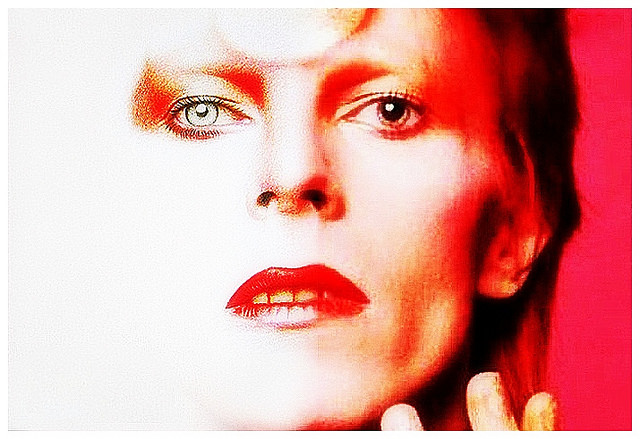
Photo credit: Ace MegaRex via Foter.com / CC BY
My latest piece over at Aleteia about David Bowie’s death, one of my favorite pieces so far, has received interesting responses.
Among the negative responses I received was one man who told me,
Pray for those [souls] in purgatory…not for David Bowie.
Another person argued that David Bowie is most likely not going to heaven saying:
I know that he had a year and some time to get right with God and die with perfect contrition but I haven’t heard anything about it if he did. He also doesn’t seem like one to apologize for anything he did.
What shocked me about these responses was the presumption that we can know with a degree of certainty whether someone has or has not been saved based on the evidence in a person’s life.
One reason I love being Catholic is that we do not waste time arguing over whether someone has not been saved. People are basically in the “We don’t know but we hope” category or in the canonized Saint category.
The Catholic response to the Evangelical who asks us, “Have you been saved?” is, as Jimmy Akin puts it:
“I have been saved, I am being saved, and I hope to be saved.”
God can save people in the last moments of their life in whatever way he pleases. He does not require a pat formula of accepting Jesus into our hearts. He requires repentance. So we really can never know for sure whether someone has or has not been saved. In fact, even Judas, the betrayer of Jesus, could have been saved in the last moments of his life.
What implications does this have for us as Catholics? For one, when we hear about the death of someone like David Bowie, whose music we may or may not admire, I don’t really think it is the time to pull out all the skeletons from his closet or speculate about his soul’s future abode. I also don’t think it makes sense to criticize his music based on his life.
In a very interesting piece in Dappled Things, Michael Rennier writes:
Can we praise the music of Bowie even though he was no saint? More broadly speaking, can a bad person create good art?
I sure hope so, otherwise my Caravaggio admiration will have to go (murder, beating up prostitutes, stabbing people, so very many other things), so will Beethoven (misanthrope, abusive uncle), every Renaissance artist who ever chased down a wayward apprentice with murder in his heart (more than you would think), Van Gogh, Oscar Wilde, Hart Crane, the list goes on.
Before all else, we are called to pray for the dead who, we hope, are in the process of being purified of their sins.
In this Jubilee Year of Mercy, it is a good reminder to us that praying for the dead is a spiritual work of mercy and it is one that we can easily do every day. Even a simple “Eternal rest…” before we go to bed for all who have died that day. One sister told me that when she goes up to receive the Eucharist every day she offers it for all the people who will die that day. This is part of our duty as Christians, to pray for the living and the dead.
And we should not just remember to pray for people when they have died! The Daughters of St. Paul regularly pray for people who influence our culture, like David Bowie. This is part of our charism. Unfortunately, it seems that it can sometimes be more comfortable to criticize culture influencers than to pray for them. This is a shame. We should be praying for artists, musicians, actors and all people who influence the culture, whether we believe it is for good or for worse. (If we believe it is for worse, then all the more reason for prayers!)
I think the fear in many minds when we take a stance toward culture that is open and discerning, is that we will be changed by the culture rather than the opposite. But in order to change culture we must engage it, and not solely to judge, criticize and shame.
The question becomes then, “How can we change our stance to be more open toward popular culture without assimilating values that are not in line with our faith?”
Sr. Nancy Usselmann address this question recently in an excellent article for the Brehm Center:
I believe our call is to be cultural mystics, that is, mystics of the popular culture that pervades our lives. We are not to fight against it, point out everything that is evil in it, or condemn it. That’s the easy thing to do. Instead, we are to be the mystics who look at the world with love and contemplate the deep underlying desires, longings, needs and struggles present there in order to offer the world a message of hope, truth, beauty and goodness. In order to do this, we must take a step back intellectually and reflect on the beauty that is present within the created world and in the creations of cultural artists who seek to give expression to the existential desires of humanity. It requires us to take a sacred look. Through this theological aesthetics we can develop an anthropological-incarnational-sacramental foundation for a theology of popular culture.
What a beautiful call.
I believe if there were more cultural mystics in our world, there would be more people coming into the Church than walking out.
Previous Post
January 21, 2016
Prayer Intention for the Tighe Family
Next Post

January 27, 2016 Take a Funny Break, Everyone Needs One
Browse Our Archives
Select a Category Advent Art Atheism Book Reviews Christmas Church Issues Discernment Easter Ecumenism Entertainment Environment Eucharist Evangelization Family Freebies Guest Post Holy Spirit Inspire Me Interreligious Dialogue Jesus Lectio Divina Lent Life Issues Liturgical Season Mary Media MISC Movie Reviews Pauline Pope Francis Prayer Prayer Intention Religious Life Saints Sanctity Scripture Social Justice Social Teaching St. Paul Theology of the Body Uncategorized US News Vocations World News Writing Year of Mercy
Select a Month September 2016 June 2016 May 2016 April 2016 March 2016 February 2016 January 2016 December 2015 November 2015 October 2015 September 2015 August 2015 July 2015 June 2015 May 2015 April 2015 March 2015 February 2015 January 2015 December 2014 November 2014 October 2014 September 2014 August 2014 July 2014 June 2014 May 2014 April 2014 March 2014 February 2014 January 2014 December 2013 November 2013 October 2013 September 2013 July 2013 June 2013 May 2013 April 2013 March 2013 February 2013 January 2013 December 2012 November 2012 October 2012 September 2012 August 2012 July 2012 June 2012 May 2012 April 2012 March 2012 February 2012 January 2012 December 2011 November 2011 October 2011 September 2011 August 2011 July 2011 June 2011 April 2011 March 2011 February 2011 January 2011 December 2010 November 2010 October 2010 September 2010 August 2010
Follow Us!
TAKE THE
Religious Wisdom Quiz
Which disciple was exiled to the island of Patmos?
Select your answer to see how you score.
Thomas John Paul Peter
Related posts from Pursued by Truth

WATCH: Sr. Maria Kim's Vocation Story
How God Hauled Me Kicking and Screaming Into...
3 Moments When the Holy Spirit Worked in...

How to Read Amoris Laetitia without Assumptions, Cynicism,...
TRENDING AT PATHEOS Catholic

Rejecting Doom: Christian Hope And Human Action
Christianity is a religion of hope. We are to have hope and...

It’s What Comes From Within Which Matters
One of the most difficult things for us to understand is why...

Why I Choose the Eucharist Over the Sermon
Choose the Eucharist, Not the Sermon What are we supposed to get...

5 Design Elements Found in Spiritually Rooted Homes
Putting Spirituality Into Home Decor Our homes are more than our living...

Credo: A Story of God Told with the...
About 10 years ago, I began to imagine a personal "Credo" that...

The Anatomy of Divine Revelation in Catholic Thought
The claim that God has made Himself known to human beings is...
view all Catholic blogs
Ad-Free & Subscriber Log-In Subscription Support
- About Us
- 2026 Calendar
- Videos
- Podcasts
- Library of World Religions
- Faith In Media Tracker
- Advertise With Us
- Write for Us
- Privacy Policy
- Terms of Service
- Do Not Sell My Data
- Contact Us
- Radiant Digital
- Manage Newsletter Subscriptions
- Unsubscribe From Notifications
- Sitemap
Copyright 2008-2026, Patheos. All rights reserved.
Subscription Support Ad-Free & Subscriber Log-In
Follow Patheos