
BuddhistCatholicContemplativeEvangelicalGeneral ChristianHinduJewishLatter-day SaintMuslimNew VisionsProgressive Christian
Beliefs
- Buddhist
- Catholic
- Contemplative
- Evangelical
- General Christian
- Hindu
- Jewish
- Latter-day Saint
- More Voices
- Muslim
- New Visions
- Pagan
- Progressive Christian
Topics
- Religion News
- Food and Religion
- Sports and Religion
- Religious Art
- Religious Music and Entertainment
- Religious Events
- History and Religion
- Style and Religion
- Politics and Religion
- Women in Religion
- Recreation Outdoors and Religion
- Business Finance and Religion
- Careers Workplace and Religion
- Education and Religion
- Family Parenting and Religion
- Health Fitness and Religion
- Home and Religion
- Relationships and Religion
- Technology and Religion
- Travel and Religion
Columnists
- Buddhist Columnists
- Business Finance and Religion Columnists
- Careers Workplace and Religion Columnists
- Catholic Columnists
- Contemplative Columnists
- Education and Religion Columnists
- Evangelists Columnists
- Family Parenting and Religion Columnists
- General Christian Columnists
- Health Fitness and Religion Columnists
- Hindu Columnists
- History and Religion Columnists
- Home and Religion Columnists
- Jewish Columnists
- More Voices Columnists
- Latter Day Columnists
- Muslim Columnists
- New Visions Columnists
- Nonreligious Columnists
- Pagan Columnists
- Politics and Religion Columnists
- Progressive Columnists
- Recreation Outdoors and Religion Columnists
- Relationships and Religion Columnists
- Religion News Columnists
- Religious Art Columnists
- Religious Events Columnists
- Religious Music and Entertainment Columnists
- Sports and Religion Columnists
- Style and Religion Columnists
- Technology and Religion Columnists
- Travel and Religion Columnists
- Women in Religion Columnists
Resource Library
- 2026 Calendar
- Library of World Religions
- The 100 Most Holy Places on Earth
- Patheos Answers
- Podcasts
- Videos
- Faith Leaders Database
- Anglican Episcopalian
- Bahai
- Baptist
- Buddhism
- Christianity
- Confucianism
- Eastern Orthodoxy
- Hinduism
- Holiness and Pentecostal
- ISKCON
- Islam
- Judaism
- Lutheran
- Methodist
- The Church of Jesus Christ of Latter-day Saints
- New Age
- Paganism
- Presbytarian and Reformed
- Protestantism
- Religion Behind the Scenes
- Roman Catholic
- Scientology
- Shia Islam
- Sikhism
- Sufism
- Sunni Islam
- Taoism
- Zen
- See all religions
Research Tools
 Ad-Free & Subscriber Log-In Subscription Support
Ad-Free & Subscriber Log-In Subscription Support
Follow Patheos 

- Trending:
- Forgiveness
- |
- Marriage
- |
- Consciousness
- |
- Death Penalty
- |
- Election
- |
- Halloween
 Pursued by Truth
- Home
- Catholic
- Paschal’s Wager and Pope Francis’ Leaked Encyclical
Paschal’s Wager and Pope Francis’ Leaked Encyclical
Last updated on: June 17, 2015 at 7:30 am by Guest Contributor
Paschal’s Wager and Pope Francis’ Leaked Encyclical 2015-06-16T20:27:41-04:00 Guest Contributor
Patheos Explore the world's faith through different perspectives on religion and spirituality! Patheos has the views of the prevalent religions and spiritualities of the world.
By Anne Flanagan, FSP
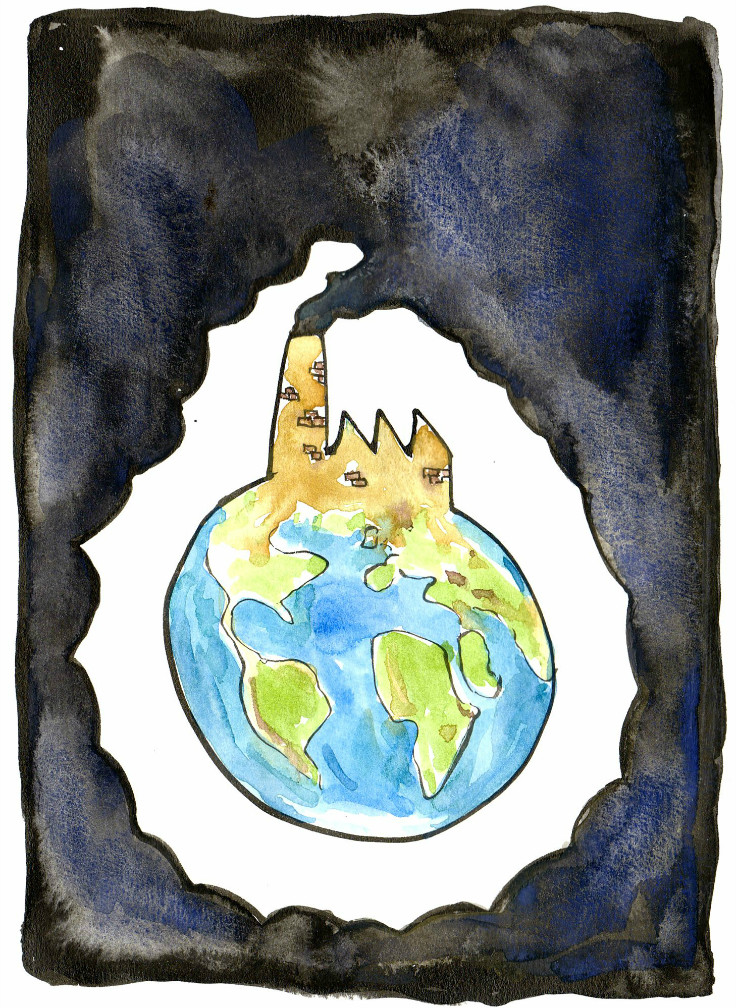
Photo credit: HikingArtist.com / Foter / CC BY-ND
The Catholic world has been breathless over the leak of an Italian “draft” (“not the final version,” insisted the Vatican spokesman) of the Pope’s much-anticipated (and in some quarters much-dreaded) encyclical on the care of creation.
(“The care of creation” is how the encyclical was mentioned by Cardinal O’Malley in his homily Sunday at the Daughters of St. Paul’s Centenary Jubilee Mass.)
I have not been able to do much more than glance at the Italian (the leaked document is 172 pages long and I have not been well this week). If I am going to read 172 pages, it will be of the published version and not a leaked one.
The document (as it comes to us, unofficial) is a new expression of the social doctrine of the Church (see n. 15). One horrified Catholic glumly reported, on the basis of a Google translation of the Italian draft, that the Pope had swallowed climate change “hook, line and sinker.”
By this, he meant not only that the climate is changing (that is a given), but that humans bear some (or most) of the responsibility for that change.
This is something that politically conservative Catholics are especially wary of: The “climate change” mantra is often invoked as justifying drastic population control measures, and does seem quite often to accompany a particularly dismissive attitude toward the human species as a whole. Some go so far as to suggest that the earth would be better off without us: this rightly unnerves Catholics when climate change comes up as a subject.
Pope Francis appears (we are only looking at a draft–and in Italian) to take aim at the anti-human conclusions of those who make man the servant of the environment. He quotes St John Paul on “an authentic human ecology” (an expression that Pope Francis has used more than once in his talks). The draft goes on, “This concerns especially certain significant themes that criss-cross the whole Encyclical. For example: the intimate relationship between the poor and the fragility of the planet.” The Church is concerned not only for Planet Earth in and for itself, but is concerned with Planet Earth for the sake of the people who inhabit it, especially the most defenseless.
The leaked document cites Benedict XVI on correcting “models of growth that seem incapable of guaranteeing respect for the environment” (my translations throughout). “Pope Benedict has recommended that we acknowledge that the natural environment is full of wounds caused by our irresponsible behavior.” “Attitudes, even among believers, that obstruct the pathways to a solution go from denial of the problem to indifference, to comfortable resignation or blind trust in technical answers.”
The draft addresses the “throwaway culture” and its relationship to pollution. (It is again the poor who bear the heaviest burdens when it comes to pollution: not just the problem of waste disposal and entire communities living on garbage heaps, but health risks associated with things like smoke from cooking over fire, and lack of access to clean water.) In wealthier parts of the world, pollution seems to be an old, largely-resolved story, but it is a still a daily health hazard for most of the children of Adam.
The draft spends dozens of paragraphs describing the problems the environment faces, in terms and with examples that generally coincide with those we find in the fund-raising literature of environmental organizations. The document acknowledges: “On many concrete matters, the Church has no reason to propose a definitive word, and understands that she must listen to and promote honest conversation among the experts, respecting the diversity of opinion.” But the Church herself is, in the words of Benedict XVI (himself quoting Paul VI??) “an expert in humanity.”
The draft warns against divinizing the earth, “leveling all living beings and taking from the human that unique value that at the same time implies a tremendous responsibility.” In the fourth chapter, the document calls for an “integral ecology”: environmental, economic and social. That last point becomes the most crucial. Everything is ordered to the human person. Lack of housing, inadequate public space, the dissolution of the natural family. “Human ecology also implies something very profound: the necessary relationship of the life of the human being with the moral law written his in very nature, a relationship that is indispensable for being able to create a more dignified environment.”
Whether or to what extent human activity is responsible for some of the environmental changes that we are witnessing (things like the tree line of certain species climbing north as their former habitats become too hot or wet or dry, or changes in plumage and migration for certain birds), it is clear that human activity is to blame for the changes in amphibians and fish subjected to wastewater that retains estrogen from birth control pills.
And there is always the warning “follow the money”: who stands to gain financially if climate change can be ignored or blamed entirely on the planet itself? Who stands to gain financially (or politically) if the responsibility can be placed tout court on human influence?
Admittedly, I have a powerful personal motivation for desiring to see climate change slow down, if there is anything at all that can be done: my family’s roots go back 300 years in one of the most threatened cities on the planet. Some estimates give New Orleans about twenty years before it becomes part of a growing Gulf of Mexico (and shrinking State of Louisiana, which loses a football field’s worth of coastland every hour).
If there is even a 5% chance that this could be slowed down, I would pray we would take it. Pope Francis writes from a similar point of view: the poor of the world live in the most threatened spots. My family has the resources to pick up and move elsewhere (but where?); that is not even a remote possibility for the poor in the south of the world.
I look at the question of human responsibility for climate change as a kind of Paschal’s wager: If humans are responsible for some proportion of climate change, it behooves us to alter what we can in order to preserve the environment. If we are not, what do we lose by attempting to rein in those things that are clearly not good for the environment?
This is a long (draft) document, and one which merits to be read in its entirety–when the official version is released.
 Sister Anne Flanagan, a Daughter of St Paul, a native of New Orleans, is author of Five Keys to Understanding Pope Francis. She has also recorded over two dozen albums as a soprano in the Daughters of St Paul choir. Follow her on Twitter @nunblogger. She blogs at Nun Blog.
Previous Post
June 16, 2015
A Beauty That Cannot Be Marred: Why I Remain Catholic
Next Post
June 17, 2015 BREAKING: Archbishop in Syria Pleads for Help
Browse Our Archives
Select a Category Advent Art Atheism Book Reviews Christmas Church Issues Discernment Easter Ecumenism Entertainment Environment Eucharist Evangelization Family Freebies Guest Post Holy Spirit Inspire Me Interreligious Dialogue Jesus Lectio Divina Lent Life Issues Liturgical Season Mary Media MISC Movie Reviews Pauline Pope Francis Prayer Prayer Intention Religious Life Saints Sanctity Scripture Social Justice Social Teaching St. Paul Theology of the Body Uncategorized US News Vocations World News Writing Year of Mercy
Select a Month September 2016 June 2016 May 2016 April 2016 March 2016 February 2016 January 2016 December 2015 November 2015 October 2015 September 2015 August 2015 July 2015 June 2015 May 2015 April 2015 March 2015 February 2015 January 2015 December 2014 November 2014 October 2014 September 2014 August 2014 July 2014 June 2014 May 2014 April 2014 March 2014 February 2014 January 2014 December 2013 November 2013 October 2013 September 2013 July 2013 June 2013 May 2013 April 2013 March 2013 February 2013 January 2013 December 2012 November 2012 October 2012 September 2012 August 2012 July 2012 June 2012 May 2012 April 2012 March 2012 February 2012 January 2012 December 2011 November 2011 October 2011 September 2011 August 2011 July 2011 June 2011 April 2011 March 2011 February 2011 January 2011 December 2010 November 2010 October 2010 September 2010 August 2010
Follow Us!
TAKE THE
Religious Wisdom Quiz
I am a precious stone, tested and chosen. Believers will never be put to shame when they trust in me. What am I?
Select your answer to see how you score.
A living stone A rock A cornerstone A foundation
Related posts from Pursued by Truth

NEW Syrian Archbishop's Letter: Will We Become the...
How God Hauled Me Kicking and Screaming Into...

How to Read Amoris Laetitia without Assumptions, Cynicism,...
Archbishop of Damascus: 4 Greatest Challenges to Christians...
TRENDING AT PATHEOS Catholic

Creation, Preservation, and Teleology in Catholic Theology
As I write this, it is very early Monday morning. Like millions...

The Parable Of The Sower And The Word...
One of Christ’s most famous parables is that of the sower who...

Rejecting Doom: Christian Hope And Human Action
Christianity is a religion of hope. We are to have hope and...

Why I Choose the Eucharist Over the Sermon
Choose the Eucharist, Not the Sermon What are we supposed to get...

5 Design Elements Found in Spiritually Rooted Homes
Putting Spirituality Into Home Decor Our homes are more than our living...

Credo: A Story of God Told with the...
About 10 years ago, I began to imagine a personal "Credo" that...
view all Catholic blogs
Ad-Free & Subscriber Log-In Subscription Support
- About Us
- 2026 Calendar
- Videos
- Podcasts
- Library of World Religions
- Faith In Media Tracker
- Advertise With Us
- Write for Us
- Privacy Policy
- Terms of Service
- Do Not Sell My Data
- Contact Us
- Radiant Digital
- Manage Newsletter Subscriptions
- Unsubscribe From Notifications
- Sitemap
Copyright 2008-2026, Patheos. All rights reserved.
Subscription Support Ad-Free & Subscriber Log-In
Follow Patheos