
BuddhistCatholicContemplativeEvangelicalGeneral ChristianHinduJewishLatter-day SaintMuslimNew VisionsProgressive Christian
Beliefs
- Buddhist
- Catholic
- Contemplative
- Evangelical
- General Christian
- Hindu
- Jewish
- Latter-day Saint
- More Voices
- Muslim
- New Visions
- Pagan
- Progressive Christian
Topics
- Religion News
- Food and Religion
- Sports and Religion
- Religious Art
- Religious Music and Entertainment
- Religious Events
- History and Religion
- Style and Religion
- Politics and Religion
- Women in Religion
- Recreation Outdoors and Religion
- Business Finance and Religion
- Careers Workplace and Religion
- Education and Religion
- Family Parenting and Religion
- Health Fitness and Religion
- Home and Religion
- Relationships and Religion
- Technology and Religion
- Travel and Religion
Columnists
- Buddhist Columnists
- Business Finance and Religion Columnists
- Careers Workplace and Religion Columnists
- Catholic Columnists
- Contemplative Columnists
- Education and Religion Columnists
- Evangelists Columnists
- Family Parenting and Religion Columnists
- General Christian Columnists
- Health Fitness and Religion Columnists
- Hindu Columnists
- History and Religion Columnists
- Home and Religion Columnists
- Jewish Columnists
- More Voices Columnists
- Latter Day Columnists
- Muslim Columnists
- New Visions Columnists
- Nonreligious Columnists
- Pagan Columnists
- Politics and Religion Columnists
- Progressive Columnists
- Recreation Outdoors and Religion Columnists
- Relationships and Religion Columnists
- Religion News Columnists
- Religious Art Columnists
- Religious Events Columnists
- Religious Music and Entertainment Columnists
- Sports and Religion Columnists
- Style and Religion Columnists
- Technology and Religion Columnists
- Travel and Religion Columnists
- Women in Religion Columnists
Resource Library
- 2026 Calendar
- Library of World Religions
- The 100 Most Holy Places on Earth
- Patheos Answers
- Podcasts
- Videos
- Faith Leaders Database
- Anglican Episcopalian
- Bahai
- Baptist
- Buddhism
- Christianity
- Confucianism
- Eastern Orthodoxy
- Hinduism
- Holiness and Pentecostal
- ISKCON
- Islam
- Judaism
- Lutheran
- Methodist
- The Church of Jesus Christ of Latter-day Saints
- New Age
- Paganism
- Presbytarian and Reformed
- Protestantism
- Religion Behind the Scenes
- Roman Catholic
- Scientology
- Shia Islam
- Sikhism
- Sufism
- Sunni Islam
- Taoism
- Zen
- See all religions
Research Tools
 Ad-Free & Subscriber Log-In Subscription Support
Ad-Free & Subscriber Log-In Subscription Support
Follow Patheos 

- Trending:
- Forgiveness
- |
- Marriage
- |
- Consciousness
- |
- Death Penalty
- |
- Election
- |
- Halloween
 Pursued by Truth
- Home
- Catholic
- St. Paul and Wild Olives Grafted onto the Olive Tree
St. Paul and Wild Olives Grafted onto the Olive Tree
Last updated on: January 29, 2015 at 4:05 pm by Guest Contributor
St. Paul and Wild Olives Grafted onto the Olive Tree 2015-01-29T16:05:45-04:00 Guest Contributor
Patheos Explore the world's faith through different perspectives on religion and spirituality! Patheos has the views of the prevalent religions and spiritualities of the world.
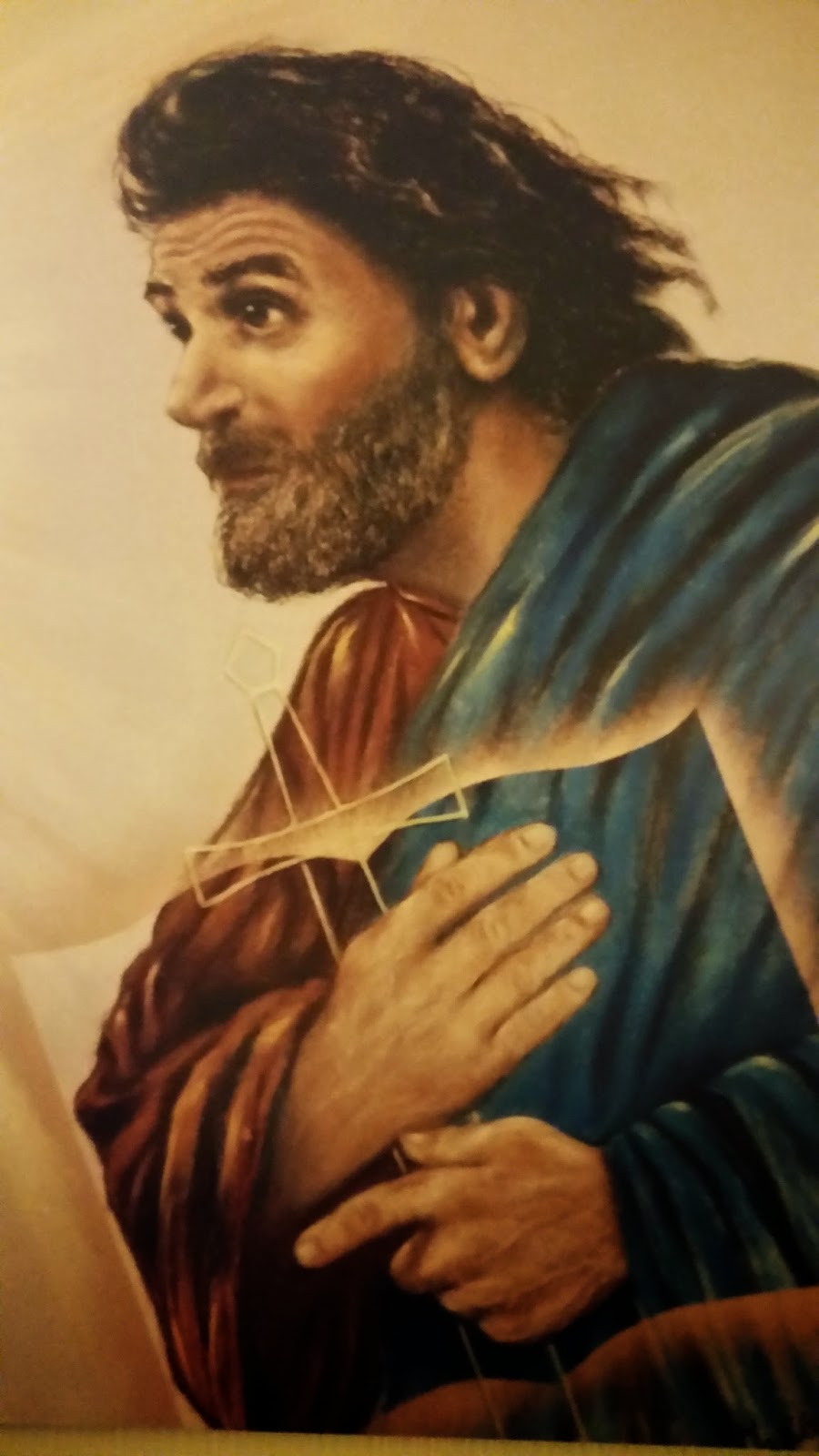
“St. Paul Evangelizing” by Sr. Elena Alvarez, PDDM (All Rights Reserved)
“Paul describes the work of the gospel in terms of the divine ‘word,’ referring to the powerful divine activity both in bringing people to faith and in transforming their lives” (N.T. Wright).
Each year our Pauline community sings a novena to St. Paul from January 16th to the 25th, honoring his transformation in Christ and praying for our own ongoing conversion.
Saul, persecutor of the Christian Church began calling himself Paul, a servant of Christ Jesus, after his conversion. Born and raised in the city of Tarsus (Acts 21.39), a crossroads of the world, a great trade center on the Mediterranean, and a university town filled with young scholars and philosophers, Saul was a devout Jew (Phil. 3:5). He traveled to Jerusalem for his religious studies. As a Pharisee (Acts 23:6; 26:5; Phil. 3:5) his life’s dream was to “sit at the feet of Gamaliel” (Acts 22:3) the most distinguished and revered living rabbi in his time.
This started Paul on the road to conversion. He alludes to it in Gal. 1:15-16: “When he who had set me apart before I was born, and had called me through his grace….” At one point in his life, Saul resisted ongoing conversion. He became fundamentalist in his approach to followers of the Way of Jesus. He participated in the stoning of Stephen (Acts 7:59) and persecuted the Church: “entering into every house, and hauling men and women out, committing them to prison” (Acts 8:3). Even though Gamaliel taught him that God is the One who judges, Saul thought he alone heard the voice of God.
Paul attributes his striking religious conversion on the road to Damascus to God: “By the grace of God I am what I am” (1 Cor. 15:10; Eph. 2:8). Religious conversion always results from a divine intervention. His initial conversion (Acts 9) sowed the seeds of his “continual conversion.” Paul became attentive to the need for conversion in every area of his life testifying that “the grace he has given me had not been without result” (1 Cor. 15:10).
The Word of God is also alive and active for our continual conversion. One of the key terms Paul uses is the Greek word energeō, “to be at work.” The Word, he says, is “at work” in you. N. T. Wright tells us that Paul “speaks of the powerful divine word as a transforming energy which, though unleashed through his own announcement of the Gospel, is much greater than the sum of his own words or his rhetorical skill. ‘We know,’ he says, ‘that God has chosen you, because our gospel did not come to you in word only, but in power, and in the Holy Spirit, and in full conviction’ (1:4-5).” In 1 Th 2:13 Paul develops the theme further. We always thank God, he says, “that when you received the word which you heard from us you received it, not as the word of human beings, but as what it really is, the word of God which is at work in you believers.”
As testimony to this, we have written on the walls of all our Pauline chapels the words, “live in continual conversion,” sometimes translated “be sorry for sin.” Actually, the original Latin “Cors poenitens tenete” means “live with a penitent heart.” The exhortation to live in continual conversion is a core charismatic principle and belief of Pauline Christian living. This exhortation does not place emphasis on our efforts to avoid sin and live in conversion as it seems to do, but as a kind of covenant, or agreement between Jesus Christ and us. Our founder, Blessed Alberione received these words through revelation in a time of particular difficulty: “While examining all of his actions anew to see if there were impediments to the work of grace on his part, it seemed that the Divine Master wanted to assure the Institute, launched just a few years earlier…. In truth Jesus Master was saying: ‘Do not be afraid; I am with you; from here (pointing to the tabernacle with great emphasis) I want to enlighten. Live with a penitent heart’ (Abundantes divitiae gratiae suae: 151-152).”
So that the grace given us will not be without result, Alberione wrote, “[T]he secret of success is to model oneself on God by living in the Church and for the Church; of being wild olives grafted onto the olive tree, the Eucharistic Lord; of reflecting and nourishing oneself with every Word of the Gospel, in accord with the spirit of St. Paul” (Abundantes divitiae gratiae suae: 94-95). His prayer, “Jesus, live in our mind, will and heart, that we live in faith…unite us to you, incarnated sanctity, in whom is the divine life” (Until Christ Be Formed in You: 60) is one of trust that God’s Word and Eucharist, at work in us, transforms us into Christ (Gal. 2:20).
_________
Following is a suggested, 30-minute method for entering prayerfully into Paul’s experience and allowing him to make it our own:
Lectio Divina 1 Corinthians 15:10
Lectio (Truth) Read 1 Corinthians 15:10, in which Paul presents us with a synopsis of his conversion and his correspondence to this grace. Pay careful attention to your inner response.
Meditatio (Way) Meditate on how St. Paul has captured the eternal struggle that we all go through in our call to conversion. “I do not do what I want, but I do the very thing that I hate.” “Who will deliver me from this body of death? Thanks be to God through Jesus Christ our Lord!” (Romans 7:15; 24-25). Blessed Alberione tells us of himself, “Here is a half-blind man, who is being led; and in moving along he is enlightened from time to time, so that he can proceed further: God is the light” (AD, 202).
Contemplatio (Life) Contemplate in the light of this passage. Christ’s redemptive death inaugurates the new creation: “By new creation, Paul means that God in Christ has created humanity anew, giving it newness of life” (Romans 6:4), a life in union with the risen Christ, “Christ lives in me” (Galatians 2:20), a life destined to share in the glory of God. After encountering the risen Christ on the road to Damascus Paul uses the expression “to be,” or “to live in” Christ 164 times. Through baptism the resurrected, glorified Christ truly dwells within us (Galatians 2:20). Through the Holy Spirit, Christ brings about our ongoing conversion that we might live in him (Colossians 3:10).
Actio (Live) Act on God’s invitation. Paul admitted that he was still on the road to conversion: “I do not consider that I have made it my own, I strain forward to what lies ahead, pressing on toward the goal for the prize of the upward call of God in Christ Jesus” (Philippians 3:14).
Oratio (Pray) Live in us, Jesus, with the outpouring of the Holy Spirit, so that we may love you with our whole heart, love you with our whole mind, love you with our whole will, and love our neighbor as ourselves. Make us faithful witnesses to your Word. May your grace in us be fruitful! (Cf. Blessed James Alberione)
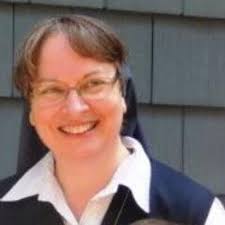 Sr. Margaret Kerry, FSP celebrates 40 years of life and mission as a Daughter of St. Paul. With a Masters from Boston College School of Theology & Ministry, she gives presentations on the vocation and mission of the laity, media literacy, and evangelization. She directed the Association of Pauline Cooperators for 15 years and was creative editor of The Pauline Cooperator magazine.An author (St. Anthony of Padua: Fire & Light; Strength in Darkness: John of the Cross), Sr. Margaret is working on a young adult book.
This article originally appeared on the Association of Pauline Cooperators‘ blog. Pauline Cooperators is a public Catholic Association of the Laity born of the prophetic intuition of Blessed James Alberione in 1917. They live in communion with members of the Pauline Family employing prayer, gifts and talents in order to grow in sanctity and to evangelize in today’s communication culture.
Previous Post

January 28, 2015
Can One Calculate Grace Missed?
Next Post
February 9, 2015 Oscar Romero and Hatred of the Faith
Browse Our Archives
Select a Category Advent Art Atheism Book Reviews Christmas Church Issues Discernment Easter Ecumenism Entertainment Environment Eucharist Evangelization Family Freebies Guest Post Holy Spirit Inspire Me Interreligious Dialogue Jesus Lectio Divina Lent Life Issues Liturgical Season Mary Media MISC Movie Reviews Pauline Pope Francis Prayer Prayer Intention Religious Life Saints Sanctity Scripture Social Justice Social Teaching St. Paul Theology of the Body Uncategorized US News Vocations World News Writing Year of Mercy
Select a Month September 2016 June 2016 May 2016 April 2016 March 2016 February 2016 January 2016 December 2015 November 2015 October 2015 September 2015 August 2015 July 2015 June 2015 May 2015 April 2015 March 2015 February 2015 January 2015 December 2014 November 2014 October 2014 September 2014 August 2014 July 2014 June 2014 May 2014 April 2014 March 2014 February 2014 January 2014 December 2013 November 2013 October 2013 September 2013 July 2013 June 2013 May 2013 April 2013 March 2013 February 2013 January 2013 December 2012 November 2012 October 2012 September 2012 August 2012 July 2012 June 2012 May 2012 April 2012 March 2012 February 2012 January 2012 December 2011 November 2011 October 2011 September 2011 August 2011 July 2011 June 2011 April 2011 March 2011 February 2011 January 2011 December 2010 November 2010 October 2010 September 2010 August 2010
Follow Us!
TAKE THE
Religious Wisdom Quiz
How did Judas signal who Jesus was to the soldiers?
Select your answer to see how you score.
With a kiss By handing Him bread By pointing By shouting
Related posts from Pursued by Truth

WATCH: Sr. Maria Kim's Vocation Story

How to Read Amoris Laetitia without Assumptions, Cynicism,...
Archbishop of Damascus: 4 Greatest Challenges to Christians...
5 Quick Thoughts on Pope Francis' Amoris Laetitia
TRENDING AT PATHEOS Catholic

Rejecting Doom: Christian Hope And Human Action
Christianity is a religion of hope. We are to have hope and...

It’s What Comes From Within Which Matters
One of the most difficult things for us to understand is why...

Why I Choose the Eucharist Over the Sermon
Choose the Eucharist, Not the Sermon What are we supposed to get...

5 Design Elements Found in Spiritually Rooted Homes
Putting Spirituality Into Home Decor Our homes are more than our living...

Credo: A Story of God Told with the...
About 10 years ago, I began to imagine a personal "Credo" that...

The Anatomy of Divine Revelation in Catholic Thought
The claim that God has made Himself known to human beings is...
view all Catholic blogs
Ad-Free & Subscriber Log-In Subscription Support
- About Us
- 2026 Calendar
- Videos
- Podcasts
- Library of World Religions
- Faith In Media Tracker
- Advertise With Us
- Write for Us
- Privacy Policy
- Terms of Service
- Do Not Sell My Data
- Contact Us
- Radiant Digital
- Manage Newsletter Subscriptions
- Unsubscribe From Notifications
- Sitemap
Copyright 2008-2026, Patheos. All rights reserved.
Subscription Support Ad-Free & Subscriber Log-In
Follow Patheos