
BuddhistCatholicContemplativeEvangelicalGeneral ChristianHinduJewishLatter-day SaintMuslimNew VisionsProgressive Christian
Beliefs
- Buddhist
- Catholic
- Contemplative
- Evangelical
- General Christian
- Hindu
- Jewish
- Latter-day Saint
- More Voices
- Muslim
- New Visions
- Pagan
- Progressive Christian
Topics
- Religion News
- Food and Religion
- Sports and Religion
- Religious Art
- Religious Music and Entertainment
- Religious Events
- History and Religion
- Style and Religion
- Politics and Religion
- Women in Religion
- Recreation Outdoors and Religion
- Business Finance and Religion
- Careers Workplace and Religion
- Education and Religion
- Family Parenting and Religion
- Health Fitness and Religion
- Home and Religion
- Relationships and Religion
- Technology and Religion
- Travel and Religion
Columnists
- Buddhist Columnists
- Business Finance and Religion Columnists
- Careers Workplace and Religion Columnists
- Catholic Columnists
- Contemplative Columnists
- Education and Religion Columnists
- Evangelists Columnists
- Family Parenting and Religion Columnists
- General Christian Columnists
- Health Fitness and Religion Columnists
- Hindu Columnists
- History and Religion Columnists
- Home and Religion Columnists
- Jewish Columnists
- More Voices Columnists
- Latter Day Columnists
- Muslim Columnists
- New Visions Columnists
- Nonreligious Columnists
- Pagan Columnists
- Politics and Religion Columnists
- Progressive Columnists
- Recreation Outdoors and Religion Columnists
- Relationships and Religion Columnists
- Religion News Columnists
- Religious Art Columnists
- Religious Events Columnists
- Religious Music and Entertainment Columnists
- Sports and Religion Columnists
- Style and Religion Columnists
- Technology and Religion Columnists
- Travel and Religion Columnists
- Women in Religion Columnists
Resource Library
- 2026 Calendar
- Library of World Religions
- The 100 Most Holy Places on Earth
- Patheos Answers
- Podcasts
- Videos
- Faith Leaders Database
- Anglican Episcopalian
- Bahai
- Baptist
- Buddhism
- Christianity
- Confucianism
- Eastern Orthodoxy
- Hinduism
- Holiness and Pentecostal
- ISKCON
- Islam
- Judaism
- Lutheran
- Methodist
- The Church of Jesus Christ of Latter-day Saints
- New Age
- Paganism
- Presbytarian and Reformed
- Protestantism
- Religion Behind the Scenes
- Roman Catholic
- Scientology
- Shia Islam
- Sikhism
- Sufism
- Sunni Islam
- Taoism
- Zen
- See all religions
Research Tools
 Ad-Free & Subscriber Log-In Subscription Support
Ad-Free & Subscriber Log-In Subscription Support
Follow Patheos 

- Trending:
- Forgiveness
- |
- Marriage
- |
- Consciousness
- |
- Death Penalty
- |
- Election
- |
- Halloween
 Pursued by Truth
- Home
- Catholic
- Give Us This Day Our Daily Rice?
Give Us This Day Our Daily Rice?
Last updated on: February 29, 2012 at 12:47 pm by Sr. Theresa Aletheia Noble
Give Us This Day Our Daily Rice? 2012-02-29T12:47:00-04:00 Sr. Theresa Aletheia Noble
Patheos Explore the world's faith through different perspectives on religion and spirituality! Patheos has the views of the prevalent religions and spiritualities of the world.
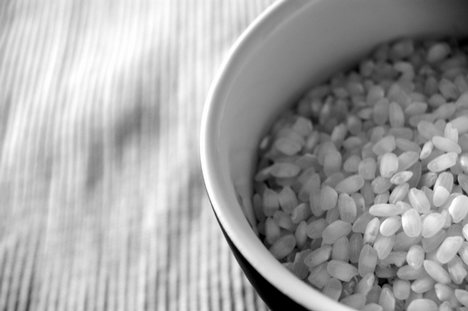 Just not the same as bread…
“Three types of bread are to be asked from the Lord when using the formula, ‘Give us our daily bread,’ that is the word of God, the Eucharistic bread, and bread for the body.” – Blessed James Alberione
Every morning, the sisters in my convent meditate on the day’s Gospel for a half hour before morning prayer. Recently, I was sitting in chapel meditating on the Lord’s Prayer. I was specifically meditating on the best word in the entire prayer – BREAD.
Those of you who know me, are probably not surprised that this is my favorite word in the prayer. I am a bit obsessed with baking bread. There is something so elemental about it. Aside from baking bread and building tree houses, I don’t think there is much more one needs to know to survive in this world, (so I just have one more skill to learn). But then as my mind wandered into the delicious taste of freshly baked bread smothered in butter, a mind blowing, earth shaking thought, (for a bread lover like me), suddenly came to my mind.
If Jesus had been teaching in China, he probably would have said, “Give us this day our daily RICE.”
Ok, I know I am losing some people here, (at least the normal ones). But, honestly it’s when I have strange, off the wall thoughts like this that my meditations get good. And really, it is true. Some cultures do not eat much bread. I imagine a person who evangelizes in some parts of Asia has to explain this one to confused people who are obsessed with rice, much like I am obsessed with bread.
Before you wonder why I waste time on tangents like this in prayer, I will point out that thinking about the cultural limitations of the word “bread” led me to ponder why Jesus used that earthy word to describe our needs, both physical and spiritual.
For most cultures, bread is a staple. It’s as basic as you can get. It is what we need to survive.
So what is this bread Jesus tells us to ask for?
Catholics immediately point to the Eucharist. It is our daily bread (or rice, depending on where you live). Literally. It appears to be bread, but it is really God. (How crazy is that?)
But there is another dimension to the use of the word bread that only recently became clear to me. Now, maybe I am a little slow or just too Catholic, but I always thought of the Eucharist as my “daily bread” and had not, until recently, thought of the Word of God when I prayed that part of the Our Father. That is so embarrassing to admit and Protestants reading this are probably saying, “What?!? What is wrong with those Catholics?” but I just have to be honest (and reaffirm age-old stereotypes).
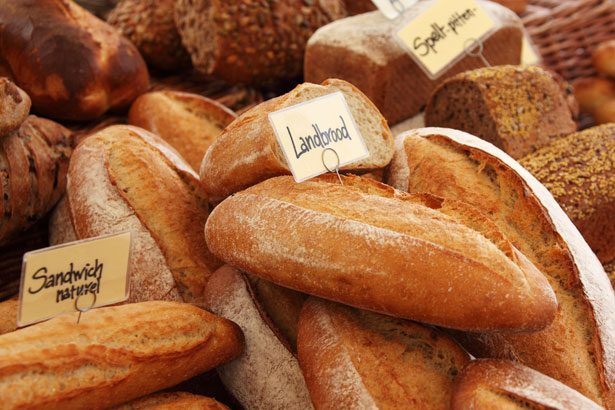 Oh bread, I love you more than life itself.
Now, as I am taking a class on the Old Testament, I am realizing why I had this blind spot. I did not appreciate the presence of God in Scripture as I did in the Eucharist because my knowledge and understanding of Scripture, especially the Old Testament, was woefully inadequate. As I read Scripture now, and really look at how Jesus speaks, I realize that Scripture was Jesus’ daily bread. This was a man who lived and breathed the words of the Scriptures. He is constantly quoting them, referring to Old Testament prophecies and insisting on the necessity of their fulfillment. His entire life revolved around the Word of God, (which should come as no surprise because He is the Word of God incarnate). He is the living, breathing walking Scripture. And this is why the Catechism of the Catholic Church urges us to venerate Scripture as we venerate the Eucharist.
There are many great works of literature out there but only one is written by God. You could take a class on Scripture for the rest of your life and never plumb the treasures that are available in the Word, just as none of us will ever plumb the depths of the mystery of God Himself.
Jesus wants us to munch on his Word everyday, in more ways than one. He gives us the Eucharist so that we can be spiritually nourished in a way that involves our entire bodies and he gives us the Word that nourishes both our minds and hearts with its many layers of meaning, mysteries and puzzles. (And he gives us delicious bread to fill our tummies and keep us physically well, which is necessary for spiritual wellness!)
This Lent dear Jesus, please give us our daily bread. Help us to read your Scripture with the same voracious appetite we have when scarfing down a good piece of bread. Your Word is the stuff that will satisfy us. You are the person who satiates our every need. Please be with us this Lent in your Word and in your Eucharist and bring us closer to your divine life. Amen.
Previous Post

February 1, 2012
Jesus is NOT a Marshmallow Treat!
Next Post
March 12, 2012 This Lent, Leave Your Water Jar Behind
Browse Our Archives
Select a Category Advent Art Atheism Book Reviews Christmas Church Issues Discernment Easter Ecumenism Entertainment Environment Eucharist Evangelization Family Freebies Guest Post Holy Spirit Inspire Me Interreligious Dialogue Jesus Lectio Divina Lent Life Issues Liturgical Season Mary Media MISC Movie Reviews Pauline Pope Francis Prayer Prayer Intention Religious Life Saints Sanctity Scripture Social Justice Social Teaching St. Paul Theology of the Body Uncategorized US News Vocations World News Writing Year of Mercy
Select a Month September 2016 June 2016 May 2016 April 2016 March 2016 February 2016 January 2016 December 2015 November 2015 October 2015 September 2015 August 2015 July 2015 June 2015 May 2015 April 2015 March 2015 February 2015 January 2015 December 2014 November 2014 October 2014 September 2014 August 2014 July 2014 June 2014 May 2014 April 2014 March 2014 February 2014 January 2014 December 2013 November 2013 October 2013 September 2013 July 2013 June 2013 May 2013 April 2013 March 2013 February 2013 January 2013 December 2012 November 2012 October 2012 September 2012 August 2012 July 2012 June 2012 May 2012 April 2012 March 2012 February 2012 January 2012 December 2011 November 2011 October 2011 September 2011 August 2011 July 2011 June 2011 April 2011 March 2011 February 2011 January 2011 December 2010 November 2010 October 2010 September 2010 August 2010
Follow Us!
TAKE THE
Religious Wisdom Quiz
How many plagues did God inflict upon Egypt?
Select your answer to see how you score.
21 14 10 7
Related posts from Pursued by Truth

NEW Syrian Archbishop's Letter: Will We Become the...

Death and Social Security Fraud: Celebrating Mother Teresa

WATCH: Sr. Maria Kim's Vocation Story
How God Hauled Me Kicking and Screaming Into...
TRENDING AT PATHEOS Catholic

Rejecting Doom: Christian Hope And Human Action
Christianity is a religion of hope. We are to have hope and...

It’s What Comes From Within Which Matters
One of the most difficult things for us to understand is why...

Why I Choose the Eucharist Over the Sermon
Choose the Eucharist, Not the Sermon What are we supposed to get...

5 Design Elements Found in Spiritually Rooted Homes
Putting Spirituality Into Home Decor Our homes are more than our living...

Credo: A Story of God Told with the...
About 10 years ago, I began to imagine a personal "Credo" that...

The Anatomy of Divine Revelation in Catholic Thought
The claim that God has made Himself known to human beings is...
view all Catholic blogs
Ad-Free & Subscriber Log-In Subscription Support
- About Us
- 2026 Calendar
- Videos
- Podcasts
- Library of World Religions
- Faith In Media Tracker
- Advertise With Us
- Write for Us
- Privacy Policy
- Terms of Service
- Do Not Sell My Data
- Contact Us
- Radiant Digital
- Manage Newsletter Subscriptions
- Unsubscribe From Notifications
- Sitemap
Copyright 2008-2026, Patheos. All rights reserved.
Subscription Support Ad-Free & Subscriber Log-In
Follow Patheos