
BuddhistCatholicContemplativeEvangelicalGeneral ChristianHinduJewishLatter-day SaintMuslimNew VisionsProgressive Christian
Beliefs
- Buddhist
- Catholic
- Contemplative
- Evangelical
- General Christian
- Hindu
- Jewish
- Latter-day Saint
- More Voices
- Muslim
- New Visions
- Pagan
- Progressive Christian
Topics
- Religion News
- Food and Religion
- Sports and Religion
- Religious Art
- Religious Music and Entertainment
- Religious Events
- History and Religion
- Style and Religion
- Politics and Religion
- Women in Religion
- Recreation Outdoors and Religion
- Business Finance and Religion
- Careers Workplace and Religion
- Education and Religion
- Family Parenting and Religion
- Health Fitness and Religion
- Home and Religion
- Relationships and Religion
- Technology and Religion
- Travel and Religion
Columnists
- Buddhist Columnists
- Business Finance and Religion Columnists
- Careers Workplace and Religion Columnists
- Catholic Columnists
- Contemplative Columnists
- Education and Religion Columnists
- Evangelists Columnists
- Family Parenting and Religion Columnists
- General Christian Columnists
- Health Fitness and Religion Columnists
- Hindu Columnists
- History and Religion Columnists
- Home and Religion Columnists
- Jewish Columnists
- More Voices Columnists
- Latter Day Columnists
- Muslim Columnists
- New Visions Columnists
- Nonreligious Columnists
- Pagan Columnists
- Politics and Religion Columnists
- Progressive Columnists
- Recreation Outdoors and Religion Columnists
- Relationships and Religion Columnists
- Religion News Columnists
- Religious Art Columnists
- Religious Events Columnists
- Religious Music and Entertainment Columnists
- Sports and Religion Columnists
- Style and Religion Columnists
- Technology and Religion Columnists
- Travel and Religion Columnists
- Women in Religion Columnists
Resource Library
- 2026 Calendar
- Library of World Religions
- The 100 Most Holy Places on Earth
- Patheos Answers
- Podcasts
- Videos
- Faith Leaders Database
- Anglican Episcopalian
- Bahai
- Baptist
- Buddhism
- Christianity
- Confucianism
- Eastern Orthodoxy
- Hinduism
- Holiness and Pentecostal
- ISKCON
- Islam
- Judaism
- Lutheran
- Methodist
- The Church of Jesus Christ of Latter-day Saints
- New Age
- Paganism
- Presbytarian and Reformed
- Protestantism
- Religion Behind the Scenes
- Roman Catholic
- Scientology
- Shia Islam
- Sikhism
- Sufism
- Sunni Islam
- Taoism
- Zen
- See all religions
Research Tools
 Ad-Free & Subscriber Log-In Subscription Support
Ad-Free & Subscriber Log-In Subscription Support
Follow Patheos 

- Trending:
- Forgiveness
- |
- Marriage
- |
- Consciousness
- |
- Death Penalty
- |
- Election
- |
- Halloween
 Pursued by Truth
- Home
- Catholic
- Triduum Meditation
Triduum Meditation
Last updated on: January 11, 2015 at 6:28 pm by Sr. Theresa Aletheia Noble
Triduum Meditation 2015-01-11T18:28:52-04:00 Sr. Theresa Aletheia Noble
Patheos Explore the world's faith through different perspectives on religion and spirituality! Patheos has the views of the prevalent religions and spiritualities of the world.

Dead Christ by Albrecht Dürer (Public Domain)
They gave him wine to drink mixed with gall, which he tasted but refused to drink. – Matthew 27:34
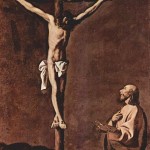
When Jesus died on the cross, he gave everything he had and suffered all that he could suffer, he did not even accept wine to dull the pain. Jesus was like a mother giving birth to salvation without an epidural. He did not die on the cross like a smiling Buddha or an ecstatic martyr. He denied himself his own grace of a peaceful death because he knew the deeper he went into the emptiness – the closer he brought divinity to the evil he was to overcome – the greater the flow of grace would be.
When Jesus says, “My God, my God why have you forsaken me?” he is not telling us like a grey-haired professor to refer to Psalm 22 to interpret his passion – he is referring us to the Psalm, yes, but the desolation he feels is real. The separation he feels from the Father is as real as the evil that crushes in on him. The cry of his heart is a cry that helps us to see that there is truly no pain that we feel in this life that he does not understand – even the felt abandonment of God.
Jesus died this way, suffering so much, because he could not do it any other way. In the way Jesus dies, he teaches us about himself, about Love.
Love does not love because he will receive something in return. Love does not love just enough to do the job and then hold back. Love does not love until it is too hard or too ugly to love. Love loves with everything he has, he empties himself until there is nothing left to give. Love dies for those he loves, whether it is one person or one million – the number does not change the sacrifice. I believe Jesus would have died in exactly the same way, feeling the same pain, if it had just been for you. Love cannot scale down or back away. Love does not avoid any sacrifice for his beloved – Love knows that experiencing pain is the only passageway to giving new life.
In dying on the cross Jesus opened the doors to heaven for us. The way he died shows us how to follow him to true joy on earth and ultimately to heaven. If there were another way, Jesus would have shown us. We must die to ourselves to follow our Savior. We must empty ourselves in love until the emptiness overwhelms us. We must experience the silence and despair of the tomb to experience the resurrection.
Do we think we can avoid the cross of suffering to find resurrection joy? Jesus did not, and he asks us to come and follow him.
I will follow you Jesus, wherever you ask me to, because I know that it will lead to my own joyous resurrection.
Previous Post
April 17, 2011
Save Me from Mediocrity
Next Post

April 25, 2011 Falling Stars of Joy
Browse Our Archives
Select a Category Advent Art Atheism Book Reviews Christmas Church Issues Discernment Easter Ecumenism Entertainment Environment Eucharist Evangelization Family Freebies Guest Post Holy Spirit Inspire Me Interreligious Dialogue Jesus Lectio Divina Lent Life Issues Liturgical Season Mary Media MISC Movie Reviews Pauline Pope Francis Prayer Prayer Intention Religious Life Saints Sanctity Scripture Social Justice Social Teaching St. Paul Theology of the Body Uncategorized US News Vocations World News Writing Year of Mercy
Select a Month September 2016 June 2016 May 2016 April 2016 March 2016 February 2016 January 2016 December 2015 November 2015 October 2015 September 2015 August 2015 July 2015 June 2015 May 2015 April 2015 March 2015 February 2015 January 2015 December 2014 November 2014 October 2014 September 2014 August 2014 July 2014 June 2014 May 2014 April 2014 March 2014 February 2014 January 2014 December 2013 November 2013 October 2013 September 2013 July 2013 June 2013 May 2013 April 2013 March 2013 February 2013 January 2013 December 2012 November 2012 October 2012 September 2012 August 2012 July 2012 June 2012 May 2012 April 2012 March 2012 February 2012 January 2012 December 2011 November 2011 October 2011 September 2011 August 2011 July 2011 June 2011 April 2011 March 2011 February 2011 January 2011 December 2010 November 2010 October 2010 September 2010 August 2010
Follow Us!
TAKE THE
Religious Wisdom Quiz
What was the most common staple grain in ancient Israel?
Select your answer to see how you score.
Oats Barley Rice Wheat
Related posts from Pursued by Truth

NEW Syrian Archbishop's Letter: Will We Become the...

Death and Social Security Fraud: Celebrating Mother Teresa

WATCH: Sr. Maria Kim's Vocation Story

How God Hauled Me Kicking and Screaming Into...
TRENDING AT PATHEOS Catholic

Rejecting Doom: Christian Hope And Human Action
Christianity is a religion of hope. We are to have hope and...

It’s What Comes From Within Which Matters
One of the most difficult things for us to understand is why...

Why I Choose the Eucharist Over the Sermon
Choose the Eucharist, Not the Sermon What are we supposed to get...

5 Design Elements Found in Spiritually Rooted Homes
Putting Spirituality Into Home Decor Our homes are more than our living...

Credo: A Story of God Told with the...
About 10 years ago, I began to imagine a personal "Credo" that...

The Anatomy of Divine Revelation in Catholic Thought
The claim that God has made Himself known to human beings is...
view all Catholic blogs
Ad-Free & Subscriber Log-In Subscription Support
- About Us
- 2026 Calendar
- Videos
- Podcasts
- Library of World Religions
- Faith In Media Tracker
- Advertise With Us
- Write for Us
- Privacy Policy
- Terms of Service
- Do Not Sell My Data
- Contact Us
- Radiant Digital
- Manage Newsletter Subscriptions
- Unsubscribe From Notifications
- Sitemap
Copyright 2008-2026, Patheos. All rights reserved.
Subscription Support Ad-Free & Subscriber Log-In
Follow Patheos