
BuddhistCatholicContemplativeEvangelicalGeneral ChristianHinduJewishLatter-day SaintMuslimNew VisionsProgressive Christian
Beliefs
- Buddhist
- Catholic
- Contemplative
- Evangelical
- General Christian
- Hindu
- Jewish
- Latter-day Saint
- More Voices
- Muslim
- New Visions
- Pagan
- Progressive Christian
Topics
- Religion News
- Food and Religion
- Sports and Religion
- Religious Art
- Religious Music and Entertainment
- Religious Events
- History and Religion
- Style and Religion
- Politics and Religion
- Women in Religion
- Recreation Outdoors and Religion
- Business Finance and Religion
- Careers Workplace and Religion
- Education and Religion
- Family Parenting and Religion
- Health Fitness and Religion
- Home and Religion
- Relationships and Religion
- Technology and Religion
- Travel and Religion
Columnists
- Buddhist Columnists
- Business Finance and Religion Columnists
- Careers Workplace and Religion Columnists
- Catholic Columnists
- Contemplative Columnists
- Education and Religion Columnists
- Evangelists Columnists
- Family Parenting and Religion Columnists
- General Christian Columnists
- Health Fitness and Religion Columnists
- Hindu Columnists
- History and Religion Columnists
- Home and Religion Columnists
- Jewish Columnists
- More Voices Columnists
- Latter Day Columnists
- Muslim Columnists
- New Visions Columnists
- Nonreligious Columnists
- Pagan Columnists
- Politics and Religion Columnists
- Progressive Columnists
- Recreation Outdoors and Religion Columnists
- Relationships and Religion Columnists
- Religion News Columnists
- Religious Art Columnists
- Religious Events Columnists
- Religious Music and Entertainment Columnists
- Sports and Religion Columnists
- Style and Religion Columnists
- Technology and Religion Columnists
- Travel and Religion Columnists
- Women in Religion Columnists
Resource Library
- 2026 Calendar
- Library of World Religions
- The 100 Most Holy Places on Earth
- Patheos Answers
- Podcasts
- Videos
- Faith Leaders Database
- Anglican Episcopalian
- Bahai
- Baptist
- Buddhism
- Christianity
- Confucianism
- Eastern Orthodoxy
- Hinduism
- Holiness and Pentecostal
- ISKCON
- Islam
- Judaism
- Lutheran
- Methodist
- The Church of Jesus Christ of Latter-day Saints
- New Age
- Paganism
- Presbytarian and Reformed
- Protestantism
- Religion Behind the Scenes
- Roman Catholic
- Scientology
- Shia Islam
- Sikhism
- Sufism
- Sunni Islam
- Taoism
- Zen
- See all religions
Research Tools
 Ad-Free & Subscriber Log-In Subscription Support
Follow Patheos 

- Trending:
- Advent
- |
- Forgiveness
- |
- Thanksgiving
- |
- Election
- |
- Seasonal Holidays
- |
- Marriage

- Home
- Progressive Christian
- Politics and Religion
- The Cosmic Common Good
The Cosmic Common Good
Last updated on: May 14, 2025 at 3:35 pm by Ted Peters
The Cosmic Common Good 2025-05-14T15:35:55-07:00 Ted Peters
Patheos Explore the world's faith through different perspectives on religion and spirituality! Patheos has the views of the prevalent religions and spiritualities of the world.
The Cosmic Common Good
 A cosmic common good? Really? Isn’t a global common good good enough? After all, our ethicists are working night ‘n’ day to persuade earthlings to think holistically about the sustainability of the ecosphere! This is no mean task.
The Cosmic Common Good of Daniel Sheid
So we ask: isn’t a global common good big enough? Why consider a cosmic common good that includes the entire cosmos?

Daniel Sheid on Cosmic Common Good
Let’s ask Daniel P. Sheid. Professor Sheid teaches theology and ethics at Duquesne University. He’s written a book we should take note of: The Cosmic Common Good: Religious Grounds for Ecological Ethics. By “religious,” Sheid intends to construct an “interreligious cosmic common good” (Sheid 2015, xiii, 180).
We Homo sapiens share our planet with nonhuman realities. And we should appreciate this more than we do. We should conceive of the common good as including both the human and the extra-human. Sheid enjoins us to construct “a worldview that experiences the nonhuman or more than human world as the fullest setting for human life, and experiences the vitiation of the nonhuman world as a loss for the greater community of which we are a part” (Sheid 2015, xiv). We need to construct a non-anthropocentric worldview that sees humanity as part of a larger whole. Religious practices in various traditions should all aim at the one cosmic common good. Here on Earth, the common good includes the entire human race, to be sure. But it also includes whales, robins, and roses.
Curiously, Sheid shows reluctance to embrace a cosmic common good that we earthlings might share in common with off-Earth biospheres. Rather than ask about the welfare of space neighbors on exoplanets we have yet to meet, Sheid “exhorts us” on Earth to…
“…sink our roots deeper into our native place and to work for the good of our place on Earth. The cosmic common good enjoins us to adopt and intensify the many Earth-oriented personal daily choices and movements for structural change with which we are already familiar, for example reducing consumption and energy use, eating less or no meat, minimizing our dependence on automobiles, enforcing standards to reduce carbon in the atmosphere to below 350 parts per million” (Sheid 2015, 181).
The Cosmic Common Good of John Hart

John Hart on Cosmic Common Good
For John Hart, an emeritus professor of theology at Boston University, the cosmic common good actually includes the entire cosmos. Hart is concerned that we on Earth think about the welfare of any neighbors we might meet in outer space. In 2010, Hart introduced the term, cosmic commons (Hart, Cosmic Commons: Contact and Community 2010). In 2020, Hart told us that we approach the cosmic commons with socioecological praxis ethics.
“Socioecological praxis ethics, in brief, is the integration of social justice within and among human communities, with the wellbeing of Earth and all living beings….In a universe or multiverse context, it becomes cosmosociological praxis ethics” (Hart, Third Displacement: Cosmobiology, Cosmolocality, and Cosmoecology 2020, 8n).
But more than Earth is included in Hart’s cosmic common good. So also is microbial life and even intelligent life living on an exoplanet.
“Cosmosocioecological praxis ethics might be extended now to cosmos contexts: at first as a working hypothesis, but then to be used in context upon discovery of ExoEarth microbial life, evolving life, or intelligent life” (Hart, Third Displacement: Cosmobiology, Cosmolocality, and Cosmoecology 2020, 205).
Cosmoethics, says Hart, “goes beyond-literally-astroethics” because cosmoethics takes account of off-Earth dimensions not yet encountered” (Hart, Third Displacement: Cosmobiology, Cosmolocality, and Cosmoecology 2020, 17, 236).
Now, you might object to Hart. As long as we do not know about extraterrestrial life and have no interaction, then we are not morally responsible for ET’s welfare. Because we share a biosphere on Earth with whales, robins, and roses, we can reasonably understand terrestrial ecological ethics. But not extraterrestrial ethics.
The Cosmic Common Good within an Extraterrestrial Worldview
A geocentric worldview went out with Copernicus. We now know too much about our universe. We can now discern a connectedness between Earth and what lies beyond Earth. For example, the sun pumps energy into our planet’s ecosphere twenty-four hours per day. Because of reverse entropy, this ever-increasing energy input accounts not just for survival but also our creativity and evolutionary advance. We terrestrials are as dependent on the extraterrestrial sun as we are on oxygen and rain clouds.
We on Earth are not dependent on plants or animals living on K2-18b 124 light years away. Yet, we share a cosmos with them. Might there come a day when we terrestrials will also share moral responsibilities with them? With this possibility in mind, we need now to construct a worldview with a genuinely cosmic common good in mind.
Conclusion
In a previous Patheos post, “Public Theology for the Common Good,” I began worldview construction on a foundational definition: public theology is conceived in the church, critically refined in the academy, and offered to the wider culture for the sake of the common good (Peters, The Voice of Public Theology 2023, 3). Discourse clarification and worldview construction provide the building tools. I reiterated that public theology is not a disguised form of evangelization or an attempt to usurp the public square for religious influence. Rather, public theology lifts up sound reasons for every person of good will to embrace a global common good.
In this post I have asked: how should we reason soundly about the cosmic common good? I compared Daniel Sheid with John Hart. Sheid is right in seeking common ground among the world’s religions for constructing an ecological ethic based upon the cosmic common good. Hart would agree. But Hart would spread the scope of the cosmic common good to include friends we have yet to meet on K2-18b along with any other extraterrestrials who share our universe with us.
Elsewhere I’ve recommended that we prepare in advance invitations to be issued to our expected space neighbors to attend a covered dish potluck in our church basement.
Patheos PT 3018 The Cosmic Common Good
Patheos PT 3001 Eco-Theology when it’s “Time to Act”
Patheos PT 3002 The Science-As-Savior Eco-Myth
Patheos PT 3003 Public Theology for the Common Good
Patheos PT 3011 Politics vs Common Good Governing Part One
Patheos PT 3012 Economism vs Common Good Part Two
Patheos PT 3013 Economism vs Common Good Part Three
Patheos PT 3014 Economism vs Common Good Part Four
Patheos PT 3015 Just, Sustainable, Participatory, and Planetary. Common Good Part Five
Patheos PT 3016 Moltmann, Muslims and Al-Mizan: Common Good Part Six
Patheos PT 3017 Climate Change and the Global Common Good
Patheos PT 3018 The Cosmic Common Good
▓

Ted Peters
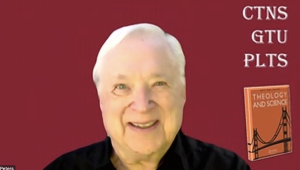
Ted Peters pursues Public Theology at the intersection of science, religion, ethics, and public policy. Peters is an emeritus professor at the Graduate Theological Union, where he co-edits the journal, Theology and Science, on behalf of the Center for Theology and the Natural Sciences, in Berkeley, California, USA. His book, God in Cosmic History, traces the rise of the Axial religions 2500 years ago. He previously authored Playing God? Genetic Determinism and Human Freedom? (Routledge, 2nd ed., 2002) as well as Science, Theology, and Ethics (Ashgate 2003). He is editor of AI and IA: Utopia or Extinction? (ATF 2019). Along with Arvin Gouw and Brian Patrick Green, he co-edited the new book, Religious Transhumanism and Its Critics hot off the press (Roman and Littlefield/Lexington, 2022). He has recently published The Voice of Public Theology (ATF 2023). See his Substack column on The Voice of Public Theology as well as his website: TedsTimelyTake.com.
[▓
References
Hart, John. 2010. “Cosmic Commons: Contact and Community.” Theology and Science 8 (4): 371-392.
—. 2020. Third Displacement: Cosmobiology, Cosmolocality, and Cosmoecology. Eugene OR: Cascade Books.
Peters, Ted. 2023. The Voice of Public Theology. Adelaide: ATF.
Sheid, Daniel. 2015. The Cosmic Common Good: Religious Grounds for Ecological Ethics. Oxford: Oxford University Press.
General Christian
Politics and Religion
About Ted Peters
For Patheos, Ted Peters posts articles and notices in the field of Public Theology. He is a Lutheran pastor and emeritus professor at the Graduate Theological Union. His single volume systematic theology, God—The World’s Future, is now in the 3rd edition. He has also authored God as Trinity plus Sin: Radical Evil in Soul and Society as well as Sin Boldly: Justifying Faith for Fragile and Broken Souls. In 2023 he published. The Voice of Public Theology, with ATF Press. This year he has published an edited volume, Promise and Peril of AI and IA: New Technology Meets Religion, Theology, and Ethics (ATF) and along with Arvin Gouw an edited collection, The CRISPR Revolution in Science, Religion, and Ethics (Bloomsbury 2025). See his website: TedsTimelyTake.com and Patheos blog site on Public Theology. You can read more about the author here.
Previous Post

April 28, 2025
Climate Change and the Global Common Good
Next Post

May 15, 2025 Corruption and Cruelty without Conscience
Browse Our Archives
Select a Category Afterlife America in Crisis Ancient Alien Apocalypse Art Artificial Intelligence Astrobiology Astrotheology Atheism Big History Buddhist Catholic Christian Nationalism Christmas Comparative Theology Death Ecology Ethics ETI Evangelical Evolution Existential Questions Free Will General Christian Hermeneutics Hindu https://www.patheos.com/blogs/allsetfree/2020/12/sins-we-need-to-talk-about/?utm_source=Newsletter&utm_medium=email&utm_campaign=Christians+For+a+Better+Christianity&utm_content=43&lct Interreligious Islam Jewish Justice Latter-Day Saints Literature Literature and Theology Lutheran Methodism Mormonism Nonreligious ontology Orthodox Pagam Prayer progressive Christian PT 6 Dignity Public Theology Race racial justice Religious Liberty Romance Satan Scapegoat Science & Religion Science and Religion social justice Spirituality SR 8 Transhumanism Systematic Theology Taoism Ted Peters UAP UFO Uncategorized War
Select a Month September 2026 August 2026 July 2026 June 2026 May 2026 April 2026 March 2026 February 2026 December 2025 November 2025 October 2025 September 2025 August 2025 July 2025 June 2025 May 2025 April 2025 March 2025 February 2025 January 2025 December 2024 November 2024 October 2024 September 2024 August 2024 July 2024 June 2024 May 2024 April 2024 March 2024 February 2024 January 2024 December 2023 November 2023 October 2023 September 2023 August 2023 July 2023 June 2023 May 2023 April 2023 March 2023 February 2023 January 2023 December 2022 November 2022 October 2022 September 2022 August 2022 July 2022 June 2022 May 2022 April 2022 March 2022 February 2022 January 2022 December 2021 November 2021 October 2021 September 2021
Follow Us!
TAKE THE
Religious Wisdom Quiz
I brought musicians and singers to serve before the ark, establishing worship in Israel. Who am I?
Select your answer to see how you score.
David Solomon Heman Asaph
Related posts from Public Theology

Why Public Theology Needs a Theology of Nature

America's 250th Birthday Gift: Civic Renewal

Do You Believe in UFOs? A Theologian's Answer.
Free Will and Christian Freedom TWO
TRENDING AT PATHEOS Progressive Christian

Can a Chatbot Touch Your Soul?
Can a chatbot offer genuine spiritual counsel? One conversation brought me to...

Religion and Politics: How Should We Then Live?
Two cultural axioms get repeated in polite company. Don't mix religion and...

7 Things We Get Wrong About Giving Thanks
It's a time of year when many of us turn to the...

Uncaging Truth: Spirituality Beyond Institutions
The Lost Connection: Why True Spirituality, Not Religion, Is the Key to...

Christ the King? Maybe We've Misunderstood the Crown
What do we mean when we say that Jesus is King? What...

Counter “Christ Is King” Nationalism with Christ THE...
Christ the King Sunday is an ideal time to address the heresy...
view all Progressive Christian blogs
Ad-Free & Subscriber Log-In Subscription Support
- About Us
- 2026 Calendar
- Videos
- Podcasts
- Library of World Religions
- Faith In Media Tracker
- Advertise With Us
- Write for Us
- Privacy Policy
- Terms of Service
- Do Not Sell My Data
- Contact Us
- Radiant Digital
- Manage Newsletter Subscriptions
- Unsubscribe From Notifications
- Sitemap
Copyright 2008-2026, Patheos, part of the Radiant Digital network of media brands. All rights reserved.
Subscription Support Ad-Free & Subscriber Log-In
Follow Patheos