
BuddhistCatholicContemplativeEvangelicalGeneral ChristianHinduJewishLatter-day SaintMuslimNew VisionsProgressive Christian
Beliefs
- Buddhist
- Catholic
- Contemplative
- Evangelical
- General Christian
- Hindu
- Jewish
- Latter-day Saint
- More Voices
- Muslim
- New Visions
- Pagan
- Progressive Christian
Topics
- Religion News
- Food and Religion
- Sports and Religion
- Religious Art
- Religious Music and Entertainment
- Religious Events
- History and Religion
- Style and Religion
- Politics and Religion
- Women in Religion
- Recreation Outdoors and Religion
- Business Finance and Religion
- Careers Workplace and Religion
- Education and Religion
- Family Parenting and Religion
- Health Fitness and Religion
- Home and Religion
- Relationships and Religion
- Technology and Religion
- Travel and Religion
Columnists
- Buddhist Columnists
- Business Finance and Religion Columnists
- Careers Workplace and Religion Columnists
- Catholic Columnists
- Contemplative Columnists
- Education and Religion Columnists
- Evangelists Columnists
- Family Parenting and Religion Columnists
- General Christian Columnists
- Health Fitness and Religion Columnists
- Hindu Columnists
- History and Religion Columnists
- Home and Religion Columnists
- Jewish Columnists
- More Voices Columnists
- Latter Day Columnists
- Muslim Columnists
- New Visions Columnists
- Nonreligious Columnists
- Pagan Columnists
- Politics and Religion Columnists
- Progressive Columnists
- Recreation Outdoors and Religion Columnists
- Relationships and Religion Columnists
- Religion News Columnists
- Religious Art Columnists
- Religious Events Columnists
- Religious Music and Entertainment Columnists
- Sports and Religion Columnists
- Style and Religion Columnists
- Technology and Religion Columnists
- Travel and Religion Columnists
- Women in Religion Columnists
Resource Library
- 2026 Calendar
- Library of World Religions
- The 100 Most Holy Places on Earth
- Patheos Answers
- Podcasts
- Videos
- Faith Leaders Database
- Anglican Episcopalian
- Bahai
- Baptist
- Buddhism
- Christianity
- Confucianism
- Eastern Orthodoxy
- Hinduism
- Holiness and Pentecostal
- ISKCON
- Islam
- Judaism
- Lutheran
- Methodist
- The Church of Jesus Christ of Latter-day Saints
- New Age
- Paganism
- Presbytarian and Reformed
- Protestantism
- Religion Behind the Scenes
- Roman Catholic
- Scientology
- Shia Islam
- Sikhism
- Sufism
- Sunni Islam
- Taoism
- Zen
- See all religions
Research Tools
 Ad-Free & Subscriber Log-In Subscription Support
Ad-Free & Subscriber Log-In Subscription Support
Follow Patheos 

- Trending:
- Forgiveness
- |
- Marriage
- |
- Consciousness
- |
- Death Penalty
- |
- Election
- |
- Halloween

- Home
- Progressive Christian
- Politics and Religion
- Political and Prophetic Public Theology
Political and Prophetic Public Theology
Last updated on: May 23, 2025 at 1:34 pm by Ted Peters
Political and Prophetic Public Theology 2025-05-23T13:34:23-07:00 Ted Peters
Patheos Explore the world's faith through different perspectives on religion and spirituality! Patheos has the views of the prevalent religions and spiritualities of the world.
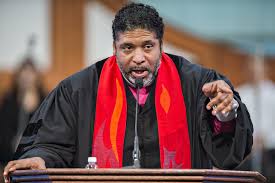
Rev.Dr. William Barber II. Political and Prophetic Public Theology
Political and Prophetic Public Theology: What is the relationship? Let’s ask Wiliam Barber II.
William Barber II just enlarged his portfolio. He has been director of the Center for Public Theology and Public Policy at Yale Divinity School. Now he will add the newly created Office of Prophetic Witness established by the Christian Church (Disciples of Christ) in Washington DC. Once per month he will preach, teach, and lecture on the “high moral stakes of the policy battle raging” in American society. This according to Dawn Araujo-Hawkins writing in The Christian Century (June 2025, p.18).
When I mapped out the tasks of public theology in my 2018 essay, “Public Theology: It’s Pastoral, Apologetic, Scientific, Political, and Prophetic Tasks,” I distinguished between the political and prophetic tasks. They overlap, to be sure. Yet, I perceive enough difference to secernate them.
The Political Task of the Public Theologian
With regard to the political task within public theology, we need to work within a worldview that lifts up a vision of a just, sustainable, participatory, and planetary society with the common good as its orienting value. The public theologian attempts to work in partnership with the body politic toward the common good.
This means the public theologian takes a particular interest in the state, the nation, the body politic. “While all members of society have a role in attaining and developing the common good,” note Andrew Bradstock and Hilary Russell, “the state has the responsibility for attaining it” (Bradstock & Russell, p. 174). This requires that public theology become political theology.
When it comes to worldview construction, I recommend that the political theologian draw upon a vision of the Kingdom of God. The New Testament symbol of the Kingdom of God is already a political symbol that grounds our vision of a just society in the divine will. This means the public theologian will begin with a normative political vision and draw middle axioms that could guide and direct the course of human social affairs.
The common good provides a heuristically powerful middle axiom that connects the Kingdom of God symbol with actionable opportunities. ELCA (Evangelical Lutheran Church in America) social teaching encourages the political public to promote a “sufficient” and “sustainable” livelihood for all, Then Lutherans add that the common good includes not merely the human community, but also the entire planetary biosphere.
Today, the meaning of “common good” or “good of all” must include the community of all living creatures. The meaning also should extend beyond the present to include consideration for the future of the web of life. The sphere of moral consideration is no longer limited to human beings alone (ELCA, 2013).
In sum, the public rhetoric of the theologian within the Church interprets the biblical symbol of the Kingdom of God in terms of justice and the common good placed within a vision of the future toward which our emerging planetary society should aspire.
The Prophetic Task of the Public Theologian
The political and prophetic tasks overlap, to be sure. But, with a slight difference. The political task centers on worldview construction, on lifting up a vision of a just, sustainable, participatory, and planetary society oriented around the common good. The prophetic task presupposes this worldview. But through public discourse clarification, the prophet analyzes, criticizes, and renders judgment.
In the last century, Paul Tillich and Reinhold Niebuhr knifed through false absolutes to render prophetic judgment. During the economic depression and World War II, they targeted the dangers of patriotism and nationalism, where the nation becomes the de facto religion.
“The most striking, contemporary form of it [the demonic] is a religious nationalism in which race and nation assume the eminence of God and demand unconditioned devotion. This absolute claim for something which is not absolute identifies the possessing spirit as demonic” (Niebuhr, 1941, p. 2:111).
It is easy for the patriot – especially when cajoled by propaganda spread by a would-be dictator — to slip into worshiping the nation. It is the task of the prophet to make this transparent. “Prophetic religion had its inception in a conflict with national self-deification” (Niebuhr, 1941, p. 1:214).
In addition to the nation, numerous other substitute ultimates have taken recognizable form in the Post-World War Two era such as health, wealth, and pleasure. In America today, we witness an explosion of corruption and cruelty right along with an explosion of apathy and complicity. Without conscience we witness the abandonment of healthcare for the poor, habeas corpus of immigrants arrested on the streets, compassion for 50,000 Gazans killed with American made bombs, and defense of invaded countries such as Ukraine fighting for their very survival.
The crisis of corruption and cruelty looms as I write this. The so-called One Big, Beautiful Bill threatens the welfare of millions in America. According to ELCA Advocacy Alert, US House committees have just advanced legislation that would cut $300 billion from education programs, $800 billion from healthcare and Medicaid programs, and $300 billion from the Supplemental Nutrition Assistance Program (SNAP) over a decade. Early estimates from the Congressional Budget office suggest over 7.6 million people would lose health coverage under this proposal, and other estimates conclude that 11 million people, including 4 million children would be at risk of losing food assistance. States cannot make up this gap. These cuts come within a wider proposal that would also increase the net federal debt by $3 – 5 trillion to due to wider tax cuts. Might such a political crisis prompt a contribution from Political and Prophetic Public Theology? Yes, indeed.
Public theologian Helene Slessarev-Jamir connects the prophetic with progressive activism, as I do.
“Progressive prophetic activism is characterized by its concern for the other, for those who are marginalized. In the midst of the chaos and pain of the present, prophetic politics envisions an altered future in which human relationships to one another and the natural world are repaired. Within Judaism, this is known in Hebrew as tikkun olam, which, translated, means repairing the world. As was the case with the Hebraic prophets and with Jesus, contemporary prophetic activism emerges in response to the myriad forms of injustice found among people who are living in the slums of the world, are hungry, excluded from full citizenship, exploited in off-shore manufacturing plants, are AIDS orphans, child soldiers, or widows who witnessed their husbands and children being slaughtered” (Slessarev-Jamir, October 2010, p. 676).
In the circus of social media and mass media, the prophetic public theologian lifts up a voice to engage in discourse clarification in the name of justice and the common good. “By rendering the particular background perspectives transparent,” says the Berlin Institute for Public Theology, “Public Theology contributes to the clarification of normative issues, the formation of opinions and political deliberation.”
Theological Anthropology and Discourse Clarification
When it comes to dicsourse clarification, the public theologian can draw upon the rich insigthts of Scripture and Systematic Theology. I find especially valuable doctrines such as the imago Dei and the fall into sin. Rather than accept public rhetoric at face value, the prophetic theologian plummets the depths hidden beneath ideology, self-justification, and scapegoating. Mark Granquist, editor of the journal. Word and World, provides an example of discourse clarification that draws upon the classic theological understanding of human sin as Jesus understands it in Luke 12:16-23. Note: where Tillich and Niebuhr put anxiety, Granquist puts fear.
“The chief problem here [the anthropogenic factor in the ecological problem] is human greed, something magnified by our current ability to consume ever more of the world’s goods . But what is behind greed? What motivates greed and the driving need to acquire more and more things? Humans seem to have an almost innate need to measure their self-worth by the measurement of possessions–the more we have, the better we feel about ourselves. But the problem goes deeper than greed, which is, in the end, a symptom, not a cause. Behind greed is fear. Fear of not being able to control the world around us, fear of our own mortality, fear of meaninglessness and the unknown. And so we surround ourselves with what we desperately hope are enough possessions to keep us safe, and to give our lives meaning (which of course, they cannot). Greed and fear are universal, primal experiences, felt by all people, religious or not”(Granquist, 140.
When we dig beneath “drill, baby drill” rhetoric combined with our frustration over human recalcitrance at taking care of our planet’s health, the public theologian uncovers fear. How should the public theologian address fear? With judgment, excoriation, and condemnation? Perhaps. But such underlying fear needs to be met with the kind of grace that elicits trust. Faith trusts. Faith reduces greed. Might faith rescue our planet?

For recommended books on Public Theology, click here.
Conclusion: Political and Prophetic Public Theology
Here is the laudable mission of the Center for Public Theology and Public Policy at Yale Divinity School.
The mission of the Center for Public Theology and Public Policy is to prepare a new generation of moral leaders to be active participants in creating a just society using the academic, practical, and research tools of past and present social justice movements.
In concert with such a mission, I am blueprinting a constructive public theology that includes both political and prophetic tasks. I think of public theology as conceived in the church, reflected on in the academy, and meshed within the national and international community for the common good (Peters, 2023, p. 3).
The political and the prophetic tasks complement one another. The political constructs a worldview incorporating positive vision of how our society should be oriented around the common good. And through discourse clarification, the prophetic renders a negative judgment when empirical reality falls short.
Patheos PT 1013. Political and Prophetic Public Theology
Public Theology: Its Pastoral, Apologetic, Scientific, Political, and Prophetic Tasks
Wounded Child No Surviving Family
▓

Ted Peters
Meet Ted Peters. For Patheos, Ted Peters posts articles and notices in the field of Public Theology. He is a pastor in the Evangelical Lutheran Church in America and emeritus professor at Pacific Lutheran Theological Seminary and the Graduate Theological Union. His single volume systematic theology, God—The World’s Future, is now in the 3rd edition. He has also authored God as Trinity plus Sin: Radical Evil in Soul and Society as well as Sin Boldly: Justifying Faith for Fragile and Broken Souls. He recently published. The Voice of Public Theology, with ATF Press. See his website: TedsTimelyTake.com and Patheos blog site and Substack blog site.
▓
References to Political and Prophetic Public Theology
Bradstock, A., & Russell, H. (n.d.). Politics, Church, and the Common Good. In Companion to Public Theology (pp. 164-183).
ELCA. (2013). Genetics, Faith, and Responsibility. http://www.elca.org/en/Faith/Faith-and-Society/Social-Statements/Genetics: Social Statement.
Granquist, M. (2025). “Driving to the Root,” Word and World 45:2 (Spring) 139-141.
Niebuhr, R. (1941). The Nature and Destiny of Man, 2 Volumes. New York: Scribners.
Peters, T. (2023). The Voice of Public Theology. Adelaide: ATF.
Slessarev-Jamir, H. (October 2010). Prophetic Activism in and Age of Empire. Political Theology 11:5, 674-690.
Politics and Religion
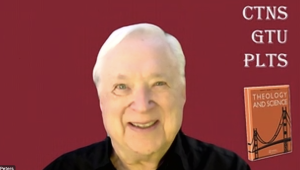
About Ted Peters
For Patheos, Ted Peters posts articles and notices in the field of Public Theology. He is a pastor in the Evangelical Lutheran Church in America and emeritus professor at Pacific Lutheran Theological Seminary and the Graduate Theological Union. His single volume systematic theology, God—The World’s Future, is now in the 3rd edition. He has also authored God as Trinity plus Sin: Radical Evil in Soul and Society as well as Sin Boldly: Justifying Faith for Fragile and Broken Souls. He recently published. The Voice of Public Theology, with ATF Press. See his website: TedsTimelyTake.com and Patheos blog site and Substack blog site. You can read more about the author here.
Previous Post

May 15, 2025
Corruption and Cruelty without Conscience
Next Post
May 29, 2025 AI and Sin: How Sloth, Bias, and Power Shape the Future
Browse Our Archives
Select a Category Afterlife America in Crisis Ancient Alien Apocalypse Art Artificial Intelligence Astrobiology Astrotheology Atheism Big History Buddhist Catholic Christian Nationalism Christmas Comparative Theology Death Ecology Ethics ETI Evangelical Evolution Existential Questions Free Will General Christian Hermeneutics Hindu https://www.patheos.com/blogs/allsetfree/2020/12/sins-we-need-to-talk-about/?utm_source=Newsletter&utm_medium=email&utm_campaign=Christians+For+a+Better+Christianity&utm_content=43&lct Interreligious Islam Jewish Justice Latter-Day Saints Literature Literature and Theology Lutheran Methodism Mormonism Nonreligious ontology Orthodox Pagam Prayer progressive Christian PT 6 Dignity Public Theology Race racial justice Religious Liberty Romance Satan Scapegoat Science & Religion Science and Religion social justice Spirituality SR 8 Transhumanism Systematic Theology Taoism Ted Peters UAP UFO Uncategorized War
Select a Month September 2026 August 2026 July 2026 June 2026 May 2026 April 2026 March 2026 February 2026 December 2025 November 2025 October 2025 September 2025 August 2025 July 2025 June 2025 May 2025 April 2025 March 2025 February 2025 January 2025 December 2024 November 2024 October 2024 September 2024 August 2024 July 2024 June 2024 May 2024 April 2024 March 2024 February 2024 January 2024 December 2023 November 2023 October 2023 September 2023 August 2023 July 2023 June 2023 May 2023 April 2023 March 2023 February 2023 January 2023 December 2022 November 2022 October 2022 September 2022 August 2022 July 2022 June 2022 May 2022 April 2022 March 2022 February 2022 January 2022 December 2021 November 2021 October 2021 September 2021
Follow Us!
TAKE THE
Religious Wisdom Quiz
What character trait is praised in the Parable of the Good Samaritan?
Select your answer to see how you score.
Selfishness Deceit Pride Compassion
Related posts from Public Theology

Why Public Theology Needs a Theology of Nature

America's 250th Birthday Gift: Civic Renewal

Do You Believe in UFOs? A Theologian's Answer.

Free Will and Christian Freedom TWO
TRENDING AT PATHEOS Progressive Christian

What Being a Modern-Day Apostle Means to Me
In my last column, I discussed the ins and outs of modern-day...

Did Ancient China Once Worship the God of...
Across human history, a common thread weaves through the origins of the...

Love Your Neighbor – Including Earth-Kin: Lev. 19,...
God’s command to love your neighbor means acting in an ethical and...

Lead a Church Study of “Jesus and Lao...
Guest writer Jack Thomas (The Irreverent Reverend) reflects on leading his church...

Pastoral Wisdom for Responding to Sermon Pushback
Getting sermon pushback on your social justice sermon? Learn practical, Proverbs-based strategies...

Principles for Understanding the Apostolic Ministry Today
Whenever people discover that my formal ministry title is "apostle," as in...
view all Progressive Christian blogs
Ad-Free & Subscriber Log-In Subscription Support
- About Us
- 2026 Calendar
- Videos
- Podcasts
- Library of World Religions
- Faith In Media Tracker
- Advertise With Us
- Write for Us
- Privacy Policy
- Terms of Service
- Do Not Sell My Data
- Contact Us
- Radiant Digital
- Manage Newsletter Subscriptions
- Unsubscribe From Notifications
- Sitemap
Copyright 2008-2026, Patheos. All rights reserved.
Subscription Support Ad-Free & Subscriber Log-In
Follow Patheos