
BuddhistCatholicContemplativeEvangelicalGeneral ChristianHinduJewishLatter-day SaintMuslimNew VisionsProgressive Christian
Beliefs
- Buddhist
- Catholic
- Contemplative
- Evangelical
- General Christian
- Hindu
- Jewish
- Latter-day Saint
- More Voices
- Muslim
- New Visions
- Pagan
- Progressive Christian
Topics
- Religion News
- Food and Religion
- Sports and Religion
- Religious Art
- Religious Music and Entertainment
- Religious Events
- History and Religion
- Style and Religion
- Politics and Religion
- Women in Religion
- Recreation Outdoors and Religion
- Business Finance and Religion
- Careers Workplace and Religion
- Education and Religion
- Family Parenting and Religion
- Health Fitness and Religion
- Home and Religion
- Relationships and Religion
- Technology and Religion
- Travel and Religion
Columnists
- Buddhist Columnists
- Business Finance and Religion Columnists
- Careers Workplace and Religion Columnists
- Catholic Columnists
- Contemplative Columnists
- Education and Religion Columnists
- Evangelists Columnists
- Family Parenting and Religion Columnists
- General Christian Columnists
- Health Fitness and Religion Columnists
- Hindu Columnists
- History and Religion Columnists
- Home and Religion Columnists
- Jewish Columnists
- More Voices Columnists
- Latter Day Columnists
- Muslim Columnists
- New Visions Columnists
- Nonreligious Columnists
- Pagan Columnists
- Politics and Religion Columnists
- Progressive Columnists
- Recreation Outdoors and Religion Columnists
- Relationships and Religion Columnists
- Religion News Columnists
- Religious Art Columnists
- Religious Events Columnists
- Religious Music and Entertainment Columnists
- Sports and Religion Columnists
- Style and Religion Columnists
- Technology and Religion Columnists
- Travel and Religion Columnists
- Women in Religion Columnists
Resource Library
- 2026 Calendar
- Library of World Religions
- The 100 Most Holy Places on Earth
- Patheos Answers
- Podcasts
- Videos
- Faith Leaders Database
- Anglican Episcopalian
- Bahai
- Baptist
- Buddhism
- Christianity
- Confucianism
- Eastern Orthodoxy
- Hinduism
- Holiness and Pentecostal
- ISKCON
- Islam
- Judaism
- Lutheran
- Methodist
- The Church of Jesus Christ of Latter-day Saints
- New Age
- Paganism
- Presbytarian and Reformed
- Protestantism
- Religion Behind the Scenes
- Roman Catholic
- Scientology
- Shia Islam
- Sikhism
- Sufism
- Sunni Islam
- Taoism
- Zen
- See all religions
Research Tools
 Ad-Free & Subscriber Log-In Subscription Support
Follow Patheos 

- Trending:
- Advent
- |
- Forgiveness
- |
- Thanksgiving
- |
- Election
- |
- Seasonal Holidays
- |
- Marriage

- Home
- Progressive Christian
- Technology and Religion
- Robert Nicastro on Teilhard de Chardin
Robert Nicastro on Teilhard de Chardin
Last updated on: April 7, 2025 at 11:54 am by Ted Peters
Robert Nicastro on Teilhard de Chardin 2025-04-07T11:54:43-07:00 Ted Peters
Patheos Explore the world's faith through different perspectives on religion and spirituality! Patheos has the views of the prevalent religions and spiritualities of the world.
Robert Nicastro on Teilhard de Chardin
Robert Nicastro on Teilhard de Chardin
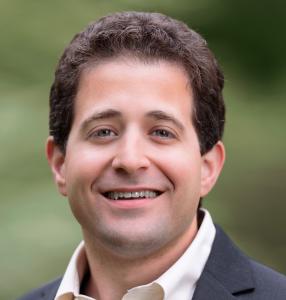
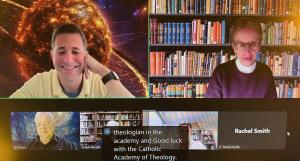
On Monday, April 7, 2025, Robert Nicastro slew the dragon. The dragon came in the form of a dissertation defense at Villanova University. The dissertation tile? The Future as Sole Support: Metaphysics, Hyperphysics, and the Theology of Teilhard de Chardin. The faculty committee was chaired by the erudite systematic theologian, Ilia Delio, OSF. The readers of Nicastro on Teilhard included New Testament scholar Peter Spitaler along with Georgetown sockdolager John Haught. And, of course, me.
Well, you might ask: what was Nicastro’s thesis? Here is the preamble.
“Given the unique and ongoing forms of innovation and creativity that color the evolutionary process, this dissertation seeks to give serious and proper attention to the future than either science or religion by themselves has presently given that.”
Well, I certainly want to see science and religion engage one another. And I certainly give credence to a future oriented approach to divine creativity. So, what’s next? Here is the thesis proper.
“The principal thesis of this dissertation is that such a synthesis is found in the hyperphysics of Jesuit scientist Pierre Teilhard de Chardin. In his comprehensive philosophical system, we are invited to see the cosmos as that which resonates with and gives rise to what is deepest in ourselves, which Teilhard referred to as a principle of personalization within each and every element of existence” (Nicastro 2025, 7).
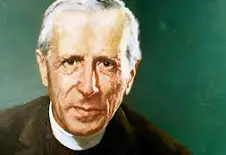
To buttress this thesis, Nicastro guides us on a tour through the reductionistic and materialistic limitations of standard science as well as the unnecessarily spiritualized or disembodied inheritance of traditional Western Christianity. Nicastro applauds the innovative integration of Jesuit paleontologist and theologian, Pierre Teilhard de Chardin (1881-1955).
“science cannot reach the full limits of itself either in its impetus or in its constructions without being tinged with mysticism and charged with faith” (De Chardin, The Human Phenomenon 2015, 203).349
Might we credit Teilhard with pioneering what today we call theistic evolution? Let’s take a closer look.
Who is God, Really?
Robert Nicastro on Teilhard dissertation defense
A century after Teilhard began his career in scientific research, theistic evolutionist John Haught demanded that contemporary systematic theologians take evolutionary biology into account. In fact, what our context requires is an evolutionary theology. “Evolutionary theology discerns in evolution a most illuminating context for our thinking about God today” (Haught, God After Darwin 2007, 36). Haught is cashing in on the inheritance bequeathed to us by Teilhard de Chardin.
Among today’s options we find Theistic Evolution. What is it? Here is a definition supplied evolutionary biologist Martinez Hewlett and me. Theistic evolution is “a family of theological positions that see a convergence between Darwinian evolutionary theory including natural selection with the doctrine of creation” (Peters 2009, 97).
Let’s pause to think through what theism might mean within theistic evolution. Does Teilhard fit here? Evolution? Yes, definitely. Theism? Well, let’s look more closely.
Teilhard saw the existing theistic image of God as in urgent need of redefinition. A static notion of the universe has given way to a dynamic understanding of reality and therefore requires the pursuit of a new God: a God no longer simply draped with the world, but a God who is the Centre of a Universe in movement (Nicastro 2025, 176).
In contrast to the idea of divine simplicity,” obsrves Nicastro, “the realization that transcendence is found precisely in the movement of the world—physical, chemical, biological, social, scientific, artistic, religious, etc.—brings us face-to-face with the need for complexity as a new metaphysical category not only in science and philosophy but also in theology. As a result of Teilhard’s cosmic Incarnational mysticism, we are led to conclude that both the infinite and the finite are thoroughly present and entangled, each in its own proper way, and that the whole is one single flow of Spirit- matter.”
Teilhard de Chardin (1881-1955)
This implies, Nicastro observes, that “there is nothing outside of this whole, which includes both the infinite and the finite. All is inside the one flow—the metaphysical order of which is not simply what is but what is complex: Nature’s dynamic becoming is God’s dynamic becoming” (Nicastro 2025, 170). Nicastro denies creatio ex nihilo and substitutes an evolution of the divine in concert with the evolution of creation. “God’s creating is not one of ex nihilo from without, but rather a process of mobilizing continuous self-creativity from within” (Nicastro 2025, 187).
The result is something distinguishable from garden variety theistic evolution. Theism usually entails belief in a divinity that transcends – stands outside of – the created world. Teilhard, instead, place God exhaustively at the center of the whole of created reality. “In the course of evolution … which is our reality … God can only be defined as a centre of centres. In this complexity lies the perfection of [God’s] unity—the only final goal logically attributable to the developments of spirit-matter. Complexity of God, we have just said. Let us not be frightened by this deduction. The expression is right” (De Chardin, Human Energy 1969, 68, Teilhard’s italics).
Ilia Delio, following in the Teilhardian tradition, places God within – not beyond – the evolutionary advance. For Delio, God becomes just as the world becomes.
“By bringing together the birth of God in time and the emergence of Jesus, the Christ, Teilhard brings together the Christian hope of new creation and the evolution of complexity-consciousness. We are not outside God’s becoming. On the contrary, we are integral to the convergent and emergent process of theogenic evolution. God is being born from within. God emerges in the form of a person and has a personality marked by love. Such a position does not diminish God but “contributes something that is vitally necessary to God.” God’s self-sufficiency is paradoxically God’s dependency. God does not need matter to be God; yet, without matter God cannot be God. God is entangled with created being and created being is entangled with God … God is active and alive in a new way as new potentials for wholeness are realized. God is not utter simplicity, Teilhard suggested. God complexifies in evolution, as consciousness attains higher levels. The more consciousness is unified, the more the world converges—but only love can unify” (Delio, The Not-Yet-God: Carl Jung, Teilhard de Chardin, and the Relational Whole 2023, 207,210).
According to Delio, God is generated. God is birthed by an evolutionary midwife.
This position shared DNA with the family of theistic evolutionists, to be sure. But it might be considered a distant relative.
God does not yet exist. Really?
My own introduction to Teilhard came from two Lutheran theologians in Chicago, Joseph Sitler and Philip Hefner. They emphasized the role of the future in theological cosmology as well as the importance of evolutionary history. My next step was to become enamored with Wolfhart Pannenberg’s claim that God is the power of the future. On the one hand, this means – in a way not unlike Teilhard or Delio – that “God does not yet exist” (Pannenberg 1969, 56). On the other hand, you and I do not construct God nor does evolution create God. Rather, once the creative process of evolution and history have attained their full quiddity, then it will be clear that God has always been God. Pannenberg is an eschatological holist in much the same way Teilhard and Delio are. “To speak of the definitive unity of the world means that all events are moving ahead to meet, finally, a common future” (Pannenberg 1969, 59).
The Retroactive Power of Eschatological Being
Helpful in sorting through the issues at stake here is the distinction we find in Jürgen Moltmann and Carl Braaten between the future understood as futurum and adventus. When thought of in terms of futurum, the future is the product of growth. We plant a tulip bulb in the garden. In April, it grows into a lovely tulip blossom. All the potential originally resided in the bulb. The future blossom is the product of original potential that becomes actualized over time.
Adventus, on the other hand, points to a future that arrives with something so new that it has no precedent in the past. The future as adventus smashes into the present moment with an eschatological reality that is transformative.
Over the three and a half decades I took to write God—The World’s Future, I attempted to draw out the implications of the future as adventus (T. Peters 2015).
Not unlike Nicastro on Teilhard, I assert that God is the world’s future. More. God’s final and consummate future takes the form of the new creation, symbolized in the New Testament as the Kingdom of God. The gospel message, then, is that we have grounds for hoping in the transformation of a world gone astray and that through faith in Christ the power of the future new creation and the justice of God’s future rule become part and parcel of our life today. “So if any one is in Christ, there is a new creation: everything old has passed away; see, everything has become new. . . . For our sake he made him to be sin who knew no sin, so that in him we might become the righteousness of God [δικαισύνη Θεоû]” (2 Cor. 5:17, 21; see Rom. 6:1-11).
Or, to say it another way, the new creation is God’s creation. We are not yet created. The power of God’s future is right now in the process of bringing us toward that which we will be. The present moment takes its definition retroactively from its place in the new creation.
Here is the contrast. Teilhard and his disciples rely on future as futurum, as growth toward actualization of previous potentials. When I speak of God as the world’s future, I rely also on adventus, the future as radically new and, thereby, both transformative and retroactively definitive.

Click for best books on public theology
Conclusion
Spring for me is the time of the year when I greet both tulips and dissertations in blossom. If you follow my Patheos series, you know that Hyung-Joo Lee and Sang Pil Yun have already produced creative doctoral dissertations. (Links below)
Gotta git ‘m finished in time to graduate in May, ya know! I find this phase of teaching most rewarding. Why? Because we can harvest the ripening fruit that has been growing for years in the fertile soil of library research. Congratulations, Robert!
Just to stay up to date, you might check out a recent book edited by Robert Nicastro along with Ilia Delio and Noreen Herzfeld, Religious and Cultural Implications of Technology-Medited Relationships in a Post-Pandemic World (Delio, Herzfeld, and Nicastro 2023).
Patheos ST 2029 Robert Nicastro on Teilhard de Chardin
SR 5025 Big Bang and the Bible: Hyung-Joo Lee
ST 2028 What is Vocation? Ask Sang Pil Yun
Substack 2008 Two Scares of Superintelligence
▓

Ted Peters
For Patheos, Ted Peters posts articles and notices in the field of Public Theology. He is a Lutheran pastor and emeritus professor at the Graduate Theological Union. His single volume systematic theology, God—The World’s Future, is now in the 3rd edition. He has also authored God as Trinity plus Sin: Radical Evil in Soul and Society as well as Sin Boldly: Justifying Faith for Fragile and Broken Souls. In 2023 he published. The Voice of Public Theology, with ATF Press. This year he has published an edited volume, Promise and Peril of AI and IA: New Technology Meets Religion, Theology, and Ethics (ATF) and along with Arvin Gouw an edited collection, The CRISPR Revolution in Science, Religion, and Ethics (Bloomsbury 2025). See his website: TedsTimelyTake.com and Patheos blog site on Public Theology.
▓
References
Bohm, David. 1975. “On the Intuitive Understanding of Nonlocality as Implied by Quantum Theory.” Foundations of Physics 5 93-109.
Braaten, Carl. 1969. The Future of God: The Revolutionary Dynamics of Hope. New York: Harper.
De Chardin, Pierre Teilhard. 1971. Christianity and Evolution. New York: Harcourt, Brace, Jovanovich.
—. 1969. Human Energy. New York: Harcourt, Brace, Jovanovich.
—. 2015. The Human Phenomenon. Brighton: Sussex Academic Press.
Delio, Ilia. 2023. The Not-Yet-God: Carl Jung, Teilhard de Chardin, and the Relational Whole. Maryknoll NY: Orbis.
Delio, Ilia; Noreen Herzfeld; and Robert Nicastro. 2023. Religious and Cultural Implications of Technology-Mediated Relationships in a Post-Pandemic World. Lanham: Lexington.
Haught, John. 2007. God After Darwin: A Theology of Evolution. London: Routledge.
—. 2015. Resting on the Future: Catholic Theology for an Unfinished Universe. London: Bloomsbury.
Moltmann, Jürgen. 1996. The Coming of God: Christian Eschatology. Minneapolis MN: Fortress Press.
Nicastro, Robert. 2025. The Future as Sole Support: Metaphysics, Hyperphysics, and the Theology of Teilhard de Chardin. Unpublished Dissertation, Villanova University.
Pannenberg, Wolfhart. 1969. Theology and the Kingdom of God. Louisville KY: Westminster John Knox.
Peters, Ted. 2015. God–The World’s Future: Systematic Theology for a New Era. 3rd. Minneapolis MN: Fortress Press.
Peters, Ted, and Martinez Hewlett. 2009. Can You Believe in God and Evolution? Nashville TN: Abingdon.
Rolston III, Holmes. 2010. Three Big Bangs: Matter-Energy-Mind. New York: Columbia University Press.
Smolin, Lee. 2014. Time Reborn: From the Crisis in Physics to the Future of the Universe . Boston: Mariner Books.
Technology and Religion
About Ted Peters
For Patheos, Ted Peters posts articles and notices in the field of Public Theology. He is a Lutheran pastor and emeritus professor at the Graduate Theological Union. His single volume systematic theology, God—The World’s Future, is now in the 3rd edition. He has also authored God as Trinity plus Sin: Radical Evil in Soul and Society as well as Sin Boldly: Justifying Faith for Fragile and Broken Souls. In 2023 he published. The Voice of Public Theology, with ATF Press. This year he has published an edited volume, Promise and Peril of AI and IA: New Technology Meets Religion, Theology, and Ethics (ATF) and along with Arvin Gouw an edited collection, The CRISPR Revolution in Science, Religion, and Ethics (Bloomsbury 2025). See his website: TedsTimelyTake.com and Patheos blog site on Public Theology. You can read more about the author here.
Previous Post

April 1, 2025
Do Scapegoats Purify America?
Next Post
April 16, 2025 Does Reason Prove the Afterlife? Gödel’s Surprising Argument
Browse Our Archives
Select a Category Afterlife America in Crisis Ancient Alien Apocalypse Art Artificial Intelligence Astrobiology Astrotheology Atheism Big History Buddhist Catholic Christian Nationalism Christmas Comparative Theology Death Ecology Ethics ETI Evangelical Evolution Existential Questions Free Will General Christian Hermeneutics Hindu https://www.patheos.com/blogs/allsetfree/2020/12/sins-we-need-to-talk-about/?utm_source=Newsletter&utm_medium=email&utm_campaign=Christians+For+a+Better+Christianity&utm_content=43&lct Interreligious Islam Jewish Justice Latter-Day Saints Literature Literature and Theology Lutheran Methodism Mormonism Nonreligious ontology Orthodox Pagam Prayer progressive Christian PT 6 Dignity Public Theology Race racial justice Religious Liberty Romance Satan Scapegoat Science & Religion Science and Religion social justice Spirituality SR 8 Transhumanism Systematic Theology Taoism Ted Peters UAP UFO Uncategorized War
Select a Month September 2026 August 2026 July 2026 June 2026 May 2026 April 2026 March 2026 February 2026 December 2025 November 2025 October 2025 September 2025 August 2025 July 2025 June 2025 May 2025 April 2025 March 2025 February 2025 January 2025 December 2024 November 2024 October 2024 September 2024 August 2024 July 2024 June 2024 May 2024 April 2024 March 2024 February 2024 January 2024 December 2023 November 2023 October 2023 September 2023 August 2023 July 2023 June 2023 May 2023 April 2023 March 2023 February 2023 January 2023 December 2022 November 2022 October 2022 September 2022 August 2022 July 2022 June 2022 May 2022 April 2022 March 2022 February 2022 January 2022 December 2021 November 2021 October 2021 September 2021
Follow Us!
TAKE THE
Religious Wisdom Quiz
Who was known for his great strength and long hair?
Select your answer to see how you score.
Samson Peter Elijah David
Related posts from Public Theology

Why Public Theology Needs a Theology of Nature

America's 250th Birthday Gift: Civic Renewal
Do You Believe in UFOs? A Theologian's Answer.
Free Will and Christian Freedom TWO
TRENDING AT PATHEOS Progressive Christian

The Secret behind A Charlie Brown Thanksgiving
Where Franklin Sat at Charlie Brown's Thanksgiving Table Sparky was sticking to...

Bridging the Gap Between God and Man
From Far Off to the Ultimate Embrace “God is a Spirit: and...

Let Matthew 25 Guide You to a Greater...
With the crisp feel of fall in the air, our minds quickly...

Can a Chatbot Touch Your Soul?
Can a chatbot offer genuine spiritual counsel? One conversation brought me to...

Religion and Politics: How Should We Then Live?
Two cultural axioms get repeated in polite company. Don't mix religion and...

7 Things We Get Wrong About Giving Thanks
It's a time of year when many of us turn to the...
view all Progressive Christian blogs
Ad-Free & Subscriber Log-In Subscription Support
- About Us
- 2026 Calendar
- Videos
- Podcasts
- Library of World Religions
- Faith In Media Tracker
- Advertise With Us
- Write for Us
- Privacy Policy
- Terms of Service
- Do Not Sell My Data
- Contact Us
- Radiant Digital
- Manage Newsletter Subscriptions
- Unsubscribe From Notifications
- Sitemap
Copyright 2008-2026, Patheos, part of the Radiant Digital network of media brands. All rights reserved.
Subscription Support Ad-Free & Subscriber Log-In
Follow Patheos