
BuddhistCatholicContemplativeEvangelicalGeneral ChristianHinduJewishLatter-day SaintMuslimNew VisionsProgressive Christian
Beliefs
- Buddhist
- Catholic
- Contemplative
- Evangelical
- General Christian
- Hindu
- Jewish
- Latter-day Saint
- More Voices
- Muslim
- New Visions
- Pagan
- Progressive Christian
Topics
- Religion News
- Food and Religion
- Sports and Religion
- Religious Art
- Religious Music and Entertainment
- Religious Events
- History and Religion
- Style and Religion
- Politics and Religion
- Women in Religion
- Recreation Outdoors and Religion
- Business Finance and Religion
- Careers Workplace and Religion
- Education and Religion
- Family Parenting and Religion
- Health Fitness and Religion
- Home and Religion
- Relationships and Religion
- Technology and Religion
- Travel and Religion
Columnists
- Buddhist Columnists
- Business Finance and Religion Columnists
- Careers Workplace and Religion Columnists
- Catholic Columnists
- Contemplative Columnists
- Education and Religion Columnists
- Evangelists Columnists
- Family Parenting and Religion Columnists
- General Christian Columnists
- Health Fitness and Religion Columnists
- Hindu Columnists
- History and Religion Columnists
- Home and Religion Columnists
- Jewish Columnists
- More Voices Columnists
- Latter Day Columnists
- Muslim Columnists
- New Visions Columnists
- Nonreligious Columnists
- Pagan Columnists
- Politics and Religion Columnists
- Progressive Columnists
- Recreation Outdoors and Religion Columnists
- Relationships and Religion Columnists
- Religion News Columnists
- Religious Art Columnists
- Religious Events Columnists
- Religious Music and Entertainment Columnists
- Sports and Religion Columnists
- Style and Religion Columnists
- Technology and Religion Columnists
- Travel and Religion Columnists
- Women in Religion Columnists
Resource Library
- 2026 Calendar
- Library of World Religions
- The 100 Most Holy Places on Earth
- Patheos Answers
- Podcasts
- Videos
- Faith Leaders Database
- Anglican Episcopalian
- Bahai
- Baptist
- Buddhism
- Christianity
- Confucianism
- Eastern Orthodoxy
- Hinduism
- Holiness and Pentecostal
- ISKCON
- Islam
- Judaism
- Lutheran
- Methodist
- The Church of Jesus Christ of Latter-day Saints
- New Age
- Paganism
- Presbytarian and Reformed
- Protestantism
- Religion Behind the Scenes
- Roman Catholic
- Scientology
- Shia Islam
- Sikhism
- Sufism
- Sunni Islam
- Taoism
- Zen
- See all religions
Research Tools
 Ad-Free & Subscriber Log-In Subscription Support
Ad-Free & Subscriber Log-In Subscription Support
Follow Patheos 

- Trending:
- Forgiveness
- |
- Marriage
- |
- Consciousness
- |
- Death Penalty
- |
- Election
- |
- Halloween

- Home
- Progressive Christian
- History and Religion
- What is Vocation? Ask Sang Pil Yun
What is Vocation? Ask Sang Pil Yun
Last updated on: March 28, 2025 at 8:46 am by Ted Peters
What is Vocation? Ask Sang Pil Yun 2025-03-28T08:46:59-07:00 Ted Peters
Patheos Explore the world's faith through different perspectives on religion and spirituality! Patheos has the views of the prevalent religions and spiritualities of the world.
What is Vocation? Ask Sang Pil Yun

What is vocation?
What is vocation? We all know what vocation means, right? A vocation is like a profession. But it’s more personal and high-minded. Your or my vocation – our calling – comes from God and we live out our vocation regardless of what our profession is. Right?
In medieval Europe priests and nuns had vocations. They were called to take vows and devote their lives to contemplative service to God.
During the Protestant Reformation, Martin Luther gave us the Priesthood of All Believers. This extended the concept of vocation to every lay Christian. If the shoemaker would make a high quality pair of shoes, that fulfilled the shoemaker’s calling from God.
Now we ask: what is vocation in the theology of Karl Barth? Sang Pil Yun has the answer.
Meet Sang Pil Yun

Sang Pil Yun.
Sang Pil Yun is a Presbyterian pastor in South Korea. On March 27, 2025, soon-to-become Doctor Yun successfully defended his dissertation at the Graduate Theological Union. Sang Pil’s Doktormutter is renowned Reformation scholar Kirsi Stjerna. One reader is Paul S. Chung, known widely for his leadership in the international Public Theology in Forum. I served as third reader.
Now, you might ask, just what was the dissertation title? Here it is: “Christ’s Calling and the Formation of Christian Existence: A Christological Inquiry into the Concept of Calling in Karl Barth’s Doctrine of Reconciliation.”
Next you will want to know his thesis. Here it is:
Karl Barth’s doctrine of calling or vocation offers a dogmatic theory that the prophetic call of Jesus Christ transforms a person into a particular form of Christian existence. The mutual indwelling between Christ and a Christian establishes him or her as a co-agent with Christ who renders the service of His prophetic speech and action for the world (Yun, 2025).
How does Karl Barth answer the question: what is vocation?
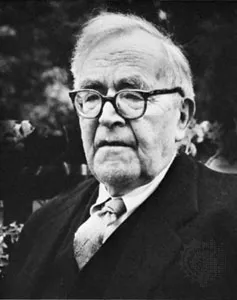
Karl Barth 1965
In the Church Dogmatics, says the almost doctor Yun, Barth argues that the calling of Jesus Christ extends to all humanity under the universal light of reconciliation, However, not all individuals become Christians in an existential sense. Christian existence is marked by a personal response to the call, distinguishing those who recognize and embrace their new identity in Christ from those who remain unaware or resistant. This Christian particularity signals that the Christian vocation does not result in indiscriminate labeling but rather in a transformative engagement with Christ’s call (Yun, 2025, p. 203).
Let’s say it another way. First, Jesus Christ redeems the world, objectively speaking. Second, the community of God – the community of God includes both the election of Israel and the calling of the Church – generates a witness within humanity that prophetically announces God’s universal grace. Third, it is the calling of the Holy Spirit within our individual subjectivity that generates distinctively Christian existence. Finally, in unity with Christ, the Christian individual witnesses to God’s grace and lives in devoted love toward the neighbor and all of creation.
This is the Christian’s calling regardless of profession.
Conclusion
What is Vocation? We’ve asked Sang Pil Yun and we’ve asked Karl Barth. We did not ask New York Times columnist David Brooks. Yet, here is what Brooks says. “The summons to vocation is a very holy thing. It feels mystical, like a call from deep to deep” (Brooks, 2019, p. 91).
What does your and my vocation call us to do in the present crisis? In the year 2025, many of us are overcome with anxiety as the once stable world order begins to fragment and dragons of tyranny rear their ugly heads. Lost is the cultural glue that previously bound many of the world’s peoples together in reverence for justice and commitment to compassion.
Our planet desperately needs people of good will to eat lugubriously the fruits hanging from trees in the Holy Spirit’s orchard. “The fruit of the Spirit is love, joy, peace, patience, kindness, generosity, faithfulness, gentleness, and self-control” (Galatians 5:21-22). That’s a calling we can answer regardless of our profession.
Patheos ST 2028 What is Vocation? Ask Sang Pil Yun
ST 2005 What is Justification by Faith?
ST 2018 What is Rahner’s Rule?
ST 2022 What is Scandinavian Creation Theology?
Big Bang and the Bible: Hyung-Joo Lee
Patheos PT 5008. The Public Theology of Paul Chung
Substack PT 3262. DOGE Fires the Holy Spirit
▓

Ted Peters
Ted Peters directs traffic at the intersection of science, religion, and ethics. Peters is an emeritus professor at the Graduate Theological Union, where he co-edits the journal, Theology and Science, with Robert John Russell on behalf of the Center for Theology and the Natural Sciences, in Berkeley, California, USA. He authored Playing God? Genetic Determinism and Human Freedom? (Routledge, 2nd ed., 2002) as well as Science, Theology, and Ethics (Ashgate 2003). Along with Martinez Hewlett, Joshua Moritz, and Robert John Russell, he co-edited, Astrotheology: Science and Theology Meet Extraterrestrial Intelligence (2018). Along with Octavio Chon Torres, Joseph Seckbach, and Russell Gordon, he co-edited, Astrobiology: Science, Ethics, and Public Policy (Scrivener 2021). He has just edited The Promise and Perils of AI and IA: New Technology Meets Religion, Theology, and Ethics (ATF 2025) and with Arvin Gouw co-edited The CRISPR Revolution in Science, Theology and Ethics (Bloomsbury 2025). See his website: TedsTimelyTake.com.
▓
References
Barth, K. (1936-1962). Church Dogmatics, 4 Volumes. Edinburgh: T&T Clark.
Brooks, D. (2019). The Second Mountain. New York: Random House.
Chung, P. (2016). Postcolonial Public Theology: Faith, Scientific Rationality, and Prophetic Dialogue. Eugene OR: Cascade Books.
Peters, T. (2024). Communicatio Idiomatum in Deep Incarnation. Dialog 63:1, 1-8; DOI: 10.1111/dial.12845.
Stjerna, K. (2021). Lutheran Theology: A Grammar of Faith. Edeinburgh: T & T Clark.
Yun, S. P. (2025). Christ’s Calling and the Formation of Christian Existence: A Christological Inquiry into the Concept of Calling in Karl Barth’s Doctrine of Reconciliation. Berkeley CA: Graduate Theological Union.
History and Religion

About Ted Peters
Ted Peters directs traffic at the intersection of science, religion, and ethics. Peters is an emeritus professor at the Graduate Theological Union, where he co-edits the journal, Theology and Science, with Robert John Russell on behalf of the Center for Theology and the Natural Sciences, in Berkeley, California, USA. He authored Playing God? Genetic Determinism and Human Freedom? (Routledge, 2nd ed., 2002) as well as Science, Theology, and Ethics (Ashgate 2003). Along with Martinez Hewlett, Joshua Moritz, and Robert John Russell, he co-edited, Astrotheology: Science and Theology Meet Extraterrestrial Intelligence (2018). Along with Octavio Chon Torres, Joseph Seckbach, and Russell Gordon, he co-edited, Astrobiology: Science, Ethics, and Public Policy (Scrivener 2021). He has just edited The Promise and Perils of AI and IA: New Technology Meets Religion, Theology, and Ethics (ATF 2025) and with Arvin Gouw co-edited The CRISPR Revolution in Science, Theology and Ethics (Bloomsbury 2025). See his website: TedsTimelyTake.com. You can read more about the author here.
Previous Post
March 16, 2025
Remembering Holmes Rolston III's planet
Next Post

April 1, 2025 Do Scapegoats Purify America?
Browse Our Archives
Select a Category Afterlife America in Crisis Ancient Alien Apocalypse Art Artificial Intelligence Astrobiology Astrotheology Atheism Big History Buddhist Catholic Christian Nationalism Christmas Comparative Theology Death Ecology Ethics ETI Evangelical Evolution Existential Questions Free Will General Christian Hermeneutics Hindu https://www.patheos.com/blogs/allsetfree/2020/12/sins-we-need-to-talk-about/?utm_source=Newsletter&utm_medium=email&utm_campaign=Christians+For+a+Better+Christianity&utm_content=43&lct Interreligious Islam Jewish Justice Latter-Day Saints Literature Literature and Theology Lutheran Methodism Mormonism Nonreligious ontology Orthodox Pagam Prayer progressive Christian PT 6 Dignity Public Theology Race racial justice Religious Liberty Romance Satan Scapegoat Science & Religion Science and Religion social justice Spirituality SR 8 Transhumanism Systematic Theology Taoism Ted Peters UAP UFO Uncategorized War
Select a Month September 2026 August 2026 July 2026 June 2026 May 2026 April 2026 March 2026 February 2026 December 2025 November 2025 October 2025 September 2025 August 2025 July 2025 June 2025 May 2025 April 2025 March 2025 February 2025 January 2025 December 2024 November 2024 October 2024 September 2024 August 2024 July 2024 June 2024 May 2024 April 2024 March 2024 February 2024 January 2024 December 2023 November 2023 October 2023 September 2023 August 2023 July 2023 June 2023 May 2023 April 2023 March 2023 February 2023 January 2023 December 2022 November 2022 October 2022 September 2022 August 2022 July 2022 June 2022 May 2022 April 2022 March 2022 February 2022 January 2022 December 2021 November 2021 October 2021 September 2021
Follow Us!
TAKE THE
Religious Wisdom Quiz
What character trait is praised in the Parable of the Good Samaritan?
Select your answer to see how you score.
Selfishness Deceit Pride Compassion
Related posts from Public Theology

Why Public Theology Needs a Theology of Nature

America's 250th Birthday Gift: Civic Renewal

Do You Believe in UFOs? A Theologian's Answer.

Free Will and Christian Freedom TWO
TRENDING AT PATHEOS Progressive Christian

What Being a Modern-Day Apostle Means to Me
In my last column, I discussed the ins and outs of modern-day...

Did Ancient China Once Worship the God of...
Across human history, a common thread weaves through the origins of the...

Love Your Neighbor – Including Earth-Kin: Lev. 19,...
God’s command to love your neighbor means acting in an ethical and...

Lead a Church Study of “Jesus and Lao...
Guest writer Jack Thomas (The Irreverent Reverend) reflects on leading his church...

Pastoral Wisdom for Responding to Sermon Pushback
Getting sermon pushback on your social justice sermon? Learn practical, Proverbs-based strategies...

Principles for Understanding the Apostolic Ministry Today
Whenever people discover that my formal ministry title is "apostle," as in...
view all Progressive Christian blogs
Ad-Free & Subscriber Log-In Subscription Support
- About Us
- 2026 Calendar
- Videos
- Podcasts
- Library of World Religions
- Faith In Media Tracker
- Advertise With Us
- Write for Us
- Privacy Policy
- Terms of Service
- Do Not Sell My Data
- Contact Us
- Radiant Digital
- Manage Newsletter Subscriptions
- Unsubscribe From Notifications
- Sitemap
Copyright 2008-2026, Patheos. All rights reserved.
Subscription Support Ad-Free & Subscriber Log-In
Follow Patheos